
Quiz
Theme 2
Create a free account to finish this quiz
Save your progress and see your final score.
Already have an account? Sign in
Questions in this quiz (52)
1In the early 1930’s William Rose fed laboratory rats a mixture of all 19 amino acids known to be present in proteins. He observed that his rats lost weight. This observation led to the discovery of ______ as the 20th amino acid found in proteins.
- AGly
- BAla
- CTyr
- DAsn
- EThr
2What percentage of the 20 amino acids is considered to be nutritionally essential to lab animals?
- A0%
- B25%
- C50%
- D75%
- E100%
3About half of the 20 amino acids are called essential because
- Athey are essential for the synthesis of pyrimidines.
- Bthey are essential for the synthesis of purines.
- Cthey are essential for nitrogen metabolism.
- Dour bodies need them for protein synthesis.
- Eour bodies cannot synthesize them and therefore they need to be present in our diet.
4Which amino acid does not have a primary alpha-amino group?
- Aglutamine
- Barginine
- Clysine
- Dproline
- Eglutamate
5Which of the following statements is true?
- AAmino acids can be derived from purines
- BPurines and pyrimidines can be derived from amino acids
- CCorn contains all 20 standard amino acids
- DAmino acids can be derived from pyrimidines
- Enone of the above
6Which of the following amino acids is the least abundant in proteins?
- AV
- BW
- CG
- DF
- EA
7The diagram below shows
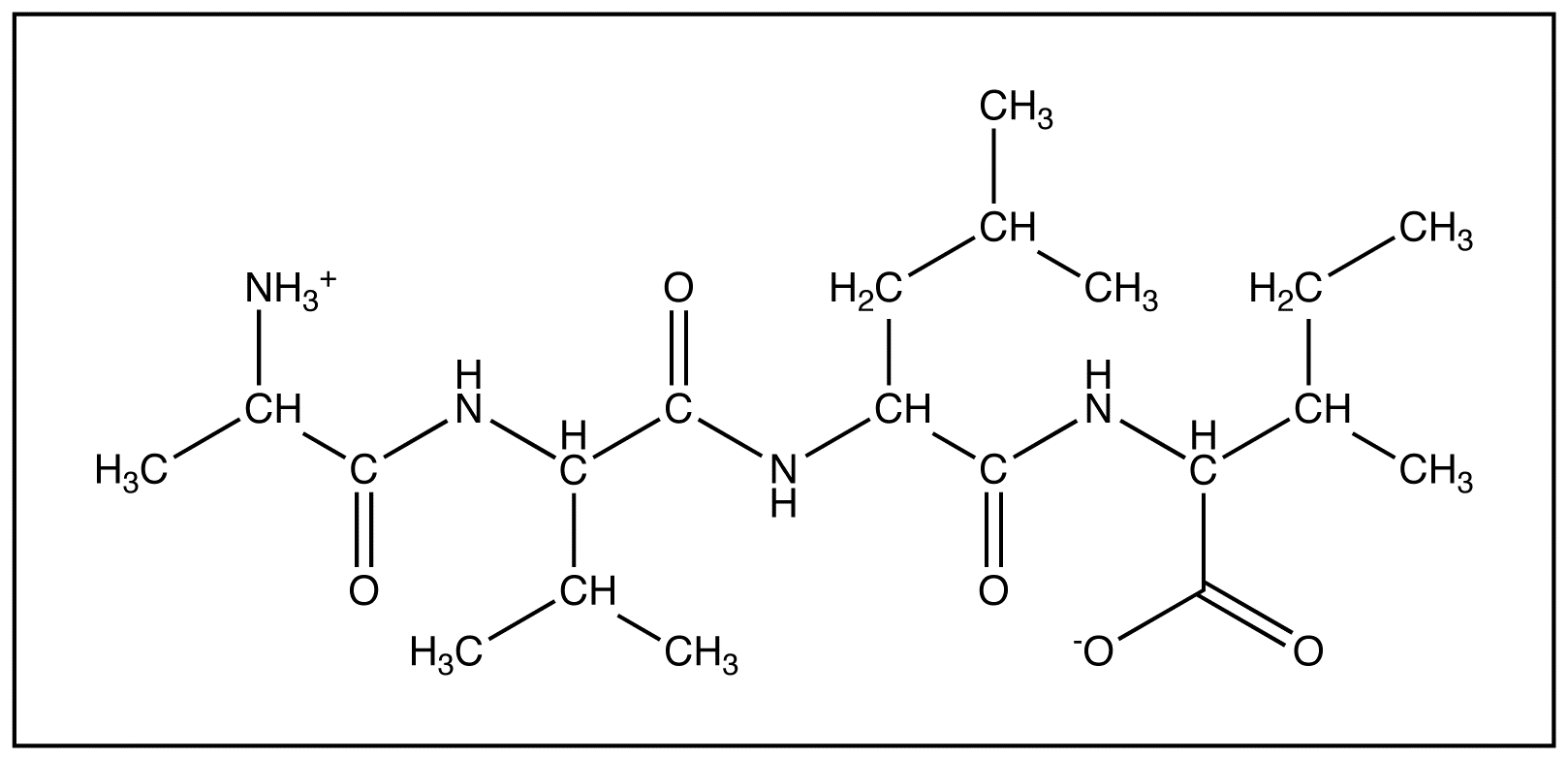
- Aan amino acid
- Ba dipeptide
- Ca tripeptide
- Da tetrapeptide
- Ea polypeptide
8Which of the following amino acids has a charged polar side chain at pH 7.0?
- ALeu
- BAla
- CMet
- DTrp
- EGlu
9Which of the following tripeptides carries a net positive charge at pH 7.0?
- AAla─Thr─Asn
- BGln─Val─Ser
- CArg─Glu─Met
- DPro─Ile─Leu
- ELeu─Lys─Gly
10Which of the following amino acids has a sulfur atom in its side chain?
- AAsn
- BSer
- CPhe
- DMet
- ETyr
11Which of the following amino acids does not have an ionizable side chain?
- Aasp
- Bcys
- Clys
- Dhis
- Easn
12Which of the following amino acids has an uncharged polar side chain at pH 7.0?
- Aarg
- Bthr
- Cglu
- Dpro
- Eile
13What is the three-letter symbol for the amino acid shown above?
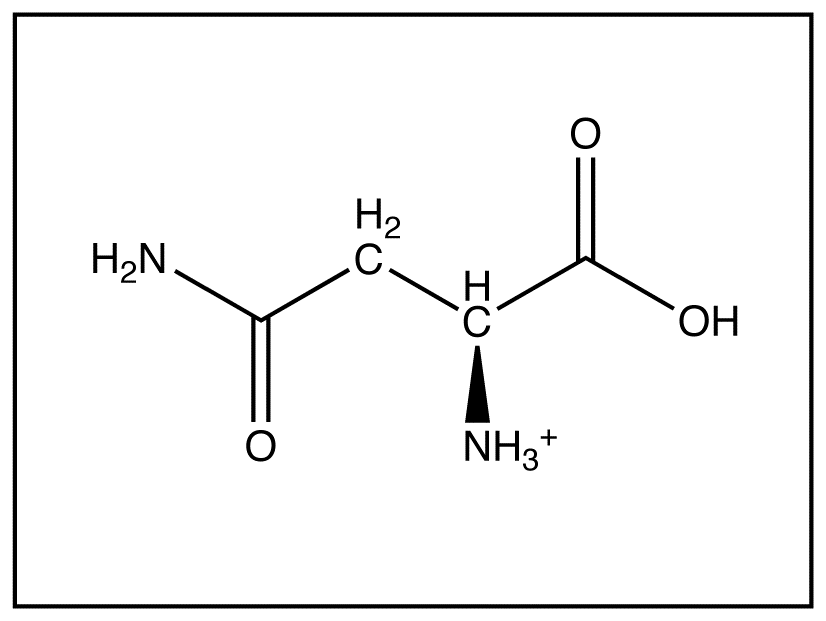
- Aala
- Basn
- Cgln
- Dasp
- Eglu
14The ionization of amino acids depends on the pH and the pKas of the ionizable groups. The pK1 and pK2 for the amino acid shown above are 2.1 and 8.8, respectively. At what pH is the amino acid ionized predominantly as shown?
- A1.0
- B2.1
- C5.5
- D8.8
- E10.0
15 The pK1, pK2, and pKR for the amino acid arginine are 1.8, 9.0, and 12.5, respectively. At pH 7.0 arginine would be charged predominantly as follows:
- A-carboxylate 0, -amino 0, guanidino +1, net charge +1
- B-carboxylate +1, -amino 0, guanidino -1, net charge 0
- C-carboxylate +1, -amino −1, guanidino −1, net charge −1
- D-carboxylate −1, -amino +1, guanidino +1, net charge +1
- E-carboxylate −1, -amino 0, guanidino +1, net charge 0
16The pK1, pK2, and pKR for the amino acid aspartic acid are 2.0, 9.9, and 3.9, respectively. At pH 7.0, aspartic acid would be charged predominantly as follows:
- A-carboxylate 0, -amino +1, -carboxylate 0, net charge +1
- B-carboxylate −1, -amino +1, -carboxylate −1, net charge −1
- C-carboxylate 0, -amino −1, -carboxylate 0, net charge −1
- D-carboxylate +1, -amino −1, -carboxylate +1, net charge +1
- E-carboxylate +1, -amino +1, -carboxylate +1, net charge +3
17The pK1, pK2, and pKR for the amino acid glutamate are 2.1, 9.5, and 4.1, respectively. At pH 11.0, glutamate would be charged predominantly as follows:
- A-carboxylate +1, -amino 0, -carboxylate +1, net charge +2
- B-carboxylate −1, -amino +1, -carboxylate −1, net charge −1
- C-carboxylate 0, -amino 0, -carboxylate 0, net charge 0
- D-carboxylate +1, -amino −1, -carboxylate +1, net charge +1
- E-carboxylate −1, -amino 0, -carboxylate −1, net charge −2
18The pK1, pK2, and pKR for the amino acid histidine are 1.8, 9.3, and 6.0, respectively. At pH 4.0 would be charged predominantly as follows:
- A-carboxylate +1, -amino 0, imidazole −1, net charge 0
- B-carboxylate −1, -amino +1, imidazole 0, net charge 0
- C-carboxylate +1, -amino +1, imidazole −1, net charge +1
- D-carboxylate −1, -amino +1, imidazole +1, net charge +1
- E-carboxylate 0, -amino +1, imidazole +1, net charge +2
19The pK1, pK2, and pKR for the amino acid cysteine are 1.9, 10.7, and 8.4, respectively. At pH 5.0, cysteine would be charged predominantly as follows:
- A-carboxylate 0, -amino 0, sulfhydryl 0, net charge 0
- B-carboxylate +1, -amino −1, sulfhydryl −1, net charge −1
- C-carboxylate −1, -amino +1, sulfhydryl +1, net charge +1
- D-carboxylate −1, -amino +1, sulfhydryl 0, net charge 0
- E-carboxylate +1, -amino −1, sulfhydryl 0, net charge 0
20The pK1, pK2, and pKR for the amino acid lysine are 2.2, 9.1, and 10.5, respectively. At pH 1.0, lysine would be charged predominantly as follows:
- A-carboxylate 0, -amino −1, -amino −1, net charge −2
- B-carboxylate −1, -amino +1, -amino +1, net charge +1
- C-carboxylate +1, -amino +2, -amino +2, net charge +5
- D-carboxylate 0, -amino +1, -amino +1, net charge +2
- E-carboxylate +2, -amino +1, -amino +1, net charge +4
21How many amino acid residues are present in the peptide shown above?
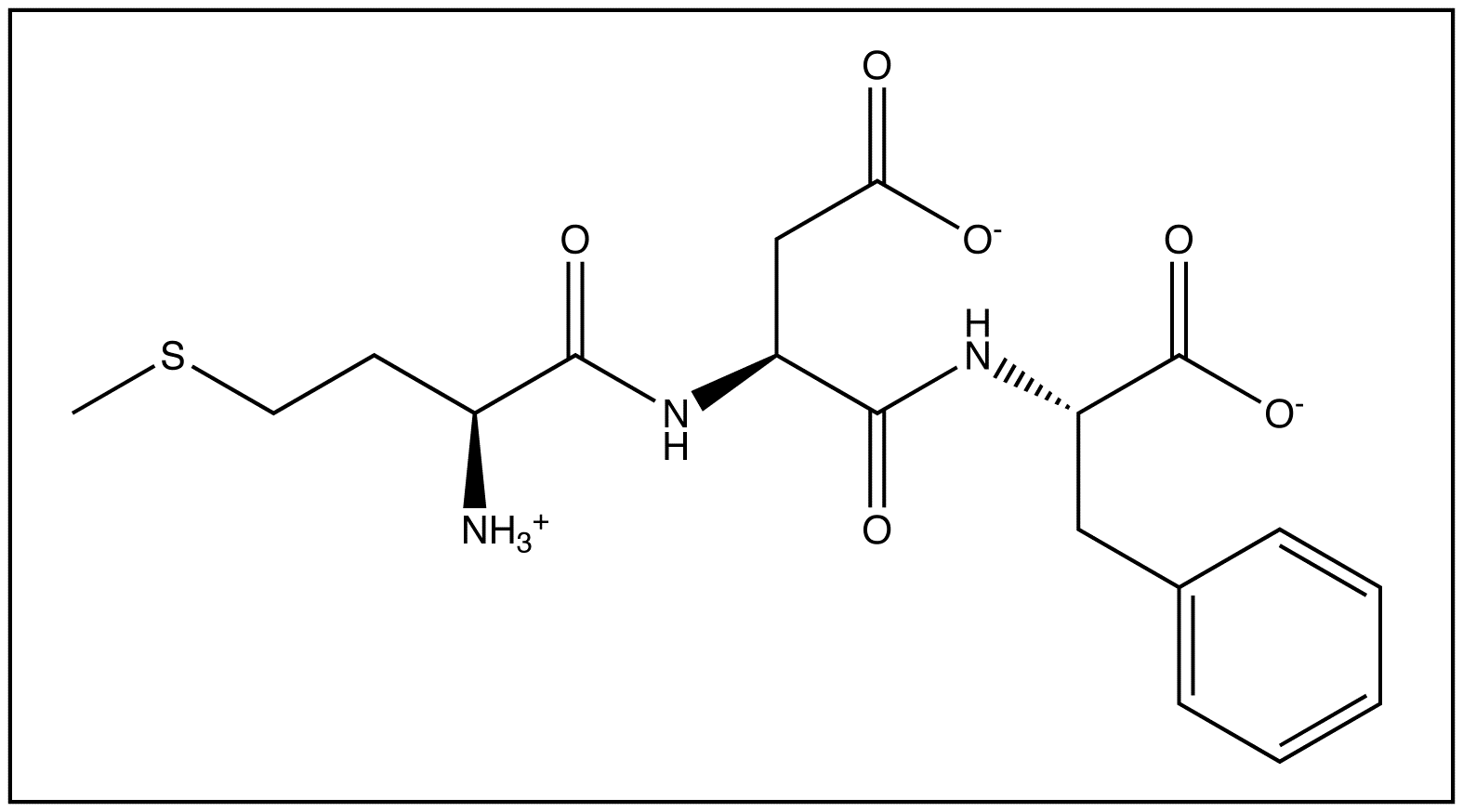
- A1
- B2
- C3
- D4
- E5
22What is the name of the N-terminal amino acid in the peptide shown above?
- Acysteine
- Bmethionine
- Cvaline
- Dalanine
- Etryptophan
23What is the three-letter symbol for the C-terminal amino acid in the peptide shown above?
- Agly
- Basp
- Ctyr
- Dmet
- Ephe
24While proteins are usually composed of linear chains of amino acids, branched chains of amino acids and internally cross-linked chains can be found in certain proteins. Polypeptide chains are most commonly linked to each other through
- Ahydrogen bonds.
- Bglycosidic bonds.
- Cpeptide bonds.
- Ddisulfide bonds.
- Eester linkages.
25The disulfide bond between two cysteine molecules
- Ais a peptide bond.
- Bis an ionic interaction that is stable at physiological pH.
- Cis a covalent bond formed by oxidation.
- Dis a hydrogen bond between the two sulfhydryl groups.
- Eis a dipole-dipole interaction.
26The two peptides shown in the diagram below are linked through
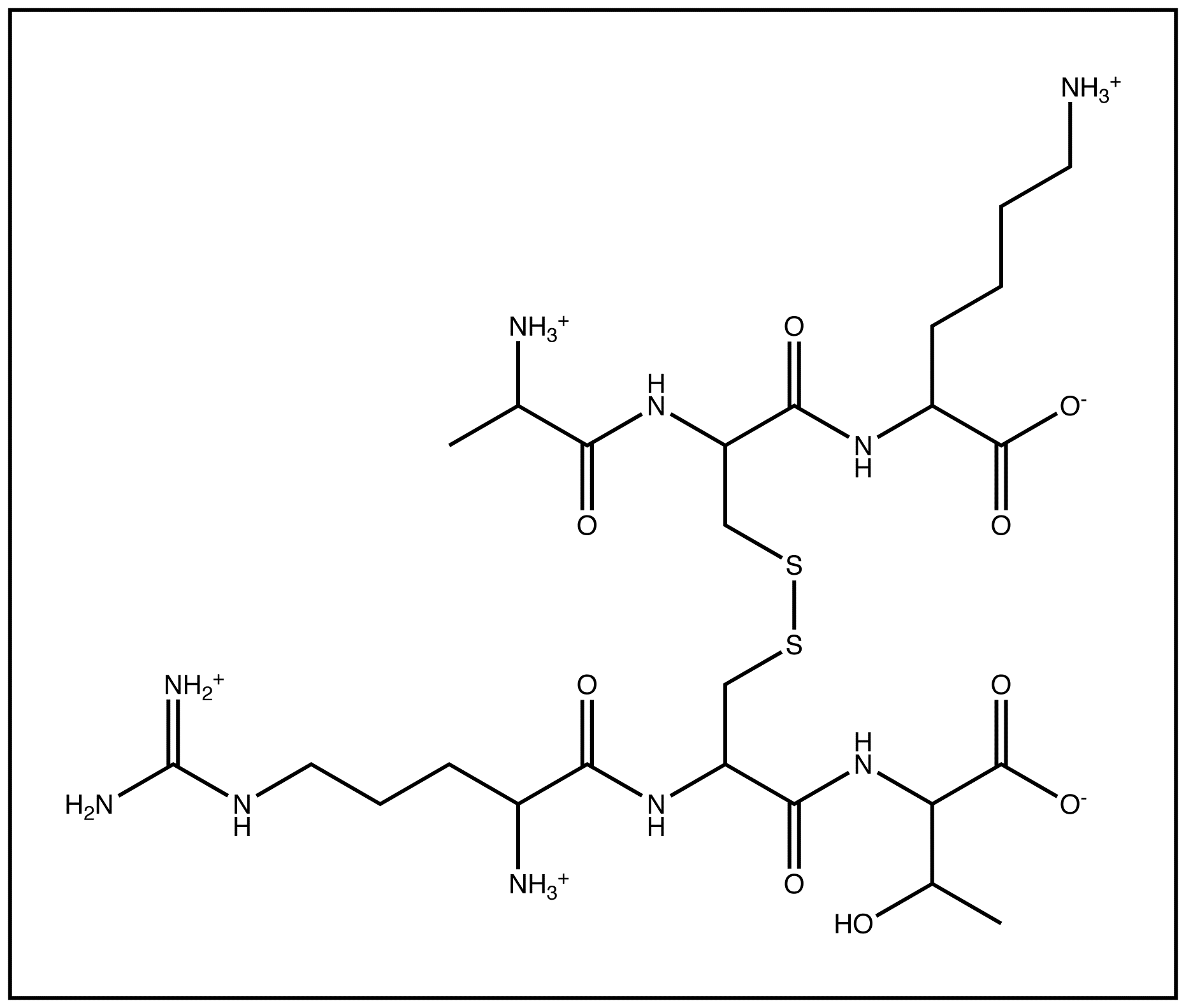
- Aa hydrogen bond.
- Ba glycosidic bond.
- Ca peptide bond.
- Da disulfide bond.
- Ean ester linkage.
27Which one of the representations describes the oligopeptide shown below?
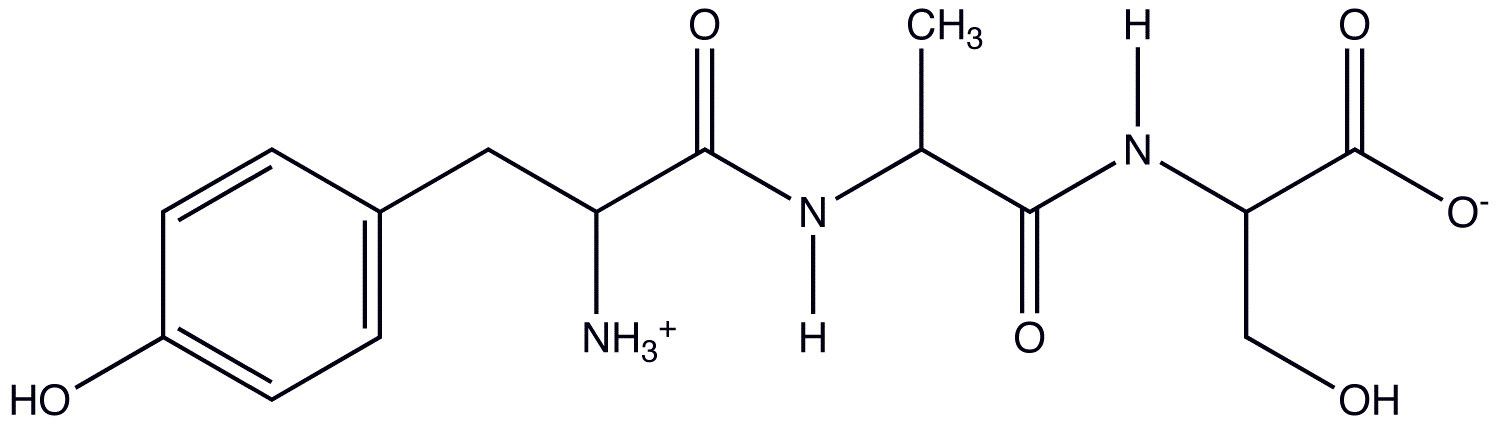
- ATyr-Ala-Thr
- BTyr-Gly-Cys
- CTyr-Ala-Ser
- DPhe-Gly-Cys
- EPhe-Ala-Thr
28The tripeptide glycylarginylglutamate contains four ionizable groups with pKas of 2.1, 4.1 9.8, and 12.5. Calculate the pI for this molecule.
- A3.1
- B6.4
- C7.0
- D7.3
- E8.3
29The tripeptide alanyllysylaspartate contains four ionizable groups with pKas of 2.0, 3.9, 9.9, and 10.5. Calculate the pI for this molecule.
- A3.0
- B6.0
- C6.2
- D10.2
- Enone of the above
30The isoelectronic point of an amino acid is the point where
- Athe pKa of the -carboxylic acid is the same as the pKa of the -amino group.
- Bthe -carboxylic acid is protonated and the -amino group is unprotonated.
- Cthe solubility of the amino acid is maximized.
- Dthe -carboxylic acid and the -amino group are both half protonated.
- Ethe amino acid carries no net electrical charge.
31The side-chains of amino acids have
- Aa positive charge in every situation.
- BpKas that assure the solubility of every protein
- Cconstant pKas no matter what aqueous environment they are found in.
- Ddifferent pKas in peptides as compared to the free amino acids
- Epolar functional groups.
32Asx refers to
- Aa negatively charged aspartic acid.
- Ba positively charged asparagine.
- Ca dipeptide containing both aspartic acid and asparagine.
- Deither aspartic acid or asparagine.
- Ean unnatural amino acid formed during acid hydrolysis of peptide bonds.
33The peptide AYDG has an N-terminal _________ residue.
- Aglycine
- Bglutamic acid
- Cglutamine
- Daspartic acid
- Ealanine
34Which of the following tripeptides would be expected to be the most hydrophobic?
- AKYG
- BKYA
- CGYA
- DDYA
- EDYG
35What is the three-letter abbreviation for the peptide valylarginylisoleucine?
- AVal─Arg─Ile
- BVal─Agn─Leu
- CVln─Arg─Ile
- DVal─Agn─Isl
- EVln─Arg─Leu
36Ribosomes use L amino acids to synthesize proteins. These amino acids are called “L” because
- Athey are chiral.
- Bthey turn polarized light to the left.
- Cthey have a configuration of groups around the C that can be related to the configuration of groups around the asymmetric carbon in L-glyceraldehyde
- Dthey are all (S)-amino acids.
- Ethey are all (R)-amino acids.
37Ribosomes use L amino acids to synthesize proteins. These amino acids are called “L” because
- Athey are chiral.
- Bthey turn polarized light to the left.
- Cthey are all (S)-amino acids.
- Dthey are all (R)-amino acids.
- Enone of the above
38Which of the amino acids represented below has two chiral centers?
- AAla
- BLeu
- CIle
- DPro
- EAsn
39Which of the five amino acids shown below has 2 chiral centers?
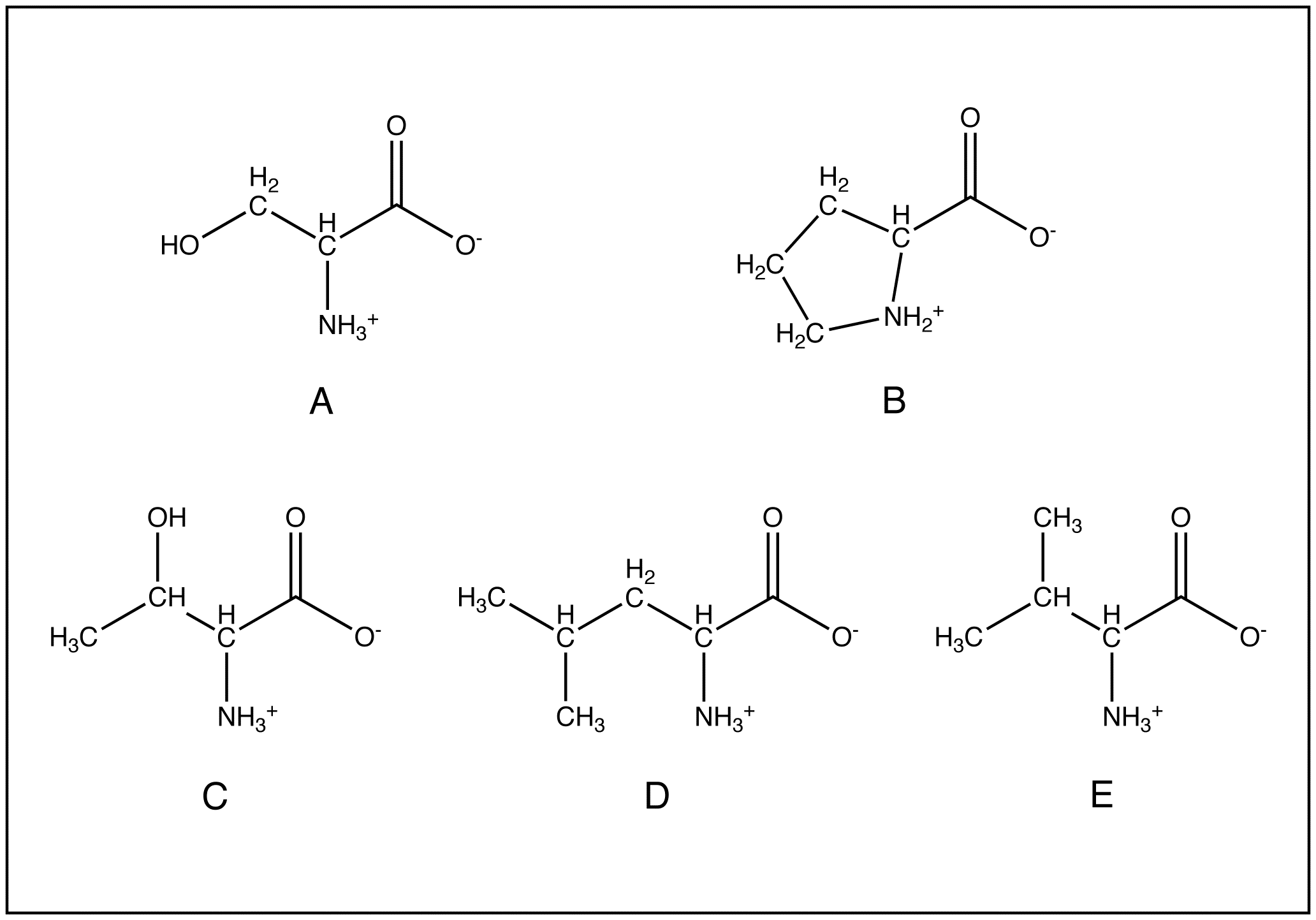
- Aa
- Bb
- Cc
- Dd
- Ee
40All the standard amino acids except ____ are optically active.
- Apro
- Barg
- Ctrp
- Dgly
- Ephe
41The __________ character of most standard amino acids causes solutions of amino acids to rotate the plane of polarized light.
- Achiral
- Bzwitterionic
- Cpolar
- Dhydrophobic
- Enone of the above
42All amino acids derived from proteins have the same stereochemical conformation as.
- AL-glyceraldehyde.
- B(R)-alanine.
- CD-glucose.
- D(S)-cysteine.
- Eglycine.
43Typically, modified amino acids, those with side chain modifications that are present in proteins
- Aare synthesized due to genetic mutations.
- Bare assembled by specialized bacterial enzymes.
- Care formed by modification of standard side chain residues after the protein is synthesized.
- Dare toxic.
- Eare racemic.
44An amide bond between a side-chain carboxylate and an -amino group is also called a(n)
- Adisulfide bond.
- Banhydride bond.
- Cester bond.
- Disopeptide bond.
- Eglycosidic bond.
45What is the name of this molecule?
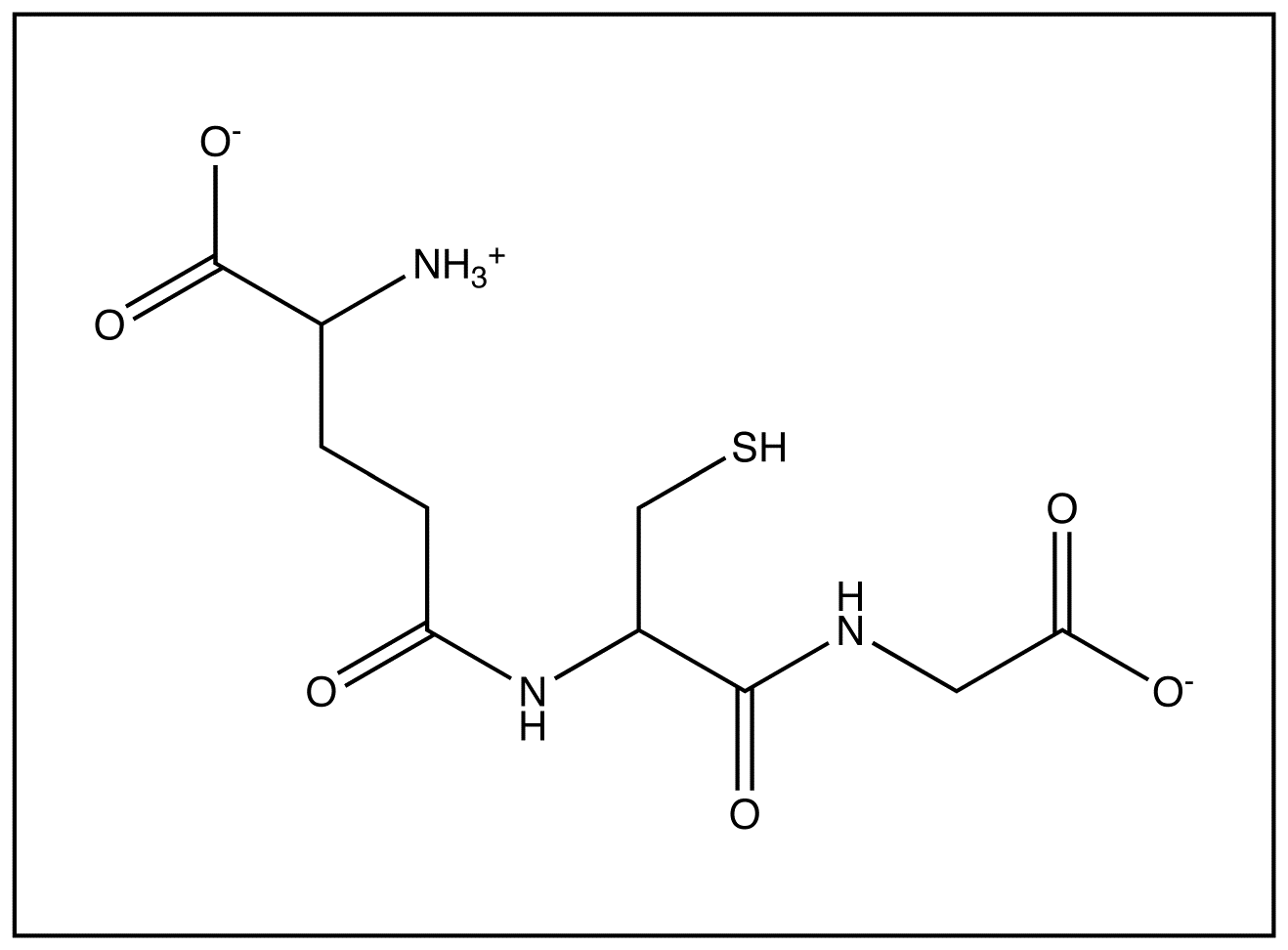
- AGABA
- Bthyroxine
- Cy-carboxyglutamate
- Dglutathione
- Eepinephrine
46Residues 1 and 2 in the peptide shown above are connected through a
- Ahydrogen bond.
- Ban isopeptide bond.
- Can ester linkage.
- Ddisulfide bond.
- Ea glycosidic bond.
47What is the three-letter symbol of the N-terminal amino acid in the structure shown above?
- Aasp
- Basn
- Cgln
- Dglu
- Elys
48The chirality of an amino acid results from the fact that its carbon:
- Ahas no net charge.
- Bis a carboxylic acid.
- Cis bonded to four different chemical groups
- Dis in the L absolute configuration in naturally occurring proteins.
- Eis symmetric
49Which of the following statements about aromatic amino acids is correct?
- AAll are strongly hydrophilic.
- BHistidine’s ring structure results in its being categorized as aromatic or basic, depending on pH.
- COn a molar basis, tryptophan absorbs more ultraviolet light than tyrosine.
- DThe major contribution to the characteristic absorption of light at 280 nm by proteins is the phenylalanine R group.
- EThe presence of a ring structure in its R group determines whether or not an amino acid is aromatic
50Amino acids are ampholytes because they can function as either a(n):
- Aacid or a base
- Bneutral molecule or an ion.
- Cpolar or a nonpolar molecule.
- Dstandard or a nonstandard monomer in proteins.
- Etransparent or a light-absorbing compound.
51For amino acids with neutral R groups, at any pH below the pI of the amino acid, the population of amino acids in solution will have:
- Aa net negative charge
- Ba net positive charge
- Cno charged groups
- Dno net charge
- Epositive and negative charges in equal concentration
52In a mixture of the five proteins listed below, which should elute second in size-exclusion (gel- filtration) chromatography?
- Acytochrome c Mr = 13,000
- Bimmunoglobulin G Mr = 145,000
- Cribonuclease A Mr = 13,700
- DRNA polymerase Mr = 450,000
- Eserum albumin Mr = 68,500
Information
- Description
- Quiz on Theme 2, created by Aly Lzo on 27/08/2017.
- Author
- Aly Lzo
- Language
- English
- Views
- 21
- Rating
- No ratings yet Rate this quiz