
16956263
Description

Quiz by Cerys Shanahan, updated more than 1 year ago
|
|
Created by Cerys Shanahan
over 7 years ago
|
|
Question 1
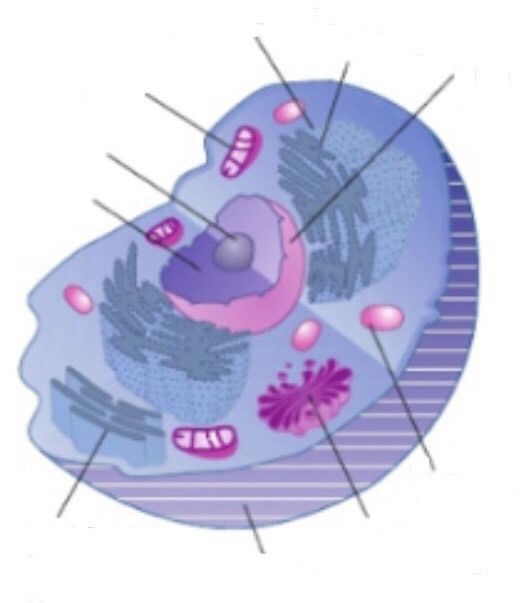
Answer
-
Lysosome
-
Golgi Apparatus
-
Plasma Membrane
-
Smooth Endoplasmic Reticulum
-
Nuclear Envelope
-
Rough Endoplasmic Reticulum
-
Ribosome
-
Mitochondrion
-
Nucleolus
-
Nucleus
Question 2
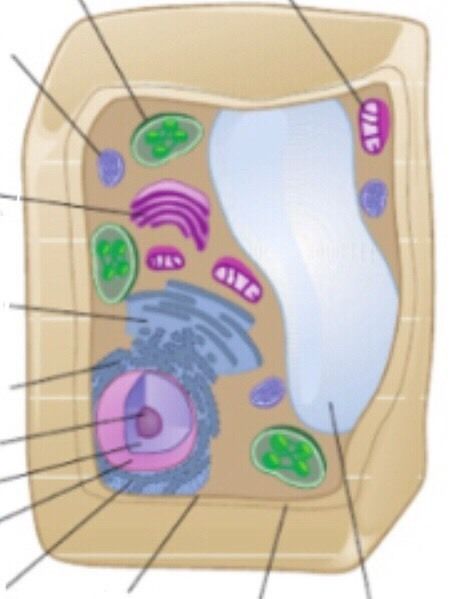
Answer
-
Vacuole
-
Cell Wall
-
Plasma Membrane
-
Rough Endoplasmic Reticulum
-
Nuclear Envelope
-
Nucleus
-
Nucleolus
-
Ribosome
-
Smooth Endoplasmic Reticulum
-
Golgi Apparatus
-
Amyloplast
-
Chloroplast
-
Mitochondrion
Question 3
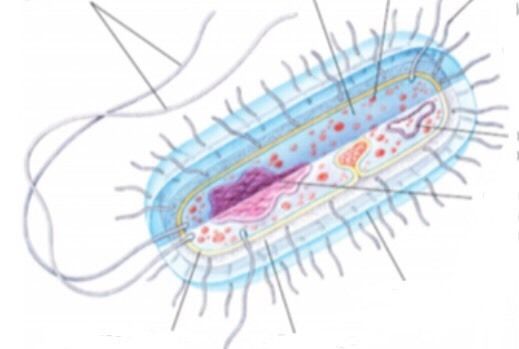
Answer
-
Flagella
-
Cytoplasm
-
Ribosome
-
Pili
-
Plasmid
-
Nucleoid
-
Waxy Protective Capsule
-
Cell Wall
-
Cell Membrane
Question 4
Question
The [blank_start]Nucleolus[blank_end] is the ‘brain’ of a cell. This is surrounded by the [blank_start]Nucleus[blank_end], which in turn is surrounded by the [blank_start]Nuclear Envelope[blank_end]. The cisternae of the [blank_start]Rough Endoplasmic Reticulum[blank_end] transport substances from one area of a cell to another. This organelle also contains many [blank_start]ribosomes[blank_end] which synthesise proteins from [blank_start]mRNA[blank_end]. The [blank_start]Smooth Endoplasmic Reticulum[blank_end] contains enzymes which catalyse reactions involved with lipid metabolism. The [blank_start]Golgi Apparatus[blank_end] modifies and packages substances into vesicles. [blank_start]Lysosomes[blank_end] are full of hydrolytic enzymes which are used for the digestion of substances. [blank_start]Mitochondria[blank_end] produce ATP during [blank_start]aerobic respiration[blank_end]. They are thought to have been a foreign organism which was consumed by another single celled organism and underwent [blank_start]symbiosis[blank_end]. [blank_start]An undulipodium[blank_end] enables a cell to move (although the only human cell to have one is a spermatozoon) and [blank_start]cilia[blank_end] can push substances past a cell. Both these structures contain [blank_start]cytoskeletons[blank_end] which allow them to move. [blank_start]Vacuoles[blank_end] are found in most plant cells. They are surrounded by membranes called [blank_start]tonoplasts[blank_end]. [blank_start]Chloroplasts[blank_end] are also in plant cells. They are the site of [blank_start]photosynthesis[blank_end]
Answer
-
Nucleolus
-
Nucleus
-
DNA
-
Nucleus
-
Nucleolus
-
Nuclear Envelope
-
Nuclear Envelope
-
Rough ER
-
Nucleus
-
Rough Endoplasmic Reticulum
-
Smooth Endoplasmic Reticulum
-
ribosomes
-
lysosomes
-
mitochondria
-
mRNA
-
DNA
-
Mitochondrial DNA
-
Smooth Endoplasmic Reticulum
-
Rough Endoplasmic Reticulum
-
Golgi Apparatus
-
Golgi Apparatus
-
Smooth ER
-
Cytoskeleton
-
Lysosomes
-
Ribosomes
-
Mitochondria
-
Mitochondrions
-
Vesicles
-
aerobic respiration
-
Anaerobic Respiration
-
symbiosis
-
biosis
-
dibiosis
-
cilia
-
Ciliums
-
Hairs
-
cytoskeletons
-
muscles
-
microfibrils
-
Vacuoles
-
Leaves
-
Green Pigments
-
tonoplasts
-
tonioplasts
-
Chloroplasts
-
Cytoskeletons
-
Cell walls
-
photosynthesis
-
anaerobic respiration
-
An undulipodium
-
A tail
-
Cillia
Question 5
Question
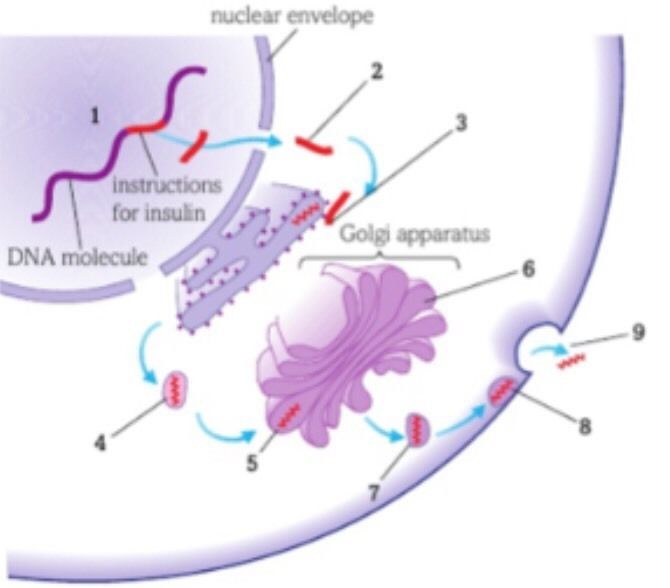
Select all the processes that occur during DNA transcription.
Image:
Mobile upload (image/jpeg)
Answer
-
An mRNA copy is made of the gene
-
mRNA leaves the nucleus through the nuclear pore
-
mRNA attaches to a ribosome
-
The ribosome synthesises the mRNA
-
The ribosome reads the base pairs of the mRNA and adds complementary base pairs, creating the substance
-
The substance travels to the Golgi Apparatus where it is packaged into a vesicle
-
A section of the Golgi Apparatus is pinched off into a vesicle
-
The vesicle travels to the plasma membrane where it fuses with the plasma membrane and exits the cell by exocytosis
-
DNA leaves the nucleus via a nuclear pore
Want to create your own Quizzes for free with GoConqr? Learn more.