
Quiz
Cell injury adaptations self assessment
Questions in this quiz (13)
1A 50-year-old man has experienced severe chest pain for the past 4 hours. On physical examination he is afebrile, but has tachycardia. Laboratory studies and EKG confirms a diagnosis of myocardial infarction. In this setting, an irreversible injury to myocardial fibers will have occurred when which of the following cellular changes occurs?
- AIncreased Na in cells
- BReduced cellular pH
- CSwelling of mitochondria
- DNuclear karyorrhexis
- EBlebs on the plasma membrane
2A 35-year-old man sustain a blunt trauma to the right leg. The skin is intact. Within 2 days there is a 5 x 7 cm purple color to the site of injury. Which of the following substances has most likely accumulated at the site of injury to produce a yellow-brown color at the site of injury 2weeks later?
- ALipofuscin
- BHemosiderin
- CMelanin
- DGlycogen
- EBilurubin
3Which of the following disorders is an example of coagulation necrosis?
- ALobar pneumonia in an alcoholic
- BHepatic abscess in a patient with amoebiasis
- CArteriolitis in Polyarteritis Nodosa (PAN)
- DDiminished brain mass in a patient with Alzheimer’s disease
- ESplenic infarction in sickle cell disease
- FLung consolidation in Tuberculosis
4A 31-year-old primigravida has a difficult delivery of a term infant. There is loss of 1500 cc of blood. She has hypotension for 6 hours. Over the next month, her ACTH level decreases. Within the next 3 months, her adrenal glands become only about 2 grams each (normal 4 to 6 grams). This alteration of the adrenals is primarily due to which of the following cellular processes?
- AMetaplasia of the cortex
- BLipid depletion of the cortex
- CAtrophy of the adrenal medulla
- DAtrophy of the adrenal cortex
- EAdrenal infarction
5A 58-year-old man with a 50-pack-year history of smoking presents with a chronic cough productive of thick, white sputum. The photograph shows a histologic section of the left main stem bronchus obtained by bronchoscopy. The arrow represents which of the following cellular adaptations?
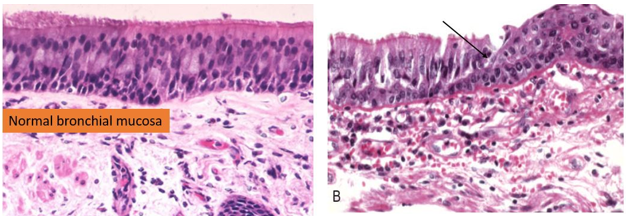
- AAtrophy
- BHyperplasia
- CMetaplasia
- DHypertrophy
- EHypoplasia
6A 62-year-old man was admitted to the hospital with severe retrosternal chest pain that radiated down the left arm. Three days later, he developed a ventricular arrhythmia and died. In the hours shortly after the patient first experienced chest pain, which of the following biochemical changes would have marked the beginning of irreversible damage to the cardiac muscle?
- ADecreased intracellular Ph
- BDecreased sodium potassium ATPase pump activity
- CIncreased activity of phosphofructokinase
- DIncreased concentration of cytosolic calcium
- EIncreased conversion of pyruvate to lactate
7A 28-year-old man with a history of bronchiectasis secondary to cystic fibrosis develops bacteremia secondary to the lung condition and dies. At autopsy, a single lesion was discovered within the cerebral cortex (see image). Which of the following mechanisms is responsible for the pattern of necrosis seen in this lesion?
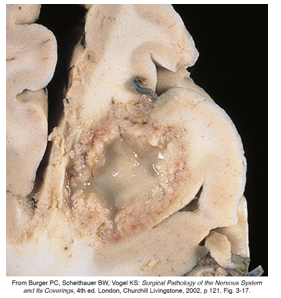
- ARelease of hydrolytic enzymes by neutrophils causing the tissue to liquefy
- BDenaturation of structural enzymes and proteins
- CLipid release from cell walls of tuberculous mycobacteria producing acellular material
- DVascular acellular necrosis in immune mediated disease producing fibrinoid deposits
8A 48-year-old man with a history of chronic alcohol abuse has epigastric pain that radiates into the back. Over three days, he develops shock and respiratory problems consistent with acute respiratory distress syndrome. The photograph shows the pancreas removed at autopsy. Which of the following best describes the type of necrosis that is present in the peripancreatic fat (black arrow)?
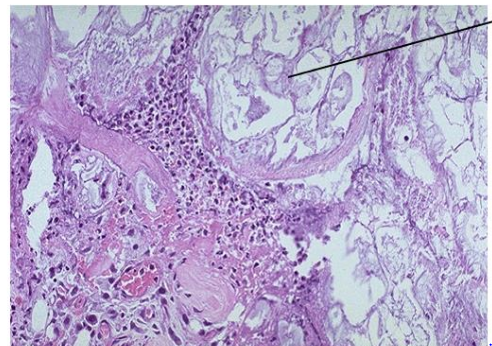
- ACaseous necrosis
- BCoagulative necrosis
- CEnzymatic fat necrosis
- DFibrinoid necrosis
- ELiquefactive necrosis
9A 50-year-old woman with a history of unstable angina suffers an acute myocardial infarction. Thrombolytic therapy with tissue plasminogen activator (tPA) is administered to restore coronary blood flow early in the course of this myocardial infarction. In spite of this therapy, the degree of myocardial fiber injury may increase because of which of the following cellular mechanisms?
- ADevelopment of a second thrombus in his coronary artery
- BCell damage by reactive oxygen metabolites
- CtPA induced apoptosis
- DAntibody dependent cytotoxicity
- EHemorrhage into the infarct
10In an experiment, a tissue preparation is subjected to oxidant stress. There are increased numbers of free radicals generated within the cells. Generation of which of the following enzymes within these cells is most likely to reduce the number of free radicals?
- AGlutathione peroxidase
- BHydrogen peroxide
- CNADPH oxidase
- DMyeloperoxidase
11An 83-year-old, previously healthy woman from a nursing home develops headache, fever, cough, malaise and difficulty breathing during a community outbreak affecting numerous other residents at the home. A diagnosis of bronchopneumonia is made. During her stay in the hospital, her condition worsens, and she passes away. Histologic examination of a section of her heart reveals findings seen in the image below. Which of the following best represents the pigment seen in the image?
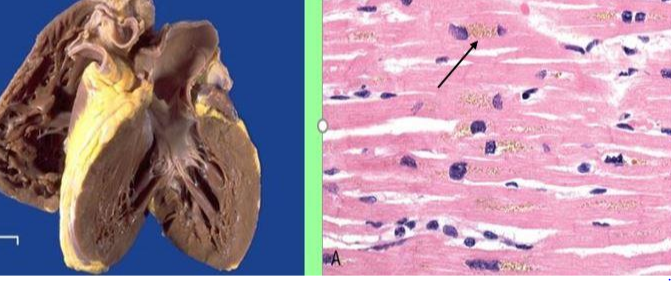
- ABilirubin
- BCytochrome c
- CHemosiderin
- DLipofuscin
- ETransferrin
12A 69-year-old female was killed in an automobile accident. She had no previous history of ill health. At autopsy the lesions shown in the attached image were noted coincidently on her aortic valve. The nodules were of firm consistency. Which of the following is responsible for the calcification seen in the image attached?
- AAluminum intoxication
- BAreas of necrosis
- CHyperparathyroidism
- DMilk-alkali syndrome
- ERenal failure
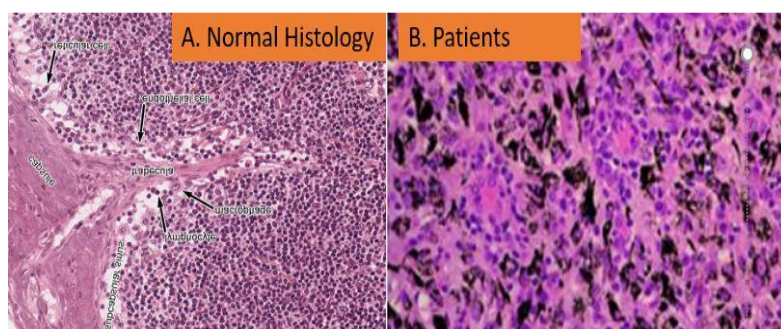
13. A 54-year-old man with a chronic cough has a squamous cell carcinoma diagnosed in his right lung. While performing a pneumonectomy, the thoracic surgeon notes that the hilar lymph nodes are small, 0.5 to 1.0 cm in size, and jet black in color throughout. A biopsy image is attached. Which of the following is the most likely cause for this appearance to the hilar nodes?
- ALipofuscin
- BMelanin
- CLead
- DAnthracosis
- EHomogentisic acid
Information
- Description
- User has deleted their subject information Quiz on Cell injury adaptations self assessment, created by Deleted user on 05/03/2020.
- Author
- Deleted user
- Language
- English
- Views
- 10
- Tags
- Rating
- No ratings yet Rate this quiz