
Quiz
Untitled
Create a free account to finish this quiz
Save your progress and see your final score.
Already have an account? Sign in
Questions in this quiz (60)
1Primary succession differs from secondary succession in what way?
- APrimary succession occurs in areas with little precipitation.
- BPrimary succession occurs in areas devoid of all living organisms.
- CPrimary succession occurs after an intermediate disturbance.
- DPrimary succession occurs in areas with no soil.
- EThey differ in the length of time that succession takes.
2According to the competitive exclusion principle, two species cannot continue to occupy the same
- Ahabitat
- Bterritory
- Crange
- Dniche
- Ebiome
3Use the following diagram of a hypothetical food web to answer the following question. The arrows represent the transfer of food energy between the various trophic levels.
Which letter represents an organism that could be a primary consumer?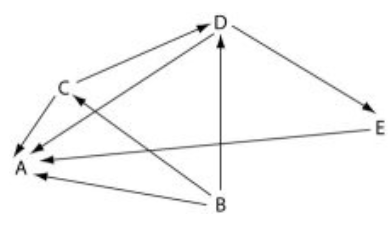
- AA
- BB
- CC
- DD
- EE
4According to bottom-up and top-down control models of community organization, which of the following expressions would imply that an increase in the size of a carnivore (C) population would negatively impact on its prey (P) population, but not vice versa?
- AC ↔ P
- BP → C
- CC ← P →
- DP ← C
- EP ← C → P
5Dwarf mistletoes are flowering plants that grow on certain forest trees. They obtain nutrients and water from the vascular tissues of the trees. The trees derive no known benefits from the dwarf mistletoes. Which of the following best describes the interactions between dwarf mistletoes and trees?
- Acommensalism
- Bmutualism
- Cfacilitation
- Dcompetition
- Eparasitism
6Which of the following pairs is incorrectly matched?
- Asecondary production — the amount of chemical energy in a consumers' food that is converted to their new biomass in a given time period
- Btrophic efficiency — percentage of production transferred from one trophic level to the next
- Ctertiary production — the number of top predators in the food web
- Dproduction efficiency — energy in assimilated food that is not used for respiration
- Eeutrophication — excess nutrients resulting in high cyanobacteria concentrations and algae blooms
7Which of the following locations is the reservoir for nitrogen in the nitrogen cycle?
- Afossilized plant and animal remains (coal, oil, and natural gas)
- Bsoil
- Csedimentary bedrock
- Datmosphere
- Eplant and animal biomass
8In ecosystems, why is the term cycling used to describe material transfer, whereas the term flow is used for energy exchange?
- AMaterials are cycled into ecosystems from other ecosystems, but energy constantly flows within the ecosystem.
- BBoth material and energy are recycled and are then transferred to other ecosystems as in a flow.
- CMaterials are repeatedly used, but energy flows through and out of ecosystems.
- DBoth material and energy flow in a never-ending stream within an ecosystem.
- ENone of the choices is correct.
9For most terrestrial ecosystems, pyramids of numbers, biomass, and energy are essentially the same—they have a broad base and a narrow top. The primary reason for this pattern is that
- Aas matter passes through ecosystems, some of it is lost to the environment.
- Btop carnivores and secondary consumers have a more general diet than primary producers.
- Cat each step, energy is lost from the system as a result of keeping the organisms alive.
- Dbiomagnification of toxic materials limits the secondary consumers and top carnivores.
- Esecondary consumers and top carnivores require less energy than producers.
10Which of the following is true of detrivores?
- AThey synthesize organic molecules that are used by primary producers.
- BSome species are autotrophic, while others are heterotrophic.
- CThey secrete enzymes that convert the organic molecules of detritus into CO2 and H2O.
- DThey recycle chemical elements directly back to primary consumers.
- EThey convert organic materials from all trophic levels to inorganic compounds usable by primary producers.
11Which statement best describes the evolutionary significance of mutualism?
- AInteraction increases the survival and reproductive rates of mutualistic species.
- BMutualistic relationships allow organisms to synthesize and use energy more efficiently.
- CMutualism offers more biodiversity to a community.
- DMutualistic interaction lessens competition in communities where it is present.
- EIndividuals partaking in a mutualistic relationship are more resistant to parasites.
12Which of the following statements is a valid conclusion of this experiment?
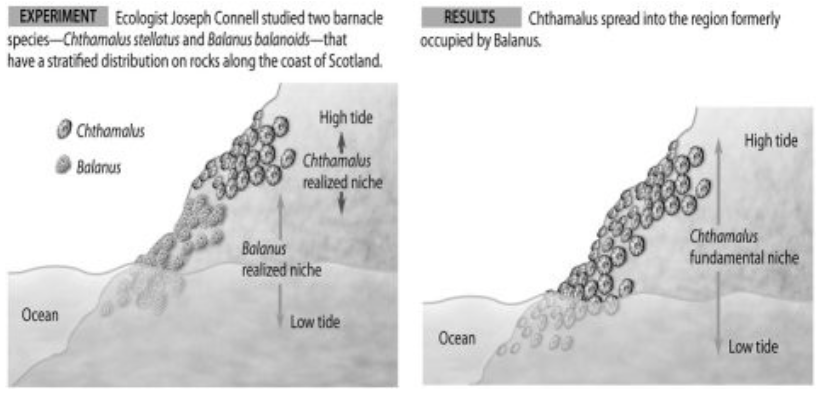
- AThese two species of barnacle do not show competitive exclusion.
- BWhen Balanus is removed, it can be observed that the realized niche of Chthamalus is smaller than its fundamental niche.
- CBalanus is inferior to Chthamalus in competing for space on intertidal zone rocks.
- DIf Chthamalus were removed, Balanus's fundamental niche would become larger.
- EBalanus can only survive in the lower intertidal zone, because it is unable to resist desiccation (drying out).
13Which of the following best describes resource partitioning?
- Aa climax community that is reached when no new niches are available
- Bcompetitive exclusion that results in the success of the superior species
- Cdifferential resource utilization that results in a decrease in community species diversity
- Dslight variations in niche that allow similar species to coexist
- Etwo species that can coevolve to share identical niches
14Resource partitioning would be most likely to occur between
- Asympatric populations of species with similar ecological niches.
- Bsympatric populations of a predator and its prey.
- Csympatric populations of a flowering plant and its specialized insect pollinator.
- Dallopatric populations of species with similar ecological niches.
- Eallopatric populations of the same animal species.
15An event that changes resource availability and removes individuals from a community is a
- Adisease.
- Bpredator effect.
- Ccompetitor effect.
- Ddisaster.
- Edisturbance.
16The amount of chemical energy in consumers' food that is converted to their own new biomass during a given time period is known as which of the following?
- Abiomagnification
- Bprimary production
- Csecondary production
- Dstanding crop
- Ebiomass
17Which of the following is primarily responsible for limiting the number of trophic levels in most ecosystems?
- ANutrient cycles involve both abiotic and biotic components of ecosystems.
- BEnergy transfer between tropic levels is in almost all cases less than 20% efficient.
- CDecomposers compete with higher-order consumers for nutrients and energy.
- DMany primary and higher-order consumers are opportunistic feeders.
- ENutrient cycling rates tend to be limited by decomposition.
18In a typical grassland community, which of the following is the primary consumer?
- Asnake
- Bgrasshopper
- Chawk
- Dgrass
- Eshrew
19A 3-hectare lake in the American Midwest suddenly has succumbed to an algal bloom. What is the likely cause of eutrophication in freshwater ecosystems, such as this one?
- Airon dust blowing into the lake
- Bincreased solar radiation
- Cintroduction of non-native tertiary consumer fish
- Daccidental introduction of a prolific culture of algae
- Enutrient runoff
20The major role of detrivores in ecosystems is to
- Aprevent the buildup of the organic remains of organisms, feces, and so on.
- Brecycle chemical nutrients to a form capable of being used by autotrophs.
- Creturn energy lost to the ecosystem by other organisms.
- Dprovide a nutritional resource for heterotrophs.
21In a tide pool, 15 species of invertebrates were reduced to eight after one species was removed. The species removed was likely a(n)
- Amutualistic organism.
- Bresource partitioner.
- Cpathogen
- Dkeystone species.
- Eherbivore.
22Imagine five forest communities, each with 100 individuals distributed among four different tree species (W, X, Y, and Z). Which forest community would be most diverse?
- A70W, 10X, 10Y, 10Z
- B40W, 30X, 20Y, 10Z
- C100W, 0X, 0Y, 0Z
- D25W, 25X, 25Y, 25Z
- E50W, 25X, 15Y, 10Z
23Which term do ecologists use to describe the ability of a community either to resist change or to recover to its original state after change?
- Astability
- Bcompetitive exclusion
- Csuccession
- Dpartitioning
- Eproductivity
24Keystone species
- Acan be removed from some communities without drastic effects on the community.
- Bhave little effect on trophic interactions in the community.
- Cexert a strong influence on the community because of population size and their ecological niche.
- Dexert a strong influence on the community, not necessarily because of population size, but because of their critical ecological role in the community.
- Eare usually one of the larger species in the community.
25Species richness increases
- Aas we travel southward from the North Pole.
- Bas we increase in altitude in equatorial mountains.
- Cas depth increases in aquatic communities.
- Don islands as distance from the mainland increases.
- Eas community size decreases.
26A cow's herbivorous diet indicates that it is a(n)
- Aautotroph.
- Bproducer
- Csecondary consumer.
- Dprimary consumer.
- Edecomposer.
27Which of the following is an example of an ecosystem?
- Aa pond and all of the plant and animal species that live in it
- Binteractions between all of the organisms and their physical environment in a tropical rain forest
- Cthe intricate interactions of the various plant and animal species on a savanna during a drought
- Dall of the brook trout in a 500 hectare^2 river drainage system
- Ethe plants, animals, and decomposers that inhabit an alpine meadow
28Use the following food web for a particular terrestrial ecosystem (arrows represent energy flow and letters represent species) to answer the question.
Which pair of species could be omnivores?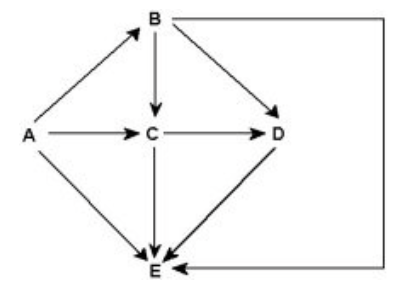
- AA and B
- BA and D
- CB and C
- DC and D
- EC and E
29On the diagram of the nitrogen cycle, which number represents nitrogen-fixing bacteria?
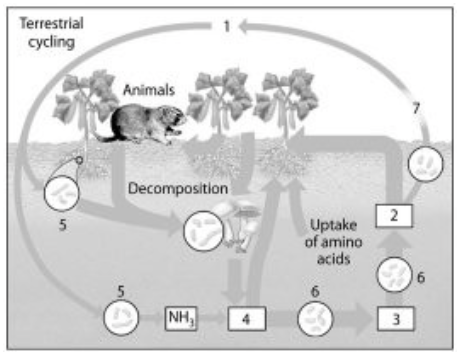
- A5
- B6
- C7
30Which of the following ecosystems would likely have a larger net primary productivity/hectare and why?
- Atundra because of the incredibly rapid period of growth during the summer season
- Bcave due to the lack of photosynthetic autotrophs
- Cgrassland because of the small standing crop biomass that results from consumption by herbivores and rapid decomposition
- Dtropical rain forest because of the massive standing crop biomass and species diversity
- Eopen ocean because of the total biomass of photosynthetic autotrophs
31There are more species in tropical areas than in places more distant from the equator. This is probably a result of
- Amore intense annual solar radiation.
- Bmore frequent ecological disturbances.
- Cfewer agents of disease.
- Dfewer predators, more intense annual solar radiation, more frequent ecological disturbances, and fewer agents of disease.
- Efewer predators.
32The following statements about community structure and interactions are correct, with the exception of which one?
- AThe trophic cascade model suggests that the lower trophic levels influence/control the higher trophic levels.
- BHigh-diversity communities are often more resilient to invasive species than low-diversity communities.
- CAn organism that influences a community by changing its physical environment is referred to as an ecosystem engineer.
- DThe dynamic stability hypothesis suggests that long food chains are less stable than low food chains.
- ECommunities show variation in the top-down and bottom-down community control.
33Elephants are not the most dominant species in African grasslands, yet they influence community structure. The grasslands contain scattered woody plants, but they are kept in check by the uprooting activities of the elephants. Take away the elephants, and the grasslands convert to forests or to shrublands. The newly growing forests support fewer species than the previous grasslands. Which of the following describes why elephants are the keystone species in this scenario?
- AGrazing animals depend upon the elephants to convert forests to grassland.
- BElephants prevent drought in African grasslands.
- CElephants help other populations survive by keeping out many of the large African predators.
- DElephants are the biggest herbivore in this community.
- EEssentially all of the other species depend on the presence of the elephants to maintain the community.
34In a particular case of secondary succession, three species of wild grass all invaded a field. By the second season, a single species dominated the field. A possible factor in this secondary succession was
- Aequilibrium.
- Bparasitism
- Cfacilitation
- Dimmigration.
- Einhibition.
35Why are food chains relatively short?
- AFood chain length is ultimately determined by the photosynthetic efficiency of producers.
- BLonger chains are less stable and energy transfer between levels is inefficient.
- CTop-level feeders tend to be small but are capable of conserving more energy.
- DTop-level feeders tend to be more numerous than lower-trophic-level species.
- EThere are only so many organisms that are adapted to feed on other types of organisms.
36Nitrogen is available to plants only in the form of
- Anitrate ions in the soil.
- Bamino acids from decomposing plant and animal proteins.
- Curic acid from animal excretions.
- DN2 in the atmosphere.
- Enitrite ions in the soil.
37Which trophic level is most vulnerable to extinction?
- Aproducer level
- Btertiary consumer level
- Cprimary consumer level
- Dsecondary consumer level
- Edecomposer level
38Which statement best describes what ultimately happens to the chemical energy that is not converted to new biomass in the process of energy transfer between trophic levels in an ecosystem?
- AIt is used by organisms to maintain their life processes through the reactions of cellular respiration.
- BHeat produced by cellular respiration is used by heterotrophs to thermoregulate.
- CIt is undigested and winds up in the feces and is not passed on to higher trophic levels.
- DIt is eliminated as feces or is dissipated into space as heat in accordance with the second law of thermodynamics.
- EIt is recycled by decomposers to a form that is once again usable by primary producers.
39Which statement most accurately describes how matter and energy are used in ecosystems?
- AMatter is cycled through ecosystems; energy is not.
- BEnergy is cycled through ecosystems; matter is not.
- CEnergy can be converted into matter; matter cannot be converted into energy.
- DMatter is used in ecosystems; energy is not.
- EMatter can be converted into energy; energy cannot be converted into matter.
40Which of the following terms encompasses all of the others?
- Aprimary consumers
- Bherbivores
- Ccarnivores
- Dsecondary consumers
- Eheterotrophs
41Why do tropical communities tend to have greater species diversity than temperate or polar communities?
- AThere are fewer parasites to negatively affect the health of tropical communities.
- BTropical communities are generally older than temperate and polar communities.
- CTropical communities are low in altitude, whereas temperate and polar communities are high in altitude.
- DMore competitive dominant species have evolved in temperate and polar communities.
- EThey are less likely to be affected by human disturbance.
42Which of the following statements is consistent with the principle of competitive exclusion?
- ANatural selection tends to increase competition between related species.
- BBird species generally do not compete for nesting sites.
- CTwo species with the same fundamental niche will exclude other competing species.
- DThe random distribution of one competing species will have a positive impact on the population growth of the other competing species.
- EEven a slight reproductive advantage will eventually lead to the elimination of the less well-adapted of two competing species.
43Which of the following would be most significant in understanding the structure of an ecological community?
- Adetermining the kinds of interactions that occur among organisms of different species
- Bdetermining how many species are present overall
- Cdetermining how many species are present overall, which particular species are present, the kinds of interactions that occur among organisms of different species, and the relative abundance of species
- Ddetermining the relative abundance of species
- Edetermining which particular species are present
44The symbols +, -, and o are to be used to show the results of interactions between individuals and groups of individuals in the examples that follow. The symbol + denotes a positive interaction, - denotes a negative interaction, and o denotes where individuals are not affected by interacting. The first symbol refers to the first organism mentioned.
What interactions exist between a bee and a flower?- A+/+
- B+/o
- C+/-
- Do/o
- E-/-
45How might an ecologist test whether a species is occupying its realized or its fundamental niche?
- AObserve if the niche size changes after the addition of nutritional resources to the habitat.
- BRemove a competitor species to see if the species expands its range.
- CStudy the temperature range and humidity requirements of the species.
- DObserve if the niche size changes after the introduction of a similar non-native species.
- EMeasure the change in reproductive success when the species is subjected to environmental stress.
46Why do logged tropical rain forest soils typically have nutrient-poor soils?
- AMost of the nutrients in the ecosystem are removed in the harvested timber.
- BLogging results in soil temperatures that are lethal to nitrogen-fixing bacteria.
- CThe cation exchange capacity of the soil is reversed as a result of logging.
- DNutrients evaporate easily into the atmosphere in the post-logged forest.
- ETropical bedrock contains little phosphorous.
47Trophic efficiency is
- Athe percentage of production transferred from one trophic level to the next.
- Babout 90% in most ecosystems.
- Ca measure of how nutrients are cycled from one trophic level to the next.
- Dusually greater than production efficiencies.
- Ethe ratio of net secondary production to assimilation of primary production.
48What is secondary production?
- Afood that is converted to new biomass by consumers
- Bsolar energy that is converted to chemical energy by photosynthesis
- Cenergy converted by secondary consumers from primary consumers
- Dgrowth that takes place during the second year of life in consumers
- Eenergy that is not used by consumers for growth and reproduction
49Why does a vegetarian leave a smaller ecological footprint than an omnivore?
- AEating meat is an inefficient way of acquiring photosynthetic productivity.
- BThere is an excess of plant biomass in all terrestrial ecosystems.
- CVegetarians require less protein than do omnivores.
- DFewer animals are slaughtered for human consumption.
- EVegetarians need to ingest less chemical energy than omnivores.
50Which of the following lists of organisms is ranked in correct order from lowest to highest percent in production efficiency?
- Ainsects, mammals, fish
- Bmammals, insects, fish
- Cfish, insects, mammals
- Dmammals, fish, insects
- Einsects, fish, mammals
51Evidence shows that some grasses benefit from being grazed. Which of the following terms would best describe this plant-herbivore interaction?
- Acommensalism
- Bmutualism
- Cpredation
- Dcompetition
- Eparasitism
52Which of the following studies would a community ecologist undertake to learn about competitive interactions?
- Aselectivity of nest sites among cavity-nesting songbirds, the grass species preferred by grazing pronghorn antelope and bison, nitrate and phosphate uptake by various hardwood forest tree species, and stomach analysis of brown trout and brook trout in streams where they coexist
- Bselectivity of nest sites among cavity-nesting songbirds
- Cstomach analysis of brown trout and brook trout in streams where they coexist
- Dnitrate and phosphate uptake by various hardwood forest tree species
- Ethe grass species preferred by grazing pronghorn antelope and bison
53Subtraction of which of the following will convert gross primary productivity into net primary productivity?
- Athe energy used by autotrophs in respiration
- Bthe energy contained in the standing crop
- Cthe energy fixed by photosynthesis
- Dthe energy used by heterotrophs in respiration
- Eall solar energy
54Which of these ecosystems accounts for the largest amount of Earth's net primary productivity?
- Atundra
- Bsalt marsh
- Ctropical rain forest
- Dopen ocean
- Esavanna
55Which of the following is an example of a local biogeochemical cycle?
- AO2 released by oak trees in a forest
- Bexcess NO3- converted to N2 by denitrifying soil bacteria
- CCO2 absorbed by phytoplankton in the open ocean
- Dorganic carbon remains of a leaf being converted to CO2 by a fungus
- Ephosphorous being absorbed from the soil by a corn plant
56Aquatic primary productivity is most limited by which of the following?
- Aincreased pressure with depth
- Bpollution
- Clight and nutrient availability
- Dtemperature
- Epredation by primary consumers
57Decomposers obtain energy from
- Aother heterotrophs
- Bfungi
- Cdetritus
- Dbacteria
- Elive organic material
58Gross primary production
- Ais the total energy from light converted to chemical energy of organic molecules per unit time.
- Bis not as important as net primary production.
- Cis equal to NPP — respiration of autotrophs.
- Dis the total biomass of all photosynthetic autotrophs.
- Eis about half of NPP.
59The rate at which nutrients move through an ecosystem is most often limited by
- Adensity of primary consumers.
- Bdecomposition rate.
- Cdensity of tertiary consumers.
- Dprimary production.
- Edensity of secondary consumers.
60What are two key factors controlling primary productivity in lakes and oceans?
- Alight and temperature
- Blight and phytoplankton
- Clight and nutrients
- Dnutrients and temperature
- Enutrients and wind
Information
- Description
- Quiz on Untitled, created by Emmy Guye on 13/04/2023.
- Author
- Emmy Guye
- Language
- English
- Views
- 0
- Rating
- No ratings yet Rate this quiz