
Quiz
Standard Deviation and Percentiles
Erstelle ein kostenloses Konto, um dieses Quiz zu beenden
Speichere deinen Fortschritt und sieh dir dein Endergebnis an.
oder mit deiner E-Mail registrieren
Schon ein Konto? Anmelden
Fragen in diesem Quiz (18)
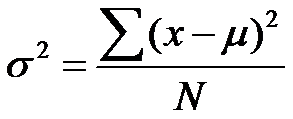
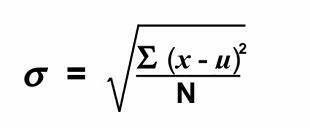
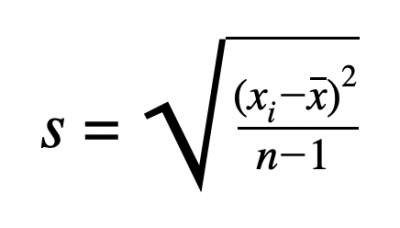
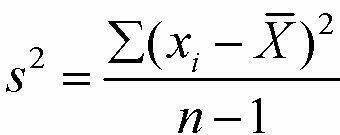
1What is the equation for Population Standard Deviation?
- AThis equation has a big N on the bottom, and it does not have a square root.
- BThis equation has a big N on the bottom, and it has a square root.
- CThis equation has n-1 on the bottom, and it has a square root.
- DThis equation has n-1 on the bottom, and it does not have a square root.
- AThis equation has a big N on the bottom, and it does not have a square root.
2What is the equation for Sample Variance?
- AThis equation has n-1 on the bottom, and it has no square root.
- BThis equation has n-1 on the bottom, and it has a square root.
- CThis equation has N on the bottom, and it has a square root.
- DThis equation has N on the bottom, and it has no square root.
- AThis equation has n-1 on the bottom, and it has no square root.
3What is the equation for Sample Standard Deviation?
- AThis equation has n-1 on the bottom and has no square root.
- BThis equation has n-1 on the bottom and has a square root.
- CThis equation has N on the bottom and has a square root.
- DThis equation has N on the bottom and has no square root.
- AThis equation has n-1 on the bottom and has no square root.
4What is the equation for Population Variance?
- AThis equation has n-1 on the bottom and has no square root.
- BThis equation has n-1 on the bottom and has a square root.
- CThis equation has N on the bottom and has a square root.
- DThis equation has N on the bottom and has no square root.
- AThis equation has n-1 on the bottom and has no square root.
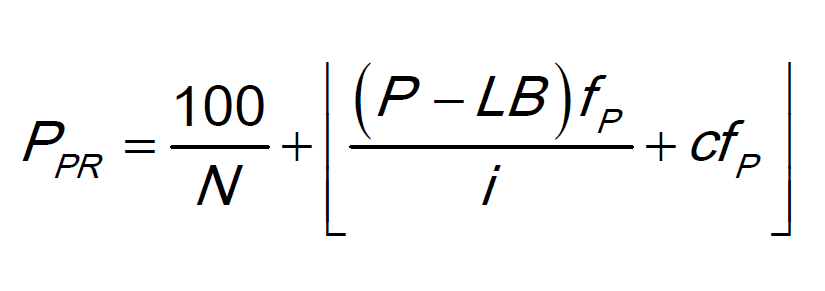
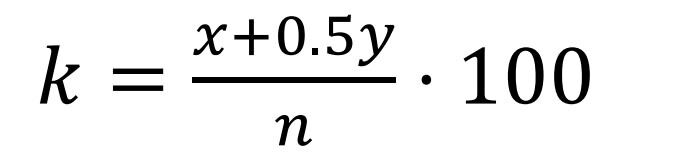
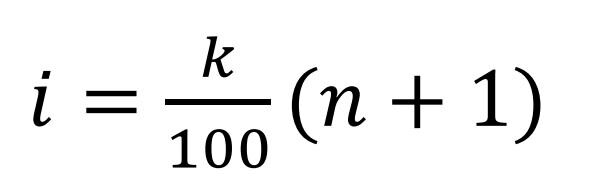
5Your data set is: 1, 2, 3, 4. Find the 9th percentile. For this question, which equation would you use?
- AThis equation is equal to a P. And there is a 100 in there.
- BThis equation is equal to a k.
- CThis equation is equal to an i. And there is a 100 in there.
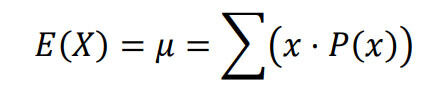
- DThis equation is equal to an s, and it sums things up.
- AThis equation is equal to a P. And there is a 100 in there.
6Your data set is: 1, 2, 3, 4. In which percentile is number 4? For this question, which equation would you use?
- AThis equation equals an i. And it has a 100 in it.
- BThis equation has a P and a 100 in it. P for percentile.
- CThis equation has a P in it. P for percentile.
- DThis equation is equal to k.
- AThis equation equals an i. And it has a 100 in it.
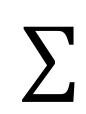
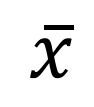
7Which of the following symbols stands for the mean?
- AThis is a "u" like symbol called "Mu"
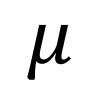
- BThis is a capital sigma, which looks like a strange E.
- CThis is called "x bar" because it is an x with a bar over it.
- DThis is lowercase sigma, which looks like a fancy "o"

- AThis is a "u" like symbol called "Mu"
8What does this symbol mean?
- ATo add things up.
- BTo times the number by itself.
- CTo square root the number.
- DThis is a symbol for the mean.
9What is the correct order of operations?
- AParentheses, exponents, multiplication, division, addition, subtraction
- BMultiplication, division, parentheses, exponents, addition, subtraction
- CMultiplication, division, addition, subtraction, parentheses, exponents
- DParentheses, exponents, addition, subtraction, multiplication, division
10Which one is a decimal percentile?
- A15th percentile
- B32nd percentile
- C20th percentile
- D64th percentile
11Which percentile gives you the 3rd Quartile?
- A25th percentile
- B50th percentile
- C75th percentile
- D100th percentile
12You square root at the end of a sample variance problem.
- ARichtig
- BFalsch
13Which equation helps you find the mean?
- AThis equation adds numbers because it has a capital sigma. But it also multiplies numbers together.
- BThis equation adds numbers because it has a capital sigma. It also divides numbers.
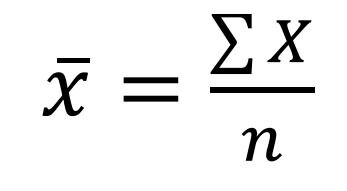
- CThis equation has a capital sigma to add numbers; it has division; and it has exponents.
- DThis equation has no sigma, so no numbers are added.
- AThis equation adds numbers because it has a capital sigma. But it also multiplies numbers together.
14How do you find range?
- AR= Maximum number - Minimum number
- BR= Minimum number - Maximum number
- CR= Q1 - Q3
- DR= Q3 - Q1
15How do you find Interquartile range?
- AIQR= Maximum number - Minimum number
- BIQR= Minimum number - Maximum number
- CIQR= Q1 - Q3
- DIQR= Q3 - Q1
16Math Question! What is the mean of: 2, 7, 15, 34 ?
- A15
- B14.5
- C11.6
- D4
17Math Time! Find the range of: 2, 3, 9, 10, 44
- A13.6
- B42
- C9
- D34
18Students got test scores of 50, 69, 75, 83, 88, 98, 100. Which equation would you use to find the 50th Percentile?
- AThis equation is equal to k.
- BThis equation is equal to i. And it has a 100 in it.
- CThis equation is equal to s (squared) , and it adds things up.
- DThis equation has a 100 in it, and a P. P is for percentile.
- AThis equation is equal to k.
Informationen
- Beschreibung
- This quiz helps distinguish certain symbols and equations involved in the first couple chapters of Statistics.
- Autor
- Serenity Brooks
- Sprache
- English
- Aufrufe
- 75
- Schlagwörter
- Bewertung
- Noch keine Bewertungen Bewerte dieses Quiz