
Quiz
Cardiology_For Dr Ryan from 2008
Fragen in diesem Quiz (20)
1Which of the following maternal conditions is associated with the greatest risk of cardiac complications during pregnancy?
- AA. Atrial septal defect.
- BB. Ventricular septal defect.
- CC. Eisenmenger syndrome.
- DD. Patent ductus arteriosus.
- EE. Mitral valve prolapse
2Cardiovascular disease is the major cause of death in dialysis patients. Elevation of which of the following clinical parameters carries the highest mortality risk?
- AA. Serum phosphate.
- BB. Serum cholesterol.
- CC. Serum homocysteine.
- DD. Serum parathyroid hormone.
- EE. Blood pressure.
3A 58 year old male presented with an acute STEMI to a rural centre and received thrombolysis. There was no resolution of ST elevation but he became pain free after 18 hours of chest pain. The patient had no further chest pain. A week later coronary angiography was performed. This showed a proximal occlusion of the right coronary artery with no significant disease elsewhere. Cardiac systolic function was only mildly impaired.
In addition to optimal medical therapy and risk factor modification, which of the following is the most appropriate next step?- Aa. coronary artery bypass grafting of the occluded vessel
- Bb. percutaneous angioplasty and stenting of the occluded vessel
- Cc. percutaneous angioplasty and stenting of the occluded vessel with a drug-eluting stent
- Dd. no additional intervention
- Ee. implantation of a cardiac defibrillator
4An elderly lady presents to a rural hospital with chest pain and vomiting. Her BP is 80/50. ECG shows ST elevation in II, III, aVF with ST depression in V1-V3. She also has 3rd degree AV block with a ventricular rate of approx 40 bpm. What is the next step in management?
- Aa. Temporary pacemaker
- Bb. IV atropine
- Cc. isoprenaline
- Dd. transfer for angiography
- Ee. GTN infusion
5All the options listed below are risk factors after NSTEMI. Which one has the greatest risk of death?
- Aa. troponin twice the upper limit of normal
- Bb. LV failure
- Cc. diabetes
- Dd. age > 70
- Ee. hypertension
6In the context of severe aortic stenosis, which of the following clinical findings has the worst prognosis?
- Aa. syncope
- Bb. CCF
- Cc. angina
- Dd. palpitations
- Ee. LV hypertrophy
7Which of the following mechanism best describes how B-blocker alleviates myocardial ischaemia?
- Aa. decreased vascular smooth muscle dysfunction
- Bb. increased diastolic blood flow
- Cc. prevent plaque disruption
- Dd. decreased myocardial oxygen demand
- Ee. decreased severity of coronary artery stenosis
8. Which of the following agents has the greatest effect on the LV function in a patient with congestive heart failure
- Aa. ACE-i
- Bb. Beta blocker
- Cc. thiazide
- Dd. digoxin
- Ee. hydralazine
9A middle aged gentleman presents with chest pain, a raised JVP and an S3 gallop. The chest is clear to auscultation, however he is hypotensive. The ECG shows ST elevation in leads V1-V4 and a right-sided ECG shows ST elevation in V4-V6. What is most likely to explain this clinical scenario?
- AA. Right coronary infarction
- BB. Left ventricular failure
- CC. Cardiac tamponade
- DD. Pericarditis
- EE. PE
10A 80 yr old female presents diaphoretic and distressed with new onset sternal chest pain radiating through to the back. She has a past history of hypertension on lercainidipine. On examination her blood pressure is 190/70 and there is an early diastolic murmur 2/6 heard best at the left sternal edge. Her ECG is shown below and bloods are pending.
What is the likely diagnosis?
A. Acute myocardial infarction
B. Aortic dissection (new AR from dissection, also wide pulse pressure)
C. New aortic regurgitation
D. Pneumonia
E. PE
??Alternate version
What is the most appropriate course of action?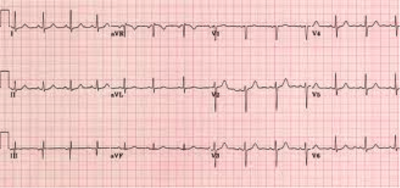
- AA. Aspirin/clopidogrel/IV heparin
- BB. Cardiac catheterisation
- CC. CT chest with contrast
- DD. Urgent echocardiogram
- EE. Thrombolysis
1156 year old male presents with chest pain. He has long standing angina that settles with aspirin. His last stress test was positive at high workload. His angiogram shows 50% stenosis of his mid RCA.
What intervention will be most beneficial in decreasing his coronary risk?
- A1. Diltiazem
- B2. Clopidogrel
- C3. HMG-CoA reductase inhibitor
- D4. ACE inhibitor
- E5. Angioplasty and stent
12the most suggestive feature on an ECG for ventricular tachycardia is:
Brugada criteria below:- Aa) AV dissociation
- Bb) Bizarre QRS complexes which appear similar but is not typical for LBBB or RBBB
- Cc) QRS >140ms
- Dd) Cardiac axis is between –90 to 140 degrees
- Ee) Delayed initiation of QRS complex
13The advantage of cardiac resynchronization therapy (has to be LBBB!, >120 QRS) over an implanted defibrillator in a person with poor Ejection Fraction and wide QRS complex is
- Aa) Reduced cardiac mortality
- Bb) Reduced procedural complications
- Cc) Reduced arrhythmias
- Dd) Improved symptoms
- Ee) Reduced inappropriate activation of defibrillator
14A 60-year-old man who previously had a rash following flucloxacillin therapy has aortic valve
endocarditis due to flucloxacillin sensitive Staphylococcus aureus. He has been treated for one week
with cefazolin 2 g, 8 hourly intravenously. He develops pulmonary oedema and has a new early
diastolic murmur in the aortic area.
What is the most appropriate management?- AA. Addition of gentamicin to cefazolin.
- BB. Change to flucloxacillin after rapid desensitisation. (would
- CC. Change to vancomycin and rifampicin.
- DD. Transfer to ICU for aortic balloon pump insertion.
- EE. Urgent aortic valve replacement
15The commonest cause of out-of-hospital cardiac arrest in a 45 year old man is
- Aa) Right ventricular arrhythmogenic dysplasia
- Bb) Long QT syndrome (3)
- Cc) Hypertrophic cardiomyopathy (if <30) (2)
- Dd) Ischaemic heart disease (1)
- Ee) Brugada syndrome (4)
16A 42 yr old man is brought to Emergency following an out of hospital VF arrest at a shopping centre. No significant past history or risk factors. Initial ECG showed VF. He was successfully resuscitated. What is the likely cause?
- AA. Right Ventrricular arrhythmogenic dysplasia
- BB. Brugada syndrome
- CC. Hypertrophic cardiomyopathy
- DD. Ischaemic heart disease
- EE. Long QT syndrome
17In severe aortic stenosis, which of the following has the worst prognosis:
- AA. Chest pain on exertion
- BB. Syncope
- CC. LV hypertrophy
- DD. Impaired LV function
- EE. Palpitations
18A 70 year old gentleman presents with CCF and LVEF of 30%. He has a history of paroxysmal AF. What is the most appropriate treatment for his atrial fibrillation?
- AA. Flecainide (NO for bad LV/coronary) - good for normal TTE, no CAD
- BB. Lignocaine
- CC. Metoprolol
- DD. Verapamil
- EE. Amiodarone
19A 35 year old lady presents with a 6-9 month history of dyspnoea on climbing stairs. She has been on the oral contraceptive pill for 10 years.
On examination there is a palpable heave at the left sternal edge and a loud P2. ECG shows tall R waves in V1, deep S wave in V6. CXR is clear. Spirometry is normal. The next most appropriate investigation is- AA. ANA
- BB. Echocardiogram
- CC. CTPA
- DD. Formal lung function tests
- EE. Exercise stress test
20A 50 year old woman presents with acute dyspnoea and chest pain. Her oxygen saturation is 90% and her blood pressure is 100/60mmHg.
CXR showed no obvious lung changes and no cardiomegaly. ECG is shown below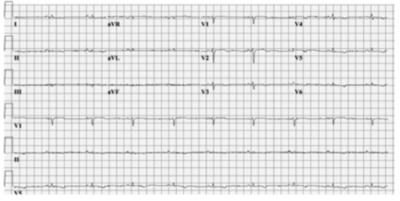
- AA. Ischaemic heart disease
- BB. Mitral valve prolapsed
- CC. Pulmonary emboli
- DD. Cardiac tamponade
Informationen
- Beschreibung
- RACP Cardiology Quiz am Cardiology_For Dr Ryan from 2008 , erstellt von Jeku Jacob am 10/01/2017.
- Autor
- Jeku Jacob
- Sprache
- English
- Aufrufe
- 17
- Schlagwörter
- Bewertung
- Noch keine Bewertungen Bewerte dieses Quiz