
Karteikarten
BIO TEST #2
Karten in diesem Stapel (120)
- 1what are the 2 main components of bacterial replication1) DNA replication
2) Binary Fission - 2describe DNA replication in bacteriaDNA is copied before cell division
- 3what is a plasmidextra piece of DNA in bacteria
- 4describe binary fissionsplitting the cytoplasm into 2, to create 2 new identical cells
- 5explain the steps in bacterial DNA replication1) DNA replication begins at the point of origin
2) enzymes separate the strands of DNA (break hydrogen bonds)
3) DNA POLYMERASE proceeds - two new strands of DNA are formed
4) binary fission - 6how do bacteria acquire genetic variation if they replicate asexuallyDNA Transfer
- 7what are the 3 types of DNA transfer1) conjugation
2) transduction
3) transformation - 8describe the process of transductionwhen bacteria acquire DNA from VIRUSES
- 9describe the process of conjugationwhen bacteria acquire DNA directly from another bacteria
- 10describe the process of transformationwhen bacteria acquire their DNA from their surroundings
- 11what is the cell cycle?the cycle includes a growth phase, DNA replication, and cell division
- 12what phase do cells spend the most time in?interphase (98% of the time)
- 13explain generally what is occuring in G1, S, G2 and mitosisG1 - cell growth phase (preparing for S)
S - DNA replication
G2 - cell growth phase (preparing for mitosis - G2 CHECKPOINT for mutations **)
M - separation of chromosomes and splitting of cytoplasm - creates 2 new identical cells - 14what is cytokinesis?the process of splitting the cytoplasm - resulting in 2 identical cells
- 15what is the main purpose of mitosisto produce more cells in the body (cell replication)
- 16how many chromosomes do humans have in each cell nucleus, how many do we receive from each parent?46 chromosomes in the cell nucleus - we acquire 23 from each parent.
- 17what is the difference between homologous chromosomes and sister chromatids?h. chrom. = each set of the 23 chromosomes (one from mom, one from dad)
sister chrom. = identical copy (mom x2 or dad x2) - 18what is a karyotypethe organization of all of a cell's chromosomes
- 19what are the main events that occur in EACH of the stages of mitosisprophase - nuclear membrane and the nucleus begin to break down, the chromosomes begin to migrate to opposite poles of the cell, spindle fibers start to form
metaphase - chromosomes move to the center of the cell, lining up
anaphase - chromosomes are pulled to opposite poles by the spindle fibres
telophase - chromosomes reach opposite ends of the cell, a new nuclear membrane is made
cytokinesis - the cytoplasm divides equally - 20what is the role of the spindle fibresthey transport the chromosomes during division
- 21how many chromosomes are in each new daughter cell46
- 22Somatic Cells - division/purpose/diploid or haploid/number of chromosomesmitosis / to produce 2 new identical cells / diploid / 46
- 23Germ Cells - division/purpose/diploid or haploid/number of chromosomesmeiosis / producing gametes / diploid / 46
- 24Gametes - division/purpose/diploid or haploid/number of chromosomesno division / fertilization / haploid / 23
- 25what is apoptosis"programmed cell death" because of a mutation
- 26what is angiogenisis? and how does it relate to cancerthe development of new blood cells - cancer cells use this to create new blood cells to feed off of for nutrients
- 27describe the 3 check points and how they are involved in cell - cycle regulationG1, G2, M checkpoints
G1 - the cell determines whether DNA replication will happen (yes if no mutations)
G2 - cell determines if there are any mutations that occured during replication
M- final checkpoint - ensures the cell cycle should be completed - 28what is a carcinogenanything that causes cancer
- 29what can cause cancerradiation, asbestos, tobacco smokes, HIV HPV and hepatitis etc.
- 30diff. between proto-oncogene oncogene tumor supressor- geneproto-oncogenes - code for a protein to speed up the cell cycle (healing or pregnancy)
oncogene - a mutated proto-oncogene
tumor supressor genes - code for a protein that stop the cell cycle if a DNA damage is detected - 31what kinds of DNA mutations could be involved in cancer1) mutated genes that regulate the cell cycle
2) mutated DNA repair enzymes
3) genes that increase angiogenesis
4) genes that prevent apoptosis
5) genes that regulate the immune response - 32Mitosis is in ______ cells Meiosis is in _____ cellssomatic
germ cells - 33what are alleleshomologous chromosomes that have the same genes but have different variations of those genes
- 34what are sister chromatidsthey are the product of DNA replication and are identical copies of each other
- 35what is the centromerewhere sister chromatids are joined together
- 36which is the process of directly acquiring DNA from a pili?conjugation
- 37which is the process of acquiring DNA from a virus?transduction
- 38what is the process in which chromosomes begin to wind up tightly called?condensation
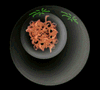
- 39what phase of mitosis is this (spaghetti lookin)INTERPHASE
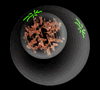
- 40what phase of mitosis is this (actual chromosomes now floatin around)PROPHASE
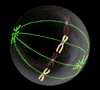
- 41what stage of mitosis is this (lining up in the thing in the Middle)METAPHASE
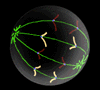
- 42what stage of mitosis is this (being pulled to opposite ends)ANAPHASE
- 43what phase of mitosis is this (cell starting to divide)TELOPHASE
- 44when is DNA replicated in meiosisONLY before Meiosis 1
- 45what does meiosis 1 do? a. separate homologous pairs // b. separates sister chromatidsA
- 46what does meiosis 2 do? a. separates homologous pairs // b. separates sister chromatidsB
- 47when does crossing over happen in meiosisprophase 1
- 48at the end of meiosis what is the result? (egg/sperm)1 egg
4 sperm - 49when do males start to undergo meiosis?puberty
- 50what bond holds together a base pair in DNA what bond holds together the sugar-phosphate backbonehydrogen bond
phosphodiester bonds - 51what are the 5 nucleotides that make up nucleic acid macromoleculesAdenine, Guanine, Cytosine, Thymine, Uracil (only RNA - replaces Thymine - bonds with Adenine)
- 52which nucleotides are purines, which are pyrimidines?purines - A + G
pyrimidines - C + T + U - 53which is double ringed / single ringed: pyrimidines / purinespurines - double ringed
pyrimidines - single ringed - 54which has an OH group attached to their 5 carbon sugar ribose / deoxyriboseribose
- 55which has just H attached to its 5 carbon sugar ribose / deoxyribosedeoxyribose
- 56what is chargaffs rulethat there is always an equal amounts of purines and pyrimidines in DNA
- 57what did franklin, watson and crick discover?that DNA has a double helix stucture
- 58whats the diff between nucleoside and nucleotidenucleotide has a sugar, a phosphate and a nitrogen
nucleoside has just a base and a sugar - 59how do our cells acquire nucleosideswhen DNA replicates nucleosides are added to the growing DNA strand
- 60where are proteins producedRIBOSOMES
- 61why are telomeres importantthey protect the ends of the genes on chromosomes when DNA replicates, they shorten with every replication
- 62do bacteria have telomeres? why/why notno, because their DNA is circular
- 63what strand of DNA can DNA polymerase add new nucleotides tothe 3' to 5' strand
- 64what is the leading / lagging strand3' to 5' is leading
5' to 3' is lagging - 65what is the thing called that the lagging strand has to use to be replicatedokazaki fragments
- 66what is the enzyme that links the new DNA segments together calledDNA ligase
- 67what does helicase dobreaks the hydrogen bonds between DNA
- 68how do our cells deal with mutations? (2) what if a mutation still occurs? (2) what if a mutation STILL occurs (1)- proof reading
- repair enzymes
- apoptosis
-immune cells (that kill cancer)
- DISEASE - 69what are the 3 main types of mutations in cellssubtitution
insertion
deletion - 70what mutation type is this an example of: THE CAT SAW THE DOG ---> THE BAT SAW THE DOGSUBSTITUTION
- 71what mutation type is this an example of: THE CAT SAW THE DOG THE CRA TSA WTH EDO GINSERTION
- 72what mutation type is this an example of: THE CAT SAW THE DOG THE _ ATS AWT HED OGDELETTION
- 73what do you call a substance that mutates DNAa mutagen
- 74what do you call a substance that mutates DNA AND ALSO causes cancercarcinogen
- 75what is the difference between exons and intronsexons - code for mrna
introns - removed and not part of the mrna sequence - 76what are the 3 parts to the path of central dogmadna - rna - protein
- 77what are the 3 kinds of RNA and their functionsmRNA - "message" transcribed from the gene
tRNA - transfers amino acids to the ribosomes
rRNA - makes up part of the ribosome - 78where does transcription occurin the nucleus
- 79what are the 3 stages of transcription (IN ELephants Trunk)Initiation
Elongation
Termination - 80which refers to producing RNA from a gene transcrition // translationtranscription
- 81what is another name form the template strand? a. coding // b. sense // c. antisenseantisense
- 82how do we have so many more proteins than genes? a. alternative splicing // b. mutations // c. DNA replicationalternative splicing
- 83which enzyme adds the complimentary nucleotides in transcription a. primase // b. DNA polymerase // c. RNA polymerasec. RNA polymerase
- 84which is a regulatory sequence for polymerase to initiate transcriptionpromoters
- 85what does a splicosome do? a. brings amino acids to the ribosome b. helps the ribosome bind to the mRNA c. removes introns d. folds proteinsremoves introns
- 86what is added to the 5' end of the mRNA molecule during RNA processing a. guanines // b. adenines // c. thymines // d. cytosinesguanines
- 87what is the sense (coding) strand / what is the antisense (template) strand 3' ---> 5' 5' ---> 3'3' ----> 5' ANTISENSE
5' ---> 3' SENSE - 88what strand codes for the gene sense // antisensesense strand
- 89where does transcription take placein the nucleus
- 90how does RNA polymerase "know" where the beginning of a gene is locatedthere is a promoter
- 91what is almost always the first codon in an mRNA moleculeAUG
- 92which strand of DNA does the polymerase use to form the mRNA molecule? in which direction does polymerase transcribe mRNApolymerase uses the antisense strand to form the mRNA --- mRNA has complimentary nucleotides to the antisense (3' -> 5')
- 93what are ribosomes composed of (4)- proteins
- rRNA
- small subunit
- large subunit - 94explain the small subunit and the large subunitsmall subunit - mRNA binds to thise
large subunit - has the 3 binding sites - 95which site of the ribosome are PePtide bonds formedP
- 96what is cellular respiratiOn essentiallythe oxidation of food to obtain energy
- 97what molecule is used as energy in our cellsATP
- 98how does ATP give us energywhen the last phosphate is broken off and ATP (tri) becomes ADP (di)
- 99what does oxidation and reduction mean LEO goes GERoxidation - LOSS of electrons
reduction - GAIN of electrons - 100what is the difference between aerobic and anearobic respirationaerobic - requires oxygen
anaerobic - does not require oxygen - 101where do the following occur: glycolysis pyruvate oxidation krebs cycle electron transport chaincytoplasm
matrix
matrix
inner membrane - 102does glycolysis produce a lil or lot of ATPa lil
- 103how many pyruvate molecules are made from 1 glucose2
- 104how many NADH molecules are made in glycolysis2
- 105how many ATP are required to start the process of glycolysis2
- 106what are the final products of glycolysis2 NADH
2 ATP
2 Pyruvates - 107during which process is acetyl CoA producedPyruvate oxidation
- 108where does pyruvate oxidation occurmatrix
- 109what is the most important product of Krebs cycleNADH
- 110when is CO2 producedglycolysis and pyruvate oxidation
- 111how many FADH2 molecules are formed during krebs2
- 112what is the end product of pyruvate oxidationNADH and aceytl CoA
- 113what waste product is created during krebs and P.OCO2 (we exhale it)
- 114how much ATP is produced in KRebs2
- 115why are NADH and FADH so importantthey carry the elctrons for the electron transport chain
- 116define homozygousalleles for some traits that are the SAME PP or pp
- 117define heterozygousalleles for some traits that are DIFFERENT Pp
- 118define dominant / recessivecapitAL - DOMINANT
lower case - recessive - 119phenotype vs genotypephenotype - what you can see
genotype - the trait of the gene - 120punnett squarespunnett squares