
Karteikarten
Week 3 - Flashcards
Karten in diesem Stapel (10)
- 1What circulating components of blood are able to induce inflammation?C3a
C5a
Histamine
Bradykinin
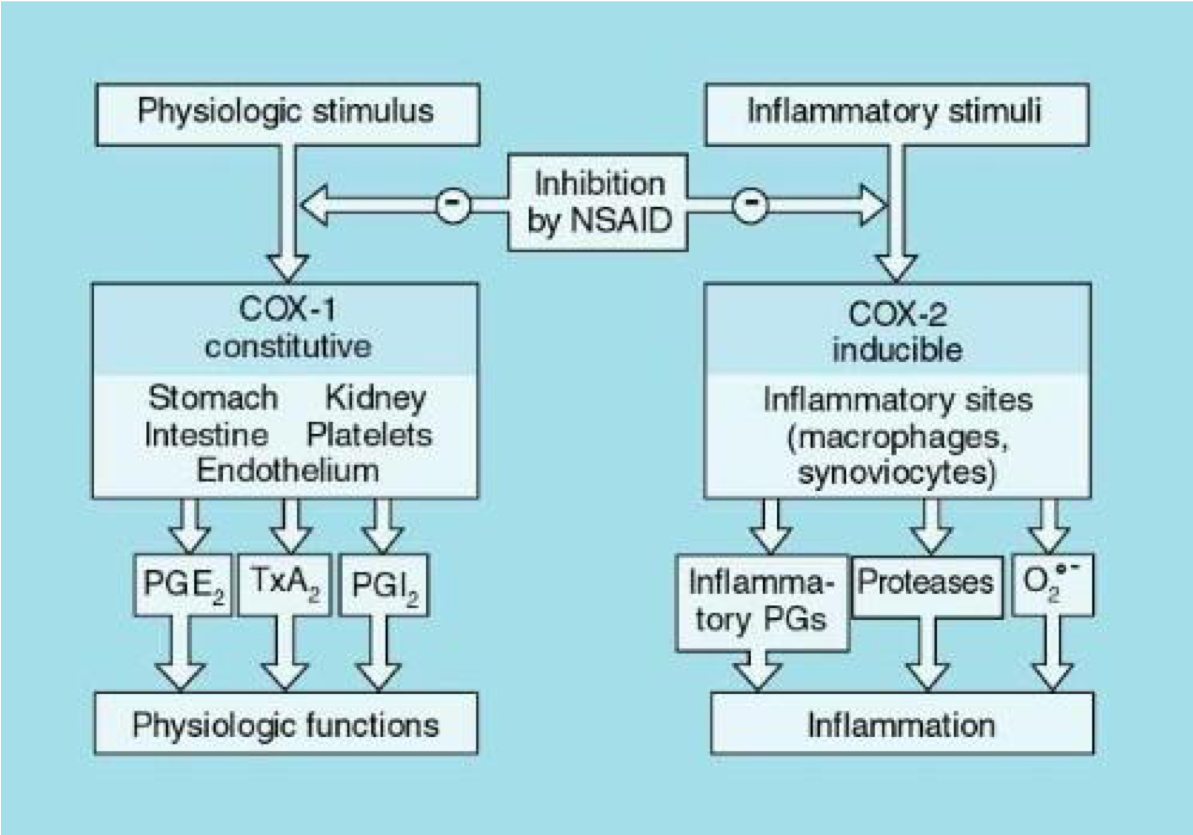
Serotonin - 2Where do NSAIDS target?COX-1 and COX-2. COX-2 are inducible inflammatory enzymes.
- 3How do glucocorticoids work?1. Steroid receptors are found in the cytoplasm complexed with a heat-shock protein Hsp90
2. Steroids cross the cell membrane and bind to the steroid receptor complex, releasing Hsp90
3. The steroid-receptor complex can now cross the nuclear membrane.
4. In the nucleus the steroid receptor binds to specific gene regulatory sequences and activates transcription. - 4Following prolonged systemic use of glucocorticoids, what side effects can manifest?- Suppression of response to infection.
- Suppression of endogenous glucocorticoid synthesis.
- Metabolic actions (affecting carbohydrate and protein metabolism)
- Iatrogenic Cushing's Syndrome
- Osteoporosis - 5Give examples of clinical presentations resulting from immunosuppression.- Tissue Rejection
- Psoriasis
- Rheumatoid Arthiritis - 6Give examples of some immunosuppressive drugs.- Cyclosporine A
- Tacrolimus
- Rapamycin - 7Describe the mechanism of action of Rapamycin (Sirolimus)rolimus inhibits IL-2 and other cytokines receptor-dependent signal transduction mechanisms, via action on mTOR, and thereby blocks activation of T and B cells. Ciclosporin and tacrolimus inhibit the secretion of IL-2, by inhibiting calcineurin.
The mode of action of sirolimus is to bind the cytosolic protein FK-binding protein 12 (FKBP12) in a manner similar to tacrolimus. Unlike the tacrolimus-FKBP12 complex, which inhibits calcineurin (PP2B), the sirolimus-FKBP12 complex inhibits the mTOR (mammalian Target Of Rapamycin, rapamycin being another name for sirolimus) pathway by directly binding to mTOR Complex 1 (mTORC1). - 8Explain the mechanism of action of Basiliximab.Basiliximab competes with IL-2 to bind to the alpha chain subunit of the IL2 receptor on the surface of the activated T lymphocytes and thus prevents the receptor from signaling. This prevents T cells from replicating and also from activating B cells, which are responsible for the production of antibodies, which would bind to the transplanted organ and stimulate an immune response against the transplant.[3][4]
- 9What are the signs and treatment options for people with Eczema?- Itchy, dry red and cracked skin.
- Barrier dysfunction - protein called filaggrin.
Treatment:
- reducing scratching
- Emollients (moisturising)
- Topical corticosteroids - 10Define and Describe AnaphylaxisIt is a systemic reaction to an allergen via any exposure route.
Rapid synthesis of prostaglandins and leukotriene.
- Systemic vasodilation and increased vascular permeability.
- Fluid enters extravascular space.
- Fall in blood pressure
- Severe bronchiole constriction, oedema and shock.
- Similar to systemic inflammation
- Anaphylaxis should always be treated as a medical emergency.