
Karteikarten
Atomic Structure
Karten in diesem Stapel (49)
- 1What is an atom?An atom is the smallest part of an element
It can be broken down into subatomic particles:
Protons
Neutrons
Electons - 2What is the relative mass, relative charge and position of protons, neutrons and electrons?PROTONS:
relative mass = 1
relative charge = +1
position = in nucleus
NEUTRONS:
relative mass = 1
relative charge = 0
position = in nucleus
ELECTRONS:
relative mass = 5x10⁻⁴
relative charge = -1
position = in orbit - 3What is the structure of atoms?Atoms have a radius in the order of 10-10m. Almost all of the mass is concentrated in the nucleus which has a very small radius (10-14m)
Protons and neutrons (nucleons) are in the nucleus
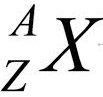
Electrons are in energy levels surrounding the nucleus - 4What do the letters represent?A - Is the mass number, the protons and neutrons added together
Z - The atomic number, the number of protons OR electrons
X - The element symbol
Ions can also have charges - 5Define atomic number What are 3 uses of the atomic number?The number of protons in the nucleus of an atom (also the number of electrons)
1. Identifies the element
2. Determines the position in the periodic table
3. Increases by 1 across the periodic table - 6Define mass numberMass number is the total number of protons and neutrons in the nucleus
- 7Define IsotopeIsotopes are atoms of the same element with the same number of protons, but with different number of neutrons
(NB they have different mass numbers) - 8What do +ve and -ve charges indicate?+ve charge shows a loss of electrons
-ve charge shows a gain of electrons - 9Define relative atomic massThe mass of an isotope relative to 1/12th of an atom of Carbon - 12
NB. Atoms are too small to be measured in grams, so masses of all atoms are relative to the mass of carbon -12, taken exactly as 12 - 10What are the properties of isotopesIsotopes have similar chemical properties and different physical properties, as chemical properties are related to the number of electrons. Mass affects physical properties.
CHEMICAL PROPERTIES:
Density/ Rate of diffusion
PHYSICAL PROPERTIES:
Melting point/ boiling point - 11What happens to make radioisotopes?Many isotopes are radioactive, as the nuclei of the atoms can break down spontaneously and when they so, they emit radiation, which is dangerous to living things
Gamma Radiation - Highly penetrating
Alpha Radiation - Can be stopped by a few cm of air
Beta Radiation - Can be stopped by a thin sheet of aluminium - 12What are the uses of radioisotopes?CARBON - 14
Used in radiocarbon dating. There is a fixed ratio of carbon-12 and carbon-14 in the atmosphere. Once dead, carbon-14 decays with a half life of 5370 years. Finding the C-12 : C-14 ratio estimates age up to 60000 years
COBALT - 60
Used in radiotherapy. A gamma emitter treats different types of cancer, it also helps the body's immune system from rejecting transplanted organs
IODINE - 125 and IODINE - 131
Used as medical tracers. 131 treats thyroid cancer and diagnosis whether the thyroid is working. 125 treats prostate cancer and brain tumours. - 13Define Relative Atomic MassIs the weighted mean mass of atoms relative to 1/12th of a carbon-12 atom
(it accounts for all isotopes and is measured using a mass spectrometer) - 14How to calculate Relative Atomic Mass (RAM/Ar)1. Take the first isotope - times the percentage abundance with the isotope (e.g. 75% C-35 = 75x35)
2. Do this for all isotopes in the sample
3. Add these all together and divide by 100
4. Give the answer to 3 sig fig - 15What are the uses of the mass spectrometer?1. Measuring the exact mass of an atom
2. Measuring the masses of breakdown particles
3. Tell the abundance and the isotopic masses of each isotope - 16What happens in the first stage of the mass spectrometer?1. VAPOURISATION - The sample is injected into the mass spectrometer and the vacuum and high temperatures produce individual particles (the air vacuum also prevents air molecules producing traces) This turns the sample from liquid to gas
- 17What happens in the second stage of the mass spectrometer?2. IONISATION - A heated filament (electron gun) produces high energy electrons that bombard the samples, knocking off electrons to produce +ve charges
- 18What happens in the third stage of the mass spectrometer?3. ACCELERATION - The positive ions pass through an electric field, where they are repelled from the positive plate and are attracted to the negative plate, forced into a beam
- 19What happens in the 4th stage of the mass spectrometer?4. DEFLECITON - Any moving, charged particle has a magnetic field, so when an external magnetic field is applied, the path of the particle is deflected. They are bent according to mass and charge.
-Higher mass particles are deflected less
-Lower mass particles are deflected more
-The magnetic field is adjusted to detect all particles
-The higher charged ions will also deflect more - 20What happens in the 5th stage of the mass spectrometer?DETECTION: When the detector is hit by the ions, an electric current is produced. This produces the mass spectrum, measuring the mass and relative abundance of the ions
- 21Draw a diagram of the mass spectrometers
- 22What are ionisation energies?The number of protons in the element's nucleus determines which element it is.
Chemical reactivity is determined by the number of electrons in the outer shell
Scientists supply atoms with energy to remove electrons to measure how much energy it takes to remove electrons - 23Define 1st ionisation energyThe energy required to remove one mole of electrons from one mole of gaseous 1+ ions under standard conditions
(298k, 1Atm)
X (g) --> X+ (g) + e-
The units are KJmol-1 - 24What do graphs of ionisation energies show?Graphs of the first ionisation energies plotted against atomic number shows a repeating pattern, where the highest value is helium (containing 2 protons, 2 electrons)
The two electrons are in the lowest energy level and are held tightly by the two protons
Graphs provide evidence that the levels can contain different numbers of electrons before they become full - 25What happens to ionisation energy down a group?1st IE decreases
As the outer electron is removed from an electron shell, which is further from the nucleus
-There is more shielding
-There is less attraction to the nucleus
- Atomic radius increases - 26What happens to ionisation energy across a period?1st IE generally increases, as the outer electron is removed
- The number of protons increases (nuclear charge)
- There is the same amount of shielding (electrons are added to the same shell)
- Atomic radius decreases, as the outer shell electron is more strongly attracted - 27What is the evidence for shells?- Large increases between the groups of removing electrons show large increases in I.E when an electron has been removed from a shell which is closer to the nucleus and has less electron shielding
Successive IE's within a shell gradually increase - 28How to write electron arrangementThe arrangement in an atom of electrons is known as electron configuration. Each energy level (shell) is separated with a comma. The electrons in the highest, main energy level (outer shell) are known as valence electrons
NUMBER OF OUTER ELECTRONS = GROUP NUMBER - 29How to determine the number of electrons in the outer shellNoble gases have very high 1st IE, as they have a full outer shell
To determine how many electrons are in an outer shell (therefore, group number) from a table, find the large increases in IE that will indicate when an electron is being removed from a shell with less shielding and that is closer to the nucleus - 30What does the attraction to oppositely charged particles depend on?1. DISTANCE APART - If they are closer, there is greater attraction
2. SIZE OF CHARGE - A higher charge will have greater attraction - 31That is electronic configuration?Each wheel of electrons within an atom has its own principal quantum number that shows;
1. Its size and position
2. How far it is from the nucleus (Larger the shell number, the bigger the shell and the further it is to the nucleus)
Each shell splits into a number of subshells -s,p,d,f - 32What are the principle quantum numbers?Principal Quantum number
1 - Is the first shell and has 2 elections, its sub-shell is the 1s
2- Is the second shell, it has 8 electrons and subshells of 2p and 2s
3- Is the third wheel and has 18 elections, with 3s,3p and 3d subshells
4- Is the fourth shell and has 32 elections in the 4s, 4p , 4d and 4f subshells
Subshells contain different numbers of orbitals, depending on the letter describing them - 33Define OrbitalAn orbital is a region within an atom that can hold unto two elections with opposite spins
- 34What are the shapes of orbitals?S - Orbitals: Are spherical - the 2s is bigger
P - Orbitals: Are dumbbell shaped along the x,y,z axis - 35What is heisenbergs's uncertainty principle?States that is impossible to know the precise location of an electron at an exact moment in time - orbitals describe the 3-D shape where an electron is likely to be found
(probability cloud) - 36What are the 3 rules of subshells?All the subshells within atoms are at different energy levels - the levels are filled according to the following rules;
1. The Afubau principle (lowest energy levels filled first)
2. The Pauli exclusion principle - Electrons within the same orbital must have different spins
3. Hunds' rule - Electrons remain unpaired within the same energy level - 37Explain the aufubau principleThe lowest energy levels are filled first
subshellls at higher energies are closer together
The 4s subshell is of lower energy than the 3d subshell, so is filled first - 38What is the pauli exclusion principle?Electrons within the same orbital must have different spins
Each orbital can hold up to 2 electrons as long as they have opposite spins - 39Explain Hunds ruleWithin the same energy level, electrons spread themselves to remain unpaired until pairing is required to minimise repulsion
- 40What happens to electrons in chemical reactions?-When chemical reactions occur, the outermost electron id the first to react
-Elements with the outermost electron in the same orbital type will show similar chemical properties - 41Define an s-block, p-block and d-block elementS and P- block -has its outermost electrons in the
s/p orbital
D-block- Shows inner building of electrons in the d-orbital - 42Define first electron affinityThe energy change when one mole of gaseous atoms acquire one electron each
O (g) + e- ---> O- (g) - 43Define second electron affinitythe energy change when one mole of gaseous 1- atoms receive one electron each
This is always endothermic, as the -ve electron will be repelled by the -ve ion
(data collected is approximate and difficult to measure for electron affinities) - 44What is the electromagnetic spectrum?Electromagnetic waves can travel through space, and depending on wavelength, matter
Light is radiation and exists as photons, which are both waves and particles
Light/ radiation travels in waves within a given wavelength related to frequency.
The smaller (shorter) the wavelength, the higher the frequency (and energy)
The longer the wavelength, the lower the frequency (and energy)
Electromagnetic radiation is a form of energy, waves can vary in length, ranging from low level radio waves and high level y- radiation - 45What is the equation for the wavelength and frequency of electromagnetic waves?E= hf = hc/ wavelength
- where h = phlanks constant - 6.63 x 10⁻³⁴
-C = speed of light (ms-1)
- f = Frequency (s-1)
- E= energy (J)
EASIER EQUATION
C= wavelength x frequency
(C (ms-1), wavelength (m), f (s-1) - 46Describe visible light in relation to the electromagnetic spectrumVisible light occupies a very narrow part of the spectrum
Red light is of low energy
Blue light is of high energy
White light is just all the colours of the spectrum
When white light is passed through a prism, a CONTINUOS spectrum is produced - 47What is meant by the atomic emission spectra?When energy is supplied to individual elements, they emit (by losing energy) a spectrum which only contains emissions at a particular wavelength
Each element has it's own characteristic spectrum - 48What explains the atomic emission spectra?- When an electron absorbs a quantum (packet) of energy, it is excited to a higher energy level
- The electron is excited from its ground state to an excited state
- The electron can go to many different energy levels because of the quantum shells
- The size of the energy packet or quantum of energy absorbed is related to the energy gap (delta E) between the energy levels
- The electron cannot stay excited, so emits the energy absorbed, corresponding to a particular wavelength and shows as a line in the spectrum
- The Balmer series shows when electrons fall back to shell 2, as visible light is produced
- When electrons fall to shell 3, energy emitted is infrared (n=3)
- When an election falls to shell 1, energy is in the ultraviolet region (n-=1) - 49Describe the hydrogen emission spectrum in the visible regionMainly in the blue section, so has high energy
Some in the red
Informationen
- Beschreibung
- IB Chemistry Karteikarten am Atomic Structure, erstellt von P H am 05/02/2015.
- Erstellt von
- P H
- Aufrufe
- 4
- Tags
- Bewertung