Karteikarten
Punctuation Marks Cards

Karten in diesem Stapel (14)
- 1White Dove Private Bilingual Institute Name: Orbin Morales Teacher: Sthepfany Castro Class: Grammar Grade: 11th Date:22-Oct-2021
- 2End marksUse a period to end a declarative sentence or an imperative sentence.
Use a period to end an indirect question.
Use a period to end a polite request disguised as a question.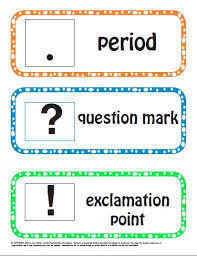
- 3Question MarkUse a question mark to end an interrogative sentence.

- 4Excamation pointUse an exclamation point to end an exclamatory sentence.
Use an exclamation point to end an imperative sentence strongly stated.
- 5CommaUse a comma and a coordinating conjunction (and, but, or, nor, for, yet) to join two independent clauses.
Use a comma and a coordinating conjunction (and, but, or, nor, for, yet) to join two independent clauses.
- 6SemicolonUse a semicolon between independent clauses if you do not use a comma and a coordinating conjunction.
A semicolon may be used between independent clauses even with a coordinating conjunction (1) if there are commas within the clauses or (2) if the clauses are long.
- 7ColonUse a colon before listed items, especially when announced by such words as as follows or the following. Do not use a colon to introduce a list that is the complement of a verb or the object of a preposition.
Use a colon to introduce a statement or quotation that is formally announced.
- 8DashUse a dash after a series of words or phrases that give de tails about the statement that is to follow.
Use a dash to indicate a break in faltering speech or an unfinished construction.
I—I—think that—that—something.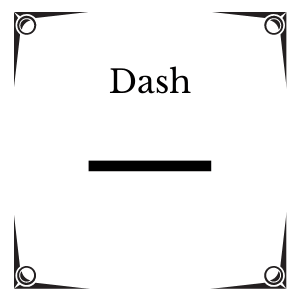
- 9ParenthesesUse parentheses to enclose brief confirmatory information.
Use parentheses to enclose confidential comments to the reader and supplementary or explanatory information added merely for clarity.
- 10BracketsUse brackets to enclose editorial corrections, comments, or explanations in quoted matter.
Use brackets, when necessary, as parentheses within parentheses.
- 11Quotation MarksUse quotation marks to enclose the exact words of a speaker (a direct quotation).

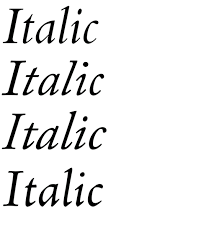
- 12ItalicsItalicize or underline the titles of books, magazines, newspapers, plays, works of art (with the exception of monuments), and the names of trains, ships, submarines, aircraft, and spacecraft.
- 13HyphenUse a hyphen if you must divide a word at the end of a line.
Use a hyphen in compound numbers from twenty-one through ninety-nine.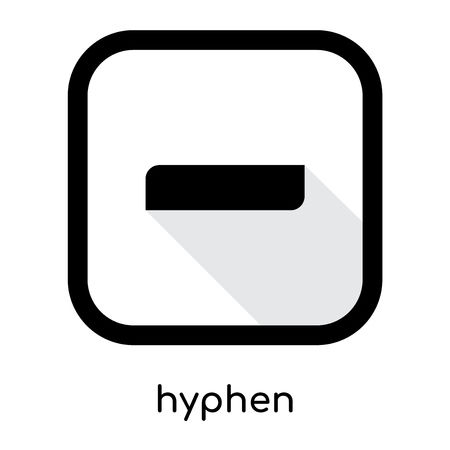
- 14ApostropheUse an apostrophe to form the possessive case of nouns.
To form the possessive case of a singular noun, first write the singular spelling of the word. Then add an apostrophe and s. (’s)