
Karteikarten
Boolean Algebra - OCR Computer Science A Level
Karten in diesem Stapel (30)
- 1Why do Computers use Binary Logic?> Can only recognise the presence or absence of current (or voltage in the case of analogue electronics)
> The voltage in a computer is measured as high or low - 1 or 0
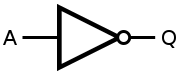
> Electronic logic gates take these inputs and produce a single output, which can be used in later gates, allowing for complex circuits - 2What is a NOT Gate and its Symbol?> Inverts the input
> Q = ¬A
> ¬1 = 0 and visa versa - 3What is an AND Gate and its Symbol?> Outputs 1 only if both inputs are 1
> Q = A ∧ B
> 1 ∧ 1 = 1
> 1 ∧ 0 = 0
> 0 ∧ 0 = 0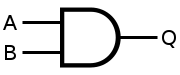
- 4What is an OR Gate and its Symbol?> Outputs 1 only if any inputs are 1
> Q = A ∨ B
> 1 ∨ 1 = 1
> 1 ∨ 0 = 1
> 0 ∨ 0 = 0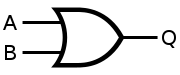
- 5What is an XOR Gate and its Symbol?> Outputs 1 only if only one input is 1
> Q = A ⊻ B
> 1 ⊻ 1 = 0
> 1 ⊻ 0 = 1
> 0 ⊻ 0 = 0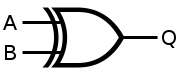
- 6What's the Benefit of Simplifying Boolean Expressions?> Uses less components
> More reliable
> Faster
> Generates less heat
> Cheaper - 7*sigh*... What are the General Rules of Boolean Algebra? (8 of them)1. X ∧ 0 = 0
2. X ∧ 1 = 1
3. X ∧ X = X
4. X ∧ ¬X = 0
5. X ∨ 0 = X
6. X ∨ 1 = 1
7. X ∨ X = X
8. X ∨ ¬1 = 1 - 8What are the Commutative Rules of Boolean Algebra? (yes they are REALLY obvious)1. X ∧ Y = Y ∧ X
2. X ∨ Y = Y ∨ X - 9What are the Associative Rules of Boolean Algebra?1. X ∧ (Y ∧ Z) = (X ∧ Y) ∧ Z
2. X ∨ (Y ∨ Z) = (X ∨ Y) ∨ Z - 10What are the Distributive Rules of Boolean Algebra? (yes they're really damn long)1. (X ∧ Y) ∨ (X ∧ Z) = X ∧ (Y ∨ Z)
2. oh god... (X ∨ Y) ∧ (W ∨ Z) =
(X ∧ W) ∨ (X ∧ Z) ∨ (Y ∧ W) ∨ (Y ∧ Z) :( - 11What are the Absorption Rules of Boolean Algebra?1. X ∨ (X ∧ Y) = X
2. X ∧ (X ∨ Y) = X - 12What is the Extremely Obvious, Hopefully Logically Oblivious, Extraordinarily Clear Double Negation Rule of Boolean Algebra?1. X = ¬¬X
- 13What are de Morgan's Laws of Boolean Algebra?1. ¬(A ∧ B) = ¬A ∨ ¬B
2. ¬(A ∨ B) = ¬A ∧ ¬B - 14What are Karnaugh Maps?> Provide an alternate way of simplifying boolean expressions
> Often easier than using boolean algebra when manipulating many variables
> Similar to truth tables
> Allows for easy grouping of common factors - 15How do you Group Expressions for use in a Karnaugh Map?Split at the OR (∨)
e.g., (A ∧ B) ∨ C = (A ∧ B) ¦ C - 16How do you Fill in a Karnaugh Map?> Mark where each variable would be 1 or 0 respectively, depending on the presence of ¬ (e.g., A = 1, ¬A = 0)
> Match up the respective variable with the box(es) on the Karnaugh Map
yes that's a bad explanation but oh well - 17What are the Rules for Simplifying Boolean Expressions in Karnaugh Maps?> Group factors in boxes / squares
> Boxes must contain 2ⁿ values
> Do not use diagonals
> Only 1s must be in the boxes
> Boxes must be as large as possible
> Boxes can overlap and wrap around - 18What are the Steps for Simplifying Boolean Expressions in Karnaugh Maps?> Take each box in any order
> Take each variable in any order
> If the digit for the variable in the heading stays the same, keep it
> Otherwise, discard the variable
> Write down the simplified expression with OR / ∨ in between - 19What is a Half Adder?> Takes an input of two bits and gives a two-bit output
> The carry bit cannot be used from a previous addition as there are only two inputs - 20What is the Logic Diagram for a Half Adder?S = A ⊻ B
C = A ∧ B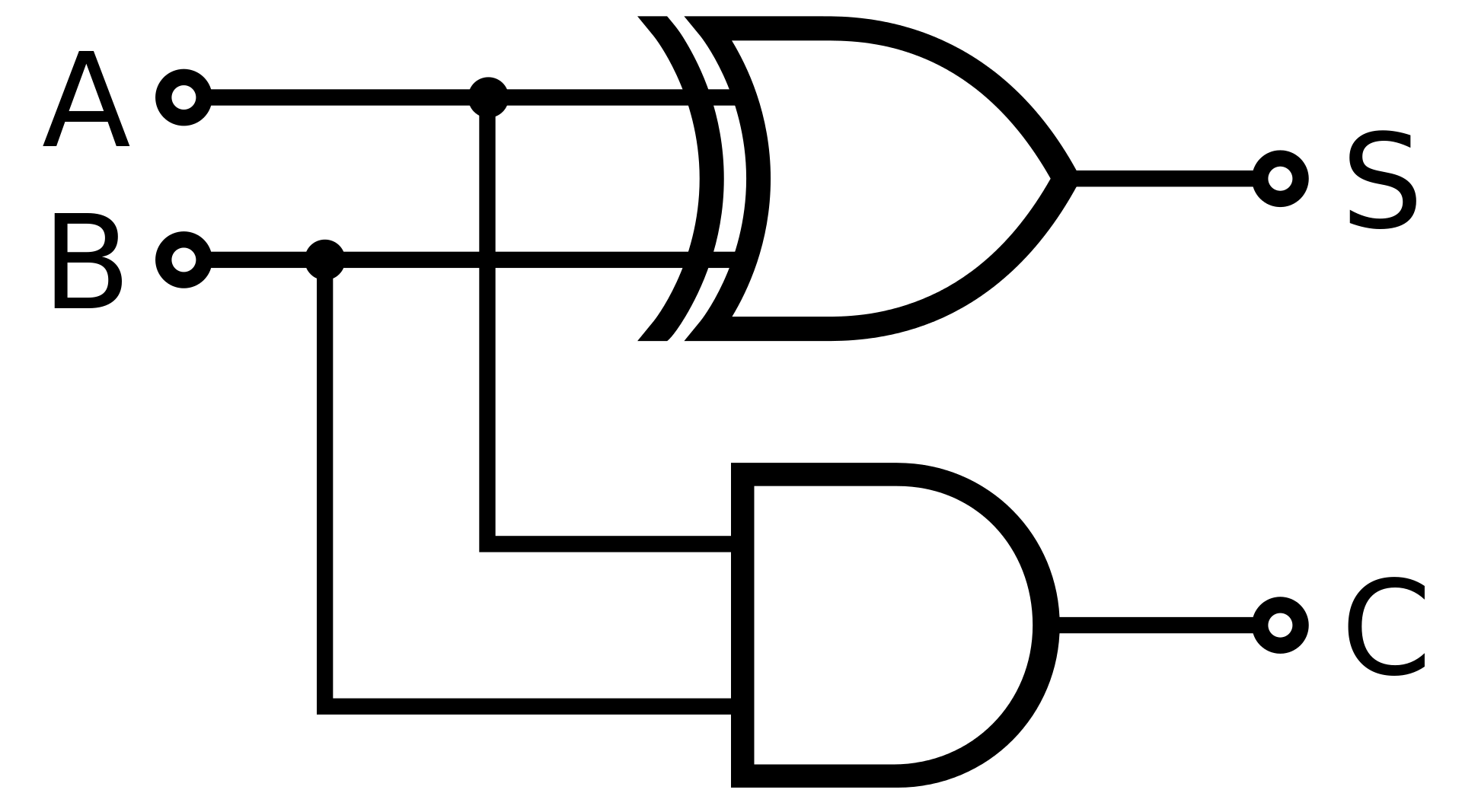
- 21What is a Full Adder?> Combines two half adders to add 3 bits together
> Includes three inputs: A, B, and a carry bit C
> Gives a two bit output - 22What is the Logic Diagram for a Full Adder?S = A ⊻ B ⊻ Cᵢₙ
Cₒᵤₜ = (A ∧ B) ∨ (Cᵢₙ ∧ (A ⊻ B))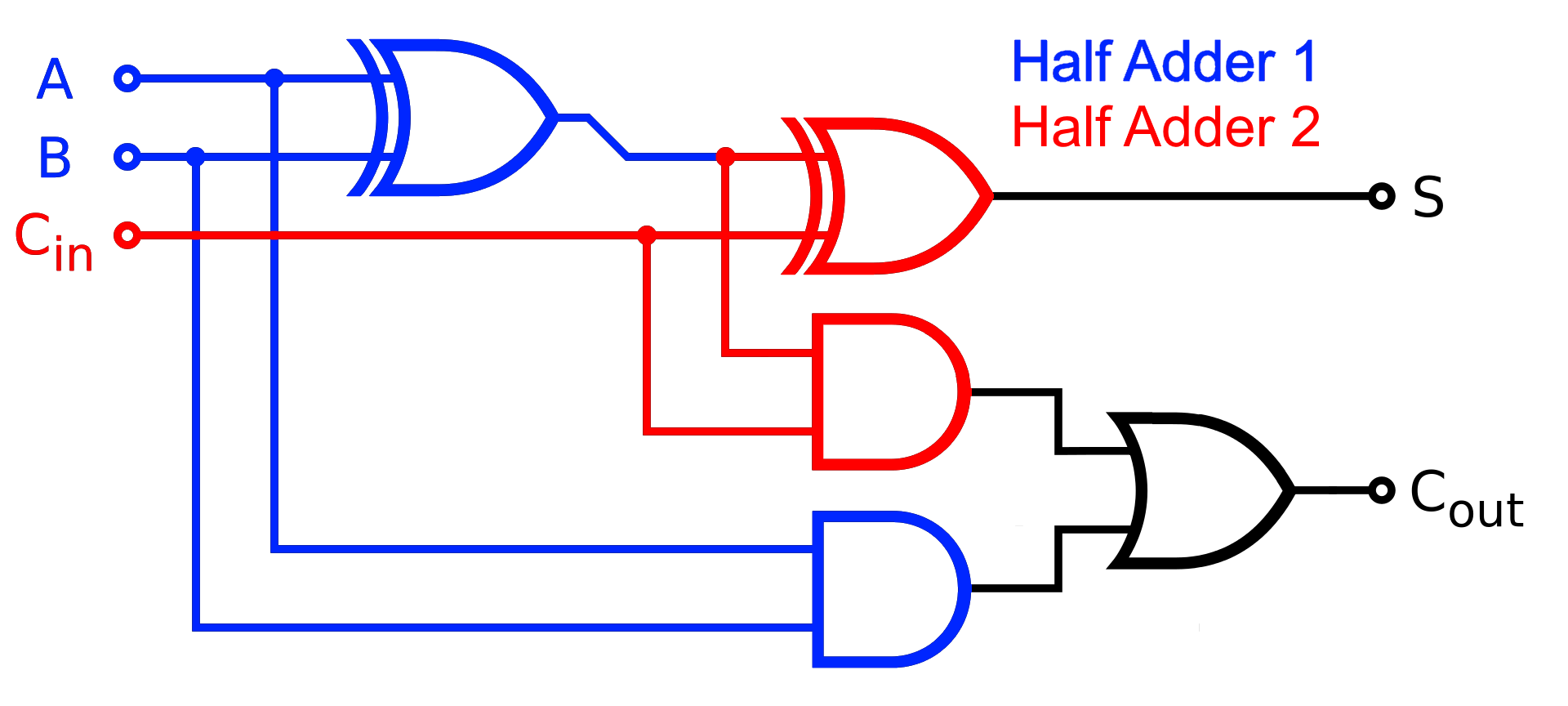
- 23How do you Connect Multiple Adders to Add more Bits?> Use the carry from the first adder to the next
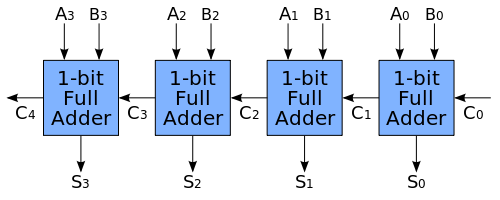
- 24What is a Flip-Flop?> Elemental sequential logic circuit (no i don't know what that means either)
> Stores one bit
> Flips between two states: 0 and 1 (wow!)
> Two inputs: a control input and a clock signal - 25What is a Clock / Oscillator?> Type of sequential circuit
> Changes state at regular time intervals
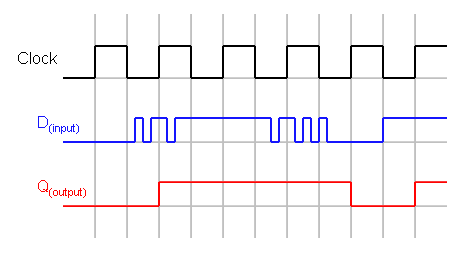
> Necessary to sync the change of state of flip-flops - 26What is a D-type Flip-Flop> Positive edge-triggered flip-flop
> Can only change the output value from 1 to 0, or visa versa, when the clock is at a rising / positive edge (when the clock is "going" from 0 to 1, not 1 to 0)
> When the clock is not at a positive edge, the input value is held and does not change - 27What is the Symbol for a D-type Flip-Flop?▷ = positive edge-triggered clock signal
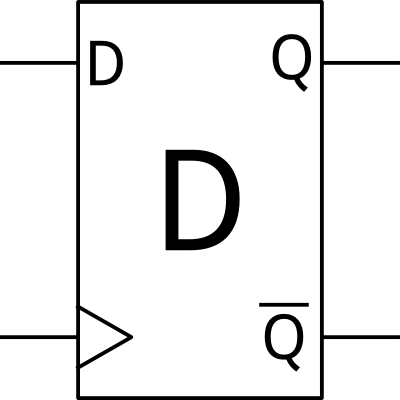
- 28Why is the Flip-Flop Circuit Important?Can be used as a memory cell to store the state of a bit
- 29What are some Examples of a D-type Flip-Flop being used as a Memory Unit?> Register memories, used for intermediate storage needed during arithmetic operations
> Static RAM - 30have a timing diagram because idk how to make a flashcard out of it
Informationen
- Beschreibung
- A level Computer Science (Boolean Algebra) Karteikarten am Boolean Algebra - OCR Computer Science A Level, erstellt von Malachy Moran-Tun am 05/12/2021.
- Erstellt von
- Malachy Moran-Tun · Dez 2021
- Aktualisiert
- 13 Dez 2021
- Aufrufe
- 88
- Bewertung