
Karteikarten
Operating Systems
Karten in diesem Stapel (7)
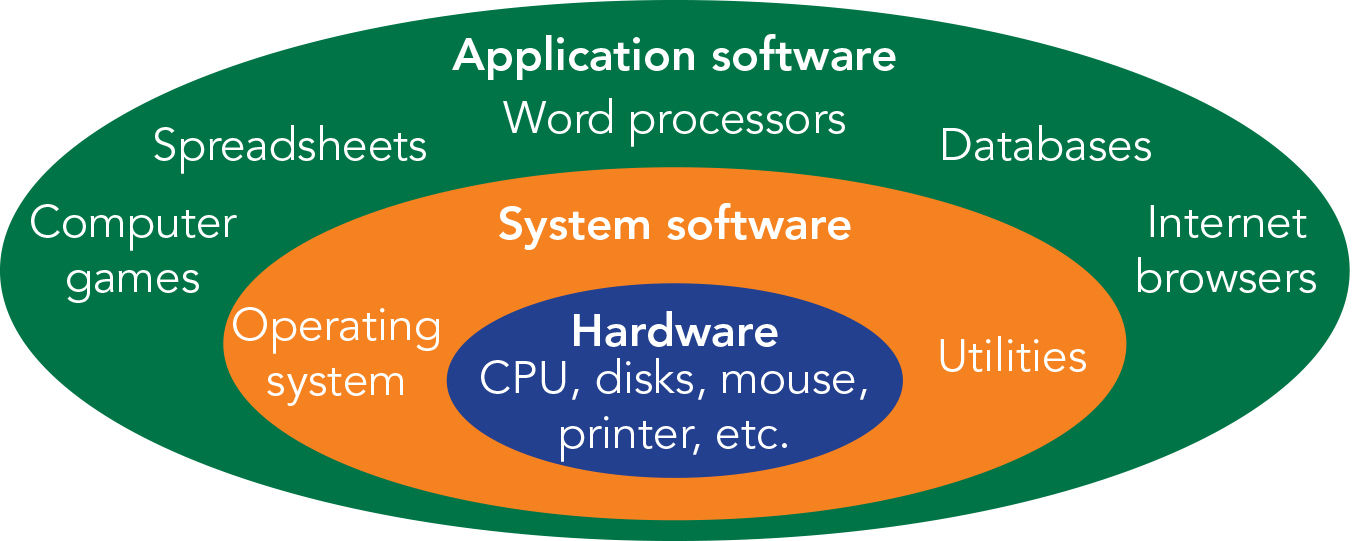
- 1—Application Software: These are pieces of software that perform a particular task such as word processing or desktop publishing
Systems Software: These types of software control the running of hardware and the running of other software
Operating Systems: An operating system is a piece of software that controls the operation of the systems hardware and the running of other software - 2Functions of Operating Systems: • Memory management • File management • Security • Provision of an Interface • Input output • Error reporting • Utility software management.Examples of where Operating Systems are used:
• Windows
• Windows CE
• Macintosh OS X (Mac OS X)
• iOS (iPhoneOS)
• Linux
• Android Phone
• Blackberry (RIM OS)
• Solaris (SunOS)
• AIX
• IOS (Cisco)
• XOS (Extreme Networks)
• IronWare OS (Foundry).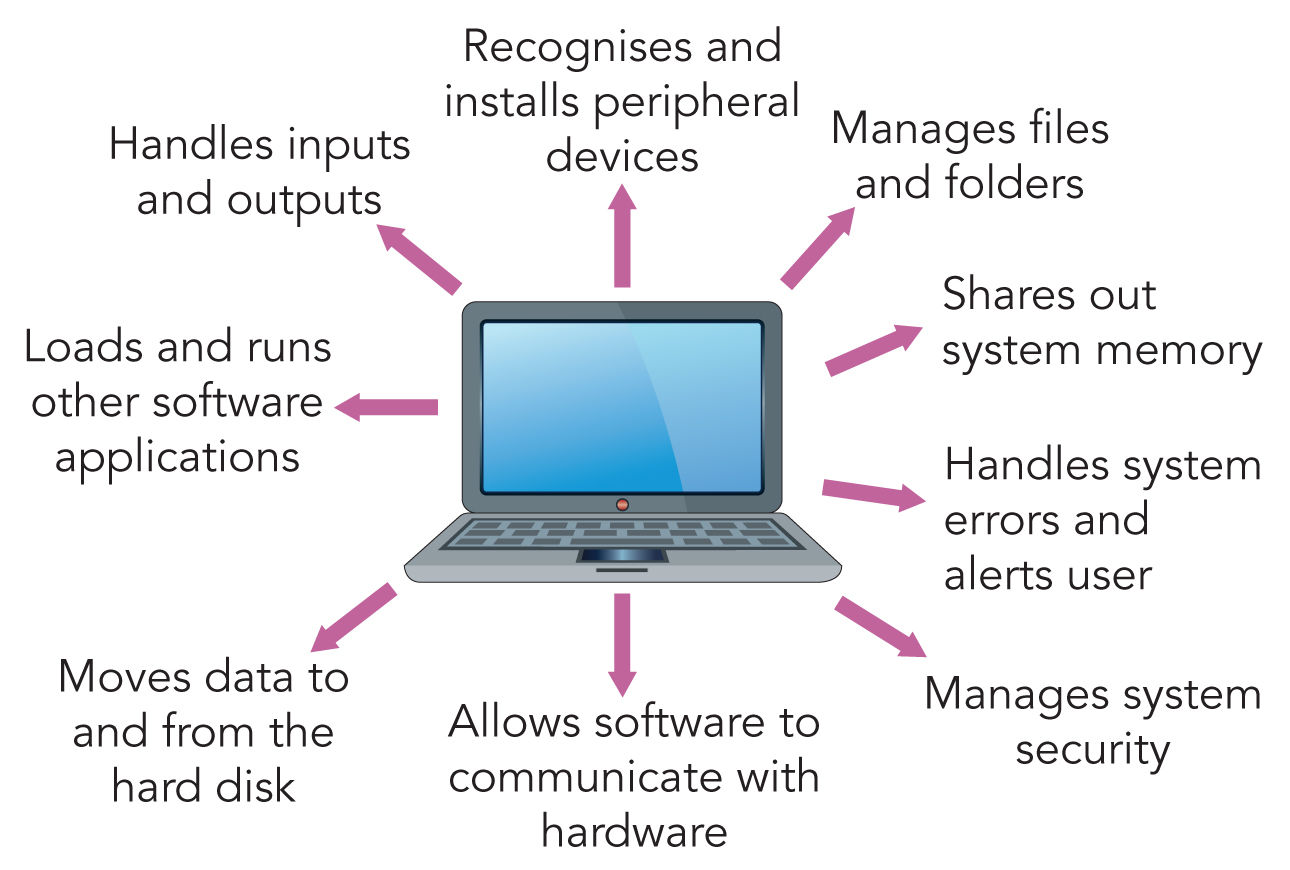
- 3Memory Management: It controls a system's RAM, and controls which location in RAM programs are loaded into. It also controls the computer's sharing of the central processing unit (CPU) as well as being responsible for maximizing the whole system.The operating system memory management functions include:
• controlling the location of memory, dealing with the transfer of programs in and out of memory when the process no longer needs it or when the process has been ended
• carrying out a process called scheduling where it manages the CPU, organising the use of memory between programs
• organising processing time between programs and users
• keeping track of processors and the status of any process running. - 4File Management: Controls where and how files are saved onto backing storage. The operating system handles the organisation and tracking of files and directories (folders). It also saves or retrieves these from a computer disk.The operating system does the following file management activities:
• allows the user to perform tasks including the creation of files and directories
• allows the user to save files to a backing store
• allows the user to rename, copy, move and delete files
• keeps track of where files are located on the hard drive through either a file allocation table (FAT) or the New Technology File System (NTFS). - 5Security: Computer systems often have multiple users. These users are often running multiple processes and these processes must be secure. The operating system maintains security and access rights of users.The operating system does the following security activities:
• controls the access of programs, processes and users to the computer resources
• ensures that all access to system resources is controlled
• ensures that external I/O devices are protected from invalid access attempts
• provides authentication features for each user by means of a password. - 6Input and Output: Controls the sending and receiving of data to and from peripherals. The operating system does the following activities for device management: • acts as the I/O comptroller by keeping track of all I/O devices • decides which process gets the device, when and for how much time.Error Reporting: Providing useful feedback to users when errors do occur.
In any computer, the operating system deals with errors and user instructions.
Errors can occur anytime and anywhere including errors in the CPU, in I/O devices or in the memory hardware.
The operating system does the following error management activities:
• monitors the system for any errors that occur
• takes appropriate actions to ensure correct operations
• closes the system if errors are terminal. - 7Virus Scanner: To protect your system from Trojans and viruses. Disk de-fragmenter: To speed up your hard disk. De-fragmentation picks up all those pieces of data that are spread across the drive and puts them back together again. System Monitor: To look at your current system resources.
Informationen
- Beschreibung
- GCSE Computing Karteikarten am Operating Systems, erstellt von Oliver Shutt am 16/05/2017.
- Erstellt von
- Oliver Shutt
- Aufrufe
- 0
- Bewertung