
Karteikarten
AQA Geography A Tourism
Karten in diesem Stapel (56)
- 1Growth in Tourism-Tourism is the worlds largest industry
-Worth $7.6 trillion dollars in 2016
-940 million international tourists in 2009
-Many countries rely heavily on tourism for income - 2Factors affecting Tourism's Growth-Social and economic factors
-Improvements in technology
-Expansion of holiday choices - 3Social and Economic Factors-Since the 1950s people have been becoming wealthier
-Most families in the UK have two working parents
-People also have more holiday time
-Holiday leave has increased from 2 weeks in the 1950s to 4 to 6 weeks
-Rising life expectancy has led to more retired people
-Good pensions mean they travel more - 4Improved Technology-Motorways, airport expansions and faster jet aircrafts make tourism faster and easier
-Flying has become cheaper
-Online booking increases ease - 5Expansion of Holiday Choice-1970s cheap package holidays competed with seaside resorts
-Packages are now available to all around the world
-Ecotourism and extreme tourism in places like Antarctica also expands tourism choices - 6Tourist attractions-Cultural (art galleries, museums, architecture etc.)
-Natural landscapes (mountains, beaches etc.) - 7Italy: Tourist AttractionsOffers a lot of choice
-Culture in places like Venice, canals and renaissance architecture
-Alps offer scenery skiing and hiking
-Beaches along the coast offer beach holidays - 8Importance of tourism-Important part of the economy in many richer countries
-But they have a broadly balanced economy of which tourism is only one part
-Developing countries' economies depend on tourism a lot more
-80% of Barbados' national income comes from tourism - 9Dubai: Tourism-In the United Arab Emirates
-Easily accessible from Europe, Asia and Africa, 120 airlines fly there
-Tourism is growing quickly
-Hotel revenue up 22% in the first quarter of 2008
-2.8 million tourists in 2000
-4.9 million tourists in 2003
-5.4 million tourists in 2004
-14.9 million tourists in 2016
-Emirates airlines carried 56.1 million passengers in 2016, many long haul to their 140 destinations, many have stop overs in Dubai - 10Dubai: Attractions-Duty free shopping malls with huge department stores
-Watersports like diving
-City skyline
-Dubai Mall
-Bird watching trips to wet mudflat areas where there are over 400 species
-Desert exursions - 11Benefits of Tourism to LEDCs-Employs many people, in Barbuda 30% of the population work in these jobs
-Tourists spend holiday money in pound sterling or dollars, providing essential foreign currency
-Governments tax visitors to pay for water, electricity, roads etc
-Extra jobs created indirectly, e.g. hotels buy food from local farmers
-Small businesses start up to serve tourists like taxis bars, restaurants, maintenance workers - 12UK Tourism: Growth-UK tourism used to be mainly domestic, only rich went abroad
-Domestic tourism grew in 1950s and 1960s as growing economy meant higher wages and more time off
-UK seaside holidays peaked in 1970s with 40 million visitors annually
-Package holidays led to a reduction in domestic, seaside holidays
-British weather was too unreliable
-2010-11 UK residents made 55.7 million trips abroad - 13UK Tourism: Contribution to Economy-UK economy earned £114 billion in 2008
-27.7 million overseas visitors spent £13 billion of this
-Over 100 new hotels from 2004 to 2005
-London ye has 3.7 million visitors a year
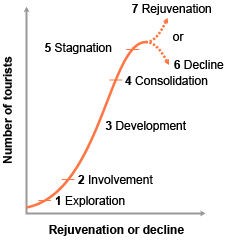
-1.1 million tourists arrived for the Royal Wedding in 2011 - 14Butlers Model
- 15Exploration-Small numbers of visitors
-Attracted to something particular
-Locals haven't developed many tourism services - 16InvolvementLocal population sees opportunities so starts to provide accommodation, food, transport and guides for visitor
- 17Development-Large companies get involved
-Build hotels and leisure complexes
-Advertise package holidays
-Job opportunities for locals grows rapidly - 18Consolidation-Tourism is a major aspect of the local economy
-Visitor numbers are steady so employment is more secure
-Hotels and other facilities becoming older so the types of customers attracted go downmarket
-Rowdiness becomes an issue - 19Stagnation-Resort becomes unfashionable
-Visitors start to decline
-Businesses change hands and often fail - 20Decline-Visitors prefer other resorts
-Day trippers and Weekenders become the main sources of income - 21Rejuvenation-Attempts to modernise the resort are made
-Try to attract different people to new activities - 22UK Tourism: External factors-Terrorism
-Exchange rates - 23Terrorism-9/11 had a massive impact on international travel
-Visitor numbers decline sharply after terrorist attacks like the 2005 underground bombings - 24Exchange Rates-Since 2008 world has been facing issues
-People facing a pay freeze or rising unemployment decreases number of tourists
-2011 Euro was high against the pound (87p compared to previous 68p) so less holidays in Europe - 25National ParksAn area where development is limited and planning controlled. The landscape is regarded as unusual and valuable and therefore worth looking after
- 26Honeypot SitesSomewhere that attracts a large number of tourists who, due to their numbers, place pressure on the environment and people
- 27Lake District-Cumbria, north-west England
-64 km long, 53 km wide
-Became a national park in 1951 - 28Lake District: Outdoors-Ribbon lakes and tarns
-Lake Windermere specialises in ferry cruises
-Most ferry from Windermere town to Ambleside
-Small boats allowed on many lakes
-Areas set aside for windsailing and powerboating so it doesn't clash with quiet areas
-Fishing is also popular
-Walking is very popular
-Routes vary from short and flat to extremely long and tough
-Known as the "Birth place of mountaineering - 29Lake District: History and Culture-Historical and cultural sites attract tourists
-Lake district occupied since the end of the ice age 10 000 years ago
-Evidence of early settlements remain in the landscape
-Land has been farmed for centuries leaving distinctive field patterns with dry stone walls
-19th century writers and artists loved the area
-Beatrix Potter lived on the shores of Lake Windermere - 30Lake District: Traffic Problems-89% of visitors come by car
-Many roads are narrow and winding
-Buses and large delivery vehicles have to use these as well
-Queues are a common problem, especially at the end of the day when day trippers go home
-Bowness-on-Windermere were not built for the large amounts of traffic
-Congestion and parking are serious problems
-People in the countrysides park on verges, causing serious damage - 31Lake District: Traffic Solutions-Dual carriageways built either side of the Lake District to move traffic in and out efficiently
-Distributor roads connect small towns and key tourist villagers
-Traffic on smaller roads has been slowed down
-Traffic calming measures like cattle grids implemented
-Maximum overall speed limit
- Heavy lorries kept off scenic roads
-Where possible bus lanes operate, although small streets limit this
-Park and ride scheme called "Honister Rambler" operates from Keswick to the edge of the park, they are then transported to areas where parking is a problem like Catbells
-Low-carbon vehicles like buses have been encouraged - 32Lake District: Honeypot Sites Issues-Beauty spots, small shopping centres and historic houses attract hundreds of visitors daily
-Catbells is easy to climb so popular, leading to serious footpath erosion - 33Lake District: Honeypot Site Management-Upland Path Landscape Restoration Project repaired 145 paths involving creating steps, surfacing with local stone and re-planting native plants
-Severely eroded path at Whiteless Pike, Buttermere repaired with stone pitching, cost £1000 per m
-Road sides fenced off so cars can't damage verges
-Car parks surfaces reinforced. "Waffles" are large concrete slabs with holes in them where grass grows
-Bins provided at sites and emptied regularly
-Signs encourage people to be responsible with litter - 34Lake District: Pressure on Property-20% of housing are holiday homes or second homes
-Holiday cottages and flats not occupied the entirety of the year
-Holidaymakers don't always support local businesses, often doing one big shop beforehand
-Demand for property from outsiders increases the prices for locals
-Nothing can really be done about it - 35Lake District: Environmental Issues-Wash from faster water vehicles, where allowed, erode the shore
-Fuel spills aren't uncommon, causing pollution - 36Lake District: Environment Solutions-Speed limits set for boats, but to prevent erosion this needs to be very low which clashes with the pleasure of the sport
-18 km/h speed limit on Lake Windermere
-Limiting noisiest and most dangerous sports restricts the amount of damage done - 37Lake District: Farming-Tourism and farming are often in conflict
-Visitors can trample crops and disturb livestock
-However, tourists offer hill farmers diversification opportunities in economically difficult times
-Income can come from B&B, holiday cottages, caravan and camping sites as well as pony trekking - 38Lake District: Tourism Management Strategies2007 launched it's vision for 2030
-Aims to maximise economic opportunities in a sustainable way - 39Mass TourismTourism on a large scale to one country or region. This is linked to the development and consolidation phases of Butler's Model
- 40Mass Tourism: Advantages-Provides jobs for previous subsistence farmers who now have a more reliable income
-New infrastructure put in place for tourists benefits locals
-Temporary construction jobs go to locals
-New leisure facilities may be open to locals
-Economy benefits from the taxation of tourists and hotels, creation of jobs and spending money in shops - 41Mass Tourism: Disadvantages-Activity may be seasonal so local people are out of work for the rest of the year
-Industry is dominated by large travel companies
-New construction can damage the environment
-Doesn't appeal to wealthier people
-Few locals paid well
-Higher up jobs taken by people from the companies, not locals
-Investing companies based in foreign companies so profits leave the country
-New developments need land, farmers may be tempted to sell their land, decreasing food production
-Tourists can be narrow minded and prefer local food, so food is imported locally
-Cultural clashes can occur which can lead to issues with alcohol and drugs - 42Jamaica: Tourism-One of the Caribbean's main tourism destinations
-3.1 million tourists in 2016
-Tourism is the countries second largest earner 24% of GDP
-262 000 Jamaicans work in this sector (22.6% of population)
-Local businesses like food production and Hotel supplies rely on tourism
-Attracts people for watersports, wildlife sanctuaries, golf and beaches
-Cultural pollution, Jamaica suffers with drugs and sex tourism - 43Jamaica: Community Tourism-Visitors stay in local's homes
-Families provide B&B accommodations
-Local businesses like restaurants supply other needs
-More interaction between tourists and locals
-Tourists have a clearer idea of local life, less likely to waste water etc.
-Support local businesses
-Money goes directly to the people - 44Jamaica: Ecotourism-Jamaica's trying to maintain it's tourist resorts for the future
-Ecotourism utilises areas like the Blue mountains in the South East of the Island and other stretches of coast, spreading tourism out
-Nature reserves include eco-lodges
-Low tourist densities in these areas to keep pressure off the environment - 45Extreme Tourism-Involves dangerous landscapes with a difficult climate
-Involves an element of risk and adrenaline rush
-Northern Pakistan has some of the most mountainous an challenging landscape, terrorist groups add an extra thrill/risk
-Growing rapidly but never likely to be big
-E.g. waterfall climbing or cliff diving in Jamaica - 46Extreme Tourism: Target Market-Tourists looking for a physical challenge
-Often around 30, unmarried with no children with high powered jobs and a god income - 47Antarctica: Tourism Figures-1950s commercial ships brought a few passengers
-First specially designed cruise ship in 1969
-34 000 tourists in 2010
-Tourists from northern hemisphere fly to New Zealand and then take a ship from there - 48Antarctica: Tourism Specifics-Landing sites are limited and quickly become honeypot sites
-Tourists can damage the environment so management is vital
-Attractions include walking, kayaking, skiing, climbing, scuba diving and helicopter flights
-Animals, like penguins and seals can be scared off and abandon their eggs/young
-Accidents where ships strike uncharted rocks or ice
-Oil spills are an increasing hazard for wildlife
-Ships must discharge waste far away from Antarctica's shores - 49Antarctica: Coping with Tourism-All tourist operators are members of IAATO which directs tourism be safe and environmentally friendly
-Around 100 companies are involved
-Atlantic Treaty says tourism in acceptable, but scale needs to be limited
-Visitors are not allowed to visit SSSIs
-Permit needs to be gained for activities
-No ships with over 500 passengers are allowed to land - 50StewardshipThe personal responsibility of us all for looking after the environment, no one should damage the present or future environment
- 51ConservationThe thoughtful use of resources, managing the landscape in order to protect the ecosystems and other cultural features
- 52Ecotourism: Aims-Environmentally friendly tourism
-Experiencing the natural environment directly
-As little impact on the environment as possible
-Energy used should be sustainable
-No waste should be produced that can't effectively be dealt with
-Eat local food
-This all makes the price very high though - 53Galapagos Islands-50 Volcanic Galapagos Islands that belong to Ecuador 1000 km off the coast of South America
-90% of the islands are national parks or marine reserve
-Islands have some of the most precious and fragile ecosystems
-Biosphere reserve and whale sanctuary
-UNESCO World Heritage site - 54Galapagos Islands: Tourism-Small number of tourists allowed under strict rules
-Only allowed onshore in specific places and limited numbers
-Tour boats owned by locals take 10 to 16 tourists accompanied by a local guide
-Visitors given accurate information and prevented from causing damage - 55Galapagos Islands: Benefits-Galapagos Conservation Trust receives £25 per tourist
-Pays for conservation trust in the Island
-Local people get paid as guides and small businesses have started such as running guest houses - 56Galapagos Islands: Problems- Honeypot sites are sometimes over used despite strict control and are showing signs of environmental stress
-Oil pollution from boats can affect the fragile marine life
Informationen
- Beschreibung
- GCSE Geography (Human Geography) Karteikarten am AQA Geography A Tourism, erstellt von Natalia Cliff am 01/06/2017.
- Erstellt von
- Natalia Cliff
- Aufrufe
- 56
- Tags
- Bewertung