
Karteikarten
New Security
Karten in diesem Stapel (32)
- 1Chapter 17: New securityHunger, disease and poverty can lead to global instability
and leave a vacuum for extremism to fill. So instead of just
managing poverty, we must offer nations and people a pathway
out of poverty.
~President Barack Obama - 2IntroductionGlobal issues have been repackaged
as ‘security’ issues over the past two decades using the process described by Barry Buzan and
Ole Wæver using the language of social constructivism - 3The end of the Cold War and the apparent end of a military threat to the West led to new ways of thinking about international issues and threats Though states remain key players in the international system and the great powers maintain their lofty positions of relative power, security has become less and less concerned with classic, Clauswitzian interstate conflict A new security agenda has evolved, driven in part by IOs, NGOs and TNCsThis agenda
has emphasised transnational threats to international peace and security
that have traditionally been ignored or dealt with as secondary issues
This shift was formally recognised with the publication of the UN Human
Development Report in 1994
This made policy-makers aware of the fact that some of the most serious risks facing states in the modern world
arise from transnational problems such as poverty, famine, disease and
environmental degradation - 4Not everybody agrees that these issues constitute a security threat in the traditional sense Still, the new security agenda has undoubtedly influenced the way that states and non-state actors behave around the worldNon-traditional threats that have been securitised:
climate change, human health,
resource scarcity, energy security and problems arising from changing
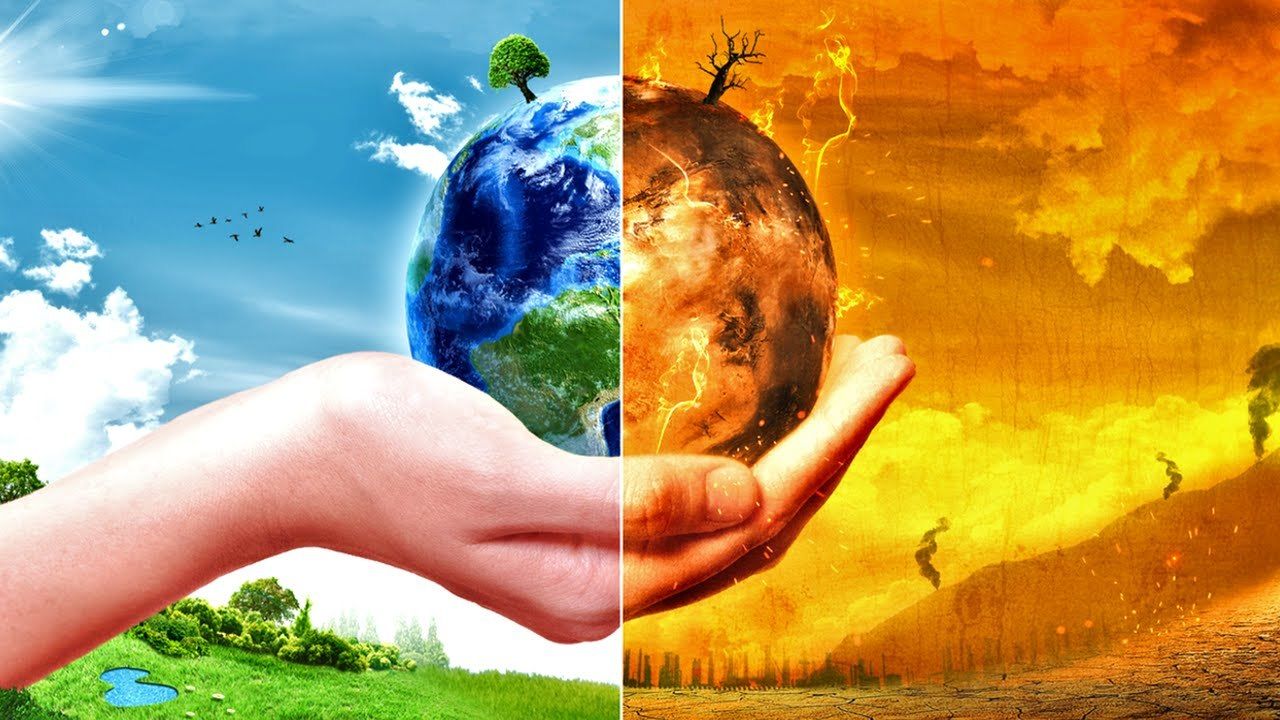
demographics - 5Climate changeThe ecological consequences of human-induced climate change may
represent the most worrying item on the new security agenda
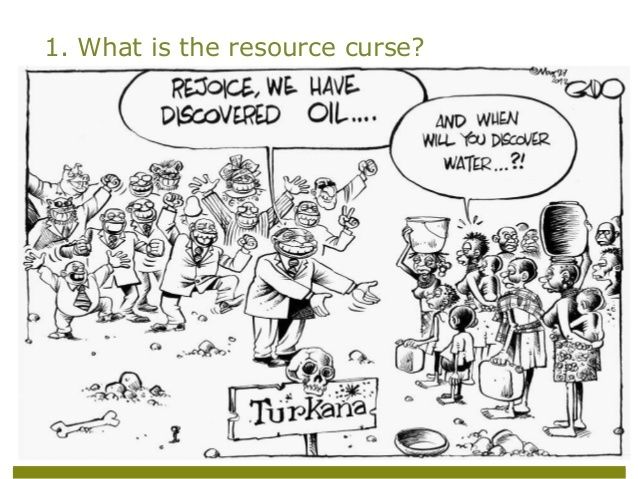
Humans
have affected the environments in which we live for millennia
For the past
500 years, human impact has ranged from the expansion of agricultural
land use, to a reduction in forests and wetlands, to a rapid rise in the amount of fossilised carbon released back into the atmosphere through
the burning of fossil fuels - 6Until recently, only a few scientists were willing to commit to the theory that human resource use – particularly the burning of coal, oil and gas – is having an appreciable effect on the Earth’s natural systems Though a few writers, sometimes funded by oil and gas companies, continue to reject the idea, anthropogenic climate change is an accepted fact among the overwhelming majority of scientists and experts in the field Increasing levels of carbon in the atmosphere are leading to rising global temperatures and increased climate variabilityThis brings with it a host of potential threats to states, non-state actors and
individuals
Rising sea levels caused by the melting of land-based polar ice
caps threaten coastal areas from the small atolls and islands of the Pacific
Ocean – where climate change is a very real matter of national interest
– to coastal Asia, Europe, Africa and America - 7Rising sea temperatures are affecting weather patterns and fish populations, increasing the likelihood and intensity of storms, shifting rainfall patterns and promoting droughts and flash floods These threats are already having an impact in several parts of the worldWhile their final impact is unknown, there is no reason
to doubt that they will lead to large-scale human migrations as once-fertile
regions are left parched, flooded or even submerged by our changing
planet - 8For IR, the key question in this debate is not whether climate change is anthropogenic or the result of some unobserved natural cycle That is a matter for ecologists IR needs to deal with international consequences of climate change’s immediate effectsSo far, the international community
has focused on two parts of the climate change puzzle: mitigation and
adaptation
Mitigation efforts focus on reducing the amount of carbon
entering the atmosphere in the hope of minimising the severity of climate
change - 9Adaptation efforts focus on protecting ourselves from its worst effects by protecting coastlines, building more resilient communities and ensuring a sustainable source of food and power There is a very extensive literature on the efforts that culminated with the signing of the Kyoto Protocol in 1997This tends to focus on the important parts played by the
UN and the EU; the forms of political resistance, led by the USA, Canada
and Australia
e.g. Rio Earth Summit, Paris Climate Accord - 10IR has contributed to the climate change debate by identifying international constraints on actors’ ability to deal with environmental issues One of these constraints relates to the great divide that still separates the economic ‘haves’ from the ‘have-nots’In theory, everyone
can agree about the facts of climate change
More practically, many
developing states fear that limits on carbon emissions will impair their
ability to ‘catch up’ with the developed world
Until recently, China has
maintained that targets should not be imposed on it while it remains so
far behind the West in terms of its per capita income - 11In a competitive and growth-oriented world economy, many sovereign states are suspicious of efforts to regulate what they can and cannot do This is less of a concern for the EU and Japan, given their already-high levels of economic development It has proved a more difficult issue in the USA, however, where TNCs have privileged access to the lobbies of Congress, allowing them to mobilise political opposition to environmental regulation, and where suspicion of international agreements that limit the country’s freedom of action remains a potent national urgeEven so, both China and the USA have stated their intentions to actively lobby for global mitigation and adaptation targets, to be negotiated through the institutions of the United Nations
This great
power partnership played a central role in the successful negotiation of a
global climate framework in Paris in late 2015
the Obama administration teamed up with the government of President Xi Jinping to push for concerted international action - 12Ever-louder warnings from the international scientific community, obvious signs of instability in the planet’s natural systems and growing calls from nonstate actors and individuals have pushed China and the USA – the world’s two biggest polluters – to jump on the climate change bandwagon The USA changed its policy following the election of President Barack Obama in 2008, stating that climate change has ‘risen up to the top of the US national security set of priorities’
- 13HealthHuman health: a new form of human security threat
trade and early forms of globalisation have played a major role in spreading
contagions around the world
From bubonic plague to smallpox to avian
flu, globalisation has carried pathogens and parasites to new parts of the
world - 14Thanks to shifts in rainfall and temperature, regions once free of mosquitoes, ticks and other parasites are now their feeding grounds, threatening human life and challenging states’ capacity to respond to health crises With disease comes increased strain on states’ health-care and emergency response systems This can stretch state resources to their breaking point, e.g. 2014 Ebola outbreak in Liberia, Sierra Leone and GuineaIn extreme cases, the state itself can begin to lose its grip on its territory and population
A number of studies now show a close
correlation between the incidence of disease and state failure
One disease has been the subject of an enormous amount of intense
research is HIV/AIDS - 15Driven by the inability of poor states to provide their citizens with information and medical care, this pandemic has made itself felt across the less developed world In sub-Saharan Africa, it has achieved terrible proportions This area holds just over 11 per cent of the world’s population, but almost 70 per cent of all HIV infections – 25 million casesA 2010 UNAIDS report records highly troubling statistics for the region
In 2009, it saw around 1.8 million people die of HIV-related illnesses,
72 per cent of the global total
Southern Africa is at the epicentre of the
ongoing epidemic
The 10 countries of the region, which have around
2 per cent of the world’s population, are home to around 32 per cent of
people with HIV and over 40 per cent of women with HIV - 16Causes range from individual-level explanations, stressing sexual promiscuity and a lack of contraceptive use among African men, through unit- and system-level explanations linked to poverty, colonialism and the failure/ refusal of Western companies to supply needed drugs at affordable prices On one point, however, there seems to be general agreement: states are more likely to be unstable and less likely to function so long as this disease continues to ravage their populations and undermine their political and economic stabilityThe past decade has witnessed a spike in the number of global health
scares, with nearly annual warnings of potential pandemics caused by
one of the many strains of influenza
e.g. the Spanish influenza outbreak in 1918
Not only did this pandemic kill more
than five times as many people as the war itself – accounting for just over
50 million lives – there was very little that the international community
could do about it - 17People are generally healthier than they were in the first half of the 20th century, medicines are more powerful and more plentiful, and international regimes are more robust Moreover, the world is not coming out of a terrible four-year conflict that drained it of manpower and moneyWhat worries many in
the field of public health is that with more people and goods travelling
around the world every year – a consequence of modern globalisation –
the possibility of another pandemic is growing ever greater - 18ResourcesThe notion that demand for natural resources will lead to scarcity was
advanced in the late 18th century by the English political economist,
Thomas Malthus
In An essay on the principle of population, first published
in 1798, he hypothesises that human numbers tend to increase at
a geometric rate, while our ability to feed ourselves only increases
arithmetically - 19this is bound to lead to profound human and economic crises when our numbers outpace our supplies Malthus’s ideas have been challenged in the centuries since Advances in technology, improvements in productivity and the opening of new agricultural lands have increased the resources available to us and allowed us to make better use of what we haveHowever, his thoughts about population
and resources remain troubling
dangers posed by the world’s rising
population and the dangers posed to subsistence agriculture by climate
change and soil exhaustion
Others look at the unequal distributions
of power and wealth, which can lead to hunger by failing to get food
supplies to poorer parts of the planet - 20This creates a socially constructed type of hunger, described by Amartya Sen; a type driven by inefficient distribution instead of natural shortages A third type of study focuses on water scarcity, including fears that shortages will give rise to new conflicts between and within states Some researchers even believe that oil will also become increasingly scarce over the next few decadesAccording to this
theory, known as ‘peak oil’, the discovery and exploitation of fossil fuels
will reach their maximum by the middle of the 21st century
If and when
this occurs, it may lead to intense competition between states seeking to
access the most important energy resource in the world economy - 21The ‘resource curse’ describes a situation in which high-value resources – oil and diamonds, for example – have a detrimental effect on the societies in which they are found Under normal circumstances, states are assumed to benefit from high-value natural resources They add to a state’s store of wealth, can be used to promote balanced economic growth and provide revenue that can be used to improve people’s living standardsIn many
states, particularly those with weak institutions and corrupt elites, high value
resources will actually distort economic development by redirecting
investment away from community-level projects in favour of increased,
large-scale resource extraction
This undermines a population’s socioeconomic
development, corrupts the political process and causes domestic
conflicts over the distribution of resource wealth - 22This does not just impact on countries like Nigeria, where the benefits of the country’s immense oil wealth is often nowhere to be found in the communities where oil is located It also has consequences for oil-rich states in the Middle East and for resource-rich sub-state actors like the province of Alberta in Canada In these places, an abundance of oil might fill state coffers in the short term, but it also creates uneven economic development and potentially undermines democratic practices in the long term
- 23Energy securityAs any decent historian will tell you, energy has
posed a problem for IR since the West became dependent on imported oil
around the beginning of the 20th century
As US writer David Painter
shows, two decades of access to cheap oil in the 1950s and 1960s were
followed by the production embargo imposed by the Organization of
Petroleum Exporting Countries (OPEC) in the 1970s - 24This led to major price rises that played a crucial – and often unexplored – role in the conduct of the Cold War One as-yet-unmentioned theory of the end of the Cold War focuses on the impact of falling oil prices in the 1980s These put a major squeeze on the troubled Soviet economy, which received most of its foreign currency from exports of oil and gas, eventually pushing it into bankruptcy and political collapseOne factor above all has pushed energy to the top of a very long list of
non-military security issues: the terrorist attacks on the USA in September
2001
Overnight, it seemed that the country had become too dependent
on Middle Eastern oil - 25It was at this crucial juncture, when fear ran headlong into the USA’s long-standing relationship with Saudi Arabia – which possesses over 25 per cent of the world’s known oil reserves – that the US debate about energy security began in earnest Even President G.W. Bush, an experienced operator in the oil industry, began to muse that it was high time for the USA to find alternative sources and forms of energyOne surprising change has been the rapid rise in US
oil and gas production thanks to hydraulic fracturing – a controversial
technique for accessing hard-to-reach supplies underground
This has seen
the USA go from the largest net importer of oil to a potential exporter,
radically redrawing the world’s energy map - 26DemographicsThe relationship between demography and international politics is one of
the most under researched topics in IR
Analysts assume that there must
be a connection between population and international affairs, but remain
divided on a range of issues - 27These include the relationship between population and power, the link between migration and stability, and the connection between the age structure of a society and the stability of its socio-economic systemThe first of these issues deals in the most general terms with the presumed
connection between state power and trends in population
Those who
advocate a correlation between population and power argue that the
decline of Russia from great power status in the 1990s coincided with
a rapid decline in its population growth rate - 28The same commentators might argue that the USA is in more robust international shape because its population is on the rise, driven by a combination of domestic growth and immigration Europe stands somewhere in between Its domestic population growth is on the decline, but the shortfall is being made up by large-scale immigrationThis is a new dynamic for Europe, which has
historically been a source rather than a destination for immigrants
There
have been political consequences to this demographic shift, including
growing nationalist movements in nearly all European states, and a
dramatic rise in vocal political opposition to even the most desperate
refugees - 29This has been encouraged by many politicians and media outlets, who portray refugees from the Middle East as potential security threats, thereby securitising what used to be a humanitarian issue Migration raises all sorts of international issues The world has never seen so many people on the move, with global migration accelerating over the past two decadesThis poses no special difficulty when the
migrants in question are relatively affluent and come from similar cultures
and backgrounds to their new host countries
Historical experiences in
the Americas and contemporary Europe indicate that issues arise when
migrants are poor and have little understanding of their destination’s
culture and language - 30Until recently, IR has dealt with such concerns as domestic problems to be handled by the countries to which people are immigrating Since 9/11, however, it has become an increasingly securitised issue, with fears rising in many host countries that at least some of their new immigrant communities might represent a threat to public safetyThis resurgent nationalism is an interesting counterpoint to
the globalism that many identify as a feature of modern international
society
Demography poses a potentially huge problem in many developing
states in the form of an enormous rise in the number of younger people as a
percentage of the overall population
e.g. Middle East and North Africa - 31There, demographic changes have produced a ‘youth bulge’, with over 30 per cent of Middle Eastern populations aged between 15 and 29 This represents over 100 million people, and is the highest proportion of youth in the region’s history Many of these young people have expectations that cannot be met by the local labour marketMiddle Eastern children generally receive a good education relative to other
parts of the developing world
Enrollment rates throughout the region are
high, with nearly universal access to education at primary level and around
70 per cent enrolment at secondary level
This widespread education
generates expectations that cannot be met by national labour markets - 32Youth unemployment in the Middle East now stands at around 25 per cent – the highest of any region in the world To make matters worse, the duration of unemployment for new graduates is extremely long, lasting, for example, up to three years in Morocco and Iran will ‘youth bulge’ lead to regime change in the Middle East?Upheavals in Tunisia, Egypt and Libya during the Arab Spring were
led by technologically astute young people, who used social media and
mobile cameras to coordinate and record the events that began in Tunisia
in January 2011
Of the many demands made by these protesters, the call
for jobs was the most consistent
Faced with their own youth in revolt,
many Middle Eastern regimes have not been able to contain instability
by the usual combination of police brutality and short-term economic
concessions
Informationen
- Beschreibung
- International Relations Karteikarten am New Security , erstellt von Amna Tamkin am 18/01/2018.
- Erstellt von
- Amna Tamkin
- Aufrufe
- 41
- Bewertung