
Introduction to International Relations and Global Politics
46 resources created by 38 users
This Introduction to International Relations and Global Politics page on GoConqr gathers community-made mind maps, flashcards, quizzes and notes, from realism and liberalism to the United Nations, ASEAN and China's power. It's built for university students and professional candidates, school students, and teachers after ready-made material. There are over 600 resources here, including more than 50 quizzes and over 400 mind maps, ranging from school-level global politics to university IR courses. Pick a topic, try a quiz to find your gaps, then make your own revision sets.
Top Introduction to International Relations and Global Politics resources
-
Mind map International Relations
-
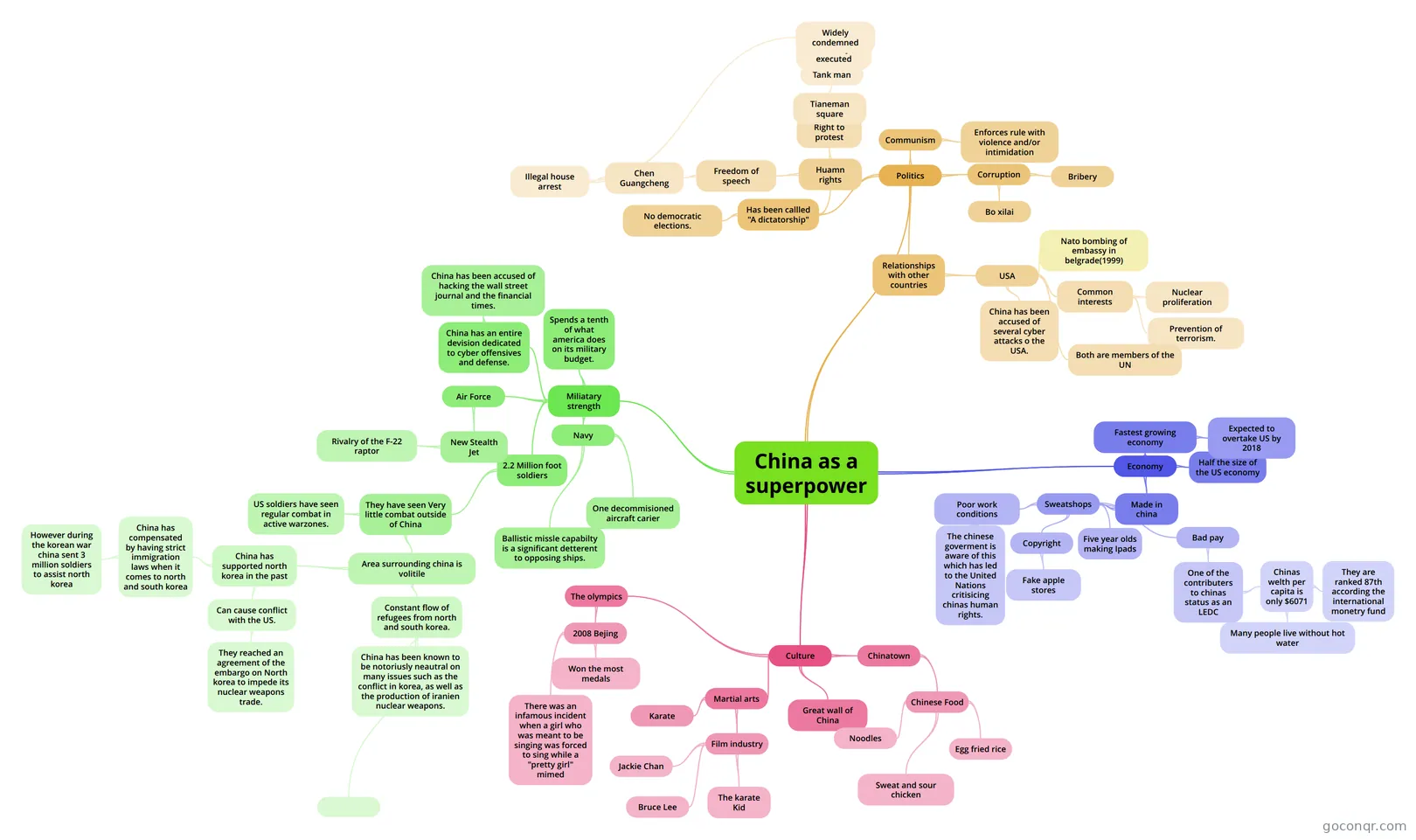 Mind map China as a superpower
-
14 cardspol2103 international relation difference between IR and foreign policy?
-
94 cardsInternational Politics 3 Major Aspects of Global Change
-
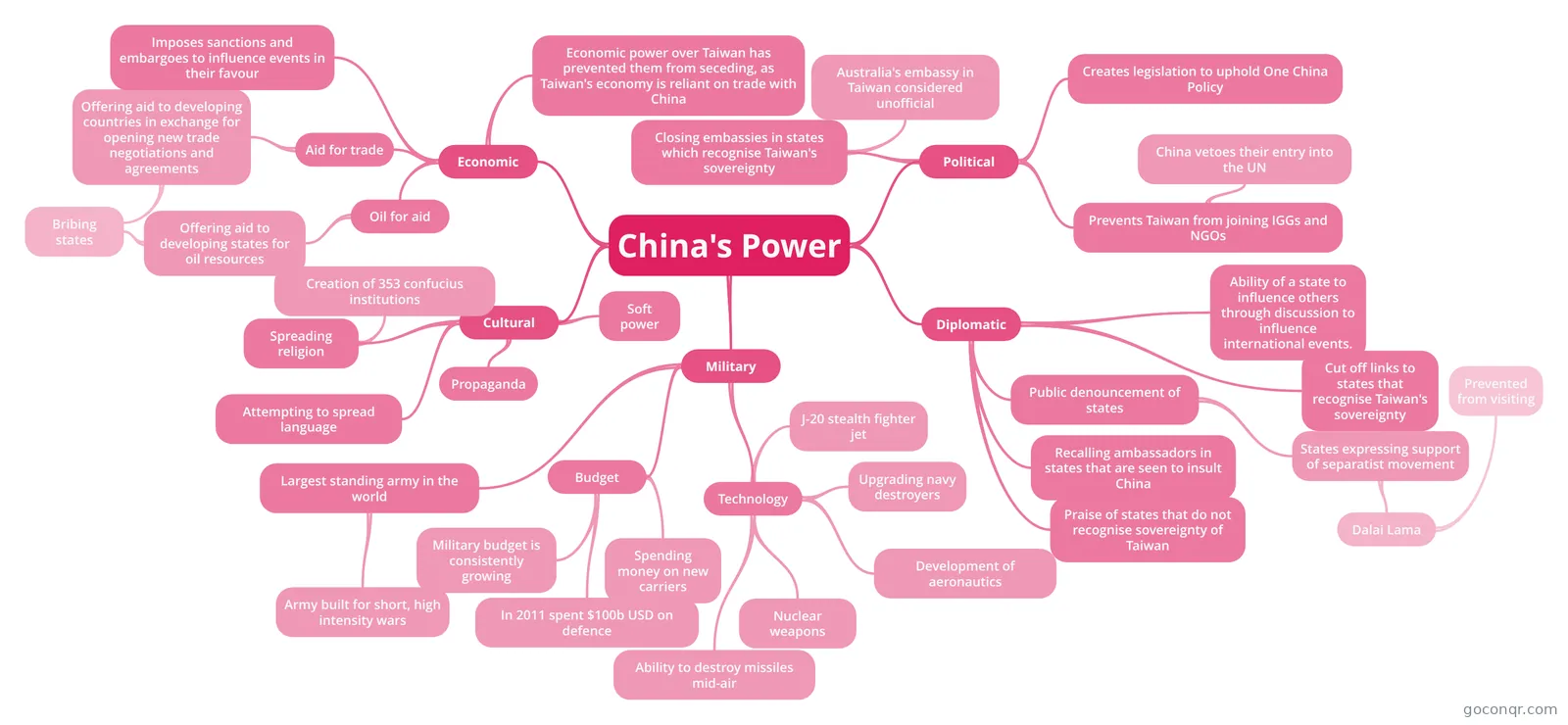 Mind map China's Power
-
140 cardsPolt 403 What was the dominant global economic order?
-
86 cardsInternational Politics: Finals Flash cards for the second half of International Politics
-
32 cardsNew Security Chapter 17: New security
Quizzes
-
45 questionsTheory of international relations The 2008 financial crisis can be used to highight:
-
16 questionsUnit 3 - Understandings of Nationalism, Affairs and Policy's. International affairs and the motivation of nation involvement in affairs
-
13 questionsTrue False #1 In international relations, since there is no court, it sometimes requires a nation to take the law into it...
Mind maps
See all 25 mind maps
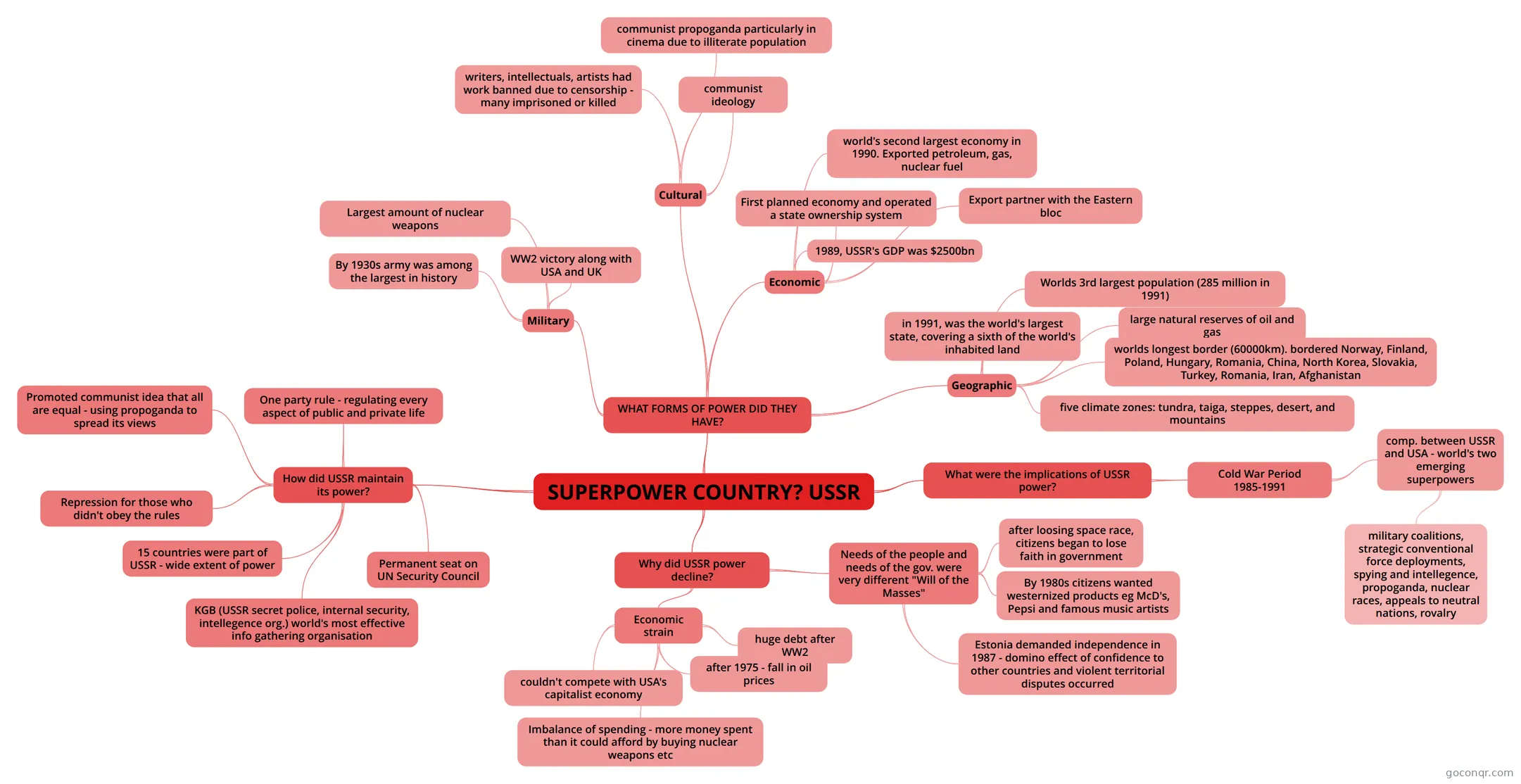
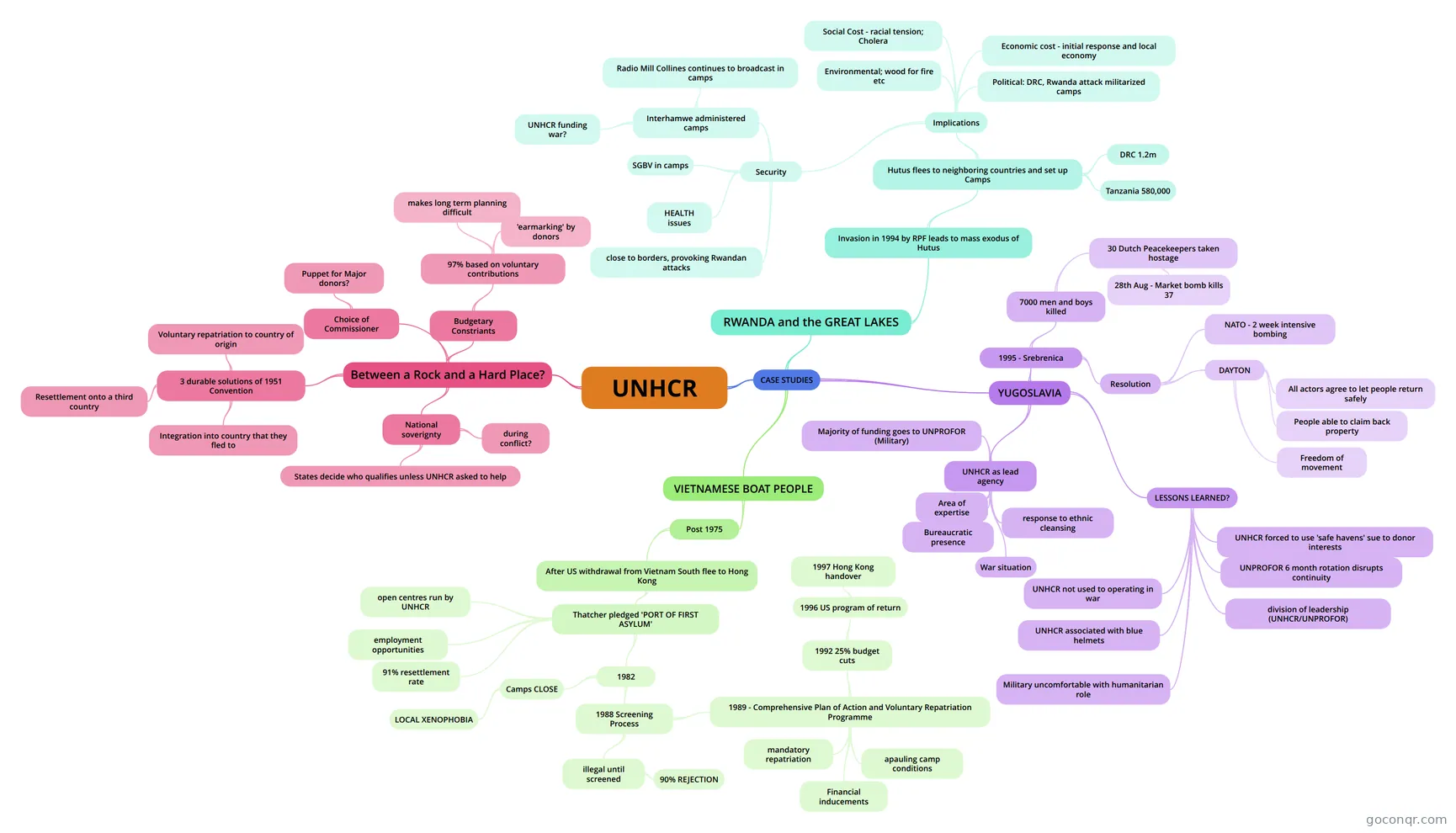
Flashcards
See all 14 flashcards-
14 cardspol2103 international relation difference between IR and foreign policy?
-
94 cardsInternational Politics 3 Major Aspects of Global Change
-
140 cardsPolt 403 What was the dominant global economic order?
-
86 cardsInternational Politics: Finals Flash cards for the second half of International Politics
-
32 cardsNew Security Chapter 17: New security
-
42 cardsState, Power and Security in the Middle East Background of realism
-
36 cardsch 1 IFP
-
42 cardsPolitics - flashcards Frames vs Lenses
Notes
-
Approaches to Global Politics Definitions State - A state is the means of rule over a defined territory. Compromised of an executive, a bureaucracy, courts and other institutions. A state levies taxes and operates a military and police force. States distribut...
-
GS 2 -- CH 3 International Relations , International happenings 1.) Operation ginger : LOC Surgical strike operations by both india and pakistan in 20112.) India launches its first international arbitration center in MUMBAI. -- Indian Arbitration lawArbitration is a place in which...
-
Business In The World 10/18/18 U.S. Defense Secretery jim mattis seeks stronger U.S. ties with China's Military Jim Mattis told Chinese defense minister Wei Fenghe that the 2 nations needed to deepen ties to navigate tensions and limit the risk of ...
Slides
More Political science topics
About Introduction to International Relations and Global Politics
GoConqr OriginalWhat this unit covers
The page brings together the core ideas of international relations. The mind map International Relations links power (hard, soft and smart), war, peace, states and the main theories: realism, liberalism and the English School. The mind map Global Politics - the entire paper except for comparative theories. is a wide overview that starts with state sovereignty and nation states.
Where to start
Begin with the big-picture maps, then move to vocabulary. The deck International Relations Definitions and the note Approaches to Global Politics Definitions give you the terms. The deck Diplomacy and the mind map SOFT POWER are good next steps once the basics feel familiar.
- Theory: IR THEORIES, DOYLE 1982 and the quiz Neoliberalism vs Neorealism.
- Institutions: several maps on the United Nations and ASEAN, plus the deck Main Features of the United Nations.
- Case studies: China as a superpower, Thai-Cambodia Conflict and the quiz Tensions in the South China Sea.
Using maps and quizzes together
Read a map first, then close it and take a quiz on the same theme. For example, work through China's Power, which splits power into cultural, political, diplomatic, economic and military strands, and then test yourself on the South China Sea. Wrong answers show which branch of the map to revisit.
Resources come from school and university courses. Some match exams named in the listings, such as IB Global Politics and A-level Politics, so check the wording against your own course.
Where it fits
This unit sits in the International Relations strand of Political science. Choose one map or deck that matches your next lesson, work through it, and then build a short set of your own to keep revising.
Frequently asked questions
Which resource should I open first?
Start with the mind map called International Relations. It links power, war, peace, states and the main theories on one page. After that, the deck International Relations Definitions helps you learn the key terms before you move on to the quizzes.
What do the mind maps cover?
They cover theories such as realism and liberalism, forms of power, the United Nations, ASEAN and country studies like China as a superpower. There are also maps on globalisation, the liberal order and the Thai-Cambodia conflict, so you can move from ideas to examples.
Are the resources free to use?
Yes. Every resource listed here is free to open, study and take, with no account needed. If you want your quiz scores saved, or want to make your own quizzes, maps, flashcards and notes, a free account lets you do that.
Which levels and exams do these suit?
Most resources suit university students and professional candidates, with a smaller share for school students. Listings mention IB, IB Global Politics and A-level Politics, so school students can find relevant material. Always compare topics with your own course outline.
Who made these resources?
They were made by GoConqr users, not by GoConqr itself. Over 500 contributors have added maps, decks, notes and quizzes. Because they come from different courses, it helps to check each one against your own syllabus.
What if I can't find my topic?
Try a nearby resource, such as the general maps on power or international organisations, and see whether it covers what you need. If a gap remains, you can build your own mind map or flashcard deck for the topic.