
Karteikarten
Last WYNTK
Karten in diesem Stapel (103)
- 1AmendmentA change to an official document
(Example: Constitution) - 2AssimilateTo understand
(information, culture, or ideas) - 3BiasTo have an influenced opinion
- 4BicameralHas to do with the legislative branch, it means to have two branches
- 5BlockadeA tactic used in the Civil War, means to close off or stop supplies from entering or leaving a port
- 6BoomtownA town that is changing, in a good way, very fast
- 7CapitalismPrivate ownership of businesses and competition
- 8Captain of IndustryA person who is very rich who has worked his/her way to the top
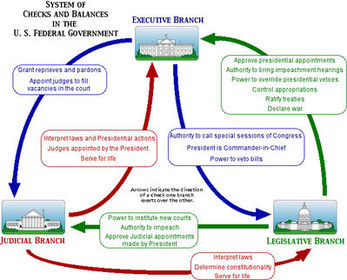
- 9—Checks and Balances
Each branch of the government has some control over the other two branches - 10—Congress
The branch known as the Legislative branch
- 11Due Process of LawSame and fair treatment in the court system
- 12EconomicsA certain economy that works towards the consumption, production, and the transfer of wealth
- 13EmancipatedTo be declared free
- 14EnfranchiseTo give the right to vote
- 15EnumeratedEstablish the number of
- 16FederalismPower that is divided between national and state governments
- 17Forty-ninersPeople who took part in the California gold rush
- 18Free EnterpriseAn economic system where private businesses thrive on competition
- 19Habeas CorpusA law requiring a person under arrest to be brought before a judge
- 20IndustryProcessing of raw materials and the manufacturing of goods in factories
- 21JudicialOne of the three branches of Government containing the Supreme Court
- 22Ku Klux KlanThe first terrorist group of America that scared blacks into not being able to vote
- 23—Manifest Destiny
The belief that God wanted the people to move westward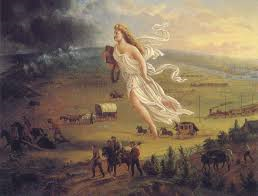
- 24MartyrAnybody who is killed for their religious beliefs or other beliefs
- 25MonopolyWhen one business takes over all of the other businesses and their is no competition
- 26NomadicAnything or anyone who moves around a lot
Ex: Native Americans moved so they could follow their food - 27OverrideTo reject or cancel one's decision
- 28Popular SovereigntyPeople are the source of the Governments power
- 29RatifyTo approve
- 30RadicalTo be extreme
- 31RepublicanismPeople elect their political representatives
- 32Robber BaronA cruel and ruthless business man who "stepped" on people to get to where they are
- 33RuralOutside of the urban area- not as big or populated as an urban area
- 34Separation of PowersWhere each of the three branches of government have their own problems and responsibilities
- 35Social DarwinismSurvival of the fittest among humans and how they adapt
- 36SuffrageTo have the right to vote in political elections
- 37—Supreme Court
The highest court system in America
- 38TariffA tax or duty that needs to be paid
- 39Taxation Without RepresentationThe colonists were not allowed to pick their representatives in the Parliament therefore were being taxed unfairly
- 40Trade UnionAnother term/word for labor union
- 41UrbanA major populated city with all of the modern perks
- 42VetoTo refuse or say no
- 43—Thomas Jefferson was our third president, a Founding Father, and wrote the Declaration of Independence.
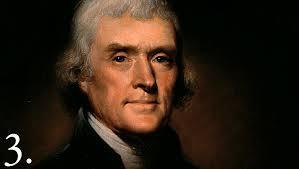
- 44—Andrew Jackson, also known as Stonewall Jackson, forced 10,000 Native Americans to leave their homeland by enacting the Indian Removal Act.
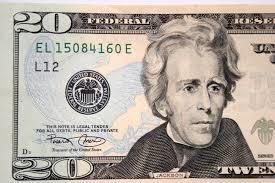
- 45—Sacagawea helped Lewis and Clark on their expedition into the Louisiana Purchase to find a water way to the West Coast.
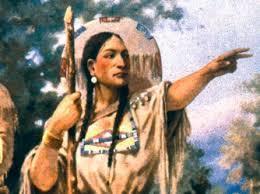
- 46—James Polk was our eleventh president. He started the Mexican American war and if it weren't for him there wouldn't be some of the states we have today.
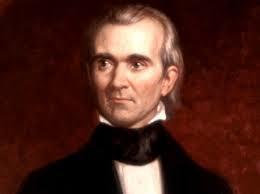
- 47—Frederick Douglass was a former escaped slave and an abolitionist.
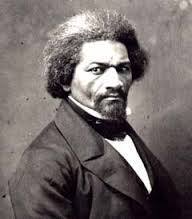
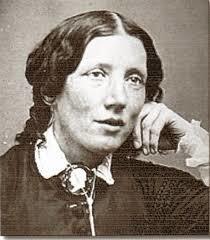
- 48—Harriet Beecher Stowe was a very strong abolitionist. She also wrote Uncle Tom's Cabin.
- 49—John Brown
He was an abolitionist and believed that violence was the answer to ending slavery. He also lead the Harpers Ferry Raid.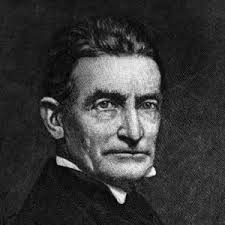
- 50—Robert E. Lee
A Confederate General during the Civil War. He surrendered to Ulysses S. Grant at Appomattox Courthouse, Virginia on April 14, 1865.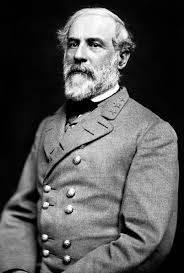
- 51—Andrew Johnson
Known as the veto president, he was our seventeenth president. He took over after Abraham Lincoln was assassinated. He also favored a lenient reconstruction plan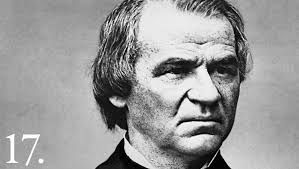
- 52—Susan B. Anthony
She was a nurse during the Civil War and founded the Red Cross. She also demanded that the utensils that were being used to do surgery be cleaned before each patient.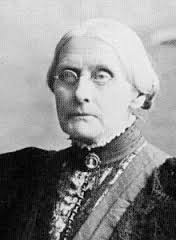
- 53—Sitting Bull
Was murdered because he was a Ghost Dance leader. He was also one of the most rebellious leaders towards the whites.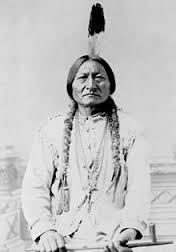
- 54—George Custer
One of the bravest Civil War generals fighting for the Union. He was one of the main reasons that Robert E. Lee surrendered at Appomattox Courthouse.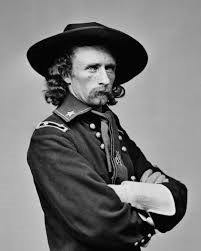
- 55—Cornelius Vanderbilt
Both a robber baron and captain of industry he worked his way up, but also bribed state officials.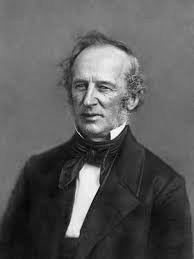
- 56—John Rockefeller
He was a captain of industry and had many good things under his belt. Such as he founded schools, colleges, and health centers.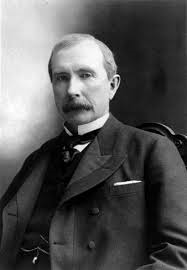
- 57—Andrew Carnegie
He was a complete robber baron. Though he did do many good things in his life, he didn't pay his workers enough and they went on strike. His business partner was in charge but most of the workers died during the Homestead strike.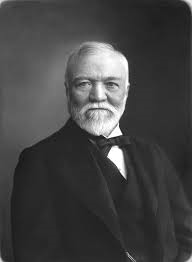
- 58—Jamestown, Virginia
One of the first colonies in the new world.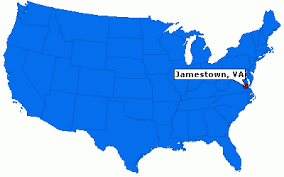
- 59—Plymouth, Massachusetts
The other first colony in the new world. The main source of production was lumbering, shipbuilding, trade, and fishing.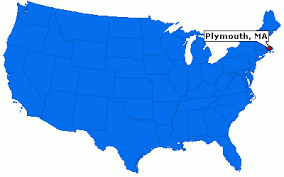
- 60—Concord, Massachusetts
Where the British soldiers were heading to get weapons believed to be owned by the colonial militia.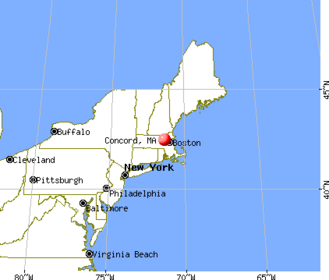
- 61—Lexington, Massachusetts
Where the civilian militia cut off the British soldiers heading towards Concord.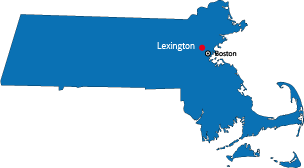
- 62—Erie Canal
This is a man made river that connects the Hudson river and Lake Erie. It was built so that settlers West of the Appalachian Mountains could transport goods and crops.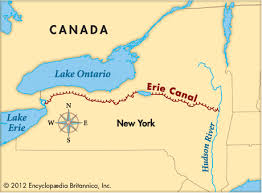
- 63—The Alamo
The Texans and the Tejanos were prepared to give their lives in order to win the battle. It went on for thirteen days and on the last day, Santa Anna's army won over the rest.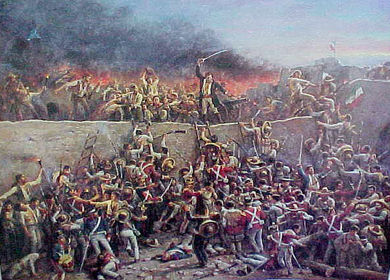
- 64—Harpers Ferry
Where John Brown went to take all of the Confederates weapons and failed.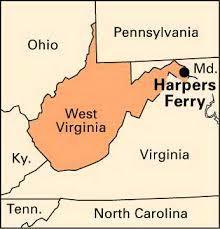
- 65—Fort Sumter
The first shots of the Civil War were fired here- fired by the Confederacy.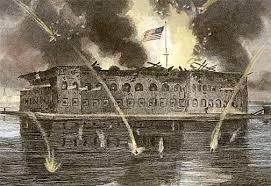
- 66—Gettysburg
The turning point in the Civil War- in favor of the Union.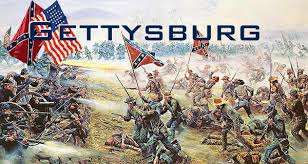
- 67—Appomattox Courthouse
Where the Civil War officially ended at Appomattox Courthouse in Virginia.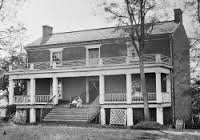
- 68—Ford's Theatre
This is where Abraham Lincoln was assassinated by John Wilkes Booth.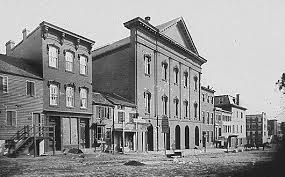
- 69—Promontory Point, Utah
This is where the transcontinental railroad was finished.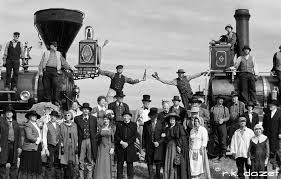
- 70—Ellis Island
Located in New York immigrants come from the West to our East coast.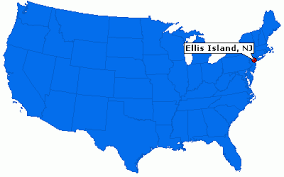
- 71—Angel Island
Located in California, immigrants heading East will end up on our West coast.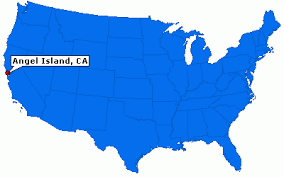
- 72Declaration of IndependenceThe Declaration of Independence was signed July 4, 1776 by our founding fathers, this marked the day America became free.
- 73Revolutionary WarMany things lead to this war one most key point was taxation without representation. The patriots won the war.
- 74Articles of ConfederationThe first "Constitution" but failed when there were no consequences.
- 75Great CompromiseThe Virginia plan was based off of population while the New Jersey plan was just to have the same number of representatives for each state. That is how the House of Representatives and the Senate came to be.
- 76Passing of the ConstitutionSome of the people in the United States didn't want the Constitution to be passed without a Bill of Rights. So when the Constitution was passed it was decided there would be a Bill of Rights.
- 77Adding the Bill of RightsThe adding to the Bill of Rights was three years after the Constitution was ratified in 1788.
- 78—Louisiana Purchase
Was purchased from France in 1803 and it included 17 states or parts of states for only 15 million dollars.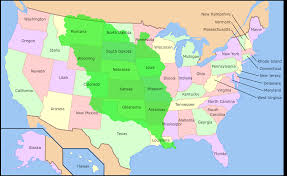
- 79—Missouri Compromise
Divided the nation into non-slave and slave states by the 36,30 latitude line.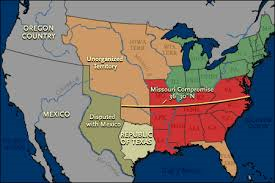
- 80Indian Removal ActThe Indian Removal Act was organized by Andrew Jackson, and moved 5 or 6 tribes to reservations in Oklahoma. Also known as the trail of tears.
- 81Mexican- American WarAmerica won and James K. Polk was president at the time and we gained the Southwest territory.
- 82California Gold RushThe California gold rush was in 1849 and the people who took place in the gold rush were known as the 49ers.
- 83Homestead ActPresident Abraham Lincoln signed this act. It gave away Western land with a small fee and a five year condition of residency before the land had an owner.
- 84Industrial RevolutionA point in American history where our technology started to excel. People moved form rural to urban areas. Streets were dirty and many people died of diseases.
- 85Underground RailroadPart of the slavery time period, it was a way for slaves to escape to freedom. The biggest leader of the underground railroad was Harriet Tubman.
- 86Seneca Falls ConventionThe women of America got together at Seneca Falls to form the first Women's rights meeting.
- 87Compromise of 1850This compromise banned slave trade in Washington D.C. and temporarily preserved the union. It also added California as a free state and the rest of the Southwest territory got to vote whether they were a free or slave state.
- 88Kansas- Nebraska ActWestern territories that were North of the Missouri compromise line were off limits to slavery and it also led to Bleeding Kansas.
- 89Dred Scott v. SanfordDred Scott and his owner moved to a free state. After living there for some time he decided to sue for his freedom. His appeal was denied, and it was said that slaves are property not people.
- 90Fugitive Slave ActThis act made it to where any black man or woman or child who was in the North would no longer be safe. The black people where always scared because the white people where allowed to capture them and return/put in the South.
- 91Bleeding KansasIt was a series of political problems that included the Free- Staters and the Border Ruffians.
- 92Civil WarThe Civil War took place after most of the South seceded from the United States, forming the Confederacy. After the war had started the secondary goal was to end slavery.
- 93Emancipation ProclamationThe Emancipation Proclamation was issued after Gettysburg and Vicksburg, and it officially ended slavery- but most of the slaves were not released.
- 94Civil War Draft RiotsThese riots took place mainly in the North because the North needed soldiers to fight in the Civil War. But the riots were because the richer people wee able to pay to get out of the war and the poorer people couldn't and were forced into the war.
- 95—Gettysburg Address
Abraham Lincoln gave this speech after the battle of Gettysburg and it honored the ones who died.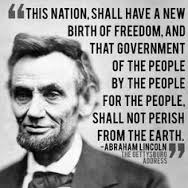
- 96ReconstructionThe time period after the Civil War, where the South was being rebuilt. Also known as the 2nd Civil War.
- 9713th AmendmentThe 13th amendment formally abolished slavery in America.
- 9814th AmendmentThe 14th amendment gave black people birth rights.
- 9915th amendmentThe 15th amendment gave African- American men the right to vote.
- 100—Completion of the Transcontinental Railroad
In 1869 it was completed and it made travel easier for the people who wanted to move West.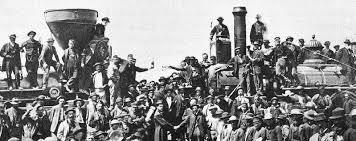
- 101Gilded AgeThe time period after Reconstruction where the rich got richer and the poor got poorer.
- 102Populist's PartyThe party that was created for the people so that the farmers and such. Also known as the People's Party.
- 103Plessy v. FergusonPlessy sat in a white railway car and was arrested. He went to the Supreme Court and claimed his Constitutional rights were violated, but the courts said that they were not it was merely a distinction between whites and blacks.