
Karteikarten
Last WYNTK
Karten in diesem Stapel (100)
- 1AmendmentA change or correction made on a document.
- 2AssimilateTo pull in information and completely understand.
- 3BiasTo favor one thing over another in an unfair way.
- 4BicameralWhen a government has two sections of a legislative body.
- 5BlockadeTo prevent supplies from entering or leaving a port.
- 6BoomtownA town going through swift growth due to sudden success.
- 7CapitalismAn economic system in which a countries industry is controlled by a private owner in order for them to make a better profit.
- 8Captain of IndustryIndustrious leaders who transformed the American economy with their business skills.
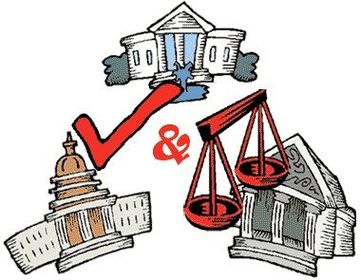
- 9Checks and BalancesEach branch of the government has somewhat control over one another.
- 10CongressA country's national legislative branch.
- 11Due ProcessA citizen's legal rights may not be taken away.
- 12EconomicsProduction, distribution, and consumption of goods and services.
- 13EmancipatedTo be freed from bondage.
- 14EnfranchiseTo give the right to vote.
- 15EnumeratedTo mention something specifically.
- 16FederalismThe dividing of power between local, state, and national governments.
- 17Forty-ninersPeople who came to California during the 1849 California Gold Rush hoping to strike rich.
- 18Free EnterpriseAn economic system in which private business is free of state control.
- 19Habeas CorpusA law requiring a person under arrest to be brought before a judge into court.
- 20IndustryThe economic production of raw materials and manufactured goods in factories.
- 21Judicialappropriate to a court or judge.
- 22Ku Klux KlanA secret society organized in the south after the Civil War to terrorize blacks and supporters of black rights.
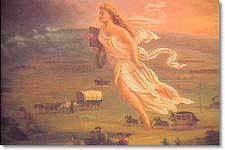
- 23Manifest DestinyThe destiny of american expansion in the 19th century to stretch from coast to coast.
- 24MartyrSomeone who dies for a religious cause.
- 25MonopolyThe control of the supply service.
- 26NomadicAnything that involves moving around a lot.
- 27OverrideTo reject or cancel a decision.
- 28Popular SovereigntyWhen people are the source of all political power.
- 29RatifyTo sign a document making it officially valid.
- 30RadicalExtremist
- 31RepublicanismHaving a representative of a government rather than having people be the head of the government.
- 32Robber BaronCruel and ruthless businessman who would step at nothing to achieve great wealth.
- 33RuralAn area that is located outside cities or towns.
- 34Separation of PowersThe dividing of power between the legislative, executive, and judicial branch in our nation government.
- 35Social DarwinismThe theory that people are subject to the same laws of natural selection as plants and animals.
- 36Suffragethe right to vote in political elections.
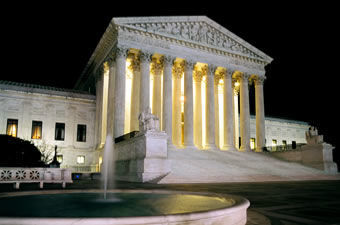
- 37Supreme CourtThe highest ruled court in the Judicial Branch.
- 38TariffA tax to be paid on particular group of imports and exports.
- 39Taxation without representationA slogan put together during the American Revolution stating that the colonist would not pay taxes with having an actual representative.
- 40Trade UnionA group of workers formed to protect their rights and interests.
- 41UrbanThe city life, surrounded by factories and buildings, away from the rural areas.
- 42VetoTo reject a decision.
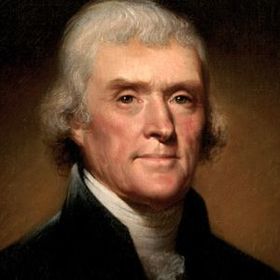
- 43Thomas JeffersonJefferson was the second president of the United States. He helped write the Declaration of Independence and purchased the Louisiana Territory.
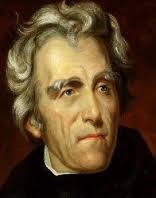
- 44Andrew JacksonAndrew Jackson was the seventh president of the United States. He signed the Indian Removal Act and is the reason we acquired Florida in 1819.
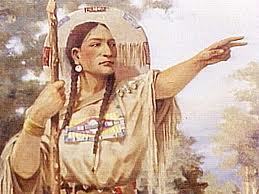
- 45SacagaweaLead guide of the Lewis and Clarke expedition. Member of the Shoshone tribe and mother of Jean Charbonneau.
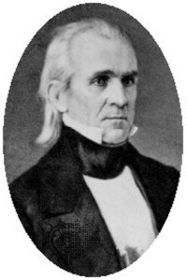
- 46James K. PolkMr. Manifest Destiny. 11th president of the United States. Helped the US acquire the Oregon Territory, California and much of the present-day Southwest.
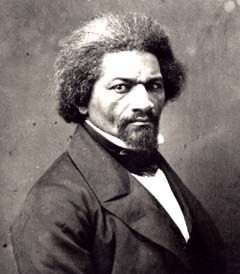
- 47Frederick DouglassDouglass was a black abolitionist who was born into slavery. Douglass wrote his own newspaper and persuaded many to help abolish slavery.
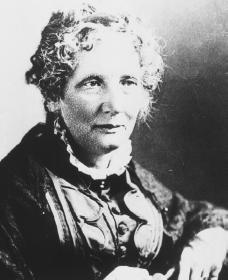
- 48Harriet Beecher StoweStowe was a white abolitionist. She wrote the famous book "Uncle Tom's Cabin". Stowe was also a women's rights activist.
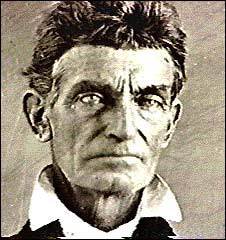
- 49John BrownBrown was a radical abolitionist who believed that violence was the only way to end slavery. He is best known for his raid at Harpers Ferry during Bleeding Kansas.
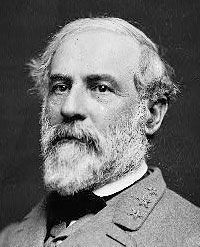
- 50Robert E. LeeLee was a general of the confederate army Virginia. He attended WestPoint University. Made a name for himself after he stopped the Harpers Ferry Raid. Very Loyal to his home state Virginia.
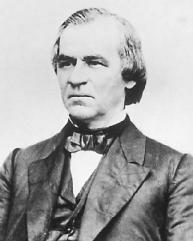
- 51Andrew JohnsonJohnson was the 17th president of the United States. Johnson took office after Lincoln's assassination. Favored the South during reconstruction and was enemies with the Radical Republicans because of their different beliefs.
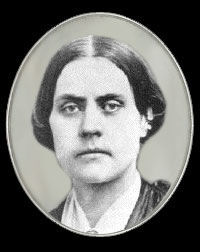
- 52Susan B. AnthonyAnthony was a leader of the women rights movement during the late 1800s and early 1900s. Anthony was a big reason women received the right to vote even though she wasn't alive when it happened.
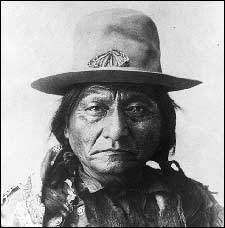
- 53Sitting BullLeader of the Lakota Sioux tribe. Led his people's resistance against the United States. Not too fond by the American people. Was later killed during his arrest in a melee outside his cabin.
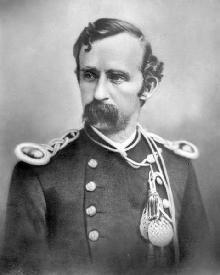
- 54George CusterOne of the youngest US Generals of his time. Famous for his death at Little Big Horn when his over confidence got him killed.
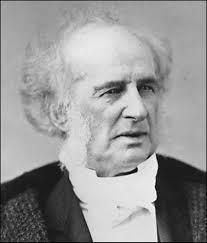
- 55Cornelius VanderbiltStarted working at age 11. Founded Vanderbilt University. Made his money off of mining gold. Offered ships to the Union during the Civil War.
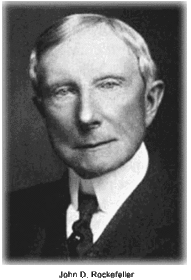
- 56John RockefellerRockefeller was Captain of Industry in the 1800s. Famous for making his money off of oil. Forced smaller companies to surrender their stocks to his control.
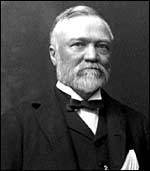
- 57Andrew CarnegieVery famous Captain of Industry during the Gilded Age. Made his money off of selling steel. Helped with transportation during Civil War. Was said to not provide the best working conditions for his workers.
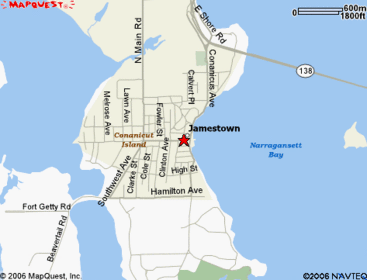
- 58JamestownThe first English settlement in american. Very rough living conditions for anything to grow. Some people ate each other to survive. Became a boomtown once illegal tobacco was brought to grow.
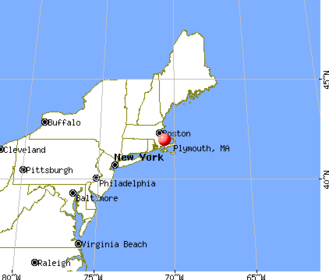
- 59PlymouthSecond English settlement in Massachusetts a couple decades after Jamestown. Settlers sailed in on the famous ship called the Mayflower. Better living conditions than Jamestown.
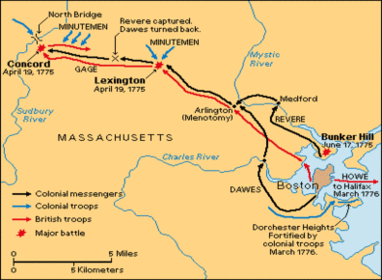
- 60Lexington and ConcordFirst battle of the Revolutionary War. This is where the first shot heard around the world was shot. Where the United States proofed that they were in for a hard fought war.
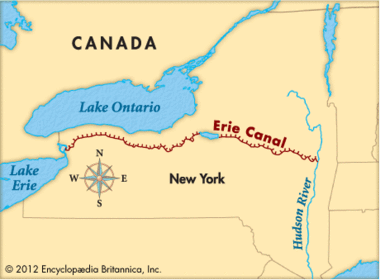
- 61Erie CanalA canal in New York that ran from Albany, New York, on the Hudson River to Buffalo, New York, at Lake Erie. This changed the way goods were exported and imported.
- 62The AlamoFamous battle during the Mexican-American war. The US held off the Mexicans for many days but eventually gave up the fort. The Mexicans then killed all Americans trying to strike fear into our hearts.
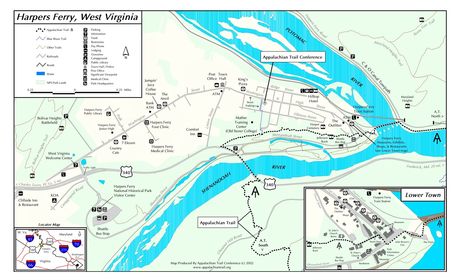
- 63Harper's FerryOn October 16th, 1859 John Brown and a group of his supported went to raid Harper's Ferry hoping that local slaves would join the raid. This did not happen and later Brown was captured and hung for his crime.
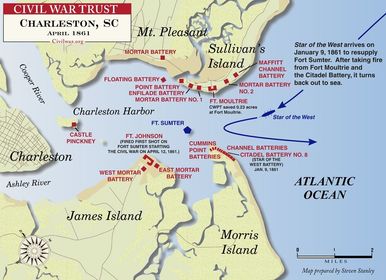
- 64Fort SumterFort Sumter was the first battle of the Civil War. This was an important battle not only because it was the first, but because the Confederates surprisingly won showing that this was going to be a long bloody war.
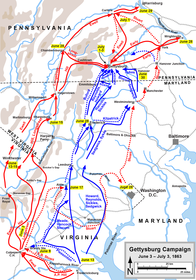
- 65GettysburgConfederates attacked Pennsylvania. For three days straight they fought. Union used a battle line called a fish hook and defended themselves to victory. Turing point for the Union.
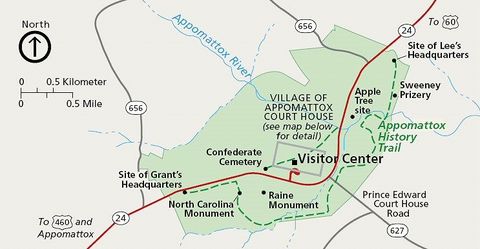
- 66Appomattox CourthouseBasically the end of the Civil War. General Robert E. Lee Surrendered. Because of this most confederates lost motivation to keep fighting because many of the soldiers looked up to Lee.
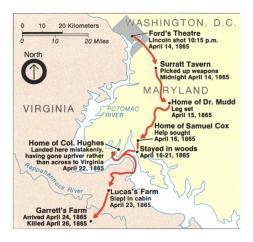
- 67Ford's TheaterThis is where Abraham Lincoln was assassinated by famous actor John Wilkes Booth. This was the first time Lincoln had done something relaxing in awhile. During a funny scene when everyone was laughing Booth shot Lincoln in the head and ran.
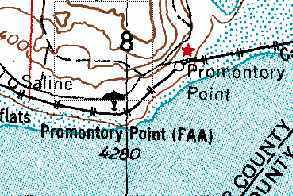
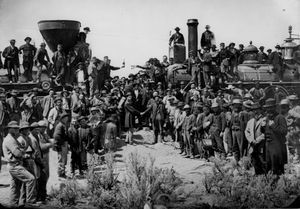
- 68Promontory Point UtahThe site of the completion of the first transcontinental railroad, which linked the Union Pacific on the east and the Central Pacific on the west.
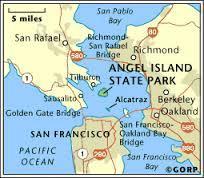
- 69Ellis Island and Angel IslandThese two islands were United States Immigrant Station. Ellis island is where most Europeans would come from. Angel island is where most Chinese would come from.
- 70Declaration of IndependenceThis document was written on July 4, 1776 declaring the United States independence from Great Britain. The new american land was then named the United States of America.
- 71Revolutionary WarThe power struggle between the colonists and Great Britain. There was a struggle because Great Britain wasn't treating the colonists equal. This caused the colonists to fight back then eventually go to war.
- 72Articles of ConfederationThe first constitution. Didn't stay for long because the articles of confederation gave too much power to the people.
- 73Great CompromiseThis compromise created our congress. Gave smaller states equal power as bigger states by having a senate (two from each state) and also gave the bigger states more power over the smaller states by giving them the House of Representatives (members based on size of state)
- 74Passing of the ConstitutionThe continental congress debated and voted on the new constitution making sure that both the government and the people had power.
- 75Adding the Bill of RightsAdded to the constitution to clarify the rights of the individual.
- 76Louisiana PurchaseThe Louisiana Territory was bought by our second president Thomas Jefferson. He bought the land from Napoleon of France in New Orleans hoping to buy the New Orleans shipping port, but ended up getting more. The territory cost around $15 million ( 4 cents per acre).
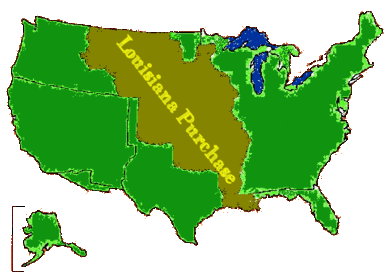
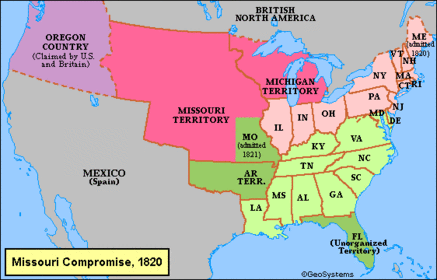
- 77Missouri CompromiseBanned all slavery in the Louisiana Territory north of 36 degrees 30' parallel. Missouri entered the United State as a slave state. Maine entered the Union as a free state.
- 78Indian Removal ActThis Act signed by Andrew Jackson relocating Indian tribes to Oklahoma. This trip to Oklahoma was called the Trail of Tears, one of the most disappointing decisions in US history.
- 79Mexican-American WarThis war was between the United States and Mexico. The war was created when the land hungry Americans and the Mexicans had controversies over the size of Texas.
- 80California Gold RushIn 1849 there was a massive Gold Rush in California. People from all over the world rushed to California in the hope to strike rich.
- 81Homestead ActEnacted to encourage settlements in the west. If settlers lived on this land for five years the land was then given to them.
- 82Industrial RevolutionThe time in American history when the Industry boomed. The country went from doing every by hand to having machines do it for us. (cotton gin & power loom)
- 83Underground RailroadA secret path from the south that led to the North. Underground meaning secret and railroad meaning path. This was led by Harriet Tubman and saved many slaves lives.
- 84Seneca Falls ConventionThe convention was in Seneca Falls, N.Y. The first ever convention held in the United States with an attendance of almost 200. Organized by Lucretia Mott and Elizabeth Cady Stanton.
- 85Compromise of 1850Slave trade was banned, and half of the new land in the west was free, while the other wasn't. A new more forceful Fugitive Slave Act was created.
- 86Kansas-Nebraska ActAllowed citizens living in Kansas and Nebraska the decision to vote whether the states would be free or slave states.
- 87Dred Scott CaseThis case was made when Scott moved with his master from a slave state to a free state. Scott went to court stating that he was free. The court not only decided that he was still a slave but also ruled that slaves didn't have the right to go to court because they were not citizens.
- 88Fugitive Slave ActThis act made it so any run-away slave caught had to be sent back to the south. Many whites would though take blacks that were born in the north lie saying they are run-away slaves and be send them to the south.
- 89Bleeding KansasSeries of violent political battles in the United States involving anit-slavers and pro-slavers.
- 90Civil WarThe result of the south believing that the power between the slave states and the free states were uneven. (1861-1865) Lasted a lot longer than people expected. People thought the North would easily win.
- 91Emancipation ProclamationSeptember 22, 1862. The proclamation declared that all persons held as slaves within' the rebellious states shall be free.
- 92Civil War draft riotsViolent draft riots in New York City to protest against the new laws passed by Congress drafting men to fight in the civil war.
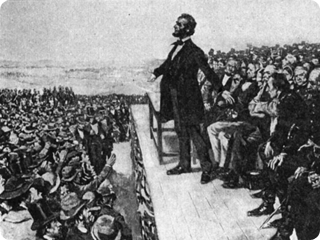
- 93Gettysburg AddressOn November 19, 1863, President Abraham Lincoln gave a short speech dedicating the battlefield cemetery at Gettysburg, Pennsylvania.
- 94ReconstructionThe period after the Civil War planning on bring the South back into the Union and rebuilding all of the destruction in the south and north from the war.
- 95Civil War Amendments13th- Abolished Slavery.
14th- Granted citizenship to blacks.
15th- Granted blacks the right to vote. - 96Completion of the Transcontinental RailroadIn 1869, The presidents of the Union Pacific and Central Pacific Railroads meet. This made goods easier to transport, and also made travel a lot safer. (Safer, Cheaper, and Quicker)
- 97Indian WarsDuring the late 1800s controversies between the Indians and Americans stirred when the land hungry americans kept moving indian reservations deeper and deeper west to the point where Indians had enough.
- 98Gilded AgeThe age at which economics in the United States boomed.
- 99Populist PartyA political party organized in 1892 to represent the common folk- especially farmers against interest of railroads and politicians who supported them.
- 100Plessy v. FergusonA fair trial between whites and blacks using the laws and not being bias.