
Karteikarten
Lab Tests
Karten in diesem Stapel (10)
- 1BUN- Blood Urea Nitrogen normal Range- 10-25 or 5-25 KaplanThe blood urea nitrogen or BUN test is primarily used, along with the creatinine test, to evaluate kidney function in a wide range of circumstances, to help diagnose kidney disease, and to monitor people with acute or chronic kidney dysfunction or failure
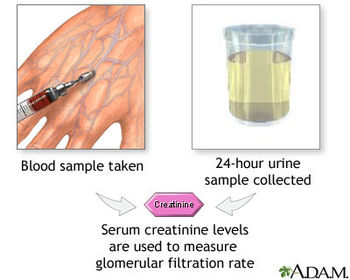
- 2Creatinine 1.2-1.5 or 0.5-1.5 kaplan 0.7 to 1.3 mg/dL for men 0.6 to 1.1 mg/dL for womanThis test is done to see how well your kidneys work. Creatinine is removed from the body entirely by the kidneys. If kidney function is not normal, the creatinine level in your blood will increase. This is because less creatinine is released through your urine.
The creatinine blood test is used to assess kidney function. ... Sometimes, creatinine may be performed as part of a renal panel to evaluate kidney function. ... Blood and urine creatinine levels may be used to calculate a creatinine clearance. - 3Creatinine A normal result is 0.7 to 1.3 mg/dL for men and 0.6 to 1.1 mg/dL for women.What Abnormal Results Mean
A higher than normal level may be due to:
Blocked urinary tract
Kidney problems, such as kidney damage or failure, infection, or reduced blood flow
Loss of body fluid (dehydration)
Muscle problems, such as breakdown of muscle fibers (rhabdomyolysis)
Problems during pregnancy, such as seizures caused by eclampsia or high blood pressure caused by preeclampsia
A lower than normal level may be due to:
Conditions involving the muscles and nerves that lead to decreased muscle mass
Malnutrition
There are many other conditions for which the test may be ordered, such as high blood pressure, diabetes, or medicine overdose. Your provider will tell you more, if needed. - 4Platelet AggregationDone to evaluate clients with bleeding disorders
- 5Creatine Clearance The creatinine clearance test helps provide information about how well the kidneys are working. The test compares the creatinine level in urine with the creatinine level in blood.Clearance is often measured as milliliters per minute (ml/min). Normal values are:
Male: 97 to 137 ml/min.
Female: 88 to 128 ml/min. - 6Albumin, Serum The typical value for serum albumin in blood is 3.4 to 5.4 g/dL. Low albumin levels can indicate a number of health conditions, including: liver disease inflammation shock malnutrition nephritic syndrome Crohn’s disease celiac diseaseA serum albumin test measures the amount of albumin in the blood. Abnormal serum albumin levels may indicate that your kidneys or liver isn’t working correctly.
Symptoms associated with liver disease include:
jaundice, or yellow skin
fatigue
unexpected weight loss
swelling around the eyes, stomach, or legs - 7potassium Normal Range: 3.5 - 5.0High potassium levels (hyperkalemia) may be seen in conditions such as:
Kidney disease
Addison disease
Injury to tissue
Infection
Diabetes
Dehydration
Consuming too much potassium (for example, fruits are particularly high in potassium, so excessive intake of fruits or juices may contribute to high potassium)
In patients on intravenous (IV) fluids, excessive IV potassium
Certain drugs can also cause high potassium in a small percent of people; among them are non-steroidal anti-inflammatory drugs (NSAIDs), ACE inhibitors, beta blockers (such as propanolol and atenolol), angiotensin-converting enzyme inhibitors (such as captopril, enalapril, and lisinopril), and potassium-sparing diuretics (such as triamterene, amiloride, and spironolactone).
Low potassium levels (hypokalemia) may be seen in conditions such as:
Diarrhea and vomiting
Conn syndrome (hyperaldosteronism)
A complication of acetaminophen overdose
In diabetes, the potassium level may fall after someone takes insulin, particularly if the person has not managed his or her diabetes well.
Low potassium is commonly due to "water - 8Specific Gravity Normal Range: 1.010-1.030Specific Gravity = object divided by water (1000kg)
Specific gravity is used to see how much the object would be submerged in water.
Specific gravity eg. - 9Erythrocyte sedimentation rate (ESR or sed rate) is a relatively simple, inexpensive, non-specific test that has been used for many years to help detect inflammation associated with conditions such as infections, cancers, and autoimmune diseasesATI: Lab value that is seen elevated when having a diagnosis of
Systemic Lupus. - 10—
Informationen
- Beschreibung
- 3rd Year Nursing LABS Karteikarten am Lab Tests, erstellt von Jamie R Pascual am 05/04/2016.
- Erstellt von
- Jamie R Pascual · Apr 2016
- Aktualisiert
- 20 Apr 2016
- Aufrufe
- 2
- Bewertung