Karteikarten
Chapter 7- Periodicity
Karten in diesem Stapel (40)
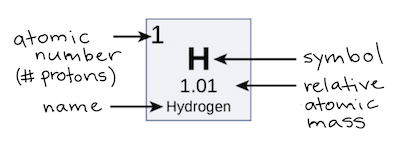
- 1Which is the mass number and which is the atomic number?
- 2Is the top or along the edge the period or the group?Period (down the peridoic table) - the number of the highest energy electron shell in element's atoms.
Group (across the peridoic table)- same number of outer-shell electrons and similar properties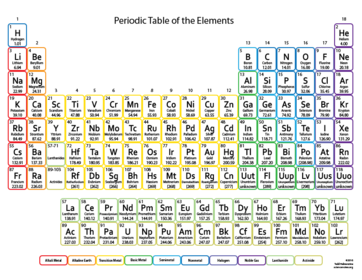
- 3Periodicity (repeating trends in properties of elements) need to know aboutElectron configuration
Ionisation energy
Structure
Melting point - 4Periodic trend in electron configuration
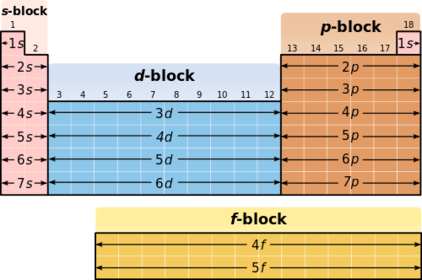
- 5Advantages of groups 1-7 and 0 (old way) and not 1-18(Old way) Group number matches number of electrons in highest energy electron shell. 1-18 does not match.
The periodic table in the exam has both - 6First ionisation energy(How easily an atom loses electrons to form positive ions)
Energy required to remove one electron from from each atom in one mole of gaseous ions of an element to form one mole of gaseous +1 ions - 7Ionisation energyGreater distance between nucleus and outer electrons, less nuclear attraction
1st electron lost is in highest energy level, experience least attraction from nucleus - 8Factors affecting attraction and therefore ionisation energy- Atomic RadiusGreater distance from nucleus and outer electrons = less nuclear attraction
Force of attraction falls off sharply with distance - 9Factors affecting attraction and therefore ionisation energy- Nuclear chargeMore protons in nucleus = greater attraction between nucleus and outer electrons
- 10Factors affecting attraction and therefore ionisation energy- Electron shieldingInner-shell electrons repel outer-shell electrons (as electrons are negatively charged)
The repulsion called the shielding effect, reduces attraction between nucleus and outer electrons - 11Second ionisation energyEnergy required to remove one electron from each atom in one mole of gaseous 1+ ions of an element to form one mole of gaseous 2+ ions
- 12Describe the difference between the size of first and second isonisation energy e.g. of heliumSecond ionisation energy is greater than first
Helium has 2 protons attracted to 2 electrons in 1s sub shell
After 1st electron is lost the 2nd is pulled closer to the nucelus
Nuclear attraction on remaining electrons increases, more ionisation energy needed to remove 2nd electron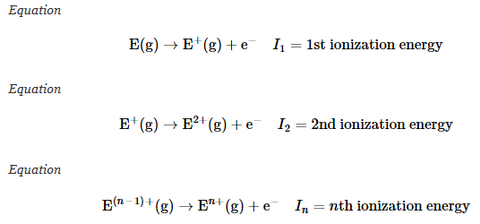
- 13Describe the successive ionisation energy graph of sodiumLarge increase between electron 9 and 10 suggesting 10th electron is removed from a different shell. Large increase between 1 and 2 suggesting 2nd electron is removed from different shell
Remember n=1 is electrons 9 and 10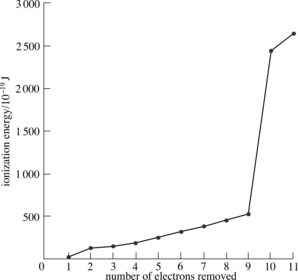
- 14Successive ionisation energies allow predictions to be made about:Number of electrons in the outer shell
Group of the element in the periodic table
Identity of the element - 15From the first 4 ionisation energies identify the element from period 3Steady increase
Large increase between 3rd and 4th ionisation energies
4th electron must be removed from inner shell
3 electrons in the outer shell so must be in group 3
Period 3 and Group 3 (13) so must be aluminium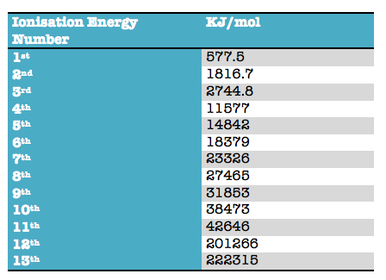
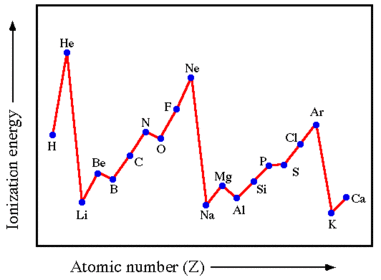
- 16Key patterns with first ionisation energiesGeneral increase in 1st ionisation energy across each period
e.g. H → He, Li → Ne, Na → Ar
Sharp decrease in 1st ionisation energy between the end of 1 period and start of the next
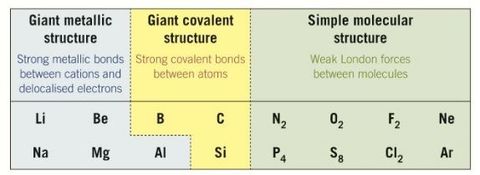
e.g. He → Li, Ne → Na, Ar → K
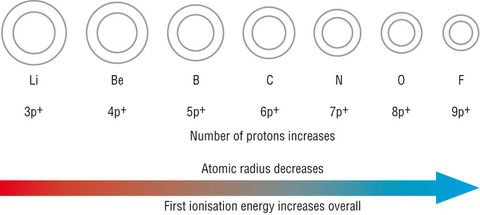
Trends are due to atomic radius, electron shielding and nuclear charge - 17Why does 1st ionisation energy show an increase across a period?Nuclear charge increase, same shell: similar shielding, nuclear attraction increase, atomic radius decrease, 1st ionisation increases
- 18Why does 1st ionisation energy show a decrease down a group?Atomic radius increases, more inner shells so shielding increases, nuclear attraction on outer electrons decreases, 1st ionisation energy decreases
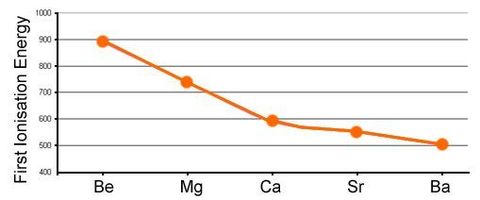
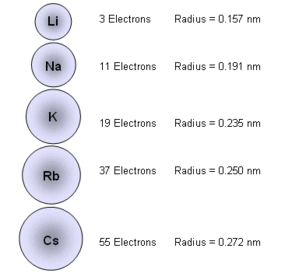
- 19Why does nuclear charge increase but 1st ionisation energy decrease?Although nuclear charge increases, it's effects are outweighed by the increase in radius and the increased shielding (to a lesser extent)
- 20Across period 2 which elements experience significant falls in the ionisation energy meaning there is not a steady increase?Beryllium to boron
Nitrogen to oxygen
It links to the filling of s and p orbitals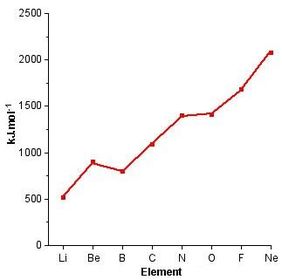
- 21Why is there a decrease in 1st ionisation energy from beryllium to boron?The start of filling the 2p sub-shell
2p sub-shell in boron has higher energy than 2s in beryllium
2p electrons in boron is easier to remove than one of the 2s electrons in beryllium
1st ionisation energy is less for boron than beryllium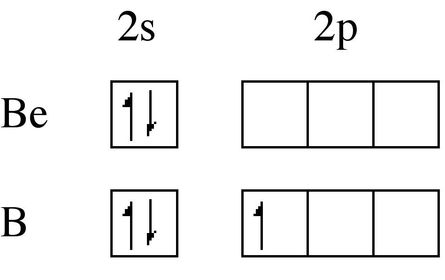
- 22Why is there a decrease in 1st ionisation energy between nitrogen and oxygen?Start of electron pairing in the p orbital
Paired electron in 1 2p orbital repel one another so is easier to remove an electron than in nitrogen
1st ionisation energy less for oxygen than nitrogen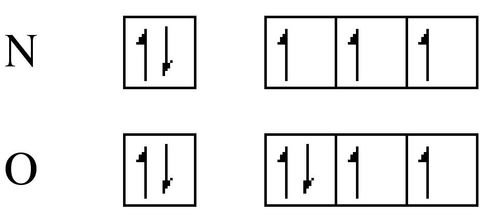
- 23What are metalloids/semi-metals?Elements near the metal/non-metal divide that show inbetween properties e.g. Boron (B), Silicon (Si), Geranium (Ge), Arsenic (As) and Antimony (Sb)
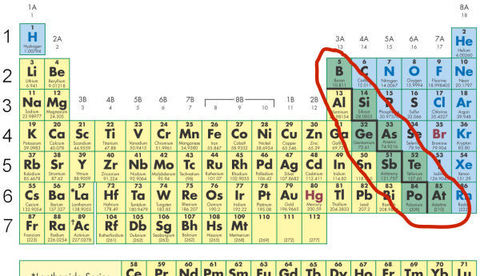
- 24Do all metals have the same properties?No
W (tungsten) is strong and hard, Al (Aluminium) is light and Os (Osmium) is heavy - 25How does conduction take place?Charge must be able to move within a structure for conduction to take place
- 26The structure of metal-metal bondingMetallic bonding- Giant metallic lattice
Each atom donates negative outer-shell electron which are delocalised throughout the whole structure and becomes positive ions (cations)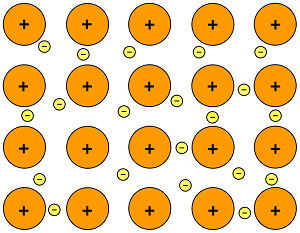
- 27Role of cations and electrons within the metallic structureCations are in a fixed position maintaining the structure and shape of the metal
Delocalised electrons are mobile and able to move throughout the structure
Charge of electrons = charge of the cations - 28Properties of metallic bondingStrong metallic bonds- between cations and electrons
High electrical conductivity
High melting and boiling points - 29Electrical conductivity in metallic bondingConduct electricity as solids and liquids
Voltage applied to a metal, delocalised electrons can move through a structure and carry charge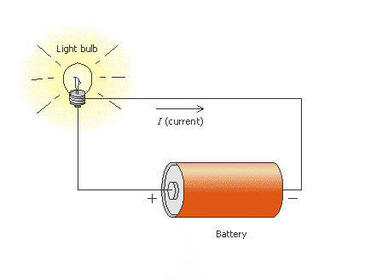
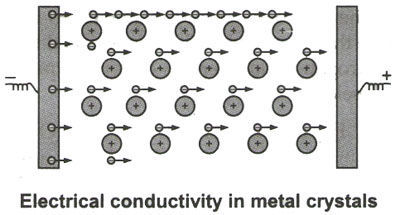
- 30Melting and boiling points of metallic bondingMelting points depends on strength of metallic bonds holding the atoms in a giant metallic lattice
Most metals- high temperature is needed to overcome strong electrostatic attraction between cations and electrons- have high melting and boiling points
- 31Solubility of metallic bondingMetals do not dissolve
Interactions between polar solvents and charges in metallic lattice would lead to a reaction not dissolving - 32Non metal and non-metalsCovalently bonded molecules
Solid state- molecules form simple molecular lattice structure held together by weak intermolecular forces - 33Which non-metals do not have simple molecular structures?Atoms are held together by covalent bonds and form a giant covalent lattice these include: boron, carbon and silicon
- 34Carbon (in it's diamond form) and silicion have a giant covalent lattice structure, but what shape structure do they form?They are both in group 14 (4) so have 4 electrons in their outer shell so can form 4 covalent bonds
It results in a tetrahedral stucture e.g. carbon in its diamond form above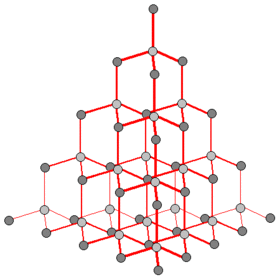
- 35Melting and boiling points of giant covalent latticesHigh melting and boiling points
Covalent bonds are strong so high temperatures needed to provide large energy quantity needed to break strong covalent bonds
- 36Solubility of giant covalent latticesInsoluble to most solvents
Covalent bonds in the structure are too strong to be broken down by interactions with a solvent - 37Electrical conductivity of giant covalent latticesNon-conductors of electricity
ONLY EXCEPTION is graphene and graphite (carbon forms). In diamond (carbon) and silicon all 4 electrons are involved in covalent bonding so cannot conduct electricity. In graphene and graphite 1 electron is avaliable for conduction so can conduct electricity.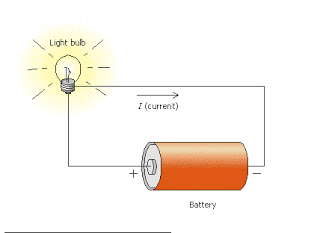
- 38Graphene and graphitePlanar hexagonal layers with 120˚ bond angles due to electron pair repulsion
Only 3 of the 4 electrons are used in covalent bonding, so has delocalised electrons
Graphene is 1 layer of graphite
Graphite has parrallel layers of heaxonally arranged carbon atoms
Layers are bonded by weak London forces
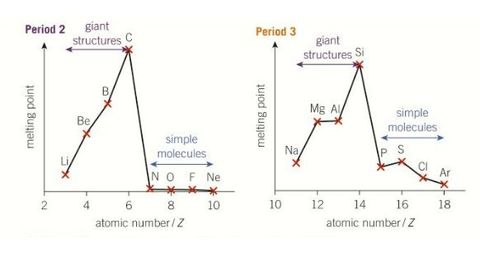
Both have delocalised electrons so can conduct electricity - 39Periodic trends in melting points- group 2 and 3
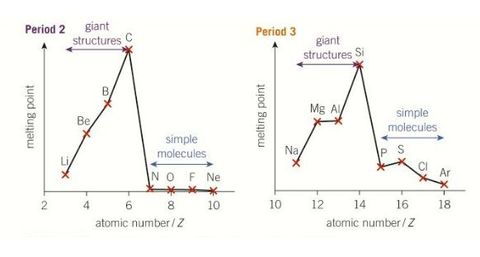
- 40Why is the periodic trends in melting point across periods 2 and 3 as they are?Melting point increases group 1-14 (4)
Sharp decrease between groups 14 (4) and 15 (5)- change from giant to simple molecular structures. Also divide between metals and non-metals
Melting points are compartively low from groups 15 (5) to 18 (0)
Giant structures have strong forces to overcome (high melting points) and simple molecular have weak forces to overcome (low melting points)