
Mindmap
Muscles & Control of Body Movement
Inhalt der Mindmap
Muscles & Control of Body Movement
skeletal
- striated
- contract in response to somatic motor neuron
- muscle tension
- neuromuscular junction
- excitation-contraction coupling
- Calcium release
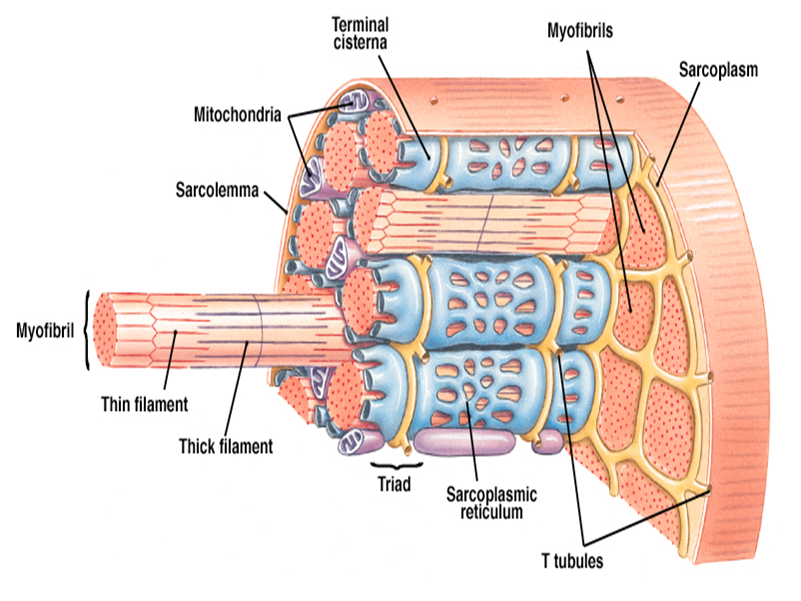
- sarcoplasmic reticulum
- lots of calcium = lots of racheting --> contracting (sarcomere shortening)
- acetylcholine release
- somatic motor neuron
- bind to receptors on sarcolemma
- sodium in (more), potassium in
- depolarize
- sodium in (more), potassium in
- bind to troponin
- tropomyosin moves away from actin
- myosing & actin can bond strongly
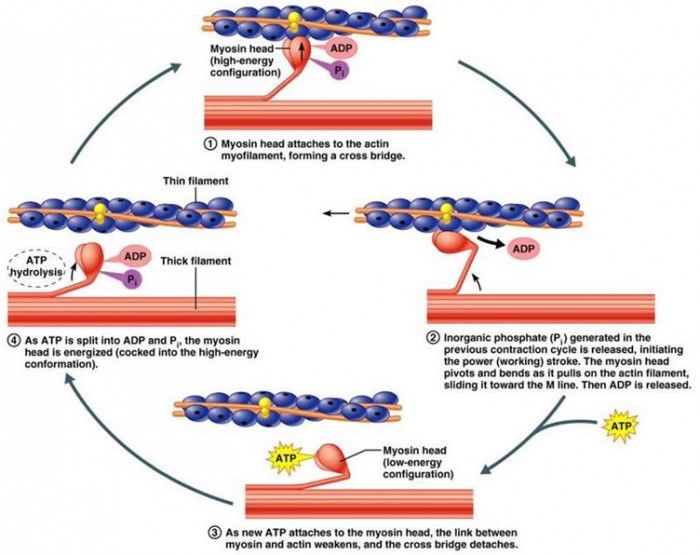
- ATP for release of myosin head
- phosphocreatine in cytoplasm breakdown; short (limited)
- anaerobic glycolysis: takes a while for blood vessels to dilate, short period (longer than phosphocreatine)
- aerobic respiration: citric acid cycle and etc slow, requires oxygen, LARGE amount of energy marathon
- *Rigor mortis: no ATP = unable to release myosin heads
- power stroke
- hydrolysis
- Fatigue theories
- peripheral = predominant theory
- depletion of glycogen stores
- run out around 20 miles
- ions
- Calcium
- Potassium
- tetanus
- cross bridge
- ATP for release of myosin head
- myosing & actin can bond strongly
- tropomyosin moves away from actin
- DHP receptor & RyR receptor (know involved)
- relay change in levels
- Calcium release
- excitation-contraction coupling
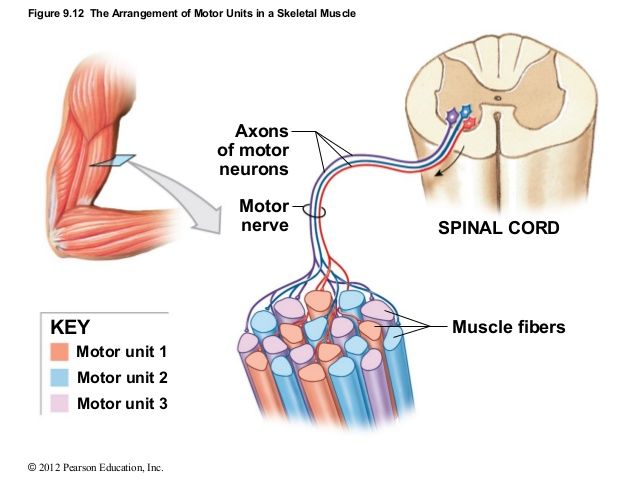
- motor units
- group of muscle fibers that function together and controlled by motor neurons, innervates split end 1 axon/motor unit
- recruitment of motor units to increase force asynchronous to avoid fatigue shaking = switching back and forth between motor units
- 1 motor unit to multiple fibers
- optimum force
- structure
- tendons
- attach to bone
- origin
- closest to more stationary
- insertion
- muscle fibers
- alpha
- long, cylindrical
- several hundred nuclei
- fusion of embryonic
- satellite (committed stem) cellsj just outside
- bundled into fascicles
- collagen, elastic fibers, nerves and blood vessels
- compare to sewer system; move things more quickly
- t-tubule: faster action potential
- thick filaments: myosin
- thin filaments: actin
- muscle twitch
- fast
- glycolytic paler fastest easily fatigueddon't need myoglobin
- oxidative glycolytic
- slow
- oxidative, mitochondria RED (myoglobin)
- summation (limited ability)
- fast
- be at least familiar with sarcomere unit bands
- tendons
- antagonistic muscle groups
- extensor (bones away)
- flexor (bones towards)
- contraction
- largest cell type, massive distance
cardiac
- intercoded discs for Ca flow
- single nucleus
- electrically linked
- ...can have some heartbeats when dead
smooth
- don't need to worry too much about structure
- small
- mostly involuntary (autonomic)
- communication
- gap junctions
- varicosities
- single vs. multi-unit
- contraction
- no bundling
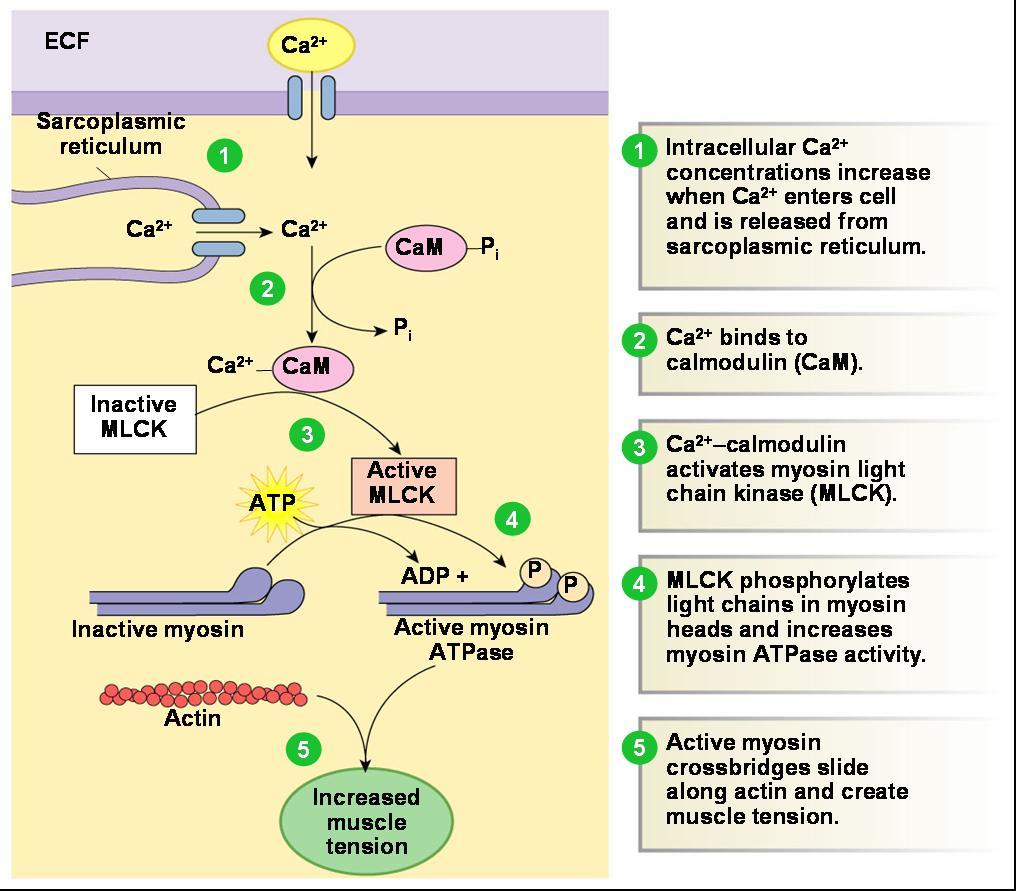
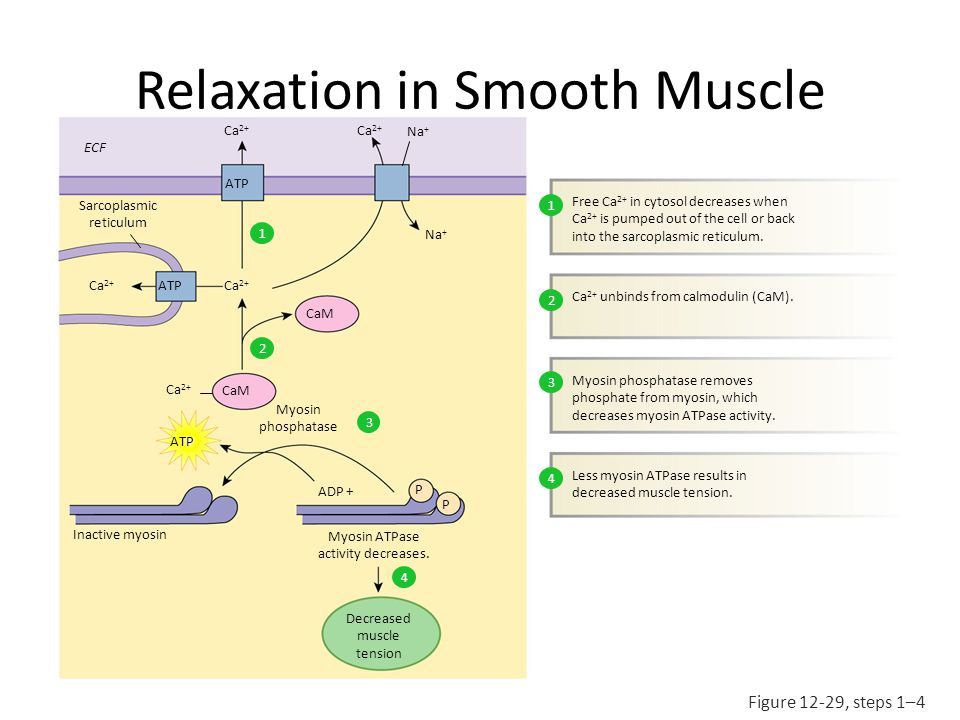
- Calcium in fluid
- phosphotase
- different sensitivites
- tonic & phasic
- slower, less energy used
- large range
- different potentials
- pacemaker
- regulation
- hormones, paracrines
neural reflexes
- somatic or autonomic brainstem or spinal cord (faster)
- nothing on innate/inborn vs. learned reflexes
- spinal reflex (child nodes not actually that related)
- basal ganglia parkinson's = death of
- integration in CNS
- voluntary: corticospinal tract
- most complicated
- motor cortex
- cerebellum
- basal ganglia
- brain stem as relay and integration center
- *TABLE 13.3*
autonomic reflexes
- slowest
- CNS
skeletal muscle reflexes
- polysynaptic
- proprioceptors
- stabilizing reflex
- joint
- golgi tendon organ
- extrafusal fibers
- muscle spindles
- embedded in middle
- stretch, intrafusal fibers
- alpha-gamma coactivation
- myotatic unit
- patellar tendon reflex collection of pathways controlling single joint quick, monosynaptic
- crossed extensor reflex more complex movement simultaneous; polysynaptic
- reciprocal inhibition
mechanics
- not too heavy
Disorders
- Duchenne muscular dytrophy
- McCardle's disease
- cannot convert glycogen
Bilder und Dateien der Mindmap
Informationen
- Beschreibung
- Chapters 12 & 13 of Silverthorn's Human Physiology
- Erstellt von
- Eliza Mendoza
- Aufrufe
- 6
- Bewertung