
Mindmap
GCSE Chemistry C1.2 - Limestone & Building Materials
Inhalt der Mindmap
GCSE Chemistry C1.2 - Limestone & Building Materials
Limestone
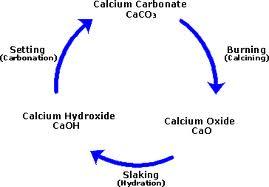
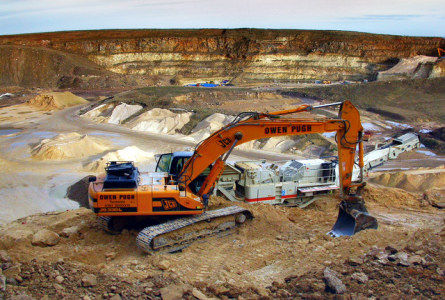
- Calcium carbonate (CaCO3) also known as Limestone is a sedimentary rock. This can be obtained by quarrying and cut into blocks. It is used as a building material to build walls of houses.
- Advanatages of quarrying:
- Creates Jobs
- Supplies limestone for glass, stell, cement industries in the area
- Increases business for local workers.
- Supplies limestone for glass, stell, cement industries in the area
- Creates Jobs
- Disadvantages of quarrying:
- Destroys habitats
- Noise pollution
- Dust pollution
- Destroys landscape
- Dust will destroy local farmers crops
- Destroys landscape
- Dust pollution
- Noise pollution
- Destroys habitats
- Advanatages of quarrying:
- Thermal Decomposition
- Calcium carbonate decomposes on heat to produce calcium oxide and carbon dioxide. This reaction is known as thermal decomposition
- Other metal carbonates also undergo thermal decomposition, also producing a metal oxide and carbon dioxide gas.
- Reaction of calcium hydroxide
- Calcium hydroxide reacts with carbon dioxide to produce calcium carbonate. This reaction is used as a test for carbon dioxide gas (if the limewater AKA Calcium hyrdoxide turns cloudy, the test is positive for carbon dioxide).
- Calcium carbonate (CaCO3) also known as Limestone is a sedimentary rock. This can be obtained by quarrying and cut into blocks. It is used as a building material to build walls of houses.
Cement, Mortar, Concrete
- Cement - Powdered limestone and powered clay are mixed in a rotary kiln to produce dry cement.
- Mortar = Cement + sand +water
- Concrete = Aggragate (crushed rock) + sand + water
Reacting Metal Carbonates
- Metal carbonates + acid --> Salt + Water + Carbon dioxide
- e.g) Calcium carbonate + Hydrochloric acid --> Calcium Chloride + Water + Carbon Dioxide
- This means that over time, the metal carbonate, calcium carbonate can be eroded away by acid rain having the potential to destroy buildings.
- e.g) Calcium carbonate + Hydrochloric acid --> Calcium Chloride + Water + Carbon Dioxide
- Metal carbonates + acid --> Salt + Water + Carbon dioxide
Bilder und Dateien der Mindmap
Informationen
- Beschreibung
- Limestone and building materials, C1.2
- Erstellt von
- chancice.branscombe
- Aufrufe
- 300
- Tags
- Bewertung