
Mindmap
Chemistry AS Revision

Inhalt der Mindmap
Chemistry AS Revision
Atomic Structure
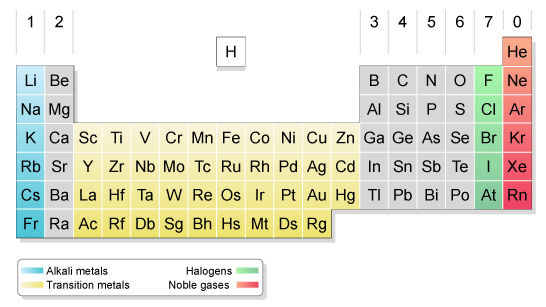
- Locate The Groups and The Groups Charecteristics
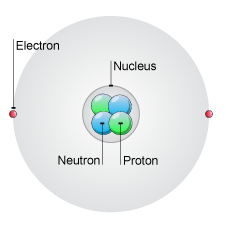
- All Material things are made up of Atoms
- Over 100 Types of Atoms Called Elements
- The mass number is equal to the number of protons and neutrons
Ionic Compounds
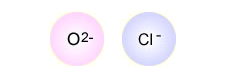
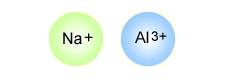
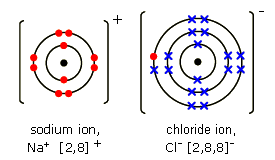
- Electrically charged particles, Made when Atoms loose or gain Electrons
- Metal Atoms loose electrons, to become Positively Charged Ions
- Non Metal Atoms gain Electrons to become Negatively Charged Ions
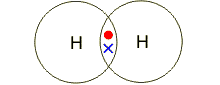
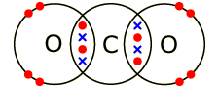
- Dot and cross Diagrams to show ions in some common Compunds
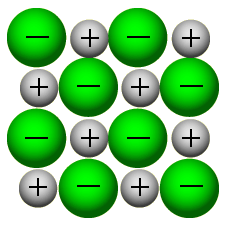
- Compounds such as Sodium Chloride are arranged in a 'Lattice'
- Non Metal Atoms gain Electrons to become Negatively Charged Ions
Covalent Compunds
- Non-Metals combine together by sharing Electrons
- Giant Molecular Compunds
- Contains Non-Metal Atoms
- Characteristics
- High Melting Points
- Variable Conductivity
- High Melting Points
- Characteristics
- Contains Non-Metal Atoms
- Giant Molecular Compunds
- Dot and Cross diagrams Show how pairs of Bonds Form
- Simple Molecular Compounds
- Only a few atoms held by strong covalent Bonds
- Simple Molecular Compounds
- Covalent Bonds do not Conduct Electricity.
- Non-Metals combine together by sharing Electrons
Periodic Table
- A Table of Metals and Non Metals
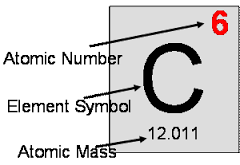
- Arranged in the order of Atomic Numbers
- Different Groups contain Elements with similar Propities
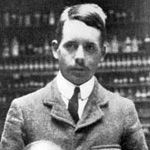
- Using Atomic Number instead of Atomic Mass as the organising principle Was first proposed by...
- Henry Moseley
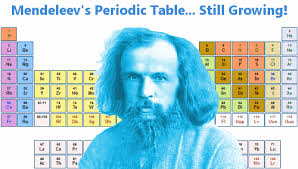
- Russian Chemist Called Dmitri Mendeleev, Discovered a sensible way to order Elements
- Mendeleev Put them in order of Relative Atomic Mass
- Arranged in the order of Atomic Numbers
- A Table of Metals and Non Metals
Chemical Reactions
- Endo and Exo Reactions
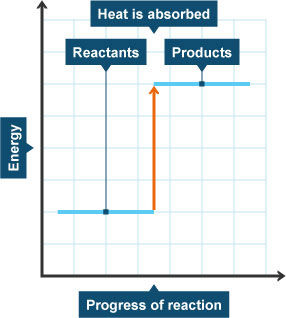
- Endothermic
- Take in Energy from the Surroundings
- Examples =
- Electrolysis
- Photosynthesis
- Electrolysis
- Examples =
- Take in Energy from the Surroundings
- Exothermic
- Transfer Energy to The surroundings
- Examples =
- Combustion (Burning)
- Neutraliastion
- Combustion (Burning)
- Examples =
- Transfer Energy to The surroundings
- Endothermic
- Endo and Exo Reactions
Quantitative Chemistry
- Relative Atomic Mass [Ar]
- Relative Formula Mass
- Example 1:
- Find the [Mr] of carbon monoxide, {CO}. The [Ar] of Carbon is 12, and The [Ar] of Oxygen is 16, So the [Mr] is 12 + 16 = 28
- In all Chemical reactions, The total Reactants used is equal to the total mass of the products made
- Find the [Mr] of carbon monoxide, {CO}. The [Ar] of Carbon is 12, and The [Ar] of Oxygen is 16, So the [Mr] is 12 + 16 = 28
- Example 1:
- Relative Formula Mass
- Empirical Formulae
- Method
- Find Mass
- Look Up Relative [Ar] Values
- Divide MASS by Ar
- Find The Ratio
- IMPORTANT - Take Caution
- Divide MASS by Ar
- Look Up Relative [Ar] Values
- Find Mass
- Method
- Relative Atomic Mass [Ar]
Bilder und Dateien der Mindmap


Informationen
- Beschreibung
- Mind-Map of Chemistry Revision
- Erstellt von
- clongworth25
- Aufrufe
- 197
- Tags
- Bewertung