
Mindmap
Atomic Structure
Inhalt der Mindmap
Atomic Structure
The Atom
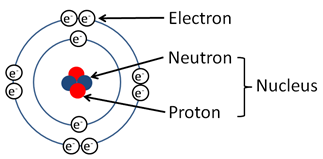
- Energy shells provide order and structure. The energy is proportional to distance from nucleus, further from nucleus, higher the energy level. Each shell must be full before filling higher shells.
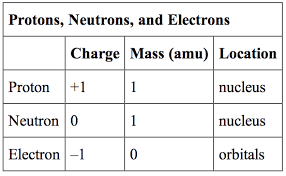
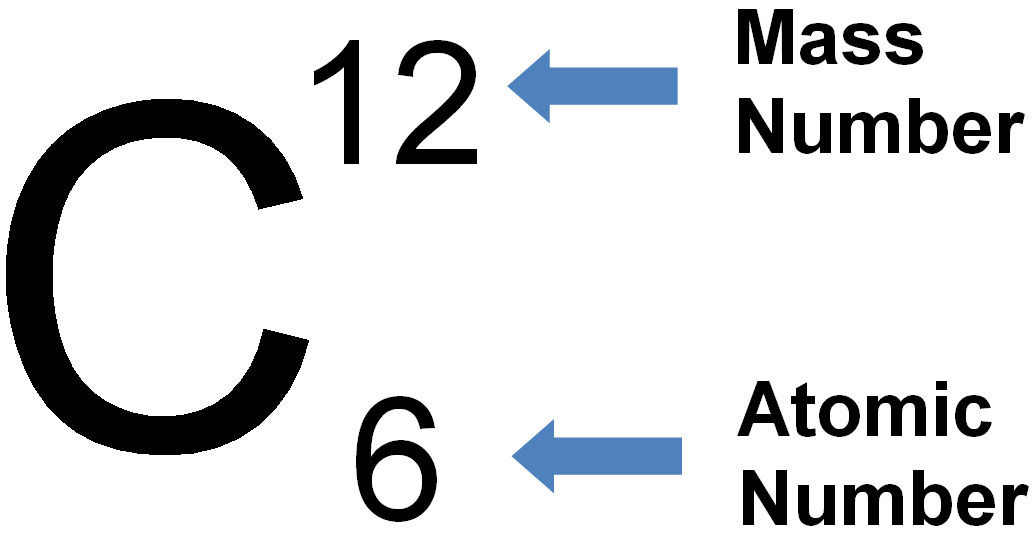
- Mass no. is total number of protons and neutrons in the nucleus
- Atomic no. is the number of protons in the nucleus as well as the number of electrons for neutral atoms.
- Mass - atomic number = no. of neutrons
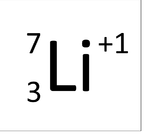
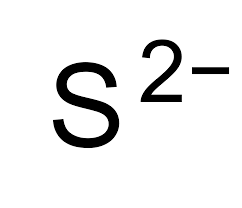
- Ions have different number of protons and electrons
- Formed by atoms losing or gaining electrons causing negative ions to have more electrons than protons and positive ions to have less electrons than protons
- 1 fewer electron than proton
- 1 more electron than proton
- Formed by atoms losing or gaining electrons causing negative ions to have more electrons than protons and positive ions to have less electrons than protons
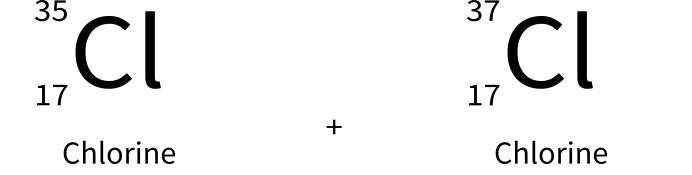
- Isotopes are atoms of the same element with the same atomic number but different mass numbers
- Vary in number of neutrons but have the same protons and electrons therefore the electrical charge is the same
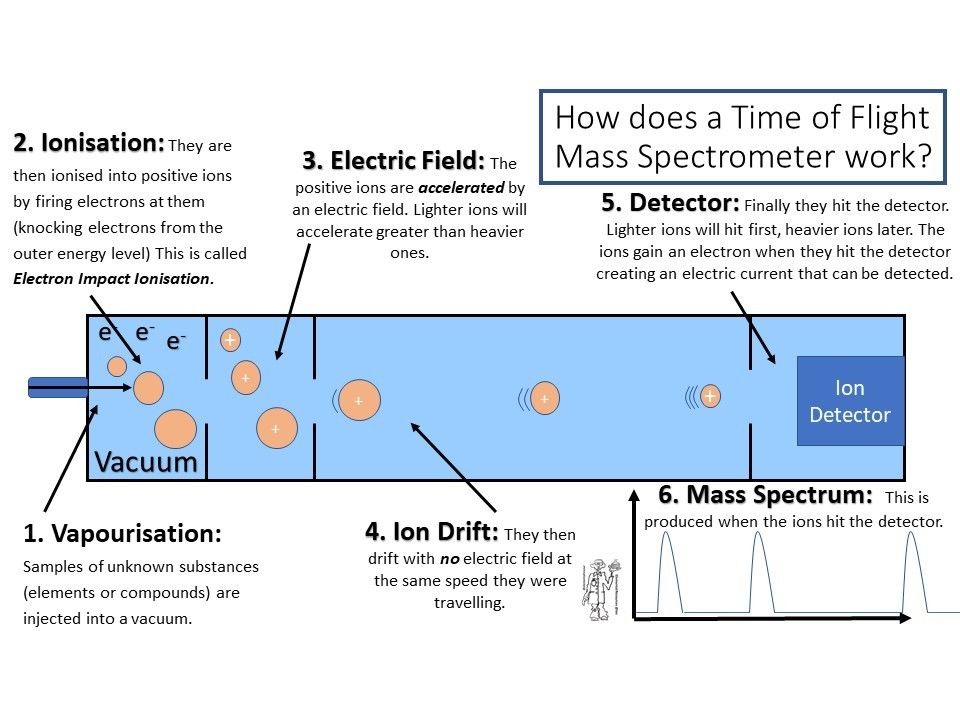
Mass Spectrometer
- Used to identify isotopes (different masses = different isotopes detected)
- Two types of mass spectrometry
- High resolution: detects relative mass upto 5 decimal places
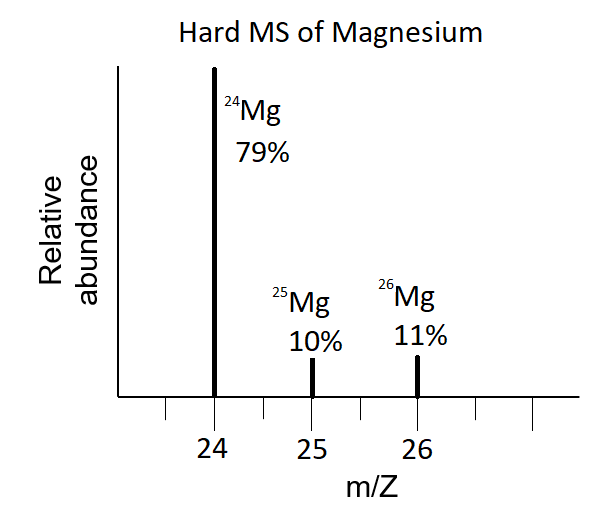
- Low resolution: detects relative atomic mass to nearest whole number
- Two types of mass spectrometry
- Calculating Relative atomic mass
- Multiply the relative abundance and the relative isotopic mass for each isotope present. Add the totals up and divide by 100 (as percentages were used)
- 79 X 24 = 1896
- 10 X 25 = 250
- 11 X 26 = 286
- 1896+250+286= 2432
- 2432/100 = 24.32
- Ar=24.32
- 2432/100 = 24.32
- 1896+250+286= 2432
- If relative abundance is not a percentage (or does not add to 100) , divide by the total sum of the relative abundances instead of 100
- Multiply the relative abundance and the relative isotopic mass for each isotope present. Add the totals up and divide by 100 (as percentages were used)
- Used to identify isotopes (different masses = different isotopes detected)
Electronic Structure
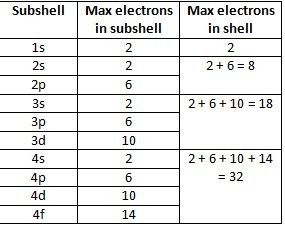
- Electrons orbit the nucleus in shells. Each shell is made up of sub-shells and orbitals.
- Each shell is given a number (Principle quantum number) the further the shell is from the nucleus, the higher the energy and principle quantum number.
- Shells can vary in energy. They can be divided into sub-shells that have different energies and different number of orbitals that can each hold 2 electrons
- Transition metals such as chromium and copper donate one of their 4a electrons to 3d subshell due to being more stable full or half full d sub shell
- When becoming ions they lose 4s before 3d electrons
- Electronic structure decides the chemical properties of an element using the number of outer shell electrons
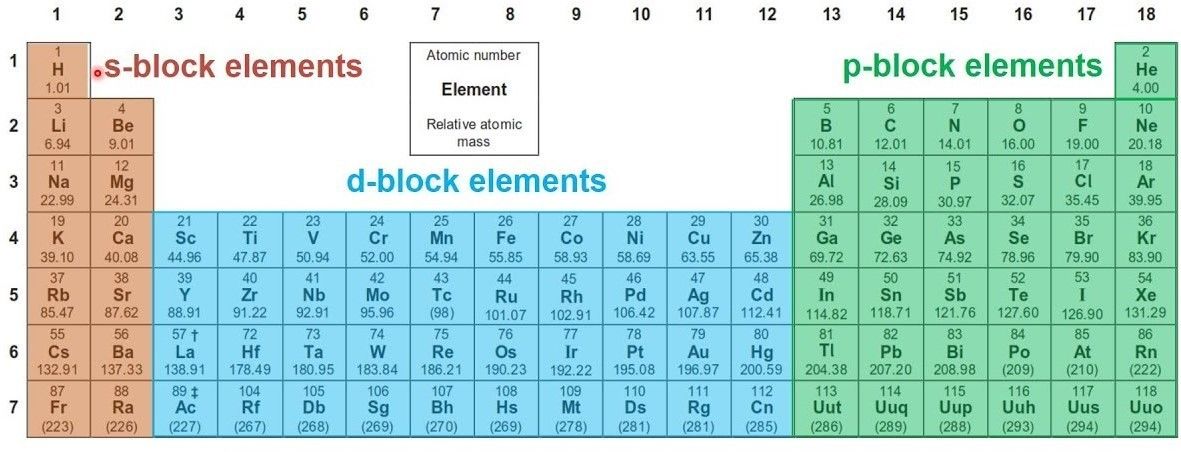
- Group 1 and 2 are s block elements which have 1 or 2 outer shell electrons which are easily lost to form positive ions with an inert gas configuratiob
- Na: 1s2s2p3s Na+: 1s2s2p
- Group 5,6,7 are p block elements which can gain upto 3 electrons to form negative ions with an inert gas configuration
- O: 1s2s2p^4 O2-: 1s2s2p^6
- Group 4 to 7 can share electrons when formed a covalent bond
- Group 0 (inert gases) have completely filled s and p sub-shells and don't lose or gain any electrons
- Group d block are transition metals which lose s to d electrons to form positive ions
- Group 1 and 2 are s block elements which have 1 or 2 outer shell electrons which are easily lost to form positive ions with an inert gas configuratiob
- Electrons orbit the nucleus in shells. Each shell is made up of sub-shells and orbitals.
Ionisation Energy
- When electrons have been removed from an atom or molecule (mass spectrometry) it has been ionised.
- The first ionisation energy is the energy needed to remove 1 electron from each atom in 1 mole of atoms in the gaseous state form 1+ions Measured in kJ mol-1 or IE
- First IE = 1+ ion Second IE = 2+ ion from a 1+ ion Third IE = 3+ ion from a 2+ ion
- The first ionisation energy is the energy needed to remove 1 electron from each atom in 1 mole of atoms in the gaseous state form 1+ions Measured in kJ mol-1 or IE
- Factors affecting ionisation energy
- Nuclear charge: more protons = more positively charged nucleus and stronger attraction for the electrons
- Distance from nucleus: attraction falls with distance, closer to the nucleus = stronger attraction
- Shielding: the number of electrons between the outer electrons and the nucleus increases, the less attraction of the outer electrons. This lessens the pull of the nucleus by inner shells of electrons
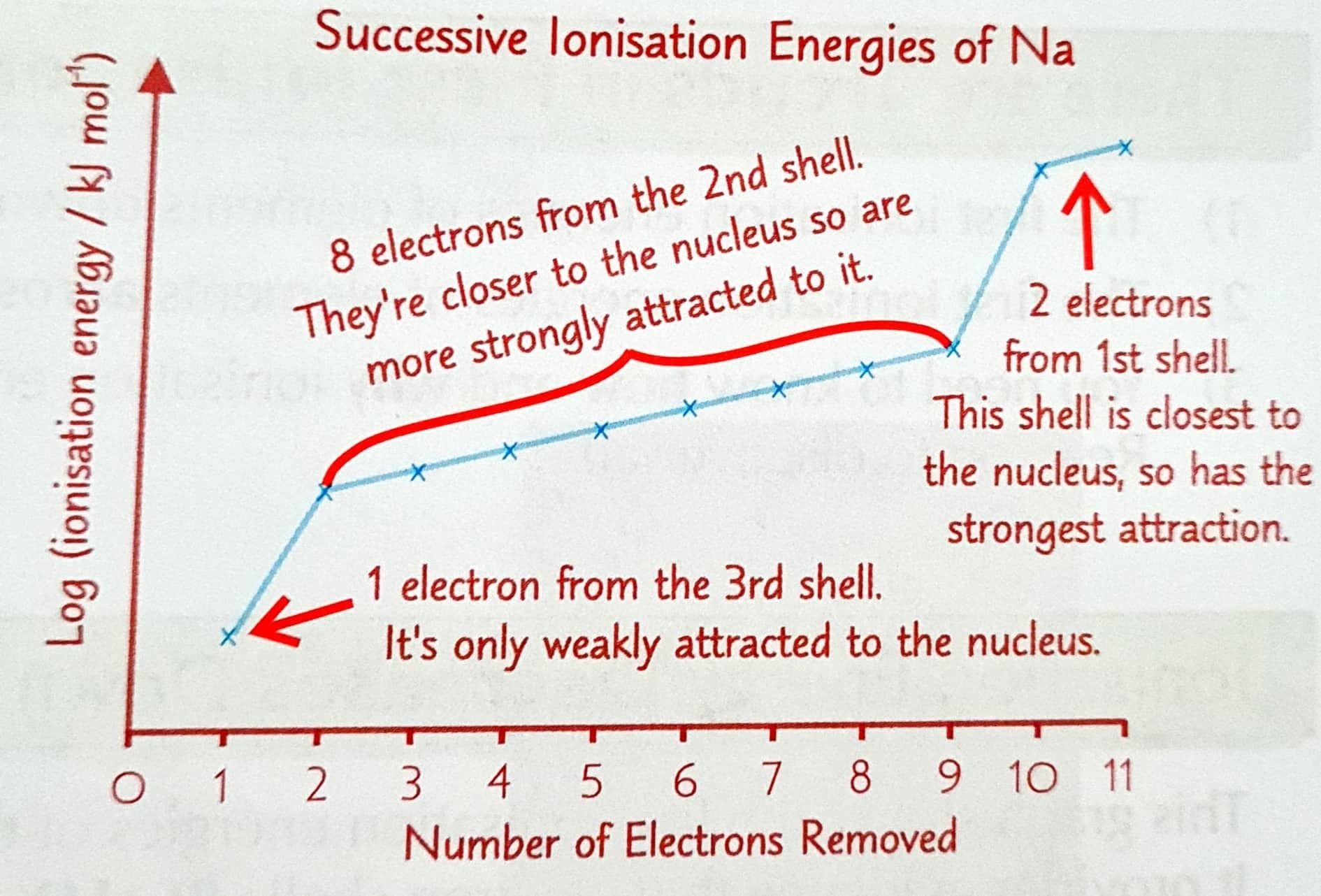
- Successive ionisation energies involve removing additional electrons
- All electrons can be removed from an atom leaving only the nucleus. successive ionisation energy= each time an electron is removed
- Second ionisation energy is the energy needed to remove 1 electron from each ion in 1 mole of gaseous 1+ ions to form 1 mole of gaseous 2+ ions
- O+(g) ------> O2+(g) + e- 2nd ionisation energy = +3388kJmol-1
- X(n-1) (g) ---------> xn+ (g) +e-
- O+(g) ------> O2+(g) + e- 2nd ionisation energy = +3388kJmol-1
- Second ionisation energy is the energy needed to remove 1 electron from each ion in 1 mole of gaseous 1+ ions to form 1 mole of gaseous 2+ ions
- Within each shell, successive ionisation energies increase due to the removal of electrons from an increasingly positive ion. Big jumps in ionisation energy occur when a new shell is broken into
- Graphs can show which groups of the periodic table an element belongs to by counting the electrons removed before the first big jump = group number
- Graphs can be used to predict the electronic structure of elements. Working right to left, count the points before each big jump to find the number of electrons in each shell
- All electrons can be removed from an atom leaving only the nucleus. successive ionisation energy= each time an electron is removed
- When electrons have been removed from an atom or molecule (mass spectrometry) it has been ionised.
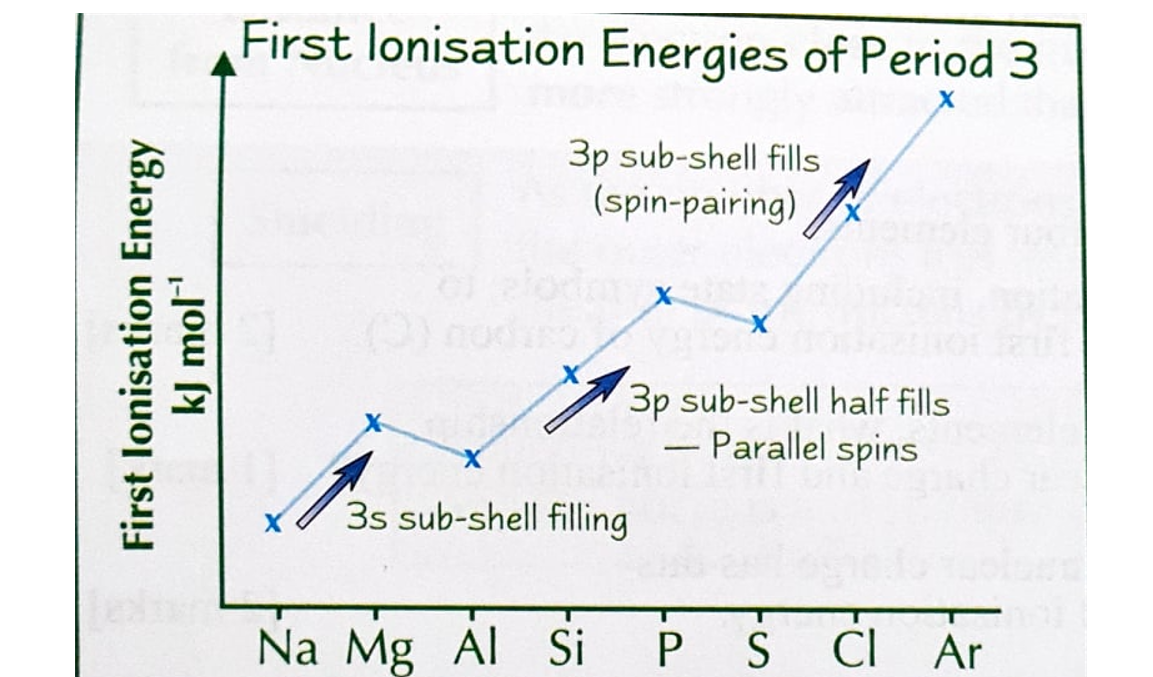
Trends in First Ionisation Energy
- Trends across a period of the periodic table (left to right) that tell us about the electrons and the energy levels and sub-shells they occupy
- Trends in first ionisation energies
- The first ionisation of energies of elements down a group of the periodic table decrease
- The first ionisation of energies of elements across a period generally increase
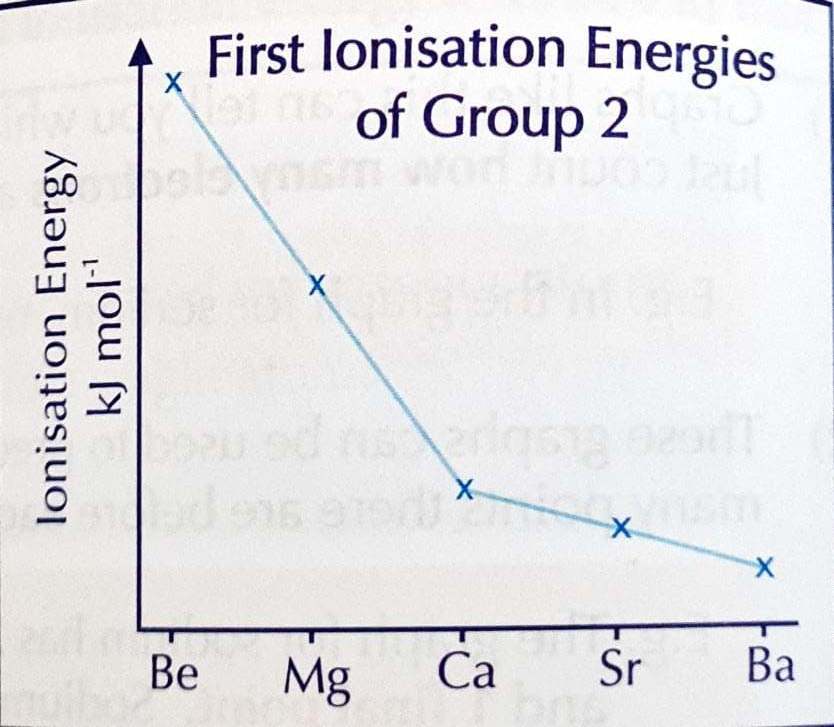
- Decreases down Group 2
- If each element down group 2 has an extra electron shell compared to the one above, the extra inner shell will shield the outer electrons from the attraction
- The extra shell means the outer electrons are further away from the nucleus, thus the nucleus attraction reduces
- If each element down group 2 has an extra electron shell compared to the one above, the extra inner shell will shield the outer electrons from the attraction
- Increases across a period
- Across a period, the trend is the ionisation energies increase (harder to remove outer electrons) due to the increasing number of protons causing a stronger nuclear attraction
- Extra electrons are roughly at the same energy level, even if the outer electrons are in a different orbital type
- There is little shielding or extra distance to lessen nuclear attraction
- Drop between group 2 and 3 displays shell structure
- Aluminium's outer electron is in 3p orbital rather than 3s, so the electron is found further from the nucleus.
- 3p orbital has additional shielding by 3s2 electrons
- Both factors override the effect of the increasing nuclear charge, resulting in the ionisation energy dropping slightly
- Provides evidence for the theory of electron sub-shells
- Both factors override the effect of the increasing nuclear charge, resulting in the ionisation energy dropping slightly
- Aluminium's outer electron is in 3p orbital rather than 3s, so the electron is found further from the nucleus.
- The drop between group 5 and 6 due to electron repulsion
- The shielding in Phosphorus and Sulfur are identical and the electron is being removed from an identical orbital.
- Phosphorus: electron removed from a singly-occupied orbital
- The repulsion between two electrons in an orbital means electrons are easily removed
- Sulfur: electron removed from an orbital containing two electrons.
- Phosphorus: electron removed from a singly-occupied orbital
- The shielding in Phosphorus and Sulfur are identical and the electron is being removed from an identical orbital.
- Trends in first ionisation energies
- Trends across a period of the periodic table (left to right) that tell us about the electrons and the energy levels and sub-shells they occupy
Bilder und Dateien der Mindmap


Informationen
- Beschreibung
- Chemistry Mindmap am Atomic Structure, erstellt von Naseem Ahmed am 28/07/2021.
- Erstellt von
- Naseem Ahmed
- Aufrufe
- 0
- Bewertung