
Mindmap
Chemisty Revision
Inhalt der Mindmap
Chemisty Revision
Periodic table
- Elements
- Electons
- mass;very small (0.0005)
- Charge;negative
- location;outer shells
- Neutron
- Location;inside the nucleus
- Charge;neutral
- Mass; 1
- Protons
- Mass; 1
- Charge;positive
- Location;inside the nucleus
- Electons
- Ordered in atomic mass
- Columns going across; groups
- Rows going across;periods
- Group 0;noble gases
- Elements
Isotops
- Atoms with the same number of protons but different number of neutrons
Maxium number of electrons in each shell;
- 2,8,8,12
Colvent compounds
- Covenlent bonds
- Bonds ocurring between non-metals
- Electrons shared between atoms
- Three different types;
- simple molecules(very small)
- very low boiling point.
- Intermolecluar forces are weak (force between molecules)
- Chlorine has a low boiling point as it contains simple covent molecules
- Nitrogen has a low boiling point as it contains simple colvent molecules
- Giant covelent (giant cluster structures)
- Polymers(long, straight lines)
- long chains of covalently bound molecules.
- Along chains are many weak intermolealur forces
- long chains of covalently bound molecules.
- simple molecules(very small)
- Covalent;sharing metals= always lose electrons.
- Covenlent bonds
diamond
- Structure;each carbon atoms is bonded to other of their own
- Melting points;high melting points because of large repeating structures
- Electrical conductivity;Doesn't conduct as all carbon electrons are bonded
Graphite
- Structure;each carbon in every layer is bonded to three others.
- Between the layers are very weak forces meaning they can slide
- Used in pemcils
- Between the layers are very weak forces meaning they can slide
- Melting points;high melting points because of large repeating structures
- Electrical conductivity;from free delocalised electron it can conduct
- Structure;each carbon in every layer is bonded to three others.
Delocalised=negative
Fullerene
- Structure;carbon bonded with three other carbons.
- hollow, cage like structure.
- Properties;
- Used in nanotubes
- can be used for drug delivery
- Structure;carbon bonded with three other carbons.
Graphene
- Structure;one graphite layer
Ion;metal=non-metal=electrostatic
- Ionic bonds
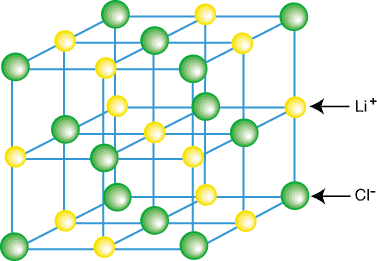
- Formed by the transfer of electrons to form ions. These are attracted to each other by electronic forces.
- Ionic structures
- Giant repeating lattices
- With strong electostatic forces in all directions
- Meaning high melting&Boiling points
- Lattices;
- With strong electostatic forces in all directions
- When dissolved or molten(melted) the ions can move=create electrons
- Higher boiling points from giant repeating lattices with strong electrostatic forces in all directions.
- Giant repeating lattices
- Ionic bonds
Metallic bonding
- losing electrons to gain a full outer shell
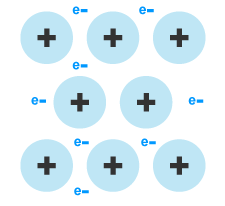
- Electrons form a 'sea of delocalisation'
- flows around the positive metals
Bilder und Dateien der Mindmap
Informationen
- Beschreibung
- Year 10 Chemistry Mindmap am Chemisty Revision, erstellt von Aimee Russell am 14/11/2016.
- Erstellt von
- Aimee Russell
- Aufrufe
- 37
- Bewertung