
Mindmap
Amount of Substance
Inhalt der Mindmap
Amount of Substance
Mole
- A large number of particles
- 6.02x10^23 particles/ molecules / ions
- Avogadro's Constant
- number of particles = moles x avogadro constant
- 6.02x10^23 particles/ molecules / ions
- Moles = mass/mr
- Moles = conc (moldm^-3) x vol (dm^3)
- 1 dm^3 = 1000 cm^3
- Ideal gas
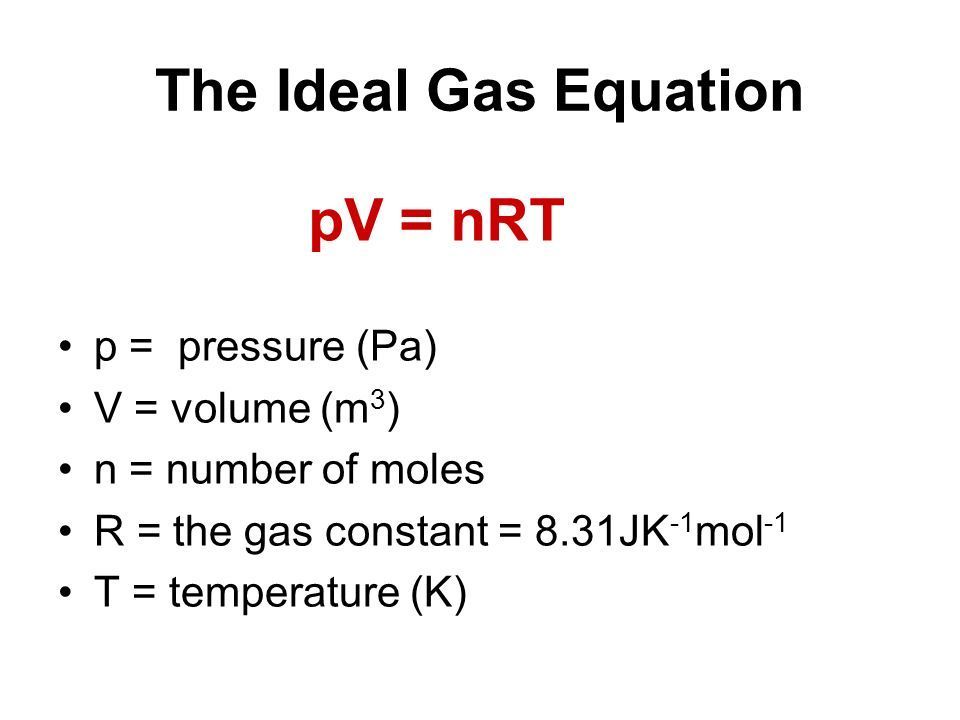
- pV = nRT
- Tells you number of moles in a volume of gas
- At room temp and pressure, one mole occupies the volume of 24dm^3
- Tells you number of moles in a volume of gas
- pV = nRT
- A large number of particles
Atom Economy
- Measure of the proportion of reactant atoms become desired product in a balanced equation
- % A.E = (mr of product / sum of all reactant mr) * 100
- High atom economy desired in industry
- Better for environment - less waste
- Waste costs money to remove safetly
- High efficiency in using raw resources
- Less money spent on seperating products and waste
- Better for environment - less waste
Titrations
- Used to find concentration of acid or akali solutions
- Allows you to find out how much acid is needed to neutralise a akali and vice versa
- Can use this data to work out conc of alkali/acid
- Use a pipette to measure out volume of the solution oy want to know the conc of
- Add few drops of indicator, then fill burette with standard solution of acid
- Use funnel to pour acid into burette, doing it below eye level for safety
- First do a rought tirtation to get a general idea of where the end point is
- Add the acid to the akali using burette with a regular swirl
- Then do an accurate titration by taking an initial reading to see exactly how much acid is in the burette
- Run the acid until within 2cm of then add dropwise, keep it accurate and not overshoot
- Work out the amount of acid used to neutralise the akali by final minus initial
- Run the acid until within 2cm of then add dropwise, keep it accurate and not overshoot
- Then do an accurate titration by taking an initial reading to see exactly how much acid is in the burette
- Add the acid to the akali using burette with a regular swirl
- First do a rought tirtation to get a general idea of where the end point is
- Use funnel to pour acid into burette, doing it below eye level for safety
- Add few drops of indicator, then fill burette with standard solution of acid
- Use a pipette to measure out volume of the solution oy want to know the conc of
- Can use this data to work out conc of alkali/acid
- Allows you to find out how much acid is needed to neutralise a akali and vice versa
- Standard Solution
- Standard solution is any solution you know the exact conc of
- Standard Solution used in titrations
- Do it by dissolving a known amount of solid in a known amount of water
- Wieght solid and boat, subtract just boat to find precise mass of solid used
- Add everything to volumetric flask and rinse beaker to make sure all solid in
- Using a funnel to make sure all goes into flask, top up flask to line
- Add stopper and shake to make sure all mixed
- Using a funnel to make sure all goes into flask, top up flask to line
- Add everything to volumetric flask and rinse beaker to make sure all solid in
- Wieght solid and boat, subtract just boat to find precise mass of solid used
- Do it by dissolving a known amount of solid in a known amount of water
- Standard Solution used in titrations
- Standard solution is any solution you know the exact conc of
- Used to find concentration of acid or akali solutions
Equations and Calculations
- Writing ionic equations
- Ionic substances in the equation will dissolve into ions
- Cancel ions on both sides, reactants and products
- Resulting in only reacting particles being shown
- Cancel ions on both sides, reactants and products
- Ionic substances in the equation will dissolve into ions
- Using molar ratio
- If you have 4 moles of reactant
- Which forms 2 moles of product
- 0.5 mol of reactant forms 0.25 moles of product
- Which forms 2 moles of product
- If you have 4 moles of reactant
- Writing ionic equations
Types of Reactions
- Compounds break down when heated, forming two or more products from one reactant
- If solid reactant broken down, will only be pure if other products are gases
- Thermal Decomposition
- If solid reactant broken down, will only be pure if other products are gases
- Compounds break down when heated, forming two or more products from one reactant
Percentage Yield
- Yield is never 100%
- Reactants lost
- Reactants not fully reacted
- Reactants lost
- % Yield = (Actual Yield / Theoretical Yield) * 100
- Theoretical: mass of products that should be formed
- Equal to the mass in mol=mass/mr
- Actual: always less than theoretical
- Theoretical: mass of products that should be formed
- Yield is never 100%
Bilder und Dateien der Mindmap
Informationen
- Beschreibung
- A2 Chemistry (Physical 1) Mindmap am Amount of Substance, erstellt von Dominic Weston am 22/01/2018.
- Erstellt von
- Dominic Weston
- Aufrufe
- 243
- Bewertung