
Mindmap
Cognitive influences on Language Learning

Inhalt der Mindmap
Cognitive influences on Language Learning
Language Aptitude
- Intelligence or the "G" factor
- aptitude is an important factor in SLA
- The existing aptitude tests should be devised
- To measure not only grammatical, memory and analytical language ability but also the learner`s capacity to communicate meanings.
- The Natural ability to learn languages
- is the most successful predictor of language learning success
- Caroll and Sapon`s MLAT identified four components in language aptitude
- Grammatical sensivity
- Rote learning
- phonetic coding ability
- inductive language learning
- Caroll and Sapon`s MLAT identified four components in language aptitude
- is the most successful predictor of language learning success
Intelligence or the "G" factor
- No se
- Gardner (1985) claimed that there are multiple intelligences
- Intelligence may influence the acquisition of some skills.
- Intelligence seems to be a strong factor when it comes to learning second languages in classrooms
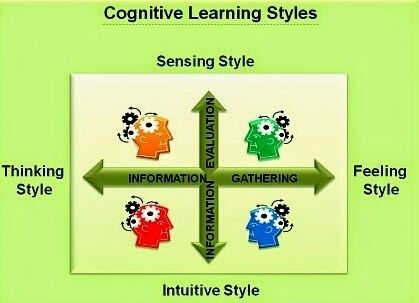
Cognitive style
- the manner in which the learner perceives, monitors, conceptualises, and recalls linguistic information.
- Witkin designed the Group Embedded Test (GET)
- To measure field dependence/ independence
- independence
- dependence
- To measure field dependence/ independence
- Brown considered that cognitive style is a combnation of affect an cognition
- Reflective- impulsive thinking
- Broad narrow categorizing
- Skeletonizing-embroidering
- belief congruence-contradiction
- Witkin designed the Group Embedded Test (GET)
- cognitive styles include
- The interference- prone
- the manner in which the learner perceives, monitors, conceptualises, and recalls linguistic information.
Learning Strategies
- Steps taken by the learner to aid the acquisition, storage and retrieval of information (Oxford and Crookall definition)
- According to Ellis strategies are the particular approaches or techniques that learners employ to try to learn L2
- Features
- contribute to the communicative competence
- allow learners to become more self-directed
- expand the role of teachers
- are problem oriented
- are specific actions taken by the learner
- involve many aspects of the learners not only cognitive
- support learning directly and indirectly
- they are not always observable, to the human eye
- can be taught
- are often councious
- are flexible
- are present in all learners
- can be influenced by degree of awareness, stage of learning, task requirements, teacher expectations, age, sex, nationality/ethnicity, general learning style, personality , motivation, and learning purpose.
- Ellis, Wenden and Rubin, Willing, Oxford and Crookall stablished a language learning strategies
- affective
- lowering anxiety, self-reinforcement, positive talk, etc
- communication
- formal, functional reduction, compensatory and retrieval achievement, etc.
- compensation
- guessing intelligently, avoidance, circumlocution.
- Social
- counting on friends help, group conversation, emphatasing with others, etc.
- Metacognitive
- Evaluating leaning, advance organizers, directed and selected attention
- Cognitive
- practising, alnalysing and reasoning, receiving and sending, generalising, note taking, etc.
- memory
- applyingimages and sounds, creating mental linkages
- affective
Bilder und Dateien der Mindmap



Informationen
- Beschreibung
- Mind Map on Cognitive influences on Labguage Learning , created by Silvia Ramírez on 06/04/2018.
- Erstellt von
- Silvia Ramírez
- Aufrufe
- 1
- Verlauf
-
- Erstellt von Silvia Ramírez · 6 Apr 2018
- Kopiert von Silvia Ramírez · 8 Apr 2018
- Kopiert von Silvia Ramírez · 8 Apr 2018
- Bewertung