
Mindmap
MODULE 1: PROPERTIES AND STRUCTURE OF MATTER
Inhalt der Mindmap
MODULE 1: PROPERTIES AND STRUCTURE OF MATTER
Properties of Matter
- Inquiry question: How do the properties of substances help us to classify and separate them?
- explore homogeneous mixtures and heterogeneous mixtures through practical investigations:
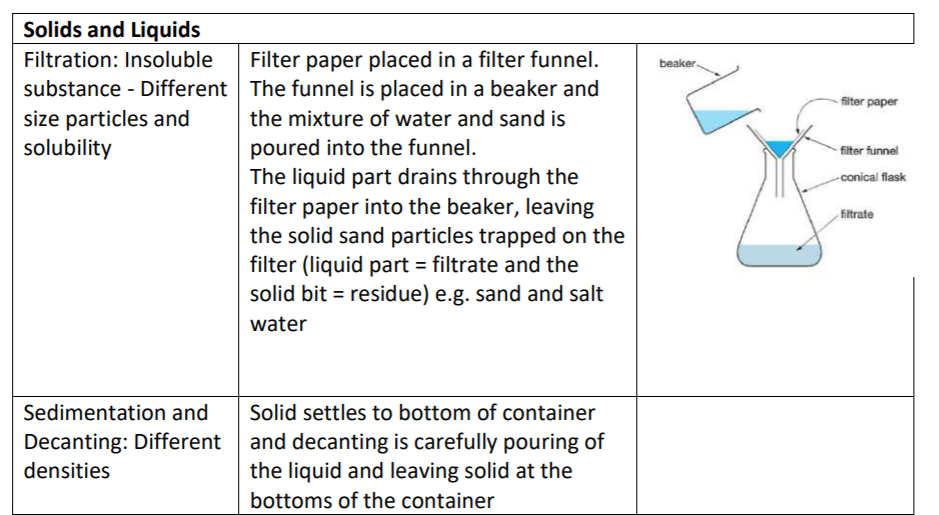
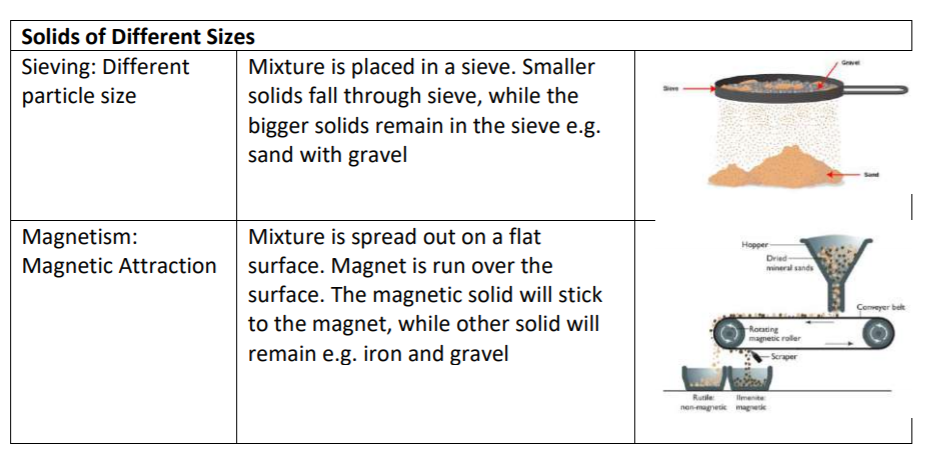
- using separation techniques based on physical properties(ACSCH026)
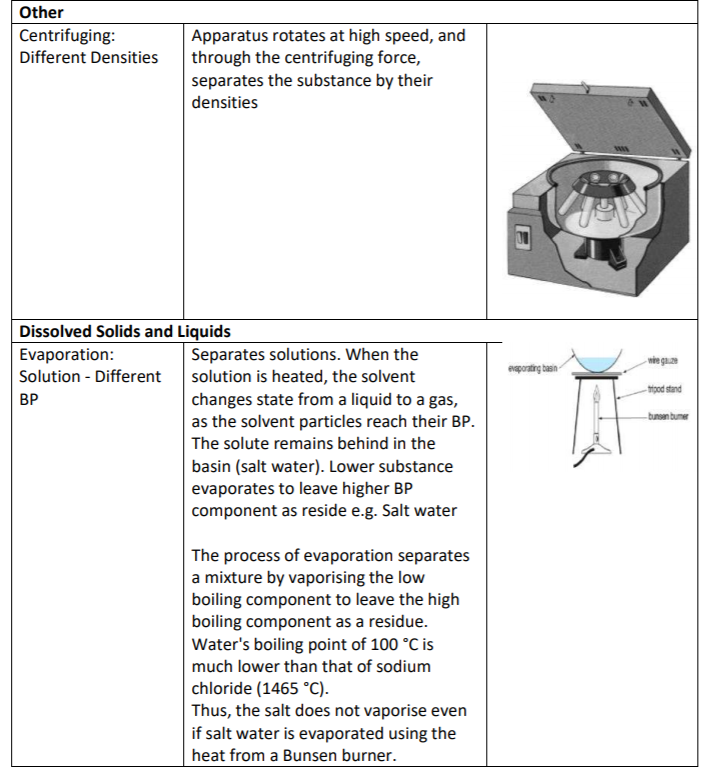
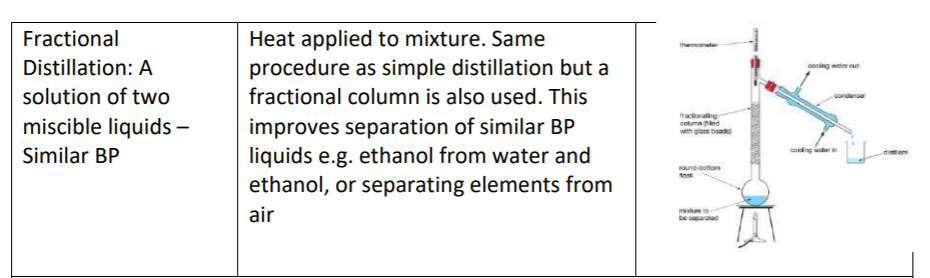
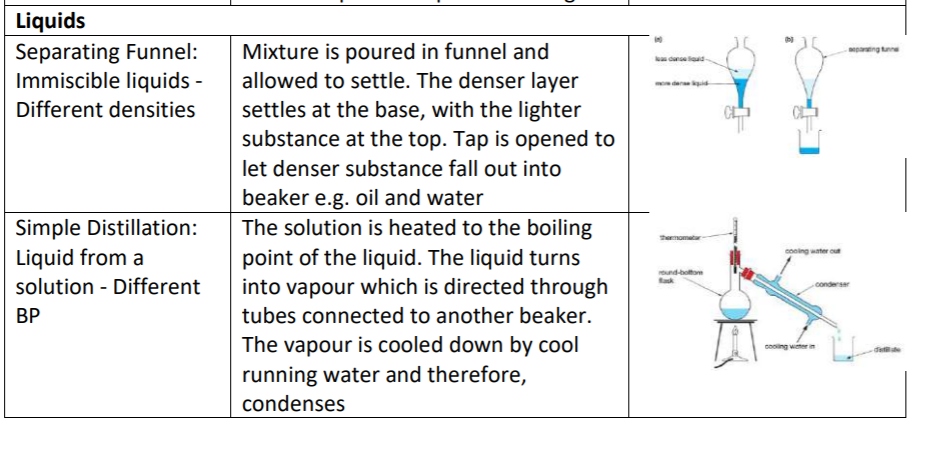
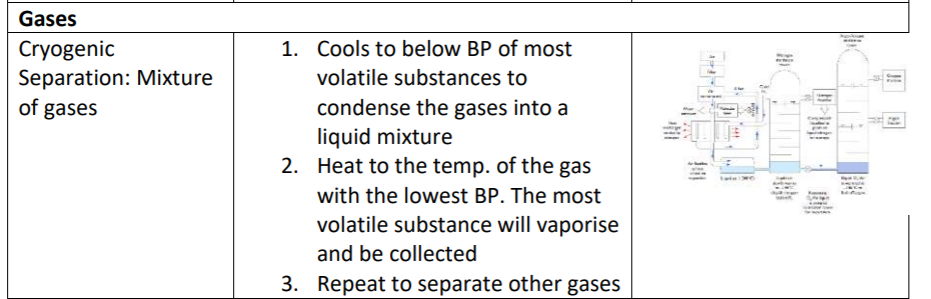
- Separation techniques: Separation of mixtures are based on different physical properties of the components in a mixture Physical properties are properties that can be observed or measured without changing chemical nature of matter, for example: colour, smell, melting point, boiling point, etc. There are a variety of separation techniques which uses the different types of physical properties to separate mixtures
- Separation techniques: Separation of mixtures are based on different physical properties of the components in a mixture Physical properties are properties that can be observed or measured without changing chemical nature of matter, for example: colour, smell, melting point, boiling point, etc. There are a variety of separation techniques which uses the different types of physical properties to separate mixtures
- calculating percentage composition by weight of component elements and/or compounds(ACSCH007)
- Percentage composition Gravimetric analysis is determining the quantities (mass) of substances present in a mixture, and expressing it as a weight percentage This involves separating the mixture and accurately measuring the mass along the way, so that you can calculate the composition of the mixture Uses of gravimetric analysis: - Percentage by weight of different ingredients in food - Whether an ore can be mined economically The percentage composition of each element/compound can be calculated using: w/w% = final mass (element/compound) initial mass (mixture) × 100%
- Background Information:
- The particle theory states that all matter consists of very small particles, which are constantly moving Elements are pure substances that cannot be decomposed into simpler substance. They are homogenous (uniform composition) Compounds are pure substances composed of two or more different types of elements chemically bonded together in a fixed ratio. They are also homogenous Mixtures are made up of two or more different types of elements or compounds mixed together (ie NOT chemically bonded) - As such, they can be separated by physical means - This also means that mixtures CANNOT be represented by a chemical formula Mixtures are classified into homogenous or heterogenous
- Homogeneous
- The components that make up homogenous mixtures are uniformly distributed. That is, they have the same uniform appearance and composition throughout Examples of homogenous mixture include: - Air - Steel - Salt water
- Heterogeneous
- A heterogenous mixture is simply any mixture that is not uniform in composition This means they have localised regions with different properties and thus different samples taken from the mixture are not identical to each other Examples of heterogenous mixture include: - Sand - Pizza - Mixed nuts
- using separation techniques based on physical properties(ACSCH026)
- investigate the nomenclature of inorganic substances using International Union of Pure and Applied Chemistry (IUPAC) naming conventions
- classify the elements based on their properties and position in the periodic table through their:
- physical properties
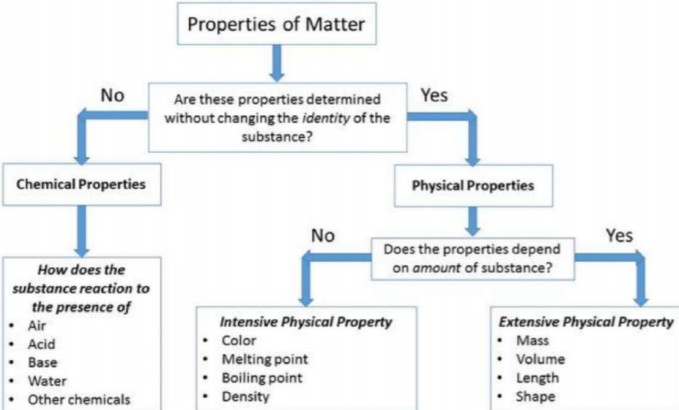
- Physical properties are properties that can be observed or measured without changing the chemical nature of matter They can be described as either intrusive or extrusive - Intrusive physical properties will remain the same regardless of the amount matter. For example: density, colour, etc - Extrusive physical properties are dependent on the amount of matter. For example: mass, volume, length etc.
- Physical properties The elements of the periodic table can be divided into three main groups: Semi-metals: - B, Si, Ge, As, Sb, Te, Po Metals: - Everything to the left of semi-metals Non-metals: - Everything to the right of semi-metals Elements in each of the above categories will have similar physical properties
- Physical properties of metals: Generally shiny/lustrous appearance Solids at room temperature moderate to high melting and boiling points Good conductors of heat and temperature Malleable (can be shaped without breaking) and ductile (can be drawn into wires without breaking) Typically high density
- Physical properties of non-metals: Generally have a dull appearance A range of melting and boiling points Quite brittle generally not malleable/ductile
- Physical properties of semi-metals: Semi-metals have properties that fall between metals and non-metals
- chemical properties
- A chemical property is a characteristic or behavior of a substance that may be observed when it undergoes a chemical change or reaction The chemical property of an element is dependent on the type of element, electrons, and bonding between particles Recall that an element is made up of only one type of atom
- physical properties
- explore homogeneous mixtures and heterogeneous mixtures through practical investigations:
- Inquiry question: How do the properties of substances help us to classify and separate them?
Atomic structure and atomic mass
- Inquiry question: Why are atoms of elements different from one another?
- investigate the basic structure of stable and unstable isotopes by examining:
- their position in the periodic table
- The vertical columns in the period table are called groups - Elements of the same group has the same number of electrons in their outermost (valence) electron shell - Eg, both sodium and lithium (group 1 elements) has only 1 electron in its valence shell - The elements between group 2 and 3 are known as transition elements
- The horizontal rows in the period table are called periods - Elements of the same period has the same number of electron shell
- the distribution of electrons, protons and neutrons in the atom
- representation of the symbol, atomic number and mass number (nucleon number)
- their position in the periodic table
- model the atom’s discrete energy levels, including electronic configuration and spdf notation
- calculate the relative atomic mass from isotopic composition
- investigate energy levels in atoms and ions through:
- collecting primary data from a flame test using different ionic solutions of metals
- examining spectral evidence for the Bohr model and introducing the Schrödinger model
- investigate the properties of unstable isotopes using natural and human-made radioisotopes as examples, including but not limited to:
- types of radiation
- types of balanced nuclear reactions
- investigate the basic structure of stable and unstable isotopes by examining:
- Inquiry question: Why are atoms of elements different from one another?
Periodicity
- Inquiry question: Are there patterns in the properties of elements?
- demonstrate, explain and predict the relationships in the observable trends in the physical and chemical properties of elements in periods and groups in the periodic table, including but not limited to:
- state of matter at room temperature
- electronic configurations and atomic radii
- first ionisation energy and electronegativity
- reactivity with water
- demonstrate, explain and predict the relationships in the observable trends in the physical and chemical properties of elements in periods and groups in the periodic table, including but not limited to:
- Inquiry question: Are there patterns in the properties of elements?
Bonding
- Inquiry question: What binds atoms together in elements and compounds?
Bilder und Dateien der Mindmap
Informationen
- Beschreibung
- Year 11 Chemistry, Module 1 summary
- Erstellt von
- Charlotte Saul
- Aufrufe
- 26
- Tags
- Bewertung