
Notizen
Electronics Notes
Inhalt der Notizen (3)
Seite 1
Series And Parallel Circuits
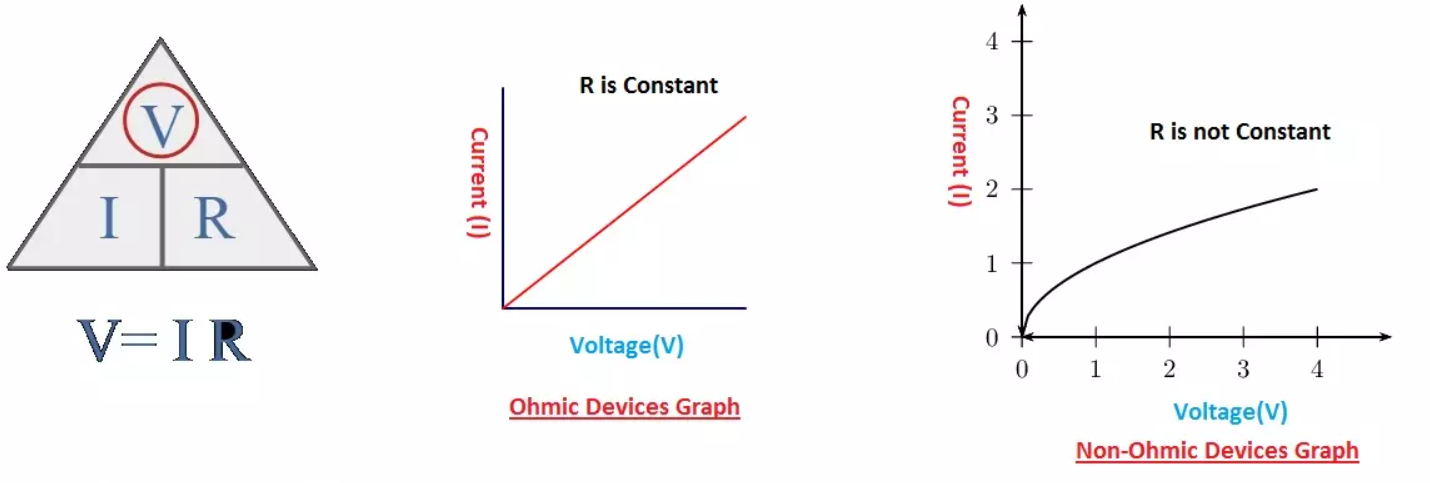
Ohm's law -> V = I x R or R = V/I
Voltage and current have a directly proportional relationship.
Resistance -> A measure of the opposition it offers to the flow of electric current.
Ohmic and Non-Ohmic:
Ohmic: obeys Ohm's law
Non-Ohmic: doesn't obey Ohm's law
Ohm's law -> current and potential difference are directly proportional
Current ∝ potential difference as long as temperature is constant
What is Ohm's Law?
V = I x R
What do we mean by Non-Ohmic?
Doesn't follow Ohm's Law
Example of Non-Ohmic Conductor: Filament Lamp - Resistance of it changes with the temperature as the potential across it increases
Example of Ohmic conductor: Resistor
Total Resistance Equations:
Series: R1+R2... = Rt
Parallel: 1/R1 + 1/R2 ... = 1/Rt
Seite 2
Potential Divider Circuits and Thevenin's Theorem
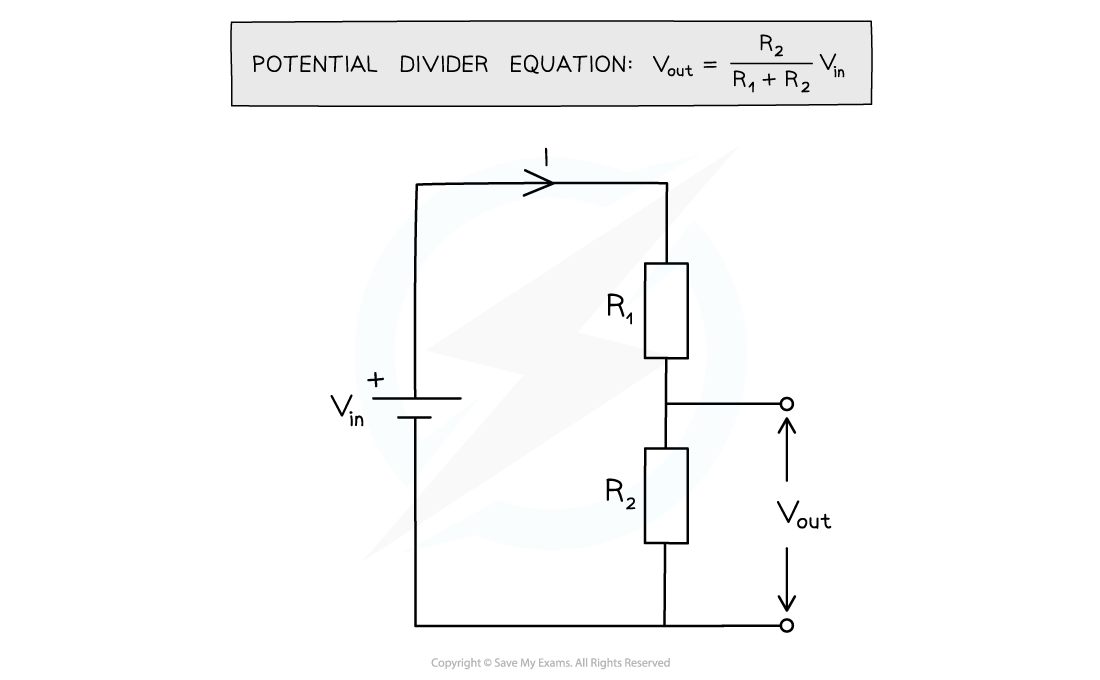
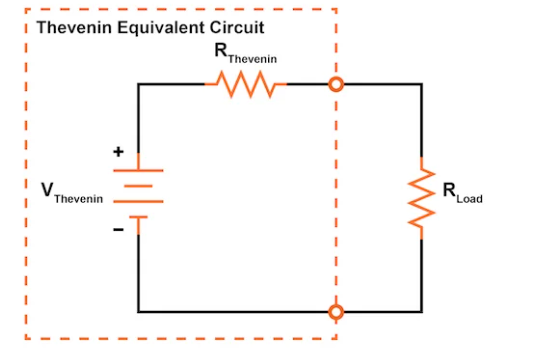
Thevenin's Equations:
Step 1: Vout (V Thevenin) = (R2xVin)/(R1+R2)
Step 2: Isc = Vin/R1
Step 3: Req (R Thevenin) = Vout/Isc
Work -> changing energy from one form to another (Measured in Joules)
When electrical energy per charge is changed to another form of energy it's called potential difference.
Another form of energy re-changed to electrical is called Electromotive Force (EMF).
Power (Measure in Watts) is the rate of work done i.e. energy change per second.
IMPORTANT EQUATIONS:
Power = Energy/Time => (P = E/t) or Power = Work/Time
Current = Charge/Time => (I = Q/t)
Voltage = Energy/Charge => (V = E/Q) or Voltage = Work/Charge
Power = Current x Voltage
Power = V^2 / R or Power = I^2 x R
Steady Voltage (e.g. in cells or batteries) -> D.C - Direct Current
Oscillating Voltage (e.g. produced by generators) -> A.C - Alternating Current
Vrms = Vp/sqrt(2)
Vpeak = Vrms x sqrt(2)
Seite 3
Capacitors
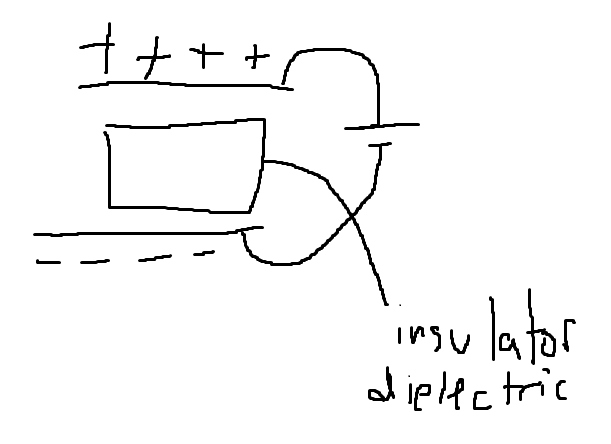
The charge stored per volt is called the capacitance -> C (Farad)
C = Q/V
Unit of capacitance is farad (F)
Capacitors are used to smooth varying D.C supplies by acting as a reservoir of charge.
Capacitors easily pass A.C signals but they block D.C signals.
There are two main groups of capacitors:
Polarised
Unpolarised
Capacitance is increased when:
the area of overlap of the plates is increased
the distance between plates is decreased
an insulator (dielectric) with a higher dielectric constant is used
Factors to consider:
the tolerance
the working voltage
the leaking current
Total Capacitance Equations:
Series : 1/C1 + 1/C2 +... = 1/Ct
Parallel: C1+C2... = Ct
Informationen
- Beschreibung
- A level Electronics Notiz am Electronics Notes, erstellt von Corey Macfarlane am 19/03/2023.
- Erstellt von
- Corey Macfarlane
- Aufrufe
- 0
- Bewertung