
Notizen
Acids, Alkalis and Salts (4A) Page1+2!
Inhalt der Notizen (1)
Seite 1
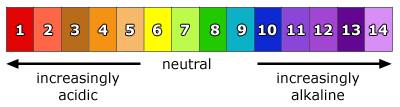
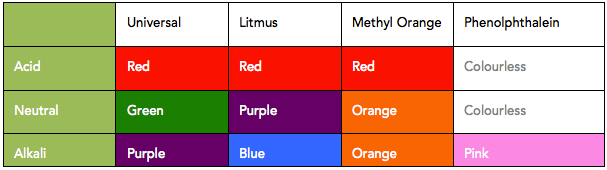
-Acids are Sources of H+ Ions.
Strong Acids fully dissociate and Weak Acids partially dissociate.
-Alkalis are Sources of OH- Ions.
Strong Alkali fully dissociate and Weak Alkali partially dissociate.
General Equations
-Hydrochloric acid gives chloride.
-Nitric acid gives nitrate
-Sulphuric acid gives sulphate
-acid + metal hydroxide → salt + water
nitric acid + calcium hydroxide → calcium nitrate + water
2HNO3 + Ca(OH)2 → Ca(NO3)2 + 2H2O
-acid + carbonate → salt + water + carbon dioxide
For example:
sodium carbonate + hydrochloric acid → sodium chloride + carbon dioxide + water
Na2CO3 + 2HCl → 2NaCl + CO2 + H2O
-acid + metal → salt + hydrogen
For example:
magnesium + sulfuric acid → magnesium sulfate + hydrogen
Mg + H2SO4 → MgSO4 + H2
-acid + metal oxide → salt + water
For example:hydrochloric acid + copper(II) oxide → copper(II) chloride + water
2HCl + CuO → CuCl2 + H2O
Solubility of Salts in water.
-All common Sodium, potassium and ammonium salts are soluble
-All nitrates are soluble
-Chlorides Soluble except Silver chloride
-Sulphates Soluble except Barium + Calcium
-Carbonates insoluble except Sodium, Potassium + Ammonium
Preparing SOLUBLE salts
If the base dissolves in water, you need to add just enough acid to make a neutral solution-
check a small sample with universal indicator paper - then evaporate the water. You get larger crystals if you evaporate the water slowly.
Preparing INSOLUBLE salts
Copper oxide, and other transition metal oxides or hydroxides, do not dissolve in water. If the base does not dissolve in water, you need an extra step. You add the base to the acid until no more will dissolve and you have some base left over (called an excess). You filter the mixture to remove the excess base, then evaporate the water in the filtrate to leave the salt behind.
-A titration is carried out using a number of steps:
If the sample is a solid, it is weighed using an accurate balance, and then dissolved to make up a known volume of solution (usually 100cm3).
A pipette is used to measure accurately a volume of this solution - for example, 10cm3. A safety pipette filler is used to draw solution into the pipette. This is emptied into a conical flask.
A few drops of an indicator may be added to the conical flask. This will show a change of colour when the titration is complete.
A second chemical is placed in a burette. This other solution is of a chemical that will react with the synthesised chemical sample in the conical flask. Often the solution in the burette is an acid or alkali, and it must be of a precise, known concentration.
The solution from the burette is run into the conical flask. The solution is added one drop at a time, with swirling to mix the solutions as the end-point is approached. Eventually, a colour change shows that the correct amount has been added to react completely with the synthesised chemical in the sample.
The volume of solution added from the burette is noted. The titration results can then be used to calculate the amount of the synthesised chemical in the sample, and therefore find its purity.
New Page
New Page
Informationen
- Beschreibung
- GCSE Chemistry Notiz am Acids, Alkalis and Salts (4A) Page1+2!, erstellt von karim14 am 31/05/2013.
- Erstellt von
- karim14
- Aufrufe
- 374
- Tags
- Bewertung