
Notizen
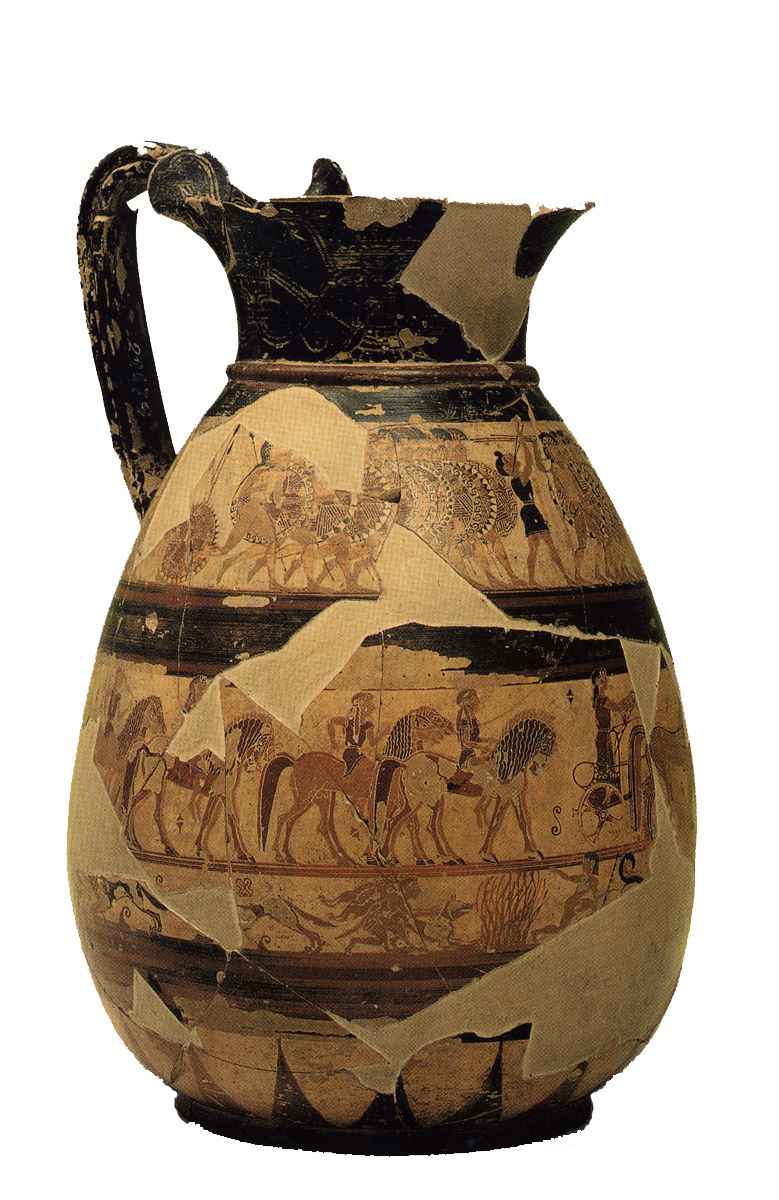
Olpe Chigi
Inhalt der Notizen (1)
Seite 1
Olpe Chigi
(c.640 BC)
Protocorinthian Olpe Vase
26cm high
Discovered in a temple on the Chigi family estate
Uses black figure technique
Structure
Hoplite WarfareHorseman, Chariot, Double-bodied sphinx, Lion Hunt, Judgement of Paris
Hare Hunt, Animals
Rays
Frieze 1: Hoplite Warfare
Hoplites were civilian soldiers armed with shields
and spears
Earliest representation of Hoplite Warfare
developed 2-3 generations earlier
Represents the othismos of battle (moment before
the two armies collide)
Representation Inaccuracies
1. Soldiers aren't carrying short swords
2. They often carried two spears (a over hand thrusting spear and a spare or throwing spear)
Significance
1. Inaccuracies show artist's intentions were purely decorative
2. The frieze shows early forms of depth in artwork - overlapping
3. Represents a significant moment in warfare
4. Meant to represent something contemporary
Frieze 2.1: Horsemen and Chariot
Frieze shows four long haired, dressed horsemen riding bareback and each leading an extra horse
Ahead of them is a four horse chariot with a rider being lead by a nude man looking back over his shoulder
Most of the work would have gone into overlapping the horses
Significance
1. Each rider leading a riderless horse could mean they are squires and not jockeys - possibly for someone else on the vase
Frieze 2.2: Double-bodied Sphinx
Sphinxes are normally not harmful (innocuous) in Protocorinthian exhibition
Common in Protocorinthian works though never in narrative context
In Greek and common imagination they thought as to be destroyers of men and posers of existential questions - though no evidence of this in Corinth beliefs
Belief that it was Sphinxes that carried fallen men off the the acropolis of Mycenae could possibly have Corinth origins
Iconography of a Sphinx is Egyptian
Double-bodied iconography is Eastern
The double-bodied sphinx is a purely Corinth invention
The Chigi Vase may have the first representation of the doubled bodied Sphinx
Significance
1. The double-bodied Sphinx is purely mythical
2. When considered with the lion hunt could be be used to represent mortality or liminality
3. The combination of two imported iconography shows external influence imposed with indigenous ideology
Frieze 2.3: Lion Hunt
Following the sphinx is the representation of a lion hunt where four men are using spears to bring down a lion which has already mortally wounded one man with purplish blood spilling out of him
The fallen man is the only causality on the entire vase
It is unknown if Lions were present in the wild at the time with limitations on physical evidence to support the literary claim that there was not
The Lion design is probably the earliest example of Assyrian design on Protocorinth Vase Painting
Significance
1. Lack of evidence to support the presence of wild lions in Corinth suggests artist must have either seen one in captivity or on imported goods
2. Use of Assyrian design suggests high import influence in the area at this time - ivories, metalwork and textures containing the imagery
3. Combining the horsemen, chariot and lion hunt could be the imagery of a kings sporting hunt (similar to the palace reliefs of Nineveh or Nimred)
Frieze 2.4: Judgement of Paris
Represents the story of the beauty contest between Hera, Athena and Aphrodite, which Aphrodite won through the bribe of the married Helen of Sparta which os believed to be the cause of the Trojan War
Frieze contains (in order): Paris, Hermes, Hera, Athena, Aphrodite
Only image on the vase to contain women and mythical narrative
Hermes and Hera missing due to damage
Significance
1. Frieze suggests the occupier of the tomb was familiar with Greece and Greek mythology/language
2. Could be argued the frieze is meant to represent:
. Beauty - beauty contest
. Decision / warning to be careful - Paris' decision leading to the Trojan War
. Marriage - Paris' later involvement with the married Helen of Sparta
. Warning about the temptations of women
. The recent establishment of Aphrodite in Corinth
3. Themes of beauty, marriage and big decisions could mean it was meant as a wedding present
4. Image is placed under that of the Hoplite Warfare which could mean it was emphasising the Trojan War consequences
5. Placing under the handle could mean it was actually more of a space filler as oppose to a significant piece
Frieze 3: The Hare Hunt
Informationen
- Beschreibung
- Notiz am Olpe Chigi , erstellt von e.skillcorn am 08/01/2016.
- Erstellt von
- e.skillcorn
- Aufrufe
- 76
- Tags
- Bewertung