
Quiz
Chemistry GCSE Review - States of Matter, Particles, Atoms, Elements, Compounds and Mixtures
Dieses Quiz enthält Fragetypen, die sich im gewohnten Player öffnen.
Fragen in diesem Quiz (10)
1Physical changes change a substance from one [blank_start]state of matter[blank_end] to another. This does not change the particles in the substance themselves, just their [blank_start]arrangement[blank_end] and level of energy.
If a substance is [blank_start]solid[blank_end], heating it enough causes it to [blank_start]melt[blank_end], forming a liquid. Conversely, [blank_start]cooling[blank_end] a liquid enough causes it to freeze. From the [blank_start]liquid[blank_end] state, heating further causes evaporation and eventually [blank_start]boiling[blank_end], causing it to change into a [blank_start]gas[blank_end]. The process of [blank_start]condensation[blank_end] occurs when a gas is cooled enough for it to become a liquid.
Some substances do not pass through the liquid state, and instead pass straight from solid to gas and back again. The passing from solid to gas after being heated is called [blank_start]sublimation[blank_end], with the passing back known as deposition.- Astate of matter
- Barrangement
- Csolid
- Dmelt
- Ecooling
- Fliquid
- Gboiling
- Hgas
- Icondensation
- Jsublimation
- Kpressure
- Lelectronic configuration
- Mcomposition
- Natoms
- Owarm
- Porganic
- Qthaw
- Rdisappear
- Smixing
- Tadding
- Ugel
- Vcondensate
- Wsimmering
- Xbubbling
- Yfluid
- Zplasma
- AAcompression
- ABsuperfluidity
- ACconcentration
- ADdilution
2Which of the following states of matter can be described as follows:
1) There is a weak force of attraction between molecules.
2) Its particles are in constant motion with random movement.
3) There is a definite volume- Asolid
- Bliquid
- Cgas
3Gases have [blank_start]a very weak[blank_end] force of attraction between particles. These particles are free to move and are far apart. They have no definite shape or [blank_start]volume[blank_end], expanding to fill a container they are in. These particles move constantly [blank_start]in straight lines[blank_end], with random motion. The hotter the gas gets, the [blank_start]faster[blank_end] the particles move. Two things can happen to the gas when it is heated: either it expands, or the [blank_start]pressure[blank_end] increases.
- Aa very weak
- Bno
- Ca very strong
- Dan average
- Evolume
- Fmass
- Gmolecular formula
- Hin straight lines
- Iin curves
- Jby quantum leaping
- Kfaster
- Lslower
- Mless
- Npressure
- Oboiling point
- Pnumber of particles
4Solids have a [blank_start]definite[blank_end] shape and volume and, although the particles do not move constantly, they vibrate about their positions. The [blank_start]hotter[blank_end] the solid becomes the more these particles vibrate (causing the solid to expand).
- Adefinite
- Bhotter
5Diffusion is:
- Athe gradual movement of particles through a fluid from places with a high concentration to places with a low concentration.
- Bthe sudden movement of particles through a fluid from places with a high concentration to places with a low concentration.
- Cthe gradual movement of particles through a fluid from places with a low concentration to places with a high concentration.
- Dthe sudden movement of particles through a fluid from places with a low concentration to places with a high concentration.
6Label the structure of the atom.
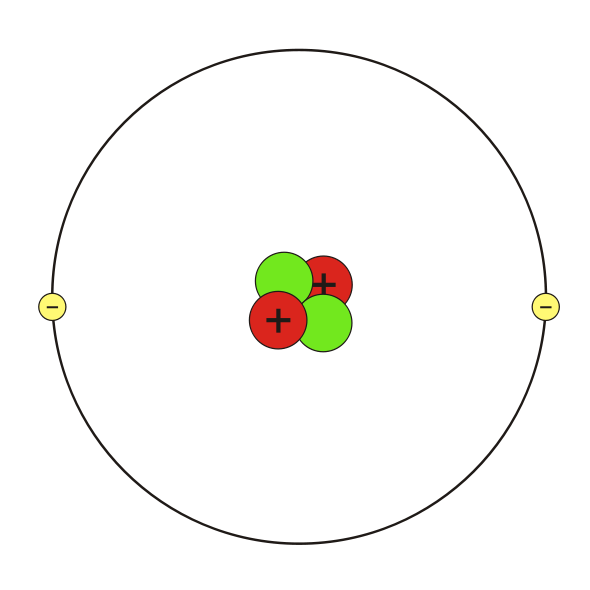
- Aproton
- Bneutron
- Celectron
- Dshell
- Eproton
- Fneutron
- Gelectron
- Hshell
- Iproton
- Jneutron
- Kelectron
- Lorbit
- Mproton
- Nneutron
- Oelectron
- Pshell
- Qnucleus
- Rproton
- Sneutron
- Telectron
- Ushell
- Vnucleus
- Wnucleus
- Xnucleus
- Ynucleus
7The only sub-atomic particle without a charge is the [blank_start]neutron[blank_end].
- Aneutron
8What number explicitly tells you how many protons an atom has in its nucleus?
- Amass number
- Batomic number
- Ctriple point
- Dgroup number
9Molecules are held together by what kind of bonds?
- Acovalent
- Bionic
- Cmetallic
10Elements are substances that consist of [blank_start]only one[blank_end] type of atom. Many everyday substances are elements, including [blank_start]nitrogen[blank_end], oxygen, [blank_start]iron[blank_end], gold, [blank_start]copper[blank_end] and aluminium. If two atoms have the same number of [blank_start]protons[blank_end], they are of the same element.
Compounds are comprised of [blank_start]two or more[blank_end] different elements chemically [blank_start]bonded[blank_end] in some way. There are three kinds of bonding, called [blank_start]covalent, ionic and metallic[blank_end]. Examples of chemical compounds include carbon dioxide ([blank_start]CO2[blank_end]), water ([blank_start]H2O[blank_end]), ethane ([blank_start]C2H6[blank_end]) and sulphuric acid ([blank_start]H2SO4[blank_end]).
The constituent parts in a mixture, unlike in a compound, are [blank_start]not chemically bonded[blank_end]. These constituent parts also do not just have to be elements - they can also be compounds themselves. For example, air is a mixture of gases including carbon dioxide (CO2), oxygen ([blank_start]O2[blank_end]), nitrogen ([blank_start]N2[blank_end]), argon ([blank_start]Ar[blank_end]) and water vapour (H2O). Another example is crude oil, a mixture of different [blank_start]fractions[blank_end], which are themselves mixtures of various [blank_start]hydrocarbons[blank_end].- Aonly one
- Bone or more
- Conly two
- Dtwo or more
- Enitrogen
- Fammonium
- Gammonia
- Hiron
- Ipyrite
- Jsteel
- Kcopper
- Lchalcopyrite
- Mcopper chloride
- Nprotons
- Oprotons and neutrons
- Pneutrons
- Qtwo or more
- Ronly one
- Smore than one
- Tonly two
- Ucovalent, ionic and metallic
- Vcovalent, stringent and additive
- Wcovalent, giant and ionic
- Xconstant, ionic and metallic
- Ycovalent, giant and molecular
- ZCO2
- AACO
- ABC2O
- ACC2O2
- ADH2O
- AEH2O2
- AFHO
- AGHO2
- AHC2H6
- AIC2H4
- AJC6H2
- AKC2H2
- ALH2SO4
- AMH2SO3
- ANH2SO2
- AOH2SO
- APnot chemically bonded
- AQorbiting each other
- ARmagnetically attracted to each other
- ASO2
- ATO
- AUO3
- AVOO
- AWN2
- AXN
- AYNN
- AZN3
- BAAr
- BBAr2
- BCArAr
- BDAr3
- BEfractions
- BFgases
- BGdistillations
- BHhydrocarbons
- BIcarbonates
- BJhydroxides
- BKcarbohydrates
- BLbonded
- BMattracted
- BNcombined
Informationen
- Beschreibung
- All or nothing - either you get each question entirely right or you get nothing at all...
- Autor
- Gelöschter Nutzer
- Sprache
- English
- Aufrufe
- 138
- Verlauf
- Erstellt am 31 Dez 2018 · aktualisiert am 31 Dez 2018
- Schlagwörter
- Bewertung
- Noch keine Bewertungen Bewerte dieses Quiz