
Quiz
Chromatography
Dieses Quiz enthält Fragetypen, die sich im gewohnten Player öffnen.
Fragen in diesem Quiz (8)
1Which of the following statements are true about chromatography? Select all that apply.
- AIt separates mixtures into its distinct constituents.
- BIt consists of stationary and mobile phases.
- CThe solvent used is water-based.
- DChromatography can only separate molecules based on their size.
2TLC stands for [blank_start]thin[blank_end] [blank_start]layer[blank_end] [blank_start]chromatography[blank_end].
- Athin
- Blayer
- Cchromatography
3For which of the following biological molecules would you use water as the mobile phase? Check all that apply.
- AAmino acids
- BFats
- CGlucose
- DOils
4Label this diagram:
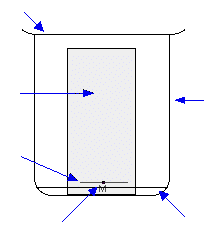
- ABeaker
- BStationary phase
- CMobile phase
- DWatch glass
- EChromatography paper
- FSolvent
- GSpot of mixture
- HBeaker
- IPencil line
- JWatch glass
- KStationary phase
- LBeaker
- MPencil line
- NSolvent
- OSolvent
- PStationary phase
- QSpot of mixture
- RChromatography paper
- SWatch glass
- TSolvent
- UPencil line
- VBeaker
- WChromatography paper
- XSpot of mixture
- YSpot of mixture
- ZChromatography paper
- AABeaker
- ABWatch glass
- ACStationary phase
5The rate at which different molecules move along the stationary phase depends on...
- ASize
- BPolarity
- CSolubility
- DElectronic charge
6Which of the following statements best explains how different molecules 'climb' chromatography paper at different rates?
- APolar molecules travel faster because they don't form hydrogen bonds with the paper.
- BPolar molecules travel faster because they form hydrogen bonds with the paper.
- CNon-polar molecules travel faster because they don't form hydrogen bonds with the paper.
- DNon-polar molecules travel faster because they form hydrogen bonds with the paper.
7Once a chromatography run has completed, you can identify the components in the mixture by finding their Rf values.
Rf = x / y
Which statements are true about this formula?- Ax is the distance travelled by the solvent
- Bx is the distance travelled by the component
- Cy is the distance travelled by the solvent
- Dy is the distance travelled by the component
8Three ways of visualising the molecular components separated during chromatography include shining [blank_start]a UV light[blank_end] over a [blank_start]TLC plate[blank_end], spraying [blank_start]ninhydrin[blank_end] on [blank_start]amino acid molecules[blank_end], or adding [blank_start]iodine crystals[blank_end].
- Aa UV light
- Bwhite light
- Cdifferent coloured lights
- Dinfrared light
- ETLC plate
- Fgas chromatography column
- Gmobile phase
- Hninhydrin
- Iamino acid molecules
- Jstarch
- Ksodium hydrogen carbonate
- Lamino acid molecules
- Mtriglyceride molecules
- Nreducing sugars
- Onon-reducing sugars
- Piodine crystals
- Qchlorine gas
- Ralkaline solution
- Scopper sulphate
Informationen
- Beschreibung
- Biology (Biological Molecules) Quiz am Chromatography, erstellt von Daniel Brand am 20/02/2017.
- Autor
- Daniel Brand
- Sprache
- English
- Aufrufe
- 916
- Verlauf
- Erstellt am 20 Feb 2017 · aktualisiert am 1 Jan 2018
- Schlagwörter
- Bewertung
- Noch keine Bewertungen Bewerte dieses Quiz