
Quiz
Lecture 4
Dieses Quiz enthält Fragetypen, die sich im gewohnten Player öffnen.
Fragen in diesem Quiz (38)
1Simple staining using dyes
Many types of dyes, but all...
• have [blank_start]chromophore groups[blank_end] (conjugated double bonds) that gives the dye its [blank_start]colour[blank_end].
• bind to [blank_start]cell components[blank_end] (either ionic, covalent or [blank_start]hydrophobic bonds[blank_end]).- Achromophore groups
- Bhydrophobic bonds
- Ccell components
- Dcolour
2There are two types of ionisable dyes
- Abasic dyes
- Bacidic dyes
- Chydrophobic dyes
- Dhydrophylic
- Eamphoteric dyes
3Which type of ionisable dye is it :
methylene blue, crystal violet, malachite green- Abasic
- Bacidic
4Which type of ionisable dye is it :
rose bengal, acid fuchsin- ABasic
- BAcid
5pH may affect effectiveness of staining
- ARichtig
- BFalsch
6Simple stains first used by Koch 1877 were stained with
- Amethyl violet
- Bmethylene blue,
- Cmalachite green
- Drose bengal
7Differential staining procedures allow the separation of bacteria into different groups based on their [blank_start]staining[blank_end] properties
[blank_start]Paul Ehrlich[blank_end] carried out studies on dyes (1877-81) and developed [blank_start]acid-fast[blank_end] staining (staining is due to [blank_start]high[blank_end] lipid content of cell [blank_start]walls[blank_end])- Astaining
- Bmolecular
- CPaul Ehrlich
- DKoch
- EPetri
- FLuceus
- Gacid-fast
- Hacid-slow
- Ibase-fast
- Jbase-slow
- Khigh
- Llow
- Mwalls
- Nmembranes
8Label the image
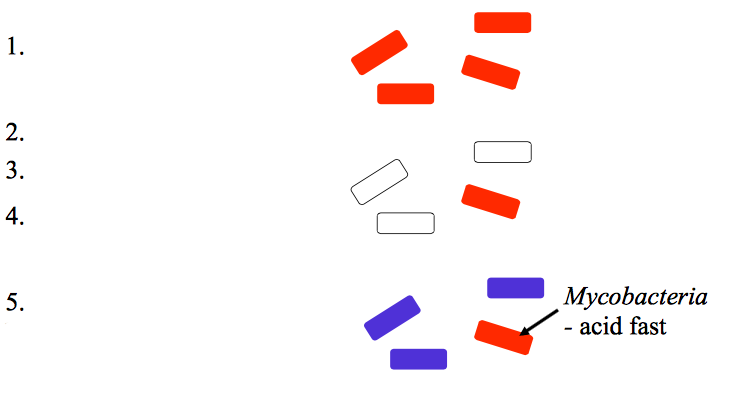
- ASmear (e.g. sputum) + HOT CARBOL FUCHSIN
- BWash with water
- C10 min 20% H2SO4
- DWash with water again
- ECounterstain with methylene blue
9Distinguishes two classes of bacteria on the basis of their cell wall structure
- Athe gram stain
- Bacid-fast staining
10The Gram Stain (Christian Gram 1884) distinguishes two classes of bacteria on the basis of their cell wall structure
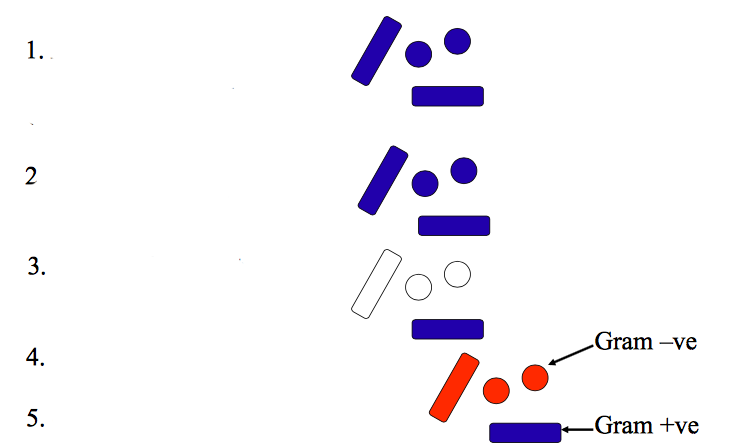
- AHeat-fixed smear + CRYSTAL VIOLET (Basic
- BIodine/KI added [CVI] formed in cells
- CWash with solvent (e.g. 95% ethanol)
- DStop with water
- ECounter-stain (e.g. carbol fuchsin)
11Label the image
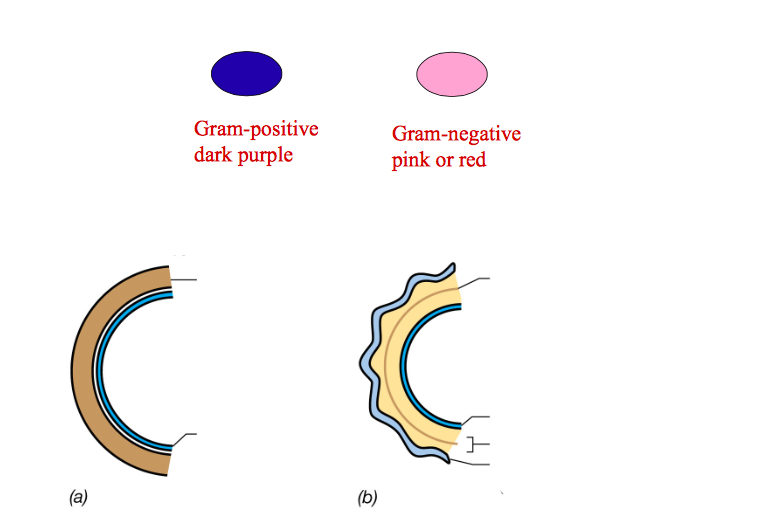
- AGram-positive
- BGram-negative
- Cpeptidoglycan
- Dmembrane
- EPeptidoglycan (negative)
- Fmembrane (negative)
- Gperiplasm
- HOuter membrane-ipopolysaccharide,protein
12Label the image
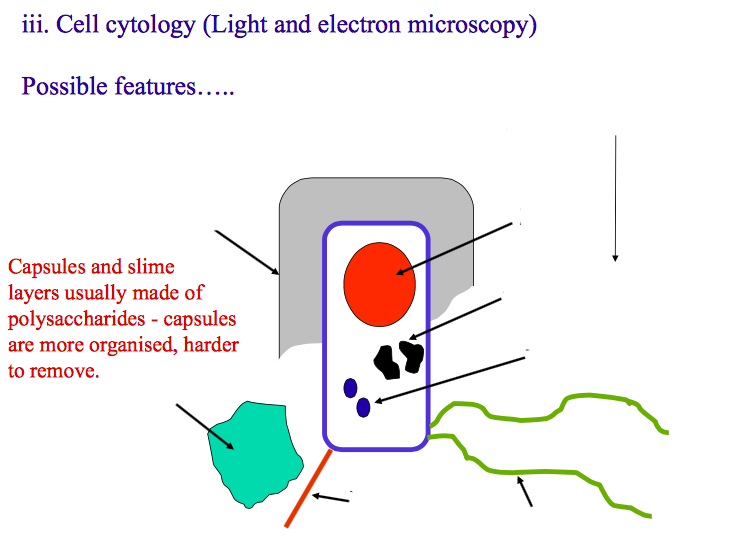
- AInclusion bodies for metabolite storage
- BSpore
- CPolyhydroxybutyrate
- DPolyphosphate
- EFlagellum
- FPilus
- GSlime
- HCapsule
13Capsules and slime
layers usually made of polysaccharides - capsules are less organised, harder to remove.- ARichtig
- BFalsch
14Physiology
[blank_start]Nutritional requirements[blank_end]
e.g. Source of C and N (gaseous or ‘fixed’)
[bacteria that can fix N2 are termed [blank_start]diazotrophs[blank_end]]. Growth factor requirements (vitamins, amino acids, etc.). [These are [blank_start]auxotrophs[blank_end]].
[blank_start]Light[blank_end]
Important for photosynthetic microbes (some obligate, some facultative [blank_start]phototrophs)[blank_end].
Most bacteria sensitive to UV light – however, some species particularly resistant (e.g. [blank_start]Deinococcus[blank_end] species and novel species recently found only in the stratosphere).
[blank_start]Temperature[blank_end]
Microbes can be classified as psychrophiles, [blank_start]mesophiles[blank_end] or thermophiles depending on their optimum growth temperature- Adiazotrophs
- Bauxotrophs
- Cphototrophs)
- DDeinococcus
- Emesophiles
- FNutritional requirements
- GLight
- HTemperature
15Label the image
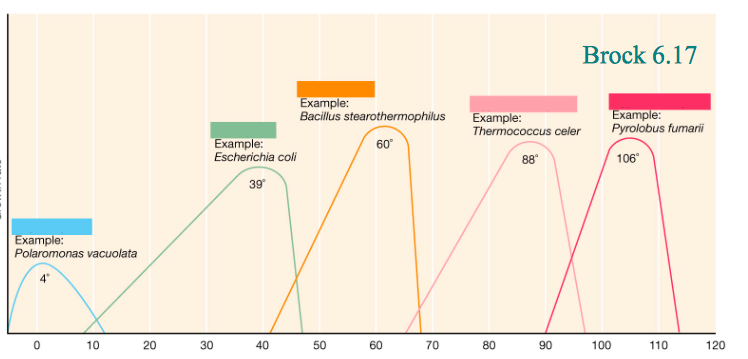
- APsychrophile
- BMesophile
- CThermophile
- DHyperthermophile
16Label the image
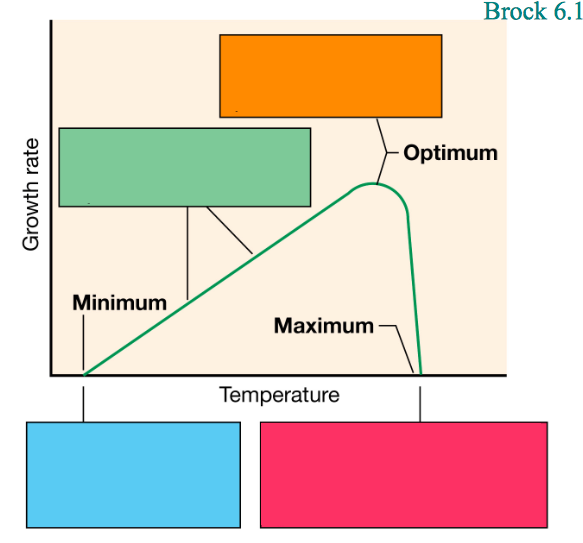
- AEnzymatic reactions at rapid rates
- BEnzymatic reactions at maximal rate
- CMembrane gelling, slow transport,no grow
- DProtein denaturation,thermal memb. lysis
17Salinity (salt concentration)
Freshwater < coastal areas < oceans < salt lakes
All marine organisms are moderate halophiles (about 3.5% salt), extreme halophiles found in salt lakes (e.g. Solar Lake, Sinai).- ARichtig
- BFalsch
18able to survive in the human stomach (~ pH 2)
- AHelicobacter pylori
- BBacillus
19Bacillus species growing in soda lakes (~ pH 3)
- ARichtig
- BFalsch
20Label the image
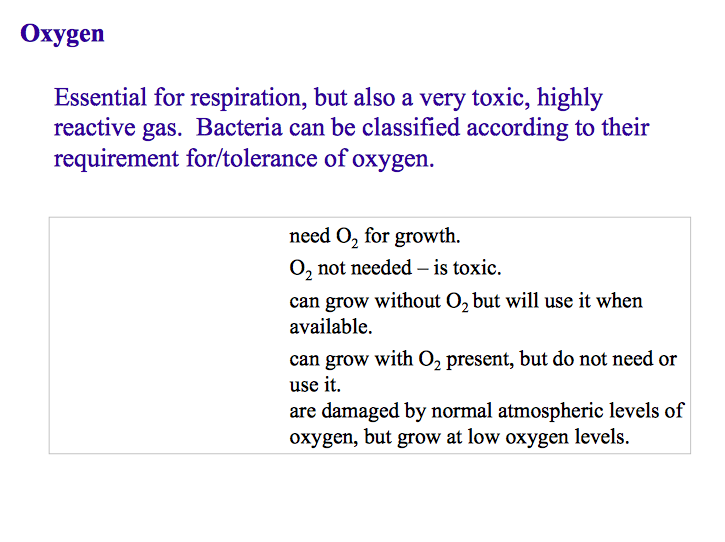
- Aobligate aerobes
- Bobligate anaerobes
- Cfacultative aerobes
- DAerotolerant anaerobes
- EMicroaerophiles
21Label the Image
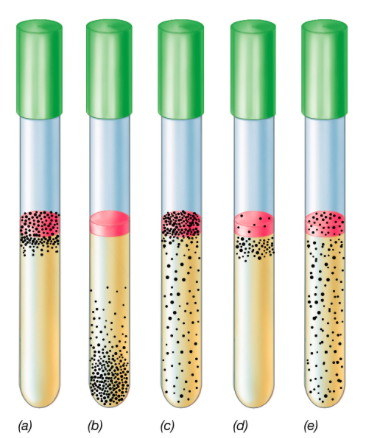
- Aobligate aerobe
- Bobligate anaerobe
- Cfacultative aerobe
- Dmicroaerophile
- Eaerotolerant anaerobe
22Pressure
Many microbes inhabit deep lakes, oceans - every [blank_start]10 m[blank_end] depth increases pressure by [blank_start]1[blank_end] atmosphere. [blank_start]90%[blank_end] of ocean water is >[blank_start]1000[blank_end] m down ( therefore > 100 atmospheres).
Deep waters contain [blank_start]lower[blank_end] concentrations of bacteria (but still 103 - 105 per ml)
Most deep-sea bacteria are [blank_start]barophiles[blank_end] - they grow best at high pressures. A few are [blank_start]extreme barophiles[blank_end] - they will not grow at normal atmospheric pressure.
Why? Pressure affects enzyme-substrate [blank_start]binding[blank_end], membrane transport, etc.
Most [blank_start]barophiles[blank_end] also psychrophiles (deep ocean water at a constant 2-3 °C)- A10 m
- B1 m
- C100 m
- D1
- E10
- F90%
- G69%
- H60%
- I1000
- J100
- K10
- Llower
- Mhigher
- Nbarophiles
- Omesophiles
- Pextreme barophiles
- Qextreme mesophiles
- Rbinding
- Sinhibition
- Tcatalysis
- Ubarophiles
- Vmesophiles
23Toleration of chemical inhibitors
for example...
1. [blank_start]Respiratory inhibitors[blank_end]
[blank_start]Enterococcus[blank_end] (e.g. E. faecalis) and other Gram +ve bacteria resistant to sodium azide (NaN3), but Gram –ve bacteria are sensitive.
2. [blank_start]Chaotropicagents[blank_end] [blank_start]Pseudomonas[blank_end] resistant to phenol.
3. [blank_start]Antibiotics[blank_end]
[blank_start]Mycoplasma[blank_end] (e.g. M. pneumoniae) lack a cell wall therefore resistant to penicillin.- ARespiratory inhibitors
- BChaotropicagents
- CAntibiotics
- DPseudomonas
- EEnterococcus
- FMycoplasma
24Can characterise bacterial isolates using
- AMICs
- Bantibiotic-impregnated discs
- Cgraduated strips
- DPID
- EMicroarrays
- FSequencing
25Label the image
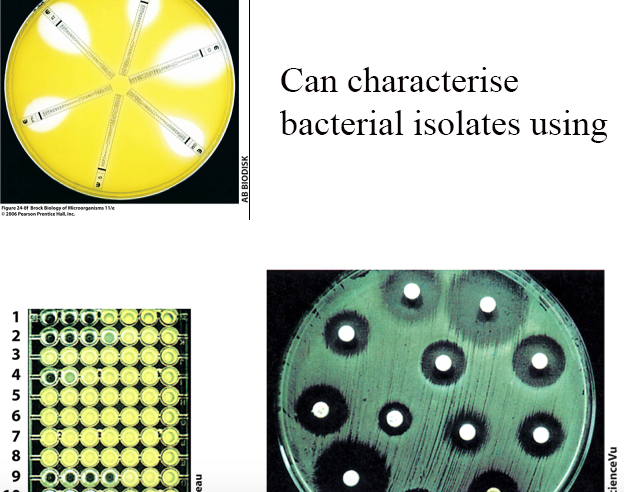
- AMIC
- Bantibiotic-impregnated discs
- Cgraduated strips
26 Biochemistry
i.e. [blank_start]Biochemical tests:[blank_end] tests for specific enzymes or metabolic pathways
i. Sugar metabolism
[blank_start]Fermentation:[blank_end] anaerobic breakdown of the sugar into smaller molecules - release of waste products (sometimes ethanol, sometimes organic acids, sometimes gases). Different waste products characteristic of different species.
[blank_start]Oxidation:[blank_end] breakdown of sugar to CO2 and water – aerobic, requires oxygen.- AFermentation:
- BOxidation:
- CBiochemical tests:
27Label the image
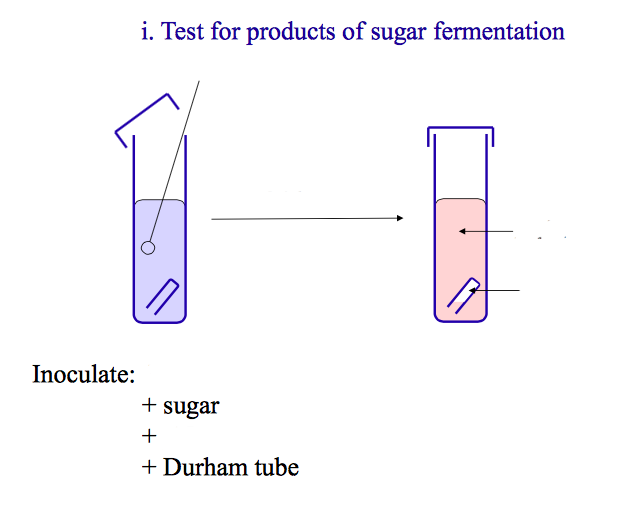
- A24h
- BAcid
- CGas
- DpH indicator
- Eliquid medium
28Label the image
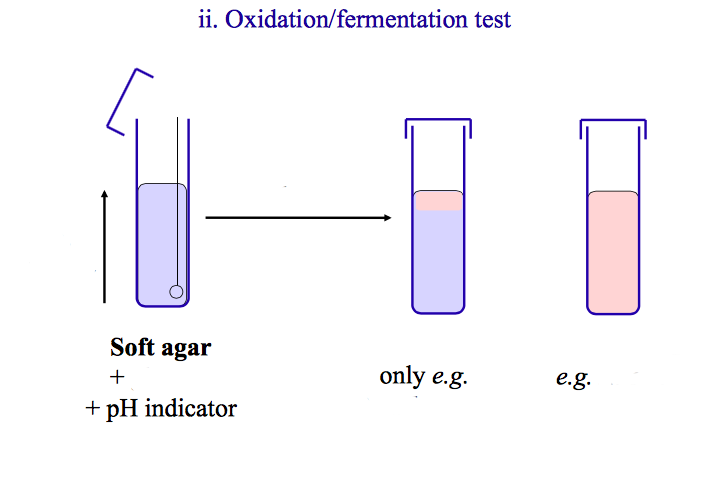
- AIncubate
- Bglucose
- CPseudomonas
- DColi
- Efermentation
- Foxidative growth
- GO2 growth
29Label the image
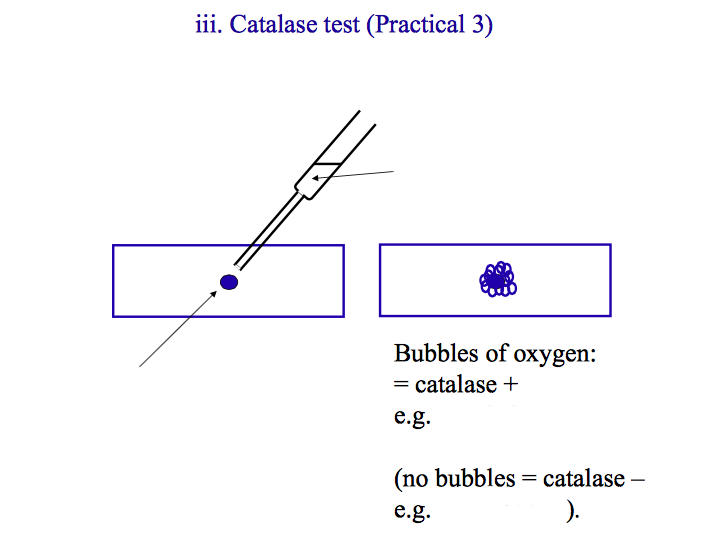
- ACells
- BH2O2 (hydrogen peroxide)
- CStaphylococci
- DStreptococci
30NH3 (pH rises)
Which test is it- AUrease test
- BCatalase test
- COxidation/fermentation test
- DTest for products of sugar fermentation
31Serology tests in 89-well microtitre plates
- ARichtig
- BFalsch
32[blank_start]Serology[blank_end]
Detection of bacterial [blank_start]antigens[blank_end] using specific [blank_start]antibodies[blank_end]
Antigen (typically a cell-surface protein or [blank_start]carbohydrate[blank_end])
1. Inject [blank_start]antigen[blank_end] into an animal, harvest
specific antibodies from blood [blank_start]serum[blank_end].
[blank_start]Specific antibody[blank_end]
2. Test in vitro for recognition of the cell- surface antigens e.g. by [blank_start]agglutination[blank_end]
- ASerology
- Bantigens
- Cantibodies
- Dcarbohydrate
- Eantigen
- Fserum
- GSpecific antibody
- Hagglutination
33Label the image
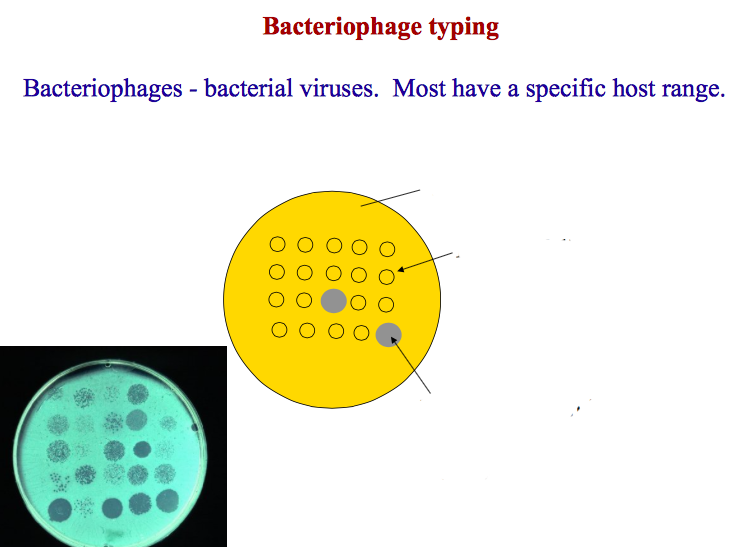
- ALawn of bacteria on agar
- BDrops of different phages
- CPhages that can infect and lyse
346. Pathogenicity
Pathogens:
[blank_start]specific[blank_end] symptoms
definite [blank_start]host range[blank_end]
Sometimes symptoms alone are enough to indicate identity:
e.g. [blank_start]Diphtheria[blank_end] - formation of a pseudomembrane in the throat [blank_start]Corynebacterium diphtheriae[blank_end]
Leprosy - loss of fingers and toes. [blank_start]Mycobacterium leprae[blank_end] [blank_start]Plague[blank_end] - buboes, skin darkening. [blank_start]Yersinia pestis[blank_end]- Aspecific
- Bhost range
- CDiphtheria
- DCorynebacterium diphtheriae
- EMycobacterium leprae
- FYersinia pestis
- GPlague
35Determining the sequence of a bacterial genome is still a major undertaking - not what you would do initially to characterise a new isolate. However, complete genome sequences can be used as reference points when characterising new isolates.
- ARichtig
- BFalsch
36ii. [blank_start]DNA hybridisation.[blank_end]
A physical technique that measures the overall sequence similarity between an unknown strain and a reference strain. Used in the definition of a bacterial species: >70% hybridisation = same species.
iii. [blank_start]Polymerase chain reaction (PCR).[blank_end]
Simple in vitro technique to amplify short, specific DNA sequences. Now used regularly to diagnose bacterial/viral infections.
iv. [blank_start]Labelled nucleic acid probes.[blank_end]
Short DNA sequences that hybridise (=bind) to specific chromosomal sequences. Used clinically to detect specific species of bacteria.
iii. and iv. are incredibly sensitive - could be used to characterise single bacterial cells.- ADNA hybridisation.
- BPolymerase chain reaction (PCR).
- CLabelled nucleic acid probes.
37With DNA-based tests, we can identify bacteria without culturing them first - makes clinical diagnosis much complicated
- ARichtig
- BFalsch
38mass sequence analysis of microbial populations without isolation/culturing.
- AMetagenomics
- BBacteriogenics
- CProtogenetics
Informationen
- Beschreibung
- UCL Microbiology Quiz am Lecture 4, erstellt von MrSujg am 19/01/2016.
- Autor
- MrSujg
- Sprache
- English
- Aufrufe
- 1
- Schlagwörter
- Bewertung
- Noch keine Bewertungen Bewerte dieses Quiz