
Quiz
Protein Folding- The Basics
Erstelle ein kostenloses Konto, um dieses Quiz zu beenden
Speichere deinen Fortschritt und sieh dir dein Endergebnis an.
oder mit deiner E-Mail registrieren
Schon ein Konto? Anmelden
Fragen in diesem Quiz (28)
1Define Protein Folding
- AThe process by which a protein obtains its natural 3D state
- BThe process by which a polypeptide chain is created from mRNA
- CThe process by which DNA sequences are converted into an mRNA chain
2Which structure of a protein shows biological activity?
- APrimary
- BSecondary
- CTertiary
3Which of the following occurs to ALL proteins?
- ANon-covalent folding
- BCovalent folding
4Which of the following are covalent modifications of the polypeptide chain?
- AGlycosylation
- BPhosphorylation
- CFormation of disulphide bonds
- DVan Der Waals interactions
- EElectrostatic interactions
5Folding corresponds to a hierarchy of protein structure
- ARichtig
- BFalsch
6Put the following in Order
A -Unfolded
B - Nucleation
C - Secondary Structure
D - Domain
E - Active Oligomer
F - Inactive Oligomer
G - Supersecondary Structure
H - Folded Monomer- AA-B-C-G-D-H-F-E
- BA-B-E-F-G-D-C-H
- CA-D-C-B-E-F-H
7What is meant by the 'Thermodynamic Hypothesis of Protein Folding'
- AThat proteins fold into different structures based on the energy available to them in the medium
- BThat the information for correct protein folding is found within the sequence itself
- CThat the protein will always fold into the lowest possible energy state
8The Kinetic Hypothysis suggests that there is a specific folding pathway for each protein- protein folding is not random
- ARichtig
- BFalsch
9Describe the features of the RNAase Refolding experiment?
- ARNAase is denatured with urea
- BRNAase is denatured with detergent
- CAnd an oxidising agent to remove the disulphide bridges
- DAnd a reducing agent to remove the disulphide bridges
- EOnce the denaturing agents were removed and it was re-oxdised
- FOnce the denaturing agents were removed and it was re-reduced
- GProtein fully reformed itself and worked
10How do we know the RNAase really was denatured during the experiment?
- AIf the protein was allowed to reform before the reducing agents were removed, the sequence showed non native sulphides and didn't work
- BWe don't know- we can never really KNOW anything
- CIf the protein was allowed to reform before the reducing agents were removed, the sequence didn't work
11Which of the following are conditions for In Vitro Refolding (Like in the RNAase experiment)?
- AStructure must be amenable to environmental changes
- BFree energy path must be relatively smooth
- CMust contain covalent bonds
- DMust have slow transitions
- EStructure must have unique free energy
12What type of amino acid is being shown ere?
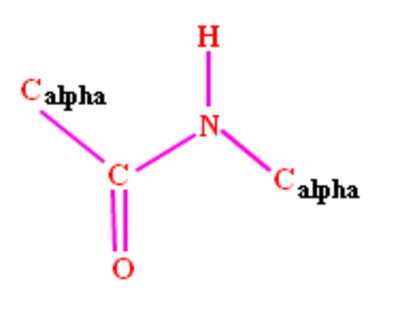
- ACis
- BTrans
13Trans formations are less stable due to their steric hindrance
- ARichtig
- BFalsch
14Proline is added to an amino acid chain exclusively in what form?
- ATrans
- BCis
- CThe other form occurs 10-40% of the time, and must be altered post addition
15Which of the following proteins converts cis isomers to their trans form?
- APeptidyl Propyl Isomerases
- BPeptidyl Glucyl Isomerases
- CPeptidyl Lipyl Isomerases
16In the Cis form, the clash of functional groups around the alpha carbon is much greater due to steric hindrance
- ARichtig
- BFalsch
17What type of bond is being shown here?
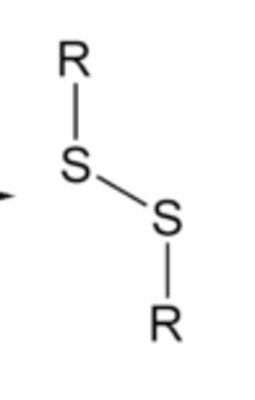
- ADisulphide
- BVan Der Waals
- CElectrostatic Attraction
18The previous amino acid to proline experiences steric hindrance in either proline conformation
- ARichtig
- BFalsch
19Cis proline has _ energy than/to trans proline
- AGreater
- BLess
- CEqual
20The two cystine molecules that bind together are known as what?
- ACysteine
- BBi-cystine
- CBi-sulphur cystine
21Proteins with di-sulphide bonds are most likely to be found where?
- AIn low/high pH
- BExtracellular proteins
- CCytoplasmic proteins
- DIn low/high salt concentrations
22Phosphorylation occurs on which residues?
- ASerine
- BValine
- CThreonine
- DTyrosine
- EGlutamine
- FAsparagine
23Pro-sequences are found at the C-terminus
- ARichtig
- BFalsch
24The Pro-sequence is also known as
- AA chaperone sequence
- BA ligation sequence
- CA glycosylation sequence
25Which proteins will have a pro-sequence?
- AChaperones
- BProteases
- CLigand-binding proteins
26The protein with a pro-sequence will auto-cleave it before folding correctly
- ARichtig
- BFalsch
27What is co-operativity in protein folding?
- AWhere one area of the protein that has already folded provides a nucleation site for another domain to fold
- BThe pre-formed proteins will be used as a template to fold more of that species
- CWhere chaperone proteins assist in protein folding
28What does the Hydrophobic Zipper Model suggest?
- AThat hydrophobic amino acids in close proximity are more likely to interact
- BThat hydrophillic amino acids in close proximity are more likely to interact
- CConstraining the chain and making other residues more likely to interact, which further constrains the chain, etc.
Informationen
- Beschreibung
- Structural Basis for Biological Function (Protein Folding) Quiz am Protein Folding- The Basics, erstellt von gina_evans0312 am 19/12/2013.
- Autor
- gina_evans0312
- Sprache
- English
- Aufrufe
- 1.347
- Schlagwörter
- Bewertung
- Noch keine Bewertungen Bewerte dieses Quiz