
Quiz
Chaperonins
Create a free account to finish this quiz
Save your progress and see your final score.
Already have an account? Sign in
Questions in this quiz (33)
1Chaperonins are for nascent proteins that don't fold independently or interact with other cytosolic chaperones
- ATrue
- BFalse
2To what is the arrow pointing on the Gro-El monomer?
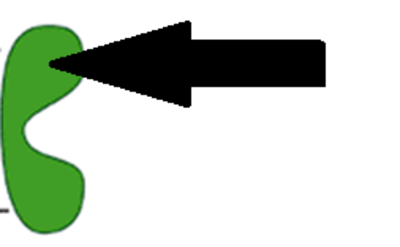
- AApical substrate binding site
- BHinge
- CATP binding site
3How many monomers make up Gro-El?
- A14- 7 in each layer
- B12- 6 in each layer
- C10- 5 in each layer
4Gro-Es is made of 7 monomers
- ATrue
- BFalse
5Why does Gro-Es bind to close the cavity?
- ACreates a space away from crowded cytosol for protein binding
- BCreates a highly acidic environment for proteins to fold in
- CAllows protein to fold in highly saline environment
6ATP & Gro-Es bind at separate points in the protein folding cycle
- ATrue
- BFalse
7The nascent protein will bind at the monomer level _ side with ADP and Gro-Es bound
- AAt the same
- BOpposite
8Once Gro-Es and ATP are bound, the protein refolds for _ seconds whilst the ATP is hydrolysed
- A10-15
- B15-20
- C20-25
9When the protein has folded properly, what happens?
- AA nascent polypeptide binds to the end opposite the Gro-Es and ADP, causing the cycle to repeat itself at the other end of the protein
- BGro-Es dissociates, releasing the folded protein
- CThe ADP is released and replaced with ATP
10The CCT and Gro-El cycles are basically the same, but Gro-El has flexible extensions that CCT does not
- ATrue
- BFalse
11What is bacterial homologue of the Hsp100 family?
- AClp
- BClr
- CCld
12Hsp100 and its bacterial homologue are hexamers
- ATrue
- BFalse
13Clp100 and its bacterial homologue do what?
- AUnfold proteins in the presence of ATP
- BFold proteins in the presence of ATP
14What is the difference between Class 1 & Class 2 Hsp100 proteins?
- AClass 1- Protein degredation
Class 2- Protein disaggregation and refolding - BClass 1- Protein disaggregation and refolding
Class 2- Protein degredation
- AClass 1- Protein degredation
15How do you tell apart Class 1 and Class 2
- AClass 1 has 2 ATPase sites, Class 2 has 1
- BClass 1 has 1 ATPase site, Class 2 has 2
16Hsp100's consist of one/two sets of hexamers
- ATrue
- BFalse
17The ATP is hydrolysed in Hsp100's/Clp proteins to allow what?
- ATo drive conformational changes in aromatic loops that interact with the substrate
- BTo provide energy to break the peptide bonds in the protein to be unfolded
- CTo provide energy to posh apart poorly stacked peptides
18When ClpA and ClpP interact, what is the role of the supercomplex?
- AUnravel denatured protein
- BRefold it
- CDegrade it
19Hsp90 chaperones are required for what?
- AHigh temperature growth
- BHigh salinity growth
- CHigh pH growth
20Hsp90 are ATP dependent monomers
- ATrue
- BFalse
21What is found on the N-terminus of a Hsp90 protein?
- AATP binding site
- BSubstrate binding domain
- CDimerisation domain
22The dimerisation domain of Hsp90 occurs at the C terminus
- ATrue
- BFalse
23ATPase inhibitors of Hsp90 target which part of the protein?
- AN terminus
- BC terminus
- CMiddle
24The binding of ATP causes the ATP 'lid' to close and the dimer to split
- ATrue
- BFalse
25Name the conformational changes that occur after ATP binds
- AN-terminals undergo Beta strand exchange
- BN-terminals undergo Alpha helix exchange
- CRotation of N domain (relative to middle) to allow meeting of dimerisation domains
- DRotation of C domain (relative to middle) to allow meeting of dimerisation domains
26What is the role of the core domain of Hsp90 (with regards to the ATPase)
- AIt's flexible enough that it completes the dimerisation site and allows ATP hydrolysis to occur
- BIt's flexible enough that it completes the ATPase site and allows ATP hydrolysis to occur
- CInteracting with the gamma phosphate of ATP
27The conformational changes of Hsp90 are thought to be brought about by client proteins
- ATrue
- BFalse
28cd37/p50 inhibit Hsp90 by what process?
- ABinding it to Hsp70
- BPreventing N-terminal dimerisation
- CPhosphorylation of Hsp90
29Sti/HOP bind to the N-terminal of Hsp90 & Hsp70, binding them together as a potent inhibitor
- ATrue
- BFalse
30Aha activates Hsp90 how?
- AActivates ATPase activity by promoting open state of of catalytic loop
- BCausing N-terminal alignment for dimerisation
- CPhysically holding the active site open
31Spa1 both inhibits and stimulates ATPase activity, leading to an overall slowing of ATPase in Hsp90
- ATrue
- BFalse
32How does Sba activate ATPase activity?
- AInteracts with the middle domain of Hsp90 and modulates the catalytic loop of this domain
- BIncreases the affinity of the dimerisation sites for each other, completing the ATPase sites more stably
- CIncreases the affinity for the binding site for ATP
33Hsp90 can be used to activate steroid receptors and kinases
- ATrue
- BFalse
Information
- Description
- Structural Basis for Biological Function (Protein Folding) Quiz on Chaperonins, created by gina_evans0312 on 20/12/2013.
- Author
- gina_evans0312
- Language
- English
- Views
- 1,331
- History
- Created on 20 Dec 2013 · updated on 15 Dec 2016
- Tags
- Rating
- No ratings yet Rate this quiz