
Quiz
Clin Lab 2 Final
Dieses Quiz enthält Fragetypen, die sich im gewohnten Player öffnen.
Fragen in diesem Quiz (62)
1A [blank_start]purple[blank_end] top tube is always used for CBC blood collection.
- Apurple
2After successful blood collection, how many times do you invert the collection tube?
- A8-10 times
- B3-6 times
- C1-5 times
- D10-12 times
3You must refrigerate a blood sample if you do not plan on evaluating within ____ mins?
- A5
- B10
- C15
- D30
4The test that measures the percentage of blood occupied by RBC's is called a(n) [blank_start]PCV[blank_end]
- APCV
5The buffy coat is included while reading a PCV
- ARichtig
- BFalsch
6The normal size of a canine red blood cells is [blank_start]7[blank_end] microns. (number)
- A7
7When reading hematocrit results, you should line the meniscus of the RBC stack up with...
- AThe clay plug
- BThe 50 line
- CThe buffy coat
- DThe 100 line
8Normal [blank_start]PCV[blank_end] values (type of test) for dogs are 37-55%, and cats are 24-45%.
- APCV
9PCV/6 = [blank_start]RBC[blank_end] count
- ARBC
10RBC counts are normally in the low thousands
- ARichtig
- BFalsch
11Variation in RBC size
- APoikilocytosis
- BAnisocytosis
- CChromocytosis
- DPolyvariocytes
12Variation in RBC shape
- APoikilocytosis
- BAnisocytosis
- CChromocytosis
- DPolyvariocytes
13Normal [blank_start]RBC[blank_end] count for dogs is 5-8.5 x10^6/uL and cats are 5-10 x10^6/uL
- ARBC
14Pick 2 answers that are consistent with Agglutination
- AIMHA
- BGrape-like clusters
- CCoin-like stacking
- DNormal in horses
15Pick 2 answers that are consistent with Rouleaux
- AIMHA
- BGrape-like Clusters
- CCoin-like stacking
- DNormal in horses
16By adding 1 gt of saline to Rouleaux will make it disperse; Agglutination will stick together.
- ARichtig
- BFalsch
17This is a type of blood parasite test
- ABPT (Blood parasite testing)
- BQBC (Quantitative Buffy Coat Analysis)
- CCBC (Complete Blood Count)
- DRBC/WBC Parasite Test
18(PCVx10) /RBC = [blank_start]MCV[blank_end]
- AMCV
19(HgB/PCV) x 100 = [blank_start]MCHC[blank_end]
- AMCHC
20When evaluating RBC indicies you must know terminology. A normal MCHC is called [blank_start]Normochromic[blank_end] while a normal MCV is [blank_start]Normocytic[blank_end]. Decreased MCV would be considered [blank_start]Microcytic[blank_end] and an increase would be [blank_start]Macrocytic[blank_end]. If the MCHC was low it would be considered [blank_start]Hypochromic[blank_end], and the high result would be [blank_start]Hyperchromic[blank_end].
- ANormochromic
- BNormocytic
- CMicrocytic
- DMacrocytic
- EHypochromic
- FHyperchromic
21(Hgb/RBC) x 10 = [blank_start]MCH[blank_end]
- AMCH
22Test that measures anisocytosis
- AMCHC
- BMCH
- CMCV
- DRDW
23PCV/3 = [blank_start]Hemoglobin[blank_end] (full word)
- AHemoglobin
24A _____ count is performed when anemia is suspected
- ARed Blood Cell
- BReticulocyte
- CWhite Blood Cell
- DPlatelet
25Only counting the aggregate reticulocytes during a reticulocyte count is standard procedure in dogs and cats.
- ARichtig
- BFalsch
26Why would TP using serum yield lower test results?
- AThe pet is dehydrated
- BPlasma molecules are usually thicker
- CSerum contains no fibrinogen
- DSerum and Plasma are actually the same
27A refractometer is used to conduct a TP test.
- ARichtig
- BFalsch
28Dehydration will cause TP results to be
- AHigh
- BLow
29nRBC
- ARubricyte
- BProrubricyte
- CMetarubricyte
- DReticulocyte
30[blank_start]Neutrophils[blank_end] are the most abundant WBC in most mammals and are known as [blank_start]Heterophils[blank_end] in avian, reptiles, fish, rats, rabbits, and guinea pigs. With the exception of bovine, who show [blank_start]Lymphocytes[blank_end] as their most abundant WBC.
- ANeutrophils
- BBasophils
- CEosinophils
- DMonocytes
- EHeterophils
- FBarr Bodies
- GExoticophils
- HHypersegmented Neutrophlis
- ILymphocytes
- JMycoplasma
- KMonocytes
- LBasophils
31Normal TP ranges for serum are [blank_start]5.5 - 7.5 g/dL[blank_end] and plasma is [blank_start]6 - 8 g/dL[blank_end].
- A5.5 - 7.5 g/dL
- B6 - 8 g/dL
32[blank_start]WBC Estimate[blank_end] = Average number of WBC x 2000
[blank_start]Corrected WBC Count[blank_end] = (100/100 + nRBCs) x WBC count
[blank_start]Absolute Count[blank_end] = Percentage of type x WBC count- AWBC Estimate
- BCorrected WBC Count
- CAbsolute Count
33Select only agranulocytes
- ANeutrophil
- BMonocyte
- CBasophil
- DEosinophil
- ELymphocyte
34What is the main job of a Neutrophil
- ACoagulation
- BAllergies
- CParasites/Inflammation
- DPhagocytosis
35What is the main job of an Eosinophil
- AAllergies/Inflammation
- BAllergies/Parasites
- CParasites/Inflammation
- DImmune/Phagocytosis
36What is the main job of a Basophil
- APhagocytosis
- BAllergies/Parasites
- CInflammation/Allergies
- DImmune
37What is the main job of a Lymphocyte
- AAllergies
- BPhagocytosis
- CImmune
- DParasites
38What is the main job of a Monocyte
- AAllergies
- BPhagocytosis
- CInflammation
- DImmune
39Platelet Count can be found by first scanning [blank_start]10[blank_end] fields to find the average number/hpf. The normal range is between [blank_start]8-10[blank_end] platelets/hpf. After the average is determined you multiply by [blank_start]20,000[blank_end]. If your results are less than 100,000 /uL your patient may have [blank_start]thrombocytopenia[blank_end].
- A10
- B5
- C50
- D100
- E8-10
- F0-3
- G1-5
- H10-12
- I20,000
- J20
- K200
- L2,000
- Mthrombocytopenia
- Nhypopenia
- Oplatelet mass deficiency
- PvWD
40Platelets, vWf, and vessel walls are essential in [blank_start]Primary[blank_end] hemostasis, which produces platelet adhesion, activation, and aggregation.
- APrimary
41During [blank_start]Secondary[blank_end] hemostasis fibrinogen converts to fibrin and strengthens the clot.
- ASecondary
42During tertiary hemostasis [blank_start]plasmin[blank_end] aids to break down the clot.
- Aplasmin
43There are two types of analyzer types, Flow cytometry, which uses [blank_start]light scatter[blank_end] technology, such as the IDEXX Lasercyte in lab class; and Impedance, which uses a [blank_start]break in current[blank_end] to process results, such as the Heska.
- Alight scatter
- Bbreak in current
44type of RBC clumping, described as grape-like clusters
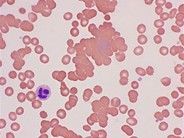
- AAgglutination
- BRouleaux
45Type of RBC clumping, described as coin like stacking
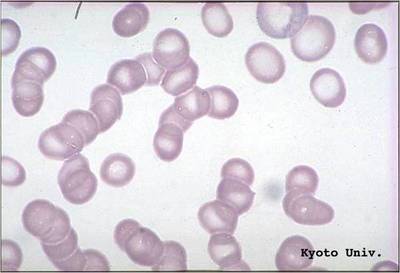
- AAgglutination
- BRouleaux
46Normal in llamas
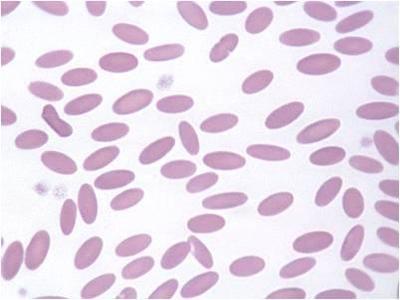
- AKeratocyte
- BDacrocyte
- CElliptocyte/Ovalocyte
- DPyknocyte
47Blister cell. Contains vacuole.
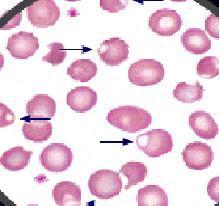
- AKeratocyte
- BPyknocyte
- CCodocyte
- DDrepanocyte
48Horn Cell. Develops after blister cell ruptures. Mechanical injury.
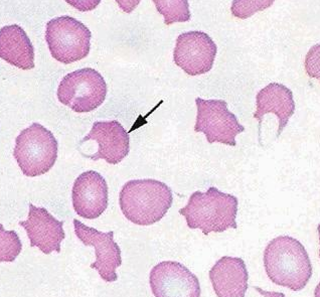
- AKeratocyte
- BStomatocyte
- CSchistocyte
- DAcanthocyte
49No central pallor. IMHA
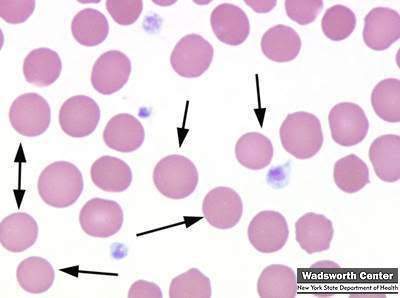
- AEchinocyte
- BOvalocyte/Elliptocyte
- CSpherocyte
- DLeptocyte
50DIC. RBC Fragments.
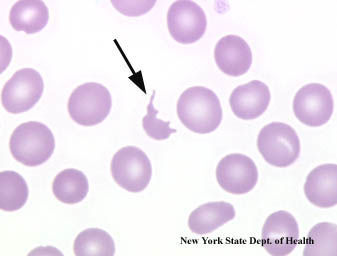
- APyknocyte
- BSchistocyte
- CEccentrocyte
- DDacrocyte
51Spur Cell. 2-10 Blunt protrusions.
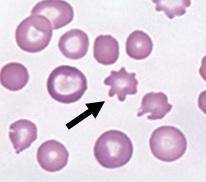
- AEccentrocyte
- BKnizocyte
- CStomatocyte
- DAcanthocyte
52Burr Cell. Uniform sharp projections. "Crenated" RBCs
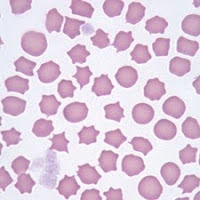
- AAcanthocytes
- BEchinocytes
- CElliptocytes
- DEccentrocytes
53Target Cells.
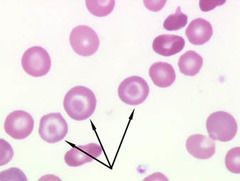
- AStomatocyte
- BDrepanocyte
- CCodocyte
- DKeratocyte
54Folded Cells.
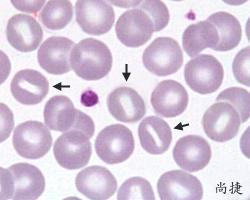
- AStomatocyte
- BPyknocyte
- CAcanthocyte
- DCodocyte
55Barr Cells.
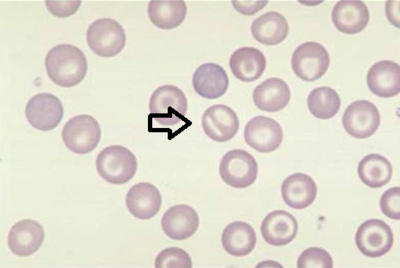
- AEccentrocyte
- BOvalocyte/Elliptocyte
- CKnizocytes
- DSchistocyte
56Off-centered central pallor
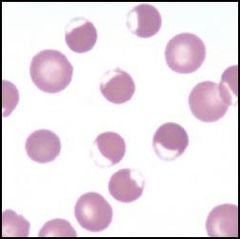
- ALeptocyte
- BElliptocyte
- CEccentrocyte
- DDacrocyte
57Tear Drop shaped.
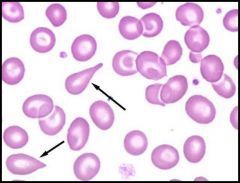
- ADrepanocyte
- BDacrocyte
- CCodocyte
- DSpherocyte
58Canoe shaped.
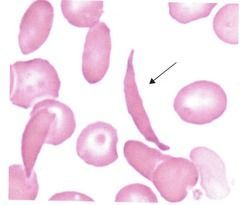
- ADrepanocyte
- BKnizocyte
- CDacrocyte
- DPyknocyte
59It is normal for Cats and Horses to have 1% Howell Jolly Bodies, but can signal regenerative anemia in other animals.
- ARichtig
- BFalsch
60Basophilic stippling is a result of [blank_start]lead[blank_end] poisoning.
- Alead
61Cytauxzoon felis is a parasite who's primary host is the bobcat. Under the microscope it looks "writing pen" shaped.
- ARichtig
- BFalsch
62Anaplasma marginale is a bacterium that affects which species?
- AEquine
- BOvine
- CBovine
- DAvian
Informationen
- Beschreibung
- Study Quiz for Clin Lab 2 Final
- Autor
- Sara-Marie Kirchner
- Sprache
- English
- Aufrufe
- 502
- Schlagwörter
- Bewertung
- Noch keine Bewertungen Bewerte dieses Quiz