
Present Perfect

Folien in diesem Satz (15)
-
- When do we use present perfect? Let´s watch this video first
- https://www.youtube.com/watch?v=q1LKzp2ozVMhttps://www.youtube.com/watch?v=q1LKzp2ozVM
- .
-
- - The present perfect tense refers to an action or state that occurred at an unspecified time in the past. Example: We have talked before.
- - Or refers to an action that started in the past and continued to the present time. Example: Sebastian has lived in England for 7 years.
- - Also we use Present Perfect to talk about recently finished events. Example: Susan has just run a marathon.
-
- The construction of this verb tense is very easy. The first element is have or has, depending on the subject. The second element is the past participle of the verb, which is usually formed by adding -ed or -d to the verb’s root. Examples: walked, cleaned, typed, jumped, laughed.
- Although English does have a long list of verbs that have irregular past participles. Examples: done, said, gone, known, won, thought, felt, eaten.
-
- These examples show how the present perfect can describe something that occurred or was the state of things at an unspecified time in the past.
- I have walked on this path before.
- We have eaten the lasagna here.
- Bildunterschrift: Your teacher´s favorite restaurant
-
- The important thing to remember about the present perfect is that you can’t use it when you are being specific about when it happened.
- I have put away all the laundry.
- I have put away all the laundry this morning. INCORRECT

-
- You can use the present perfect to talk about the duration of something that started in the past is still happening.
- She has had the chickenpox since Tuesday.

-
- TO FORM THE PRESENT PERFECT IN AFFIRMATIVE FORM:
- SUBJECT + HAVE/HAS + VERB IN PAST PARTICIPLE + OBJECT.
- SHE HAS OPENED THE DOOR. REGULAR VERB
- YOU HAVE GONE HOME. IRREGULAR VERB
-
- SUBJECT + HAVE NOT/HAS NOT + VERB IN PAST PARTICIPLE + OBJECT
- MY BROTHER HAS NOT ( HASN´T ) CALLED. REGULAR VERB
- MY NEIGHBORS HAVE NOT ( HAVEN´T ) EATEN IN THAT RESTAURANT. IRREGULAR VERB
-
- HAVE/HAS + SUBJECT + VERB IN PAST PARTICIPLE + OBJECT + ?
- HAVE THEY ENDED THE CONVERSATION ? REGULAR VERB
- HAS YOUR HUSBAND FOUND A NEW ASSISTANT ? IRREGULAR VERB
-
- WE USE -WH- QUESTIONS WHEN WE NEED MORE INFORMATION IN THE ANSWER. -WH- QUESTION WORDS ARE: WHERE, WHAT, WHEN, WHY. WHO, HOW MANY. HOW
- WHO HAVE YOU HELPED LATELY ? REGULAR VERB
- I HAVE HELPED POOR PEOPLE .
- HOW MUCH MONEY HAS SHE SPENT ? IRREGULAR VERB
- SHE HAS SPENT MORE THAN EIGHT HUNDRED DOLLARS !
-
- Use since with a specific year or a period in the past: since 2002 / since I was a child
- MICHELLE HAS WORKED HERE SINCE 2017.
- I HAVEN'T SEEN HIM SINCE I WAS A CHILD.
- Use for with a number of years: for twenty years
- DANIEL HAS LIVED IN FRANCE FOR 8 YEARS.
-
- We often use the adverb ever to talk about experience up to the present:
- My last birthday was the best day I have ever had.
- and we use never for the negative form:
- Have you ever met George?
- Yes, but I've never met his wife.
-
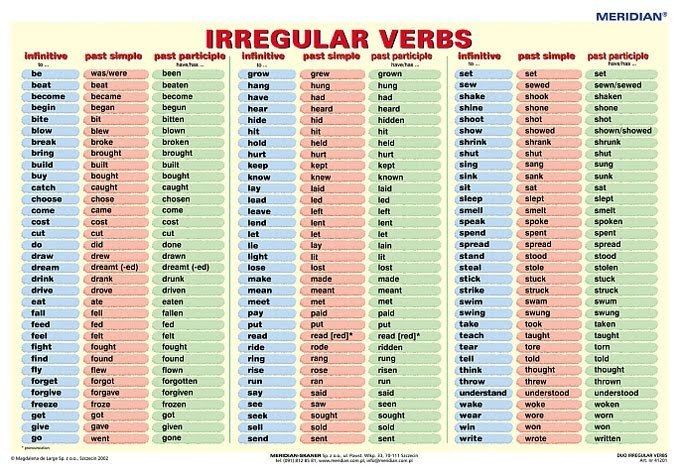
- Bildunterschrift: YOU CAN FIND THIS LIST IN THE INTERNET, BUT YOU NEED TO MEMORIZE IT !!
-
- Daniel ____ that video clip at least twenty times. (see)
- The workers _______ a break in 4 hours. (not have)
- We ___________ them regularly over the last few years. (visit)
- _______ Ella _______ her driving test yet? (pass)
- Roger _______ in Mexico several times since 2002.(be)
- They______ to each other in ages. (not speak)
- Why _______ Mathew _______his job? (quit)
- ______the nurses ______ on strike again? (go)
- ________ they ______ the mail yet? (not deliver)
- I _____ already_______ you the answer. (tell)
-

- Bildunterschrift: keep practicing!!!!
Informationen
- Beschreibung
- Present Perfect presentation
- Erstellt von
- Juanita Nunez
- Aufrufe
- 169
- Tags
- Bewertung