
Euthanasia Case Studies
Folien in diesem Satz (15)
-
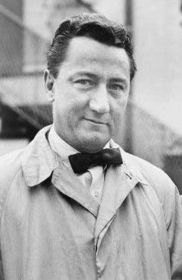
- Stewart Alsop was a journalist who died in 1975 of a rare form of cancer.
- During his illness, he shared a room with a man who he called Jack.
- Jack was dying from bowel cancer, and his wife would pat his stomach to relieve the pain during her visit.
- At night, Jack's pain would be unbearable and he would scream in agony.
- Alsop wrote this about his experience: "The third of this routine, the terrible thought occurred to me. 'If Jack were a dog,' I thought, 'what would be done with him?' The answer was obvious: the pound, and chloroform. No human being with a spark of pity could let a living thing suffer so, to no good end."
- Bildunterschrift: Stewart Alsop
-
- Dianne Pretty had motor neurone disease and faced a painful death she wanted to avoid; "I want to have a quick death without suffering, at home surrounded by my family."
- She appealed unsuccessfully to the UK courts and finally the European Court of Human Rights, to allow her husband to help her to die.
- https://www.youtube.com/watch?v=DWBMeuSagGw (Einbetten)
-
- A British
- father-of-three who feared he would be paralysed by an inoperable tumour has
- died at the Dignitas centre in Switzerland. Businessman
- Jeffrey Spector, 54, of St Annes, Lancashire, died on Friday following a
- six-year illness.
- The family said in a
- statement: "Whilst we are now in a state of all-consuming grief and miss
- Jeffrey very much, we also recognise that he is now at peace and away from the
- fear which surrounded him in the last few weeks of his life.
- "Jeffrey ended
- his life with dignity and control which was his overwhelming desire."
- In an interview with the Blackpool Gazette last week, Mr Spector said: "If I am
- paralysed and can't speak, send me to the spirit world."
- Read more: http://www.bbc.co.uk/news/uk-england-lancashire-32881161
- https://www.youtube.com/watch?v=q38vGntnqNA (Einbetten)
-
- “A stroke in 2005 left Tony Nicklinson
- with 'locked-in syndrome' – mentally sound but paralysed from the neck down and
- unable to speak.
- At the High Court in London, he
- described his existence as 'dull, miserable, demeaning, undignified and
- intolerable' as he began his landmark case that challenges the law on murder.
- Mr Nicklinson said: 'All this current
- activity making documentaries and writing articles has reminded me of how much
- I want my life to end.
- 'I know you said this hearing is all
- about the legal arguments but is it possible for you to tell/remind the judges
- a few things? I have wanted my life to end since 2007, so it's not a passing
- whim.
- 'I know consent makes no difference but the doctor has it anyway.
- Legal arguments are fine but they should not forget that a life is affected by the decision they come to – a decision that goes against me condemns me to a "life" of increasing misery. I'm sure the judges have heard it all before but I simply wanted to get it off my chest.'
- 'I cannot scratch if I itch, I cannot pick my nose if it is blocked and I can only eat if I am fed like a baby - only I won’t grow out of it, unlike the baby.
- 'I am washed, dressed and put to bed by carers who are, after all, still strangers. You try defecating to order while suspended in a sling over a commode and see how you get on.'”
- “[His wife], Mrs Nicklinson said: ‘Whatever happens, there are no happy endings in this one.'”
- Read more: http://www.dailymail.co.uk/news/article-2161494/Tony-Nicklinson-euthanasia-My-life-miserable-undignified-says-locked-syndrome-sufferer.html#ixzz3qM3XF1Db
-
- “ALS, which
- accounts for more than 90% of all cases of motor neurone disease, causes nerve
- cells in the brain and spinal cord called motor neurones to degenerate and
- eventually die… Without them the brain cannot control movement properly, and
- the muscles cease to work well…”
- “It is estimated
- that 3,500 people in the UK have ALS… Half of patients die within 14 months of
- their diagnosis… It is estimated that only about 5% of people with ALS survive
- for more than 10 years…”
- “Only one drug - Rilutek - is licensed as a treatment for
- ALS… Trials are currently taking place using another drug, lithium, which has
- produced promising results in mice, but work is still at an early stage…”
- “However, he
- could communicate. He wrote scientific papers by dictating to a secretary, and
- gave seminars through an interpreter.”
- Read more: http://news.bbc.co.uk/1/hi/health/8009804.stm
- https://www.youtube.com/watch?v=u6MyOXk98DI (Einbetten)
- Bildunterschrift: 10 Things You May Not Know About Stephen Hawking
-
- “She
- was diagnosed with a cancerous tumour on her kidney, which proved so rare that
- the doctors at Craigavon Area Hospital in Northern Ireland sent samples of it
- for examination by specialists in London, Glasgow and Harvard…
- “'They said it was
- spindle cell sarcoma, which is normally a bone cancer. I was one of only ten
- known cases where it had become a kidney tumour,' says Sharyn, a 46-year-old
- mother of four from Newcastle, Co. Down. 'The surgeon kept a watch on my
- kidney. But in April 2004, he told me the cancer had rattled through my kidneys
- and lungs and I was a terminal case.'
- “The cancer was
- inoperable and chemotherapy, even if it worked, would add only a few weeks to
- Sharyn's life. 'The hospital said treatment was an option, but not a cure, and
- that I had a year to live, at best.'…
- “'Further scans to see
- how the cancer was progressing showed the cancer was gone. The doctors were
- astonished, and said it could not have been due to anything they'd done.'
- “Sharyn is convinced that what happened was a miracle. 'When the doctors said my cancer was terminal, I put my faith into practice and attended a Christian healing ministry.'”
- Read more: http://www.dailymail.co.uk/health/article-1172211/The-miracle-survivor-I-given-months-live--terminal-cancer-vanished.html
-
- “John Pattison was diagnosed with Hodgkin's disease
- - a cancer of the lymphatic system - in 1974, he, too, was told his case was
- terminal. Thirty years ago, the
- outlook for such cancers was poor and treatment involved only basic chemotherapy
- and radiotherapy.
- “Whenever John thought he was on the mend, the
- tumours would come back. In 1977, he suffered his fourth relapse. 'This time
- they said it was now just a case of palliative care, to make me feel more
- comfortable, rather than a cure.'
- “Aged only 21, he decided to make the most of the
- time he had left. He flew to North Carolina and stayed with an aunt for two
- months. When he reluctantly returned to England to face the doctors again, the
- news was astonishing.
- “'They did a few tests and when I saw the consultant, he had a big smile
- on his face,' says Pattison. ’He shook my hands, saying: "You are clear,
- all bloody clear."'”
- Read more: http://www.dailymail.co.uk/health/article-1172211/The-miracle-survivor-I-given-months-live--terminal-cancer-vanished.html

-
- “Terry Wallis lost consciousness
- when he was involved in a car crash in Mountain View, Arkansas, in July 1984...
- Wallis and a friend had been driving when their car plunged into a
- creek. The driver, Wallis's friend died, but Terry was found comatose a day
- later under a bridge…
- “As a result of the crash, he spent 19 years in
- a coma and his injures left him a quadriplegic…
- [He] has finally woken after spending nearly 20
- years in a coma…Terry spoke his first word two weeks ago and seems to be
- recovering well.”
- Read more: http://www.dailymail.co.uk/health/article-187920/Coma-man-wakes-19-years.html
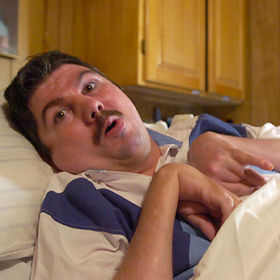
- Bildunterschrift: Terry Wallis
-
Mary Therese Helmueller - Against
- Mary Therese Helmueller wrote on the 30th
- March 2005;
- “I
- am a registered nurse in the St. Paul/ Minneapolis area with 15 years’
- experience in emergency and critical care. My knowledge of euthanasia not only
- comes from my experience working in the critical care units throughout the Twin
- Cities, but also comes from a personal tragedy and loss in 1995. This is my
- true story.
- On
- Monday, February 20th, my grandmother was admitted to a local Catholic hospital
- with a fracture above the left knee. She was alert and orientated upon
- admission but became unresponsive after 48 hours and was transferred to hospice
- on the fourth day and died upon arrival…
- Carefully
- tracing the events it was evident that my grandmother became lethargic and
- unresponsive after each pain medication. She would awaken between times saying,
- "I don't want to die, I want to live to see Johnny ordained": "I
- want to see Greta walk." Johnny was her grandson studying in Rome to be a
- priest and Greta was her new great-grandchild. Even though over-sedation is one
- of the most common problems with the elderly she was immediately diagnosed as
- having a stroke. When she became
- comatose a completely hopeless picture of recovery was portrayed by the nurses and doctors who reported that she had a stroke, was having seizures, going in and out of a coma, and was in renal failure.
- The truth however can be found in the hospital chart which indicates that everything was normal! The CAT scan was negative for stroke or obstruction, the EEG states "no seizure activity" and all blood work was normal indicating that she was not in renal failure!”
- Read more: http://www.rense.com/general63/euth.htm
-
- Michael Wenham has primary
- lateral sclerosis, a rare form of MND. He spoke to the BBC about Rob Marris’
- proposal to legalise assisted suicide in certain circumstances;
- “It is a few who want to
- take their own lives. I think the law as it stands is a cast-iron guarantee
- that a life is not to be taken under any circumstances, and there’s no getting
- away from it, assisting someone to die is a form of killing. I think the new law, as proposed by Rob
- Marris, is discriminatory by nature, and it would discriminate against people
- like me. There’s a lot of pressure on us who are disabled, we are told we are a
- burden on society, we’re a burden to those who care for us. We feel pressure to
- take the noble, self-sacrificing way out and relieve others of that burden.”
- Read more: http://www.bbc.co.uk/news/health-34208624
- https://www.youtube.com/watch?v=ZAd6ZT6Ysgg (Einbetten)
- Bildunterschrift: Michael Wenham's interview
-
- During the 1920’s and 1930’s,
- euthanasia was legal within Nazi Germany.
- Propaganda was released revealing
- that 5.50 German marks could feed one person with a hereditary disease or a
- whole family.
- There was mounting pressure on parents of disabled children to
- euthanize them. 73% of these parents voted in an opinion poll they would give
- their children to the authorities to be euthanized.
- Buses would transport the
- children to euthanasia centres to kill them under ‘Operation T-4’.
- German
- hospitals began depriving disabled children of heat and food, so they could
- claim the children died of “natural causes.”
- The practice of euthanasia was
- widely believed to a service to Germany, as it eliminated drains on public
- taxes.
- Euthanasia was given to the physically and mentally handicapped,
- deaf/blind people, people with depression or anyone who suffered from heart
- attacks and strokes.
- https://www.youtube.com/watch?v=Ww800PzlJ6Y (Einbetten)
-
- Tony Bland was the 96th
- victim of the Hillsborough disaster in 1989.
- He suffered severe crushing and
- lack of oxygen to the brain.
- After the disaster, he remained in a comatose
- state for four years. He was fed through a tube directly into his stomach.
- Bland was in a persistent vegetative state (PVS); his eyes were open, but he
- was unresponsive.
- The Yorkshire Health Authority asked the courts to allow them
- to withdraw the tube that supplied Bland with food and water.
- He died 11 days
- after the tube was withdrawn, at just 19 years old. The doctors said Bland
- could have lived for another 20 years.
- Some PVS patients can make a partial recovery. Despite lack
- of response, PVS patients can still feel pain.
- https://www.youtube.com/watch?v=oRMzmcu_gZA (Einbetten)
-
- Dax Cowart was very badly burnt after a gas explosion engulfed his car.
- He repeatedly asked his family and friends to help him end his suffering, which lasted for 10 years through agonising treatment..
- Dax is blind and cannot use his hands, but otherwise he is healthy.
- https://www.youtube.com/watch?v=vYYhfeNFvqo (Einbetten)
-
- https://www.youtube.com/watch?v=yIZU6VHX6n8 (Einbetten)
- Bildunterschrift: Recovery
- https://www.youtube.com/watch?v=eq024xHhDOQ (Einbetten)
- Bildunterschrift: Katy Piper was a 24 year old model and TV presenter who suffered third degree burns when sulphuric acid was thrown into her face.
-
- https://www.youtube.com/watch?v=kqfXRaTDGVA (Einbetten)
- Bildunterschrift: What drives a mother to help her child die? For almost a year, Panorama cameras have been following Kay Gilderdale - the woman at the centre of the recent Assisted Suicide trial - as she faced a possible life sentence over her part in the death of her daughter Lynn.
Informationen
- Beschreibung
- AS - Level (Year 1) Ethics (App. Eth. - Euthanasia) Folienset am Euthanasia Case Studies, erstellt von Summer Pearce am 13/01/2016.
- Erstellt von
- Summer Pearce
- Aufrufe
- 4
- Bewertung