
Medical Ethics and Bioethics
18 resources created by 16 users
This Medical Ethics and Bioethics page on GoConqr gathers community-made mind maps, quizzes, flashcards, notes, slide sets and flowcharts, from abortion and euthanasia to genetic engineering, embryo research and organ transplantation. It's built for school students, university students and professional candidates revising a topic, plus teachers after ready-made material. There are over 200 resources here, including more than 100 mind maps and over 20 quizzes, pitched at GCSE and A-level Religious Studies as well as university study. Pick a topic, then try a quiz to see what you remember.
Top Medical Ethics and Bioethics resources
-
Mind map Abortion
-
 Flowchart Reasons for veracity - adapted from (Kerridge et al., 2013, pp. 276–277) Kerridge, I., Lowe, M., & Stewart, C. (2013). Ethics and Law for the Health Professions (4th ed., pp. 276–2...
-
24 questionsAbortion and Euthanasia (Medical Ethics) Quotes
-
31 cardsMedical Ethics: Abortion What is abortion?
-
25 cardsGenetic Engineering Flashcards What are the pros of genetic engineering on crops?
-
35 cardsMedical Ethics Revision
-
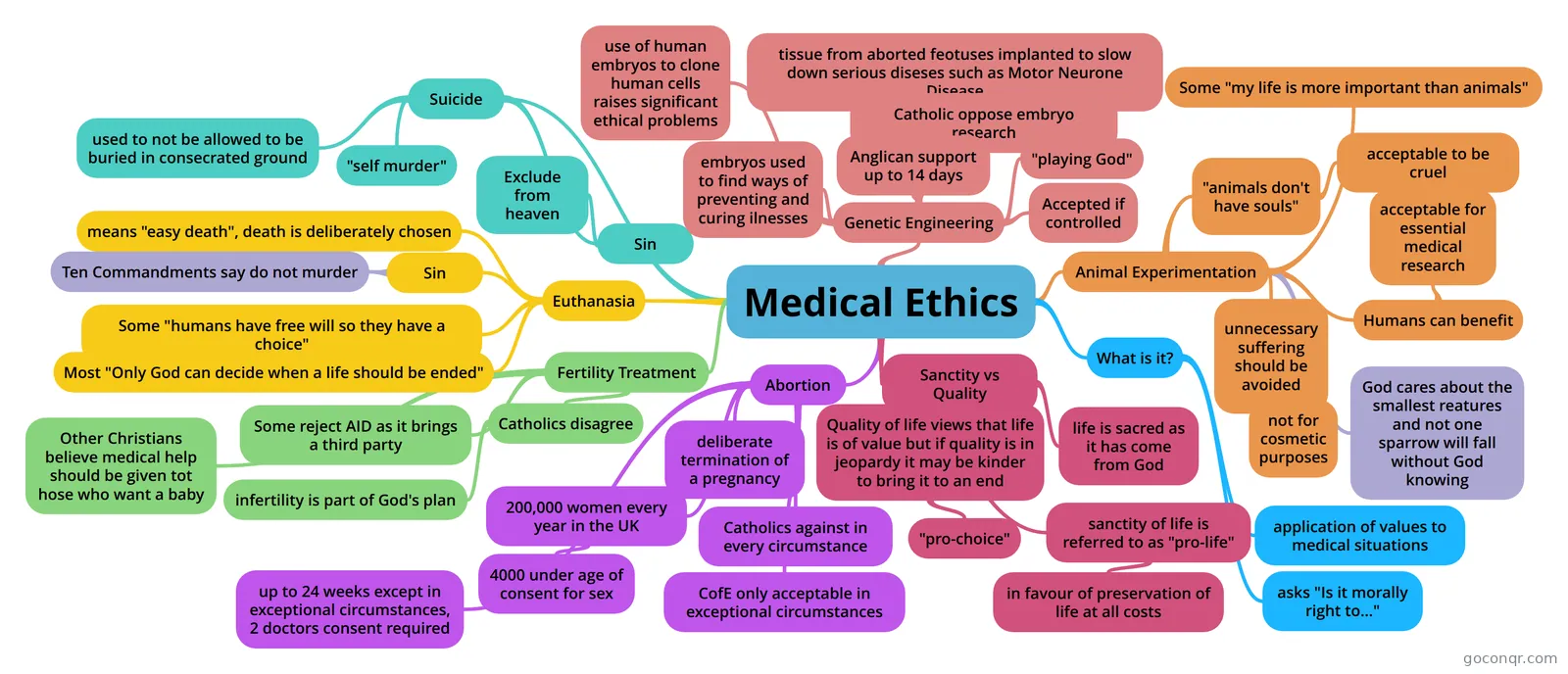 Mind map Medical Ethics
-
8 questionsEuthanasia What is active euthanasia?
Quizzes
-
24 questionsAbortion and Euthanasia (Medical Ethics) Quotes
-
8 questionsEuthanasia What is active euthanasia?
-
7 questionsAbortion Quiz Up too how many weeks can you have an abortion?
-
2 questionsPoR Ethics Abortion Abortion is the removal of a human foetus from the uterus before it is able to survive independently
Mind maps

Flashcards
Flowcharts
Notes
Slides
More Philosophy topics
About Medical Ethics and Bioethics
GoConqr OriginalWhat the resources cover
The page sits in the Ethics and Value Theory strand of Philosophy, and most of it is built around a few big questions. The mind maps on abortion look at personhood, with Michael Tooley, Peter Singer and John Locke, and at the argument that a foetus lacks the capacity for rational thought. Another map sets out religious principles such as the sanctity of life.
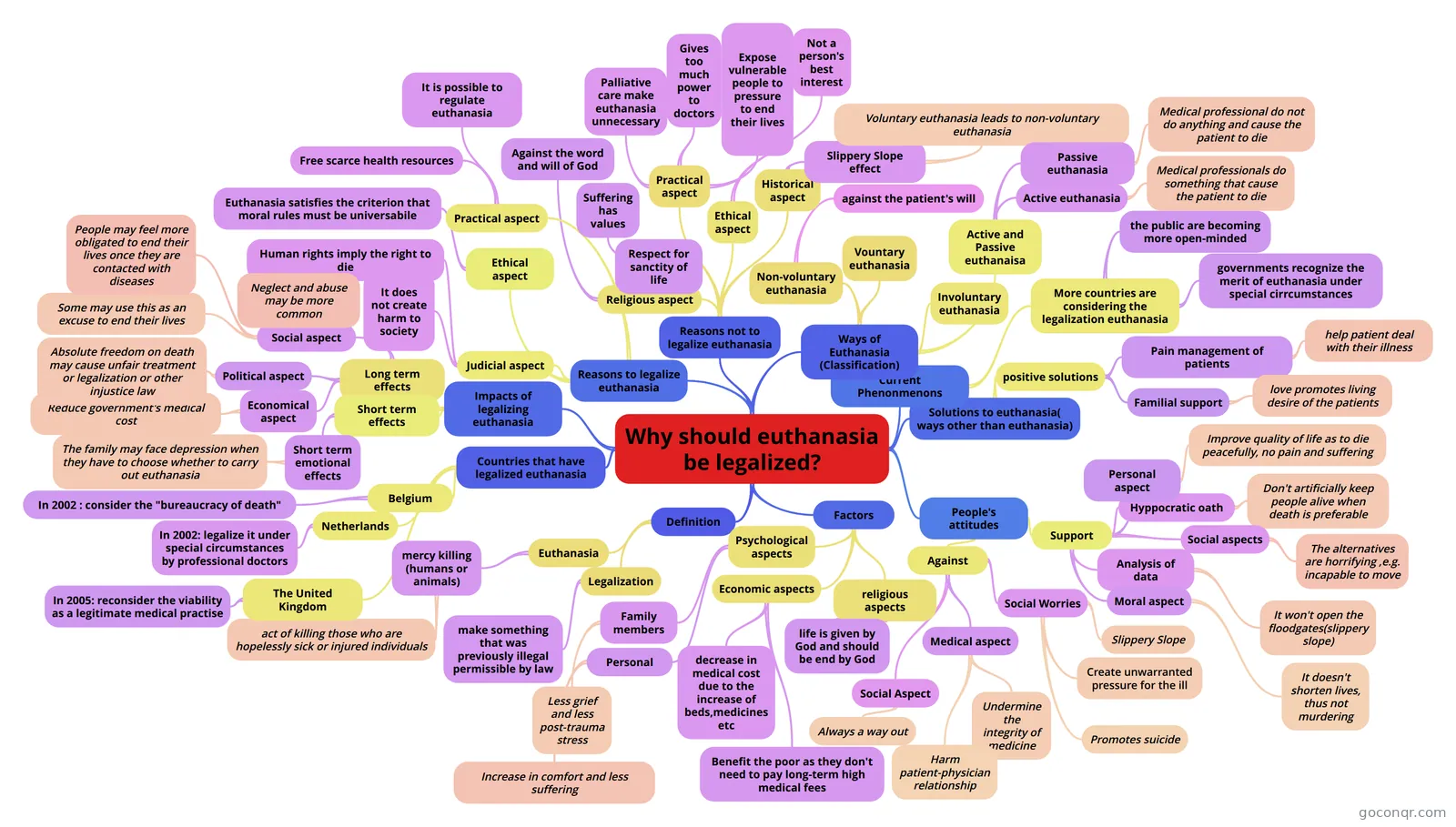
End-of-life issues have their own cluster. The Euthanasia map asks whether a good death is one we know is coming and can control. The Ethics of pain control map covers the doctrine of double effect and the side effects of strong painkillers. There are also resources on assisted dying, quality of life and embryo research.
Where to start
- Open the Ethics mind map first. It introduces the four principles identified by Beauchamp and Childress: autonomy, justice, beneficence and non-malfeasance. It also touches on advance directives and capacity.
- Move to The Principles of Biomedical Ethics if you want that framework in more depth.
- Choose one issue, such as abortion, euthanasia or genetic engineering, and read its map.
- Check the matching flashcards, for example Embryo Research and Genetic Engineering, which asks about the trans-humanist, biocentric and Christian views.
Using maps and quizzes together
Read a map, then close it and take a quiz on the same issue. The page lists quizzes on euthanasia, abortion, the right to a child and bioethics. Any question you miss tells you which branch of the map to reread. Then try explaining that branch in your own words.
The flowchart on reasons for veracity is useful for a different skill. It sets out why honesty matters in healthcare: it shows respect for individuals, enables fully informed decision-making and maintains trust between professionals and patients.
For different learners
School students will find material that fits GCSE Religious Studies and A-level Religious Studies, including religious views on life and death. University students and professional candidates can use the lecture-style flashcards and the case notes, such as the one on Diane Pretty. Teachers can pick slide sets like What is Euthanasia? to use in class.
When you are ready, choose one topic and work through its map, flashcards and quiz in turn.
Frequently asked questions
Which resource should I open first?
Start with the Ethics mind map. It lays out the four principles identified by Beauchamp and Childress, autonomy, justice, beneficence and non-malfeasance, along with advance directives and what makes a good death. Once those ideas are clear, the abortion and euthanasia resources are easier to follow.
What do the mind maps on this page cover?
They cover abortion and personhood, religious principles such as the sanctity of life, euthanasia, assisted dying, pain control and the doctrine of double effect, quality of life, embryo research, genetic engineering and the right to health care. Some are general medical ethics overviews.
Are there quizzes I can use to test myself?
Yes. There are over 20 quizzes, with titles on euthanasia, abortion, the right to a child, bioethics and a set of quotes on abortion and euthanasia. Use them after reading a map, and reread any branch connected to questions you got wrong.
Which exams do these resources suit?
The listed resources mention GCSE Religious Studies and A-level Religious Studies, so school students on those courses will find relevant material. Others are lecture-based and suit university students and professional candidates. Check each resource against your own course requirements.
Are the resources free, and who made them?
Every resource listed here is free to open, study and take, with no account needed. They were made by GoConqr users, not by GoConqr itself. A free account also saves your quiz scores and lets you create your own quizzes, mind maps, flashcards and notes.
What if I can't find the topic I need?
Try a nearby title, since many maps overlap. For example, material on saviour siblings, uterine transplantation or kidney sales sits alongside the main topics. If nothing fits, you can make your own map or flashcards and add the missing topic yourself.