
Heart
Folien in diesem Satz (6)
-
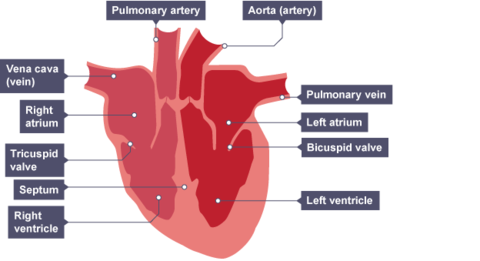
- Blood is pumped away from the heart into arteries and returns to the heart in veins.
- The septum is a thick wall of tissue that prevents deoxygenated blood on the right side mixing with oxygenated blood on the left side.
- The left ventricle has a more muscular wall than the right ventricle because it has to pump blood around the body and overcome more resistance to flow.
- The atria have less muscular walls because blood is returning to the heart there and they don't have to pump it around the body/ to the lungs.
-
- SYSTOLE
- This is when the heart muscles contract.
- The atria contract and force blood into the ventricles. The valves between the atria and ventricles open due to the pressure of blood against them.
- Then the ventricles contract to force blood out into the arteries. The valves close to prevent blood flowing back into the atria.
- DIASTOLE
- This is when the heart muscles relax.
- Blood flows into the atria from the veins.
-
- The activity of the heart can be monitored by ECG, pulse rate, and listening to sounds of valves closing.
- During exercise:
- Muscles need more energy from respiration in order to contract.
- Heart beats faster and arteries supplying muscles dilate.
- Increase in supply of oxygen and glucose (needed).
- Increase in removal of carbon dioxide.
- Pulse rate increases as left ventricles beats faster to increase blood supply.
- Pulse rate = heart rate
-
- After exercise:
- Heart rate remains high.
- Takes time for oxygen debt to be repaid.
- More oxygen is needed.
- Lactic acid builds up in muscles and needs to be cleared away - broken down and respired.
-
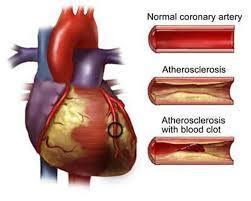
- CHD is caused by the blockage of the coronary arteries (thrombosis) that supply the heart with glucose and oxygen.
- If they are continually starved of oxygen it could lead to a heart attack. If the heart stops beating altogether, it is called cardiac arrest.
- The coronary arteries may be blocked by cholesterol that sticks to the lining of the arteries, narrowing it. This is atherosclerosis.
- If the coronary artery is partially blocked it can cause chest pains. This is called angina - lack of oxygen in the heart muscle.
- Possible risk factors:
- Diet
- Stress
- Smoking
- Genetic predisposition
- Age
- Gender
-
Prevention and treatment of CHD
- PREVENTION
- Taking care of your diet, e.g. eating less fatty foods and red meat, and eating more fresh fruit and vegetables.
- Regular exercise
- Not smoking
- TREATMENT
- Drug treatment with aspirin: decreases inflammation, inhibits blood clots, and reduces the risk of death.
- Surgery:
- Bypass - An artery or vein is taken from another part of your body and used to divert blood around the narrowing or blockage.
- Angioplasty - A thin, flexible tube with a balloon on the end is threaded to the blocked coronary artery. Then, the balloon is inflated to compress the plaque against the wall of the artery, restoring blood flow.
- Stents - small mesh tube that helps prevent blockages in the artery after angioplasty.
Informationen
- Beschreibung
- GCSE Biology (09: Transport in animals) Folienset am Heart, erstellt von Zoe CB am 30/04/2016.
- Erstellt von
- Zoe CB
- Aufrufe
- 0
- Bewertung