
Circulatory System
3,187 resources created by 2,365 users
This Circulatory System page on GoConqr gathers community-made mind maps, quizzes, flashcards, notes and slides on the heart, blood vessels, blood, the cardiac cycle and heart disease. It's built for school students revising a topic and teachers after ready-made material. There are over 3,000 resources here, including more than 250 quizzes, over 1,600 mind maps and more than 800 flashcards, mostly at secondary level and often linked to GCSE and A-level Biology. Pick a starting point, try a quiz to find your gaps, then make your own revision sets.
Top Circulatory System resources
-
65 cardsThe Heart And Blood Vessels Two types of circulatory system:
-
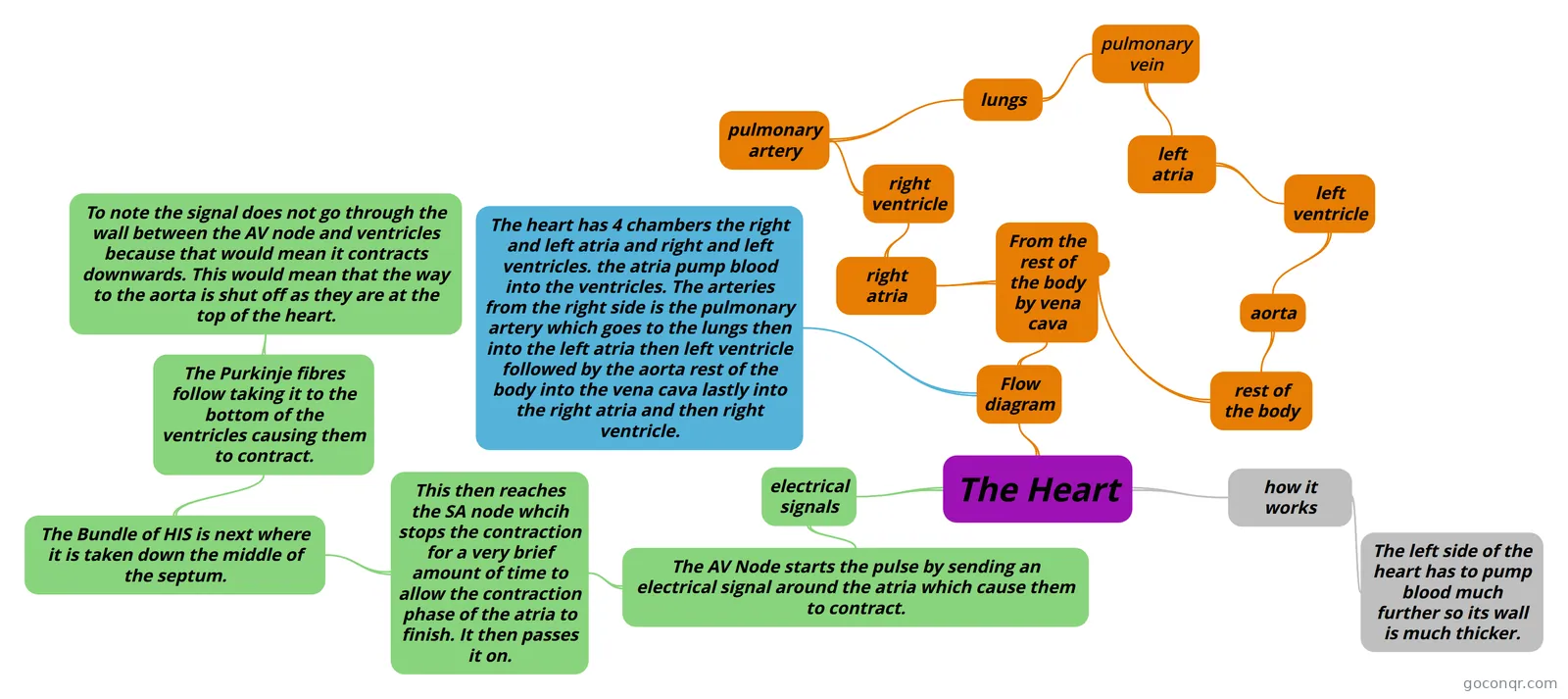 Mind map The Heart The structure of the heart
-
Mind map The Lymphatic System
-
15 cardsHaemoglobin Where is Haemoglobin found?
-
10 questionsThe Anatomy of the Heart What is #2?
-
5 questionsThe Circulatory System Capillaries work to:
-
15 questionsCIRCULATORY SYSTEM What is this clear liquid?
-
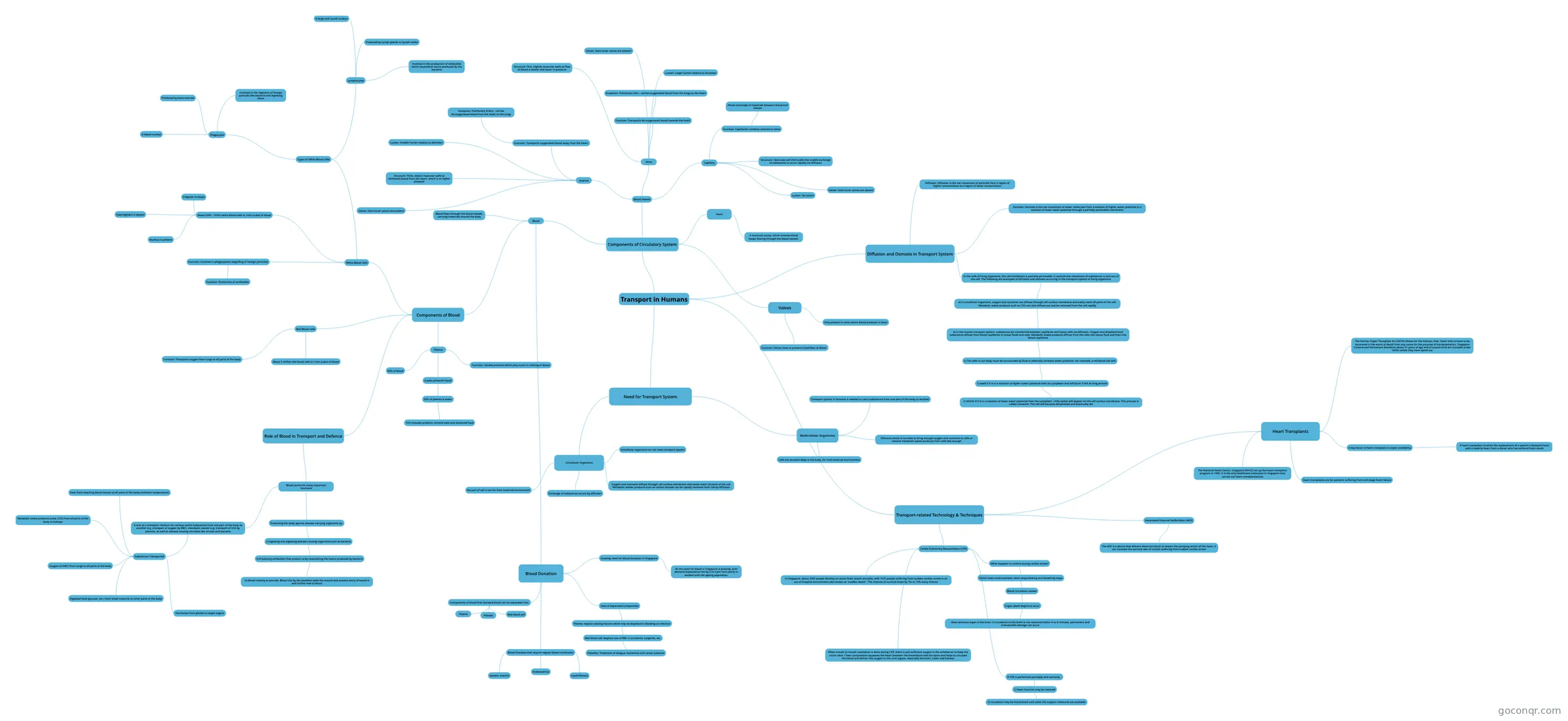 Mind map Transport in Humans Chapter 3 - Transport in Humans (Mindmap)
Quizzes
See all 317 quizzes-
10 questionsThe Anatomy of the Heart What is #2?
-
5 questionsThe Circulatory System Capillaries work to:
-
15 questionsCIRCULATORY SYSTEM What is this clear liquid?
-
45 questionsEdexcel, AS Biology, Risk Factors of CVD Quiz The typical reasons for overestimating risks are if the risk is:
-
51 questionsAS biology Unit 1-Atherosclerosis and the heart What is the main purpose of the heart and the circulatory system?
-
39 questions0654 Topic B5 Transportation From which chamber of the human heart is blood pumped most strongly?
-
23 questionsBiology Chapter 10 Review - ABeka The 3 primary organs of the cardiovascular system are: (think about what the word means.... cardio + vascular)
-
36 questions0654 Transport in Animals Quiz Which substances are dissolved in human blood plasma?
Mind maps
See all 1,665 mind maps-
The Heart The structure of the heart
-
The Lymphatic System
-
Transport in Humans Chapter 3 - Transport in Humans (Mindmap)
-
 AQA biology 5.3 heart disease
-
Blood Vessels Mind map to show the different blood vessels in the human body, and how their structure relates to function
-
B3: The Circulatory System
-
Structure of the Mammalian Heart Mind map to show the structure of the mammalian heart and how blood flows within the vessels and chambers
-
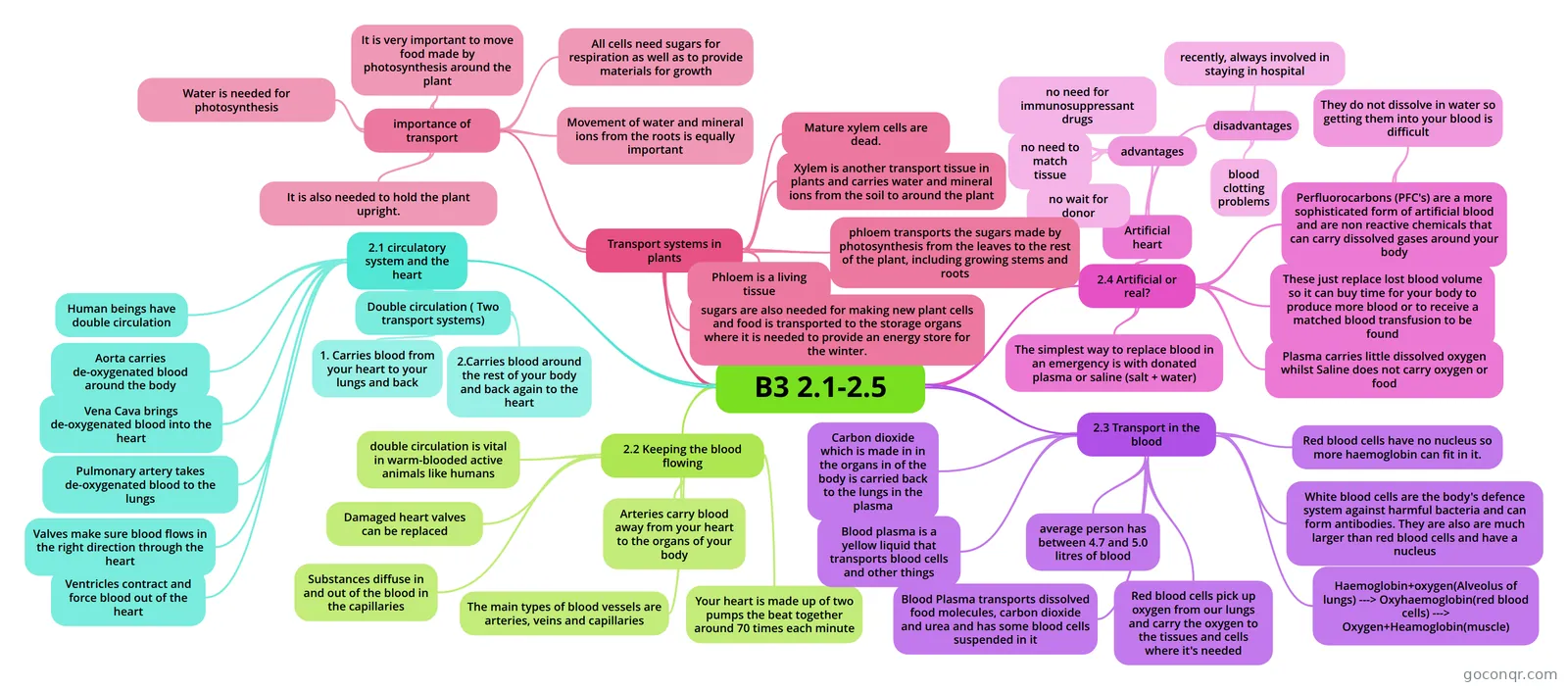 B3 2.1-2.5
Flashcards
See all 900 flashcards-
65 cardsThe Heart And Blood Vessels Two types of circulatory system:
-
15 cardsHaemoglobin Where is Haemoglobin found?
-
105 cardsAs level PE Physiology What are the health related fitness components of fitness?
-
38 cardsBlood and Circulation Syllabus Flashcards Describe the functions of the blood
-
16 cardsBiology - Blood Year 10 AQA Revision cards - Blood
-
10 cardsthe heart, cardiac cycle, control of heart beat, electrocardiogram the events in one complete heart beat are known as the cardiac cycle
-
15 cardsBiology: Transport In Humans The body, the fluids it posses and other bodily things :D
-
21 cardsYear 10: Topic 4 - Circulatory system in humans What is name of the cell trying to destroy the bacteria?
Flowcharts
See all 66 flowcharts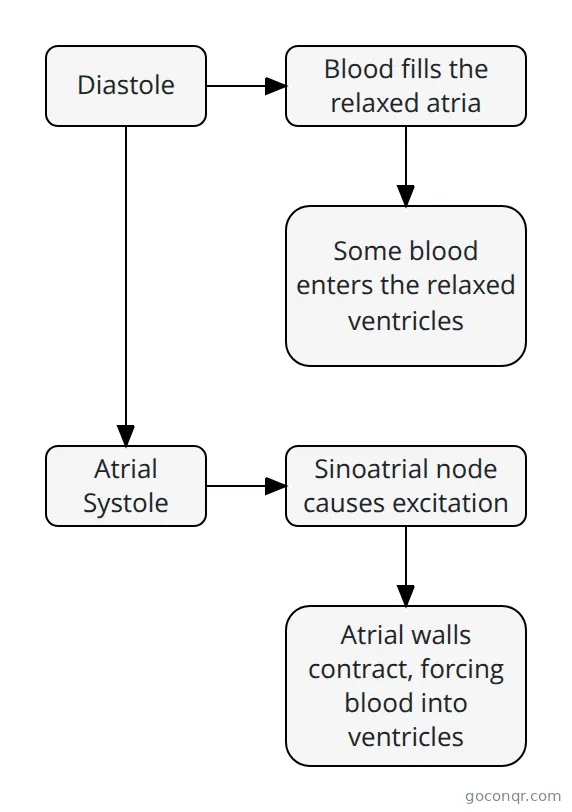
Notes
See all 170 notes-
The Heart And The Blood Vessels There are two forms of circulatory system :A) Open blood systemB) Closed blood systemOPEN CIRCULATORY SYSTEMThe heart pumps blood into open-ended blood vessels. The blood leaves these vessels and flows all aroun...
-
Functions of the blood Blood is made of 4 main componentsPlasmaPlateletsRed Bloods CellsWhite Blood Cells. Plasma is the pale yellow liquid, that is basically blood, but without the cells, the plasma carries just about everything.Carries th...
-
Biology AQA 3.1.5 Heart Structure and Function Veins are to the heartArteries are away from the heart. Left hand side the muscle is thicker:Oxygenated blood from the pulmonary vein,moves from atrium to ventricle over an atrioventricular valveVentricle then pushes ...
-
GCSE Biology heart notes Arteries carry blood away from the heart. They have to cope with high blood pressure so they have a thick wall made of elastic muscle fibres. Veins carry blood to the heart. They have lumen which is much bigger c...
-
The Heart - AS Applied Science - Biology - Unit 2 Circulation in mammals is a double circulatory system . This means that the blood goes through the heart twice for each circuit of the body. Superior Vena CavaCarries deoxygenated blood from the body to the...
-
The Heart De-oxygenated blood flows into the right atrium from the body, via the vena cava.The blood then moves into the right ventricle, where it is pumped to the lungs via the pulmanory artery.Oxygenated blood from the lungs ...
-
The Biological basis of Heart Disease Atheroma1. Cholesterol and other lipids collect on the inside of the coronary artery. This deposit is called an atheroma and it narrows the lumen restricting the blood flow.2. The atheroma is then able to collect mine...
-
Arteries Arteries. Carry blood away from the heart. High pressure. Thick, strong walls. Contains muscles, elastic fibres and fibrous tissue. Narrow lumen. No valves.
Slides
See all 69 slidesTopics in Circulatory System
More Biology and natural sciences topics
About Circulatory System
GoConqr OriginalWhat the resources cover
The unit sits in The Human Body strand of Biology and natural sciences. Its resources follow the path of blood around the body. You will find the heart, the cardiac cycle, blood vessels, blood, tissue fluid, the lymphatic system and cardiovascular disease.
Many resources name their course, including GCSE Biology, IGCSE Biology, A-level Biology, Edexcel AS Biology, OCR A-level Biology, IB Biology and HSC Biology. A few suit GCSE PE and A-level Physical Education.
Where to start
- Open the mind map Transport in Humans for the big picture: the heart as a muscular pump, plus the vessels that carry blood.
- Move to Blood Vessels, which looks at the different types of vessel and why moving blood in vessels lets it travel at high pressure.
- Look at Cardiac Cycle, which sets out atrial systole, ventricular systole and the state of the valves at each stage.
Using quizzes and maps together
Read a map first, then test yourself. Structure of the heart asks you to label the external and internal structure, with colours showing deoxygenated and oxygenated blood. Major Human Arteries and Veins (Level 2) asks you to name the major vessels from memory.
Note what you missed, then go back to the matching map and read that branch again. Flashcard decks such as The Cardiac Cycle and Haemoglobin suit short repeat sessions.
Health and disease
For the health side, try the mind maps Cardiovascular Disease and AQA biology 5.3 heart disease. They explain how an atheroma starts as fatty streaks of white blood cells that take up LDLs and grows into a plaque. The Lymphatic System map covers the second circulatory system and its clear fluid, lymph.
For teachers
Teachers can pick maps, notes and slide sets such as Atherosclerosis and blood clotting to set as ready-made starters or revision tasks. Choose one resource, open it, and see how it fits your lesson.
Frequently asked questions
Which resource should I open first?
Start with the mind map Transport in Humans. It lays out the components of the circulatory system, including the heart as a muscular pump and the different blood vessels. After that, Blood Vessels and Cardiac Cycle go into more detail on how blood moves and how the heart beats.
Are the resources free to use?
Yes. Every resource listed on this page is free to open, study and take, with no account needed. They were made by GoConqr users, not by GoConqr itself, so styles and depth vary from one resource to the next.
Which exams do these resources suit?
Resources here mention GCSE Biology, IGCSE Biology, A-level Biology, Edexcel AS Biology, OCR A-level Biology, IB Biology and HSC Biology. Some also mention GCSE PE and A-level Physical Education. Check the title and contents of each one against your own course.
What do the mind maps on this page cover?
They cover the heart and its structure, the cardiac cycle, blood vessels, capillaries, blood and white blood cells, tissue fluid and the lymphatic system. Others look at heart disease, such as atheroma, thrombosis and risk factors. There are over 1,600 mind maps to choose from.
How can I test myself on the heart?
Try the quiz Structure of the heart, where you label the external and internal structure. The Anatomy of the Heart and Understanding the Heart Diagram are further options. Pair them with the Cardiac Cycle mind map so you can check your answers against it.
What if I cannot find the topic I need?
Try a nearby title, as topics overlap. Heart rate control, for example, appears in a mind map and a quiz on nervous control. You can also make your own mind maps, flashcards or notes for the gap with a free account.