
12970692
Description

Flashcards by Mrs Z Rourke, updated more than 1 year ago

|
Created by Mrs Z Rourke
over 8 years ago
|
|
| Question | Answer |
| What is biodiversity? | The number of different species in an area |
| Why is biodiversity important? | Biodiversity is important as it provides food, industrial materials and new medicines |
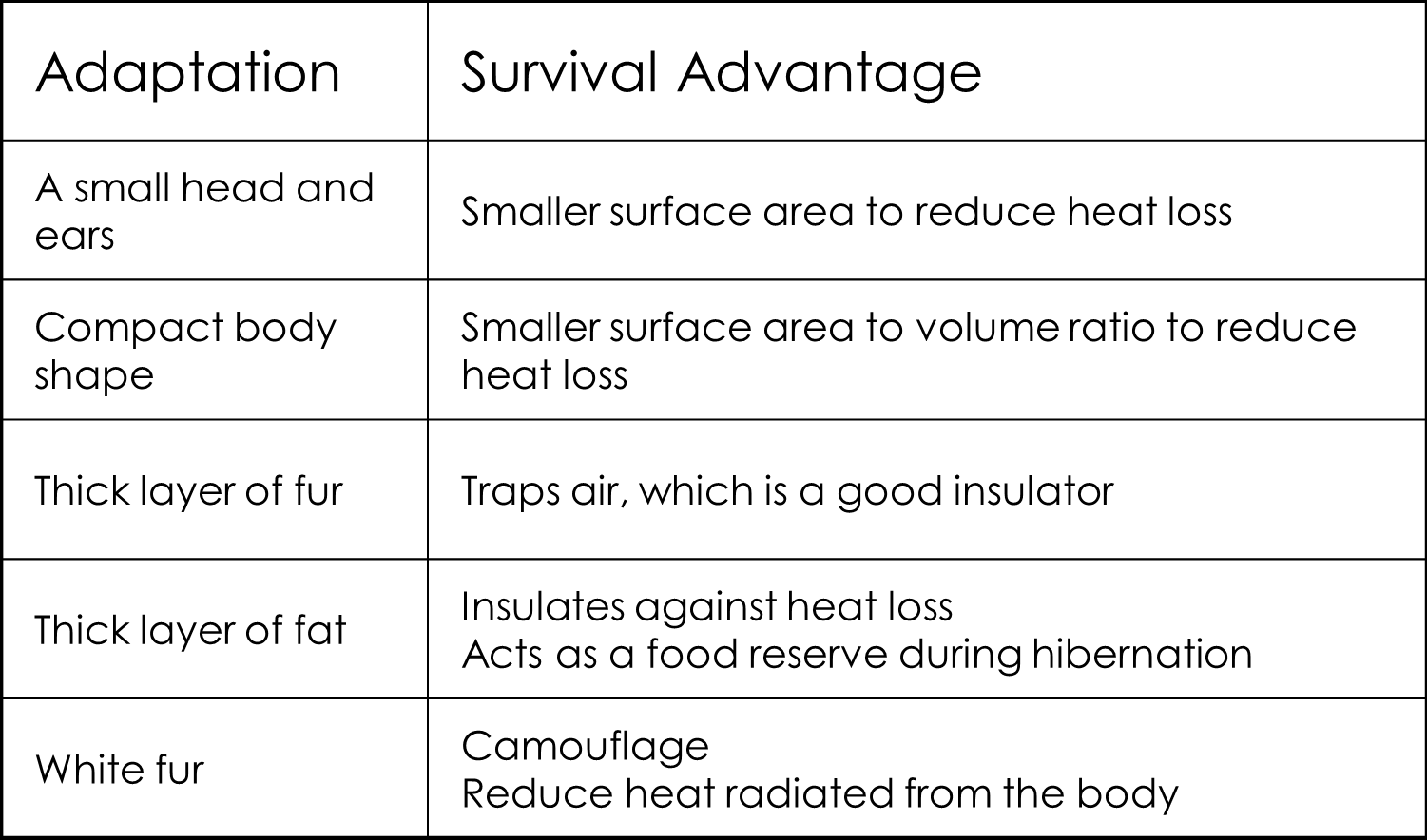
| How is a polar bear adapted to its environment? | |
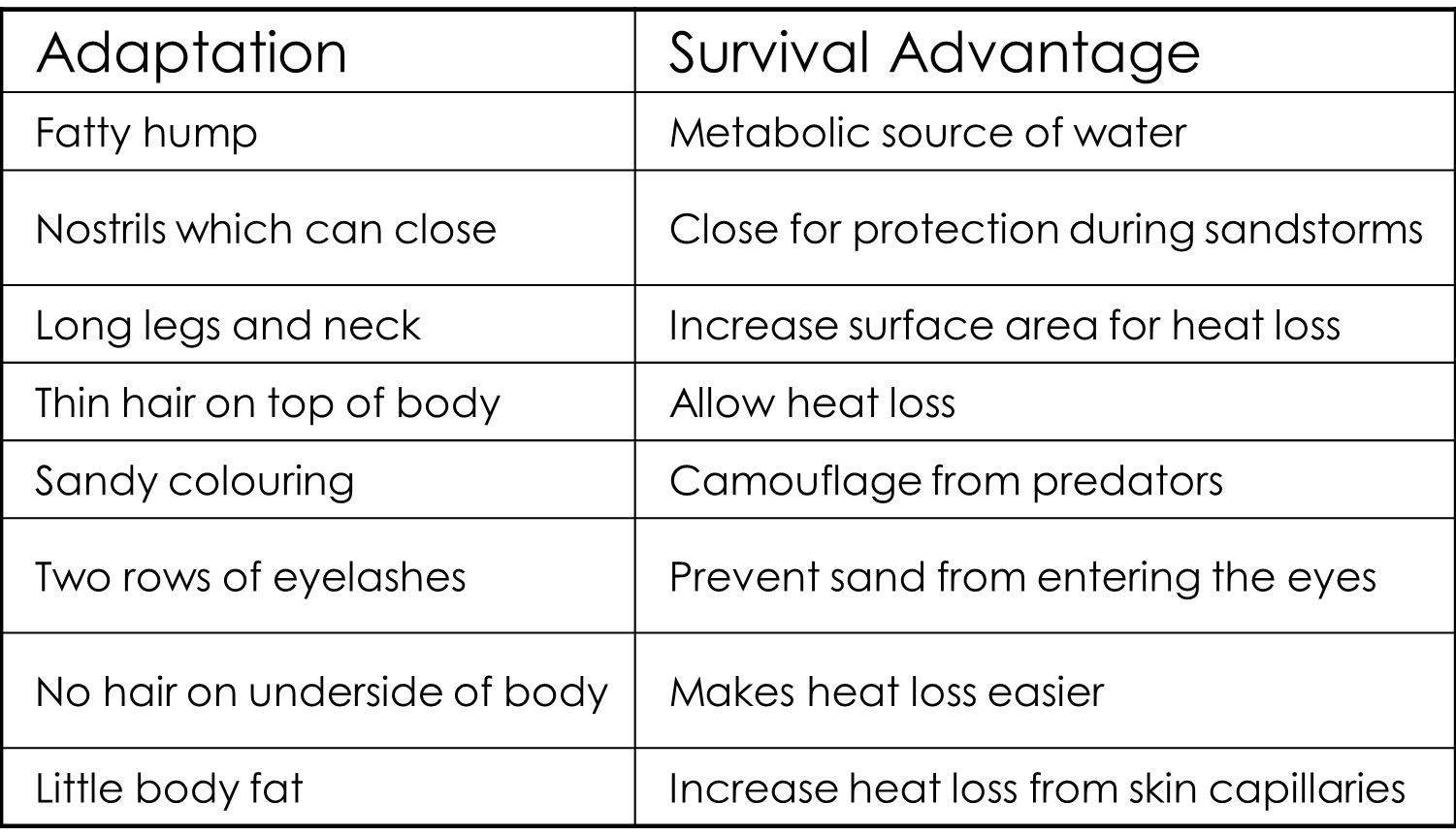
| How is a camel adapted to its environment? |
Image:
Camel (binary/octet-stream)
|
| What strategies can some animals use to avoid adverse environmental conditions? | Hibernation and migration |
| What 2 groups can plants be classified into? | Flowering and non-flowering plants |
| What 2 groups can animals be classified into? | Vertebrates and invertebrates |
| What does invertebrate and vertebrate stand for? | Invertebrate - no back bone Vertebrate - have a back bone |
| How are organisms classified? | Using the hierarchical classification system: Kingdom Phylum Class Order Family Genus Species |
| What are the 5 kingdoms? | Animals Plants Fungi Single celled organisms Bacteria |
| Why is the binomial classification used by scientists? (Remember the difference between the robins in UK and America!) | To avoid confusion between different species with the common name. |
|
Image:
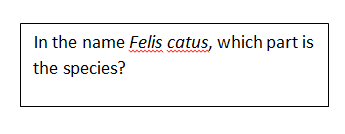
Q (binary/octet-stream)
|
catus |
| What is evolution? | A gradual change in a species over time |
| What are the stages of natural selection? | 1. Over-production - all organisms produce more offspring than will survive 2. Variation - all organisms within a species will show variation (sometimes caused by mutation) 3. Competition - those organisms that are better adapted will survive 4. Reproduction - survivors will breed and pass on their advantageous genes to their offspring |
Want to create your own Flashcards for free with GoConqr? Learn more.