
5243979
Description

Flashcards by caitlin.lane-jon, updated more than 1 year ago

|
Created by caitlin.lane-jon
over 10 years ago
|
|
| Question | Answer |
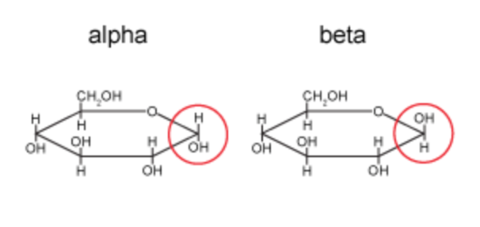
| What is the difference between the structure of glucose isomers a-glucose and b-glucose? | |
| What is a polymer? | A large molecule formed in polymerisation of monomers. Joined by condensation and broken by hydrolyses. |
| Name the main 5 macromolecules. | Protein Starch Cellulose Glycogen DNA |
| Name and explain the properties of macromolecules. | Their so big their insoluble which is important for them to carry out their function. Their osmotically inactive and so can be stored in cells without osmotic effect. |
| What are glucose & starch a polymer of? What is cellulose a polymer of? What is protein a polymer of? | a-glucose b-glucose amino acids |
| What is starch used for? | To store polysaccharides. |
| What are the elements that make starch? What is the structure of each of these? | Amylose and amylopectin, both polymers of a-glucose. Amylopectin - long linear molecule wound into a helix making it easy for glucose to be removed. Amylose - helical structure. |
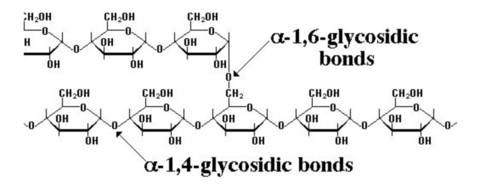
| Describe the branch structure of amylopectin and its properties? | The branches make it easier to break down, glucose can then be released quicker. |
| How does the structure of amylose allow the starch & iodine reaction? What is the result of this interaction? | Amylose has a helical structure. Rows of iodine sit inside amylose helix interacting, this changes the light absorbing properties and it appears blue. Different amylose gives different shades of blue. |
| What are the 4 structural carbohydrates? | Starch Glycogen Cellulose Chitin |
| What is starch used for? Why is it so important? | It's a plant storage carbohydrate, so stores glucose in plants. If glucose wasn't stored as starch it would create a negative water potential in cells drawing water by osmosis. Starch is insoluble and has branches so brakes down quickly. |
| What is glycogen used for? Whys is it important? | Glycogen stored glucose in animals. Like amylopectin it's a-glucose molecules have both 1-4 & 1-6 glycosidic so is highly branched and quick to release glucose. Energy for metabolic processes. |
| What is the structure of cellulose? | Polymer of b-glucose joined by glycosidic bonds in long straight lines. Each b-glucose molecule is rotated 180' from previous allowing hydrogen bonds between OH groups of adjacent chains. |
| What are the uses of cellulose? | Cellulose chains form microfibril, many microfibril form a cellulose fibre, Cellulose fibre then forms a cell wall. It's joined by many hydrogen bonds giving it a strong structure. |
| What is the structure of chitin? What are the uses? | Made of chains of b-glucose monomers rotated 180' from previous. Hydrogen bonds between chains form microfibrils. Some OH groups have b-glucose monomers are replaced by nitrogen. Chitin is strong and lightweight for insect exoskeleton. |
Want to create your own Flashcards for free with GoConqr? Learn more.