
Quiz
BIOL 108 Exam 4 Study Quiz
This quiz has question types that open in the usual player.
Questions in this quiz (116)
1Select the correct term in the drop box for each statement.
1. [blank_start]______[blank_end] Connects the brain to the spinal cord; regulates heart rate and blood pressure and generates respiratory rhythms
2. [blank_start]______[blank_end] Regulates body temperature and contains your biological clock
3. [blank_start]______[blank_end] Receives and processes visual and other sensory input, responsible for conscious thought and personality, controls voluntary movements of skeletal muscle
4. [blank_start]______[blank_end] Monitors body position and modifies motor impulses from your conscious brain- A1. Brain stem
- B1. Cerebellum
- C1. Cerebrum
- D1. Diencephalon
- E2. Brain stem
- F2. Cerebellum
- G2. Cerebrum
- H2. Diencephalon
- I3. Brain stem
- J3. Cerebellum
- K3. Cerebrum
- L3. Diencephalon
- M4. Brain stem
- N4. Cerebellum
- O4. Cerebrum
- P4. Diencephalon
2Select the following term(s) that can be measured using a spirometer.
- AResidual volume
- BTidal volume
- CRespiratory rate
- DTotal lung capacity
- EVital capacity
3The two hormones that regulate blood calcium levels are calcitonin and thyroxine (T3/T4).
- ATrue
- BFalse
4Select the correct term in the drop-down box for each sentence.
1. [blank_start]______[blank_end] Released from the pituitary; binds to receptors on cells in the kidneys
2. [blank_start]______[blank_end] Released from the adrenal medulla in response to activity of the sympathetic division of the autonomic nervous system as a response to short-term stress
3. [blank_start]______[blank_end] Stimulates cells in the liver to pull glucose molecules out of the blood and build them into a storage molecule called glycogen
4. [blank_start]______[blank_end] Nearly every cell in the body has receptors that bind this hormone; increases metabolic rate of target cells; released from the pituitary
5. [blank_start]______[blank_end] Released from the hypothalamus; binds to receptors in the anterior pituitary gland where it regulates the secretion of other hormones
6. [blank_start]______[blank_end] Released from the pancreas; stimulates cells throughout the body to increase glucose transport- A1. Antidiuretic hormone
- B1. Epinephrine
- C1. Growth hormone
- D1. Insulin
- E1. Releasing/inhibiting hormones
- F2. Antidiuretic hormone
- G2. Epinephrine
- H2. Growth hormone
- I2. Insulin
- J2. Releasing/inhibiting hormones
- K3. Antidiuretic hormone
- L3. Epinephrine
- M3. Growth hormone
- N3. Insulin
- O3. Releasing/inhibiting hormones
- P4. Antidiuretic hormone
- Q4. Epinephrine
- R4. Growth hormone
- S4. Insulin
- T4. Releasing/inhibiting hormones
- U5. Antidiuretic hormone
- V5. Epinephrine
- W5. Growth hormone
- X5. Insulin
- Y5. Releasing/inhibiting hormones
- Z6. Antidiuretic hormone
- AA6. Epinephrine
- AB6. Growth hormone
- AC6. Insulin
- AD6. Releasing/inhibiting hormones
5Label the following highlighted elements of this diagram.
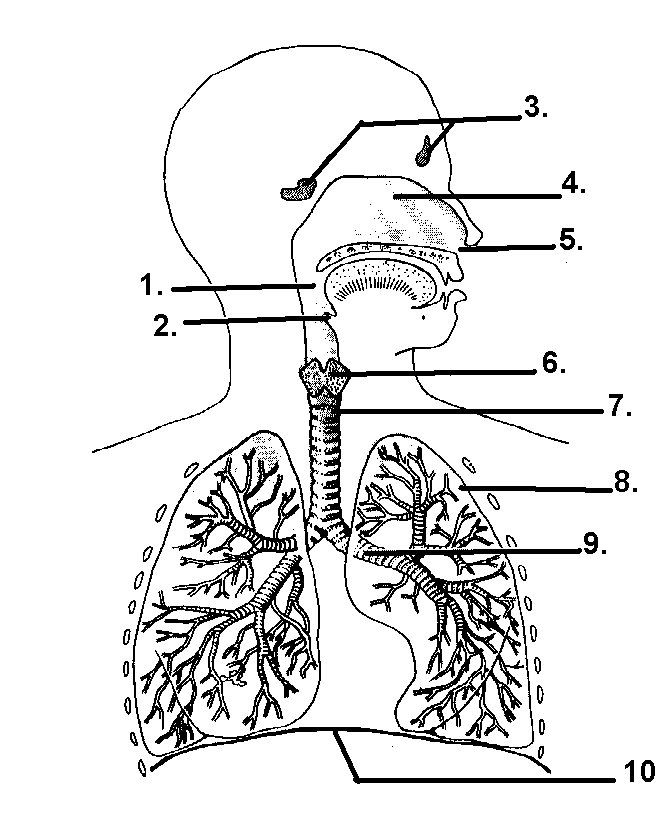
- AA. Diaphragm
- BA. Larynx
- CA. Alveolus (air sac)
- DA. Bronchus
- EA. Trachea
- FB. Diaphragm
- GB. Larynx
- HB. Alveolus (air sac)
- IB. Bronchus
- JB. Trachea
- KC. Diaphragm
- LC. Larynx
- MC. Alveolus (air sac)
- NC. Bronchus
- OC. Trachea
- PD. Diaphragm
- QD. Larynx
- RD. Alveolus (air sac)
- SD. Bronchus
- TD. Trachea
- UE. Diaphragm
- VE. Larynx
- WE. Alveolus (air sac)
- XE. Bronchus
- YE. Trachea
6Hormones will have a stronger effect on the body whehn they are more abundant or when there are more receptors for that hormone.
- ATrue
- BFalse
7Type II diabetes is an autoimmune disorder in which the pancreatic cells that produce insulin are destroyed, which causes a lack of insulin production; it can be corrected with insulin shots.
- ATrue
- BFalse
8The endocrine system has certain characteristics that set it apart from the nervous system. Which characteristics are typical of the endocrine system, but NOT the nervous system?
- AHormones released from a gland can affect the activity of cells in a variety of locations within the body, whereas one action potential travels to one specific location within the body.
- BSignals have an immediate effect on target cells.
- CSignals are sent using a combination of electrical and chemical signals
- DHormones rely on cell receptors to transfer a message but neurotransmitters do not require receptors.
9Which of the following events associated with the transmission of an impulse across a synapse occurs last?
- ANeurotransmitter is released into synaptic shift
- BAction potential arrives at the end of an axon (the axon terminal, or bulb)
- CNeurotransmitter binds to receptors on postsynaptic membrane
- DNeurotransmitter is broken down by enzymes or transported into presynaptic axon
10The central nervous system is composed of
- ANerves and ganglia
- BThe brain and spinal cord
- CThe nerves and tracts
- DThe cerebrum and cerebellum
11Breathing in carbon monoxide can cause health problems because
- AIt competes with oxygen for binding sites on hemoglobin, which reduces oxygen loading at the lungs and delivery to the tissues
- BIt impairs pacemaker cells in the heart and slows the heart rate, which reduces blood flow to the body's tissues
- CIt can come out of the solution while circulating in theh blood, whihc forms tiny, painful bubbles in the blood
- DIt affects the brain in a way that is similar to excess alcohol consumption--ie, it has an intoxicating effect
12Caffeine affects the nervous system by
- AInhibitnig the release of antidiuretic hormone
- BBlocking the receptors for adenosine
- CInhibiting activity in the cerebellum
- DEnhancing the effects of cortisol
13Physicians recommend that people breathe through their noses instead of their mouths. Which of the following occurs as air is drawn into the blood through the nose?
- AAir is dried
- BCarbon dioxide is removed from the air
- CAir is warmed and filtered
- DMoisture is removed from the air
14Neurons store neurotransmitters in vesicles located within
- ASynaptic terminals of axons
- BSchwann cells
- CDendrites
- DMyelin
15As you exhale, the diaphragm
- AContracts and becomes less dome shaped
- BRelaxes and becomes less dome shaped
- CContracts and becomes more dome-shaped
- DRelaxes and becomes more dome-shaped
16Where does the cerebral cortex dedicate the most space to processing sensory input from?
- AFingertips
- BSoles of the feet
- CNeck
- DForearm
17If you consume caffeine daily for weeks at a time, its effects on your nervous system are reduced because
- AThe blood-brain barrier becomes less permeable to caffeine, which makes it less able to get into your brain
- BThe neurons in hyour brain add more receptors that bind caffeine
- CThe hypothalamus secretes inhibiting hormones that reduce the effect of caffeine on your brain
- DThe neurons in your brain make fewer receptors that bind caffeine
18Which of the following is NOT an endocrine gland?
- ALiver
- BPituitary
- CThyroid
- DAdrenal cortex
19Select the following true statements regarding the effect of smoking on the respiratory system:
- AThe production of mucus decreases in response to the presence of smoke.
- BSmoking inhibits the activity of cilia lining the respiratory tract
- CParticles and debris from the smoke accumulate in the mucus of the airway and increase risk for infections by pathogens
20Steroid hormones differ from non-steroid hormones in that steroid hormones...
- AAre water soluble
- BCan typically be introduced to the body through ingestion of an oral (pill) form
- CCause a change to occur in the target cell
- DBind to a receptor on the outer surface of the cell membrane
21Humans must constantly breathe in oxygen in order to stay alive, because they use oxygen
- ATo make carbon dioxide, which is thehn used to produce ATP
- BTo efficiently make large quantities of ATP
- CAs an important source of energy for cells
- DTo convert amino acids and fatty acids to glucose, which the cell can use to make energy
22The left and right cerebral hemispheres are connected by the corpus callosum, which can be severed as a a treatment for severe cases of
- Aepilepsy
- Bmultiple sclerosis
- Cdrug addiction
- Dcarbon monoxide poisoning
23Which of the following would cause an acceleration of heart rate, an increase in blood pressure, and a slowing of digestive processes?
- AMotor division of the somatic nervous system
- BSensory division of the central nervous system
- CSympathetic division of the autonomic nervous system
- DParasympathetic division of the automatic nervous system
24Select the correct term from the drop-down box for each of the following statements.
1. [blank_start]______[blank_end] A bundle of axons located outside of the brain or spinal cord
2. [blank_start]______[blank_end] Increases the speed of transmission of an action potential
3. [blank_start]______[blank_end] A cluster of neuron cell bodies located outside of the brain or spinal cord
4. [blank_start]______[blank_end] A relatively long cytoplasmic extension from the cell body of a neuron that transmits action potentials
5. [blank_start]______[blank_end] A short, branched cytoplasmic extension from the cell body of a neuron that transmits graded potentials toward the cell body
6. [blank_start]______[blank_end] An electrically excitable cell- A1. Axon
- B1. Dendrite
- C1. Ganglion
- D1. Myelin sheath
- E1. Nerve
- F1. Neuron
- G2. Axon
- H2. Dendrite
- I2. Ganglion
- J2. Myelin sheath
- K2. Nerve
- L2. Neuron
- M3. Axon
- N3. Dendrite
- O3. Ganglion
- P3. Myelin sheath
- Q3. Nerve
- R3. Neuron
- S4. Axon
- T4. Dendrite
- U4. Ganglion
- V4. Myelin sheath
- W4. Nerve
- X4. Neuron
- Y5. Axon
- Z5. Dendrite
- AA5. Ganglion
- AB5. Myelin sheath
- AC5. Nerve
- AD5. Neuron
- AE6. Axon
- AF6. Dendrite
- AG6. Ganglion
- AH6. Myelin sheath
- AI6. Nerve
- AJ6. Neuron
25Match the correct brain area from the drop-down box to its correct description.
1. [blank_start]______[blank_end] Controls personality, thoughts, reasoning
2. [blank_start]______[blank_end] Output to skeletal muscles; tells them to move
3. [blank_start]______[blank_end] Receives input from sensory receptors that monitor external environment
4. [blank_start]______[blank_end] Plans speech and interprets meaning of speech- A1. Wernicke's area
- B1. Prefrontal area
- C1. Motor area
- D1. Somatosensory area
- E2. Wernicke's area
- F2. Prefrontal area
- G2. Motor area
- H2. Somatosensory area
- I3. Wernicke's area
- J3. Prefrontal area
- K3. Motor area
- L3. Somatosensory area
- M4. Wernicke's area
- N4. Prefrontal area
- O4. Motor area
- P4. Somatosensory area
26If you live long enough, hyou will eventually need reading glasses, because of age-related chages to the...
- ARetina
- BCornea
- CPupil
- DLens
27Which structure is in direct contact with the air?
- APupil
- BSclera
- CCornea
- DIris
28Which of the following can readily cross the blood-brain barrier?
- AOxygen
- BRed blood cells
- CWhite blood cells
- DViruses
29Which of hese endocrine structures is part of the brain?
- APituitary gland
- BHypothalamus
- CAdrenal medulla
- DCerebellum
30This subconscious (involuntary) brain region monitors body position and modifies motor plans to coordinate muscle activity
- ADiencephalon
- BBrain strem
- CCerebellum
- DCerebrum
31Oligodendrocytes are similar to Schwann cells in that they both
- AHelp neurons regenerate after injury
- BAre a glial cell that forms a myelin sheath around axons
- CAre located in the central nervous system
- DConduct nerve impulses
32Which of the following structures contains muscles that adjust the diameter of your pupil to regulate how much light enters your eye?
- ACornea
- BSclera
- CCiliary body
- DIris
33Which structure contains the highest density of cones, whihc provides the highest visual acuity (ie, clearest vision) when you focus an object directly onto this structure?
- AMacula lutea
- BOptic disc
- CCiliary body
- DLens
34Neurons store neurotransmitters in vesicles located within
- ADendrites
- BMyelin
- CSynaptic terminals of axons
- DSchwann cells
35The peripheral nervous system is composed of
- ANerves and tracts
- BThe cerebrum and cerebellum
- CNerves and ganglia
- DThe brain and the spinal cord
36Which of the following pairs of hormones antagonize each other, meaning that they have the opposite effect on body cells?
- AGonadotropin releasing hormone (GnRH) and estrogen
- BEpinephrine and cortisol
- CFollicle stimulating hormone (FSH) and luteinizing hormone (LH)
- DInsulin and glycogen
37Hormones are specific to particular tissues because
- AThey are released next to target tissues, so they cannot interact with other cells
- BTarget tissues display the appropriate receptor for a particular hormone
- CThey only affect the cell that releases the hormone
38Action potentials travel along these cytoplasmic extensions of a neuron
- ACell bodies
- BAxons
- CMyelin sheaths
- DDendrites
39This structure contributes the most to the bending of light rays as they enter the eye, although it does it in a non-adjustable way
- ACiliary body
- BIris
- CCornea
- DLens
40A neuron at rest has a charge difference across its cell membrane, with the interior of the cell negative relative to the exterior. This difference in charge across the plasma membrane is referred to as ____ potential
- AGraded
- BDepolarization
- CResting
- DRefractory
- EAction
41Which of these causes the release of neurotransmitter molecules?
- AThe opening of voltage-regulated calcium channels and the diffusion of calcium ions out of the neuron
- BAn action potential reaching the end of the cell body
- CAn action potentila reaching the end of an axon
- DAn action potential reaching the end of the dendrite
42The space between an axon of one neuron and the dendrite of another neuron is called a(n)
- ASynaptic cleft
- BNode of Ranvier
- CSynapse
- DSynaptic terminal
43Neurons store neurotransmitter molecules in vesicles located within
- AMyelin
- BThe synaptic cleft
- CDendrites
- DSynaptic terminals
44Cells that provide direct protection and physical support to neurons are
- AMyelienated
- BNeuroglial cells
- CFound primarily in lymphatic fluids
- DLocated only in the spinal fluid
45An action potential....
- AIs larger in response to larger stimuli
- BIs self-propagating
- CTravels faster in response to larger stimuli
- DCan travel in both directions down an axon or dendrite
46An impulse relayed along a myelinated axon "jumps" from [blank_start]node of Ranvier[blank_end] to [blank_start]node of Ranvier[blank_end].
- A(1) node of Ranvier
- B(1) Oligodendrocyte
- C(1) Schwann cell
- D(2) node of Ranvier
- E(2) Oligodendrocyte
- F(2) Schwann cell
47What part of a neuron relays signals from one neuron to another neuron or to an effector?
- AAxon hillock
- BSynaptic terminal
- CAxon
- DNode of Ranvier
48Select the following answers which are functions of the myelin sheath.
- AIt slows down the transmission of action potentials.
- BIt is involved in the repair of damaged neurons in the peripheral nervous system.
- CIt insulates a neuron and saves the neuron energy.
- DIt plays an important role in synaptic transmission.
49A nerve impulse moves toward a neuron's cell body along
- ADendrites
- BAxons
- COligodendrocytes
- DNodes of Ranvier
50When neurotransmitter molecules bind to receptors in the plasma membrane of the receiving neuron, ....
- AIon channels in the plasma membrane of the sending neuron open
- BIon channels in the plasma membrane of the receiving neuron open
- CThe receiving neuron becomes more negative inside
- DThe receiving neuron becomes more positive inside
51The small space between the sending neuron and the recceiving neuron is the
- ASynaptic terminal
- BCalcium channel
- CVesicle
- DSynaptic cleft
52When calcium ions enter the synaptic terminal,
- AThey cacuse an action potential in the sending neuron
- BThey cause vesicles containing neurotransmiter molecules to fuse to the plasma membrane of the sending neuron
- CNeurotransmitter molecules are quickly remoed from the synaptic cleft
- DThe inside of the receiving neuron becomes more negative
53The peripherary nervous system includes a sensory division and a motor division.
- ATrue
- BFalse
54The central nervous sytem is encclosed by membranes or meninges called the
- ADura mater, alma mater, and pia mater
- BDura mater, pia mater, and arachnoid
- CPleura, parietal, and arachnoid
- DGlial, Schwann, and interstitial
55Which of the following is NOT directly involved in the production of a typical spinal reflex?
- ABrain
- BInterneuron
- CMotor neuron
- DSensory neuron
56In general, the [blank_start]sympathetic nervous system[blank_end] is most active during a crisis (eg, flight-or-flight) while the [blank_start]parasympathetic nervous system[blank_end] is most active during visceral functions.
- A(1) sympathetic nervous system
- B(1) parasympathetic nervous system
- C(2) parasympathetic nervous system
- D(2) sympathetic nervous system
57Both sympathetic nerve fibers and parasympathetic nerve fibers use the same neurotransmitter.
- ATrue
- BFalse
58Sympathetic and parasympathetic nerve fibers may innervate the same organs, but they have generally opposite effects.
- ATrue
- BFalse
59In general, the neurotransmitter of the sympathetic nervous system is acetylcholine, and the neurotransmitter of the parasympathetic nervous system is norepinephrine.
- ATrue
- BFalse
60White matter of the spinal cord contains [blank_start]myelinated nerves[blank_end], whereas gray matter contains [blank_start]unmyelinated cell bodies[blank_end].
- A(1) myelinated nerves
- B(1) unmyelinated cell bodies
- C(2) unmyelinated cell bodies
- D(2) myelinated nerves
61Control of smooth muscle and internal organs is the role of the [blank_start]autonomic[blank_end] divsion of the nervous sytem.
- AAutonomic
- BSomatic
- CPostsynaptic
62The [blank_start]parasympathetic division[blank_end] of the nervous system dominates during the relaxed state.
- Aparasympathetic division
- Bsomatic division
- Cautonomic divsion
- Dsympathetic division
63Information coming into the central nervous system arrives via [blank_start]sensory neurons[blank_end], while information going from the central nervous system to the muscles, glands, and organs travels via [blank_start]motor neurons[blank_end].
- Asensory neurons
- Bmotor neurons
- Cneuroglial cells
- Dmotor neurons
- Esensory neurons
- Finterneurons
- Gneuroglial cells
- Hinterneurons
64Which of the following activities would be facilitated by the sympathetic nervous system?
- ADecreased heart rate
- BDecreased respiratory rate
- CIncreased blood pressure
- DIncreased digestion and absorption
65Label the four main regions of the brain.
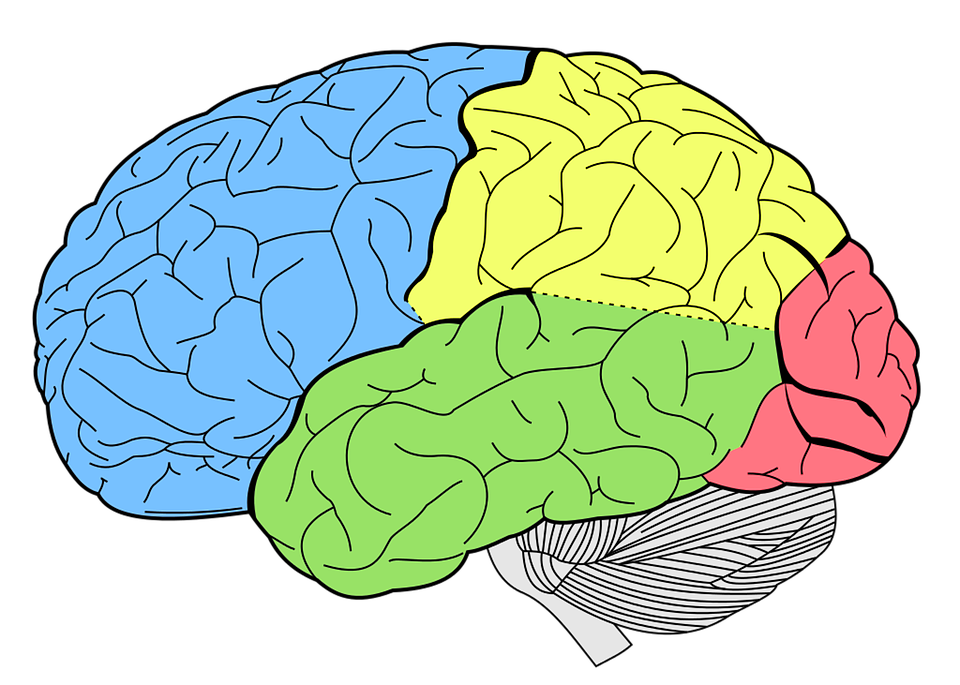
- A(4) Occipital lobe
- B(4) Parietal lobe
- C(4) Frontal lobe
- D(4) Temporal lobe
- E(3) Occipital lobe
- F(3) Parietal lobe
- G(3) Temporal lobe
- H(3) Frontal lobe
- I(2) Occipital lobe
- J(2) Parietal lobe
- K(2) Temporal lobe
- L(2) Frontal lobe
- M(1) Occipital lobe
- N(1) Parietal lobe
- O(1) Temporal lobe
- P(1) Frontal lobe
66Select the following elements contained in the FRONTAL LOBE of the human brain.
- AHigher intellectual functions (decision-making, predicting the consequences of actions, controlling aggression, planning for the future)
- BMotor area (voluntary movement)
- CSomatosensory cortex
- DSensory area (tactile sensation, self-awareness)
- EVisual area (processing visual information)
- FAuditory area (processing auditory information and some visual information)
- GMemory (and some emotion)
67Select the following elements contained in the PARIETAL LOBE of the human brain.
- AHigher intellectual functions (decision-making, predicting the consequences of actions, controlling aggression, planning for the future)
- BMotor area (voluntary movement)
- CSomatosensory cortex
- DSensory area (tactile sensation, self-awareness)
- EVisual area (processing visual information)
- FAuditory area (processing auditory information and some visual information)
- GMemory (and some emotion)
68Select the following elements contained in the OCCIPITAL LOBE of the human brain.
- AHigher intellecctual functions (decision-making, predicting the consequences of actions, controlling aggression, planning for the future)
- BMotor area (voluntary movement)
- CSomatosensory cortex
- DSensory area (tactile sensation, self-awareness)
- EVisual area (processing visual information)
- FAuditory area (processing auditory information and some visual information)
- GMemory (and some emotion)
69Select the following elements contained in the TEMPORAL LOBE of the human brain.
- AHigher intellectual functions (decision-making, predicting the consequences of actions, controlling aggression, planning for the future)
- BMotor area (voluntary movement)
- CSomatosensory cortex
- DSensory area (tactile sensation, self-awareness)
- EVisual area (processing visual information)
- FAuditory area (processing auditory information and some visual information)
- GMemory (and some emotion)
70Which part of the brain is associated with conscious thought, memory, and personality?
- ACerebellum
- BPons
- CMedulla
- DCerebral cortex
71What part of the brain functions as a relay station for information to the limbic system and the cerebral cortex?
- AHypothalamus
- BMidbrain
- CMedulla oblongata
- DThalamus
72An individual who has sufferd a stroke, which has caused damage in his cerebrum, and is now having problems with his hearing, has probably suffered damge to his [blank_start]temporal[blank_end] lobe.
- Atemporal
- Boccipital
- Cparietal
- Dfrontal
73The left and right sides of the cerebrum are interconnected by the [blank_start]corpus callosum[blank_end].
- Acorpus callosum
- Bmedulla oblongata
- Cpons
- Dthalamus
- Ecerebral cortex
74[blank_start]Short-term memory[blank_end] involves quick bursts of action potentials in the limbic system, and [blank_start]long-term memory[blank_end] resides in the cerebral cortex and involves permanent changes in neurons and synapses.
- AShort-term memory
- BLong-term memory
- Clong-term memory
- Dshort-term memory
75Short-term memory is associated with the [blank_start]limbic system[blank_end], whereas long-term meory is associated with the [blank_start]cerebral cortex[blank_end].
- A(1) limbic system
- B(1) cerebral cortex
- C(1) hypothalamus
- D(2) cerebral cortex
- E(2) limbic system
- F(2) hypothalamus
76The coordination necessary for a musician to play the piano depends on control exerted by the
- AThalamus
- BCerebral cortex
- CMedulla oblongata
- DCerebellum
77Which part of the brain is responsible for regulating the heart and respiratory rates and blood pressure?
- ACerebral cortex
- BThalamus
- CCerebellum
- DMedulla oblongata
78Which of the following are associated with storage of long-term memory?
- AThe limbic system
- BPermanent changes in neurons
- CThe formation of new synapses
- DThe cerebral cortex
79Some of the functions of the hypothalamus are the regulation of breast milk, carbohydrate metabolism, and temperature control.
- ATrue
- BFalse
80Conscious thought is associated wiht the cerebellum.
- ATrue
- BFalse
81Psychoactive drugs are characterized by the fact that they alter [blank_start]levels of neurotransmitters[blank_end].
- Alevels of neurotransmitters
- Bthe amplitude of action potentials
- Cthe travel speed of action potentials
82The [blank_start]cerebellum[blank_end] coordinates antagonistic muscle movements.
- Acerebellum
- Bthalamus
- Cpons
- Doccipital lobe
- Emedulla oblongata
83Which of the following parts of the brain effectively links the nervous system and the endocrine system?
- ACerebellum
- BHypothalamus
- CMedulla oblongata
- DCerebral cortex
84Rods and cones are the photoreceptors of the eye.
- ATrue
- BFalse
85The choroid is the tough layer that forms the "white" of the eye.
- ATrue
- BFalse
86The [blank_start]lens[blank_end] changes shape to focus light on the retina.
- Alens
- Bcornea
- Cvitreous humor
- Doptic nerve
87What is the opening that allows light into the interior of the eye?
- ASclera
- BPupil
- COptic nerve
- DRetina
88Both the lens and the cornea are involved in focusing light.
- ATrue
- BFalse
89As humans age, their ability to focus on nearby objects deteoriates. This is the result of
- AStiffening of the lens and loss of accommodation capability
- BThe loss of rods and cones
- CChanging shape of the eyeball
- DIncreased viscosity of the aqueous and vitreous humor
90This is the path of light through the eye:
1. [blank_start]Cornea[blank_end]
2. [blank_start]Aqueous humor[blank_end]
3. [blank_start]Pupil[blank_end]
4. [blank_start]Lens[blank_end]
5. [blank_start]Vitreous humor[blank_end]
6. [blank_start]Retina[blank_end]- A1. Cornea
- B1. Aqueous humor
- C1. Pupil
- D1. Lens
- E1. Vitreous humor
- F1. Retina
- G2. Aqueous humor
- H2. Cornea
- I2. Pupil
- J2. Lens
- K2. Vitreous humor
- L2. Retina
- M3. Pupil
- N3. Cornea
- O3. Aqueous humor
- P3. Lens
- Q3. Vitreous humor
- R3. Retina
- S4. Lens
- T4. Cornea
- U4. Aqueous humor
- V4. Pupil
- W4. Vitreous humor
- X4. Retina
- Y5. Vitreous humor
- Z5. Cornea
- AA5. Aqueous humor
- AB5. Pupil
- AC5. Lens
- AD5. Retina
- AE6. Retina
- AF6. Cornea
- AG6. Aqueous humor
- AH6. Pupil
- AI6. Lens
- AJ6. Vitreous humor
91The retina regulates the amount of light entering the eye.
- ATrue
- BFalse
92Lasik treatment functions to improve eyesight by changing the shape of the cornea.
- ATrue
- BFalse
93The "blind spot" is associated with the...
- AVitreous humor
- BChoroid
- CLens
- DOptic disk
94The primary function of the [blank_start]middle ear[blank_end] is amplifying sound waves.
- AInner ear
- BMiddle ear
- COuter ear
95The following sequence is the pathway by which soundwaves travel through the ear:
1. [blank_start]__________[blank_end]
2. [blank_start]__________[blank_end]
3. [blank_start]__________[blank_end]
4. [blank_start]__________[blank_end]- A1. External auditory canal
- B1. Eardrum
- C1. Oval window
- D1. Cochlea
- E2. External auditory canal
- F2. Eardrum
- G2. Oval window
- H2. Cochlea
- I3. External auditory canal
- J3. Eardrum
- K3. Oval window
- L3. Cochlea
- M4. External auditory canal
- N4. Eardrum
- O4. Oval window
- P4. Cochlea
96The part of the ear involved with the sense of equilibrium or balance is the
- ASemiciccular canals only
- BVestibule and semicircular canals
- CCochlea
- DVestibule only
971. The auditory nerve is located in the [blank_start]inner ear[blank_end].
2. The [blank_start]inner ear[blank_end] is the site of the vestibular canal and the tympanic canal.
3. Sound waves moving through the [blank_start]outer ear[blank_end] hit the tympanic membrane.
4. The air-filled chamber in the temporal lobe that contains three small bones is located in the [blank_start]middle ear[blank_end].- A1. Inner ear
- B1. Middle ear
- C1. Outer ear
- D2. Inner ear
- E2. Middle ear
- F2. Outer ear
- G3. Outer ear
- H3. Middle ear
- I3. Inner ear
- J4. Middle ear
- K4. Inner ear
- L4. Outer ear
98Label the following parts of the eye.
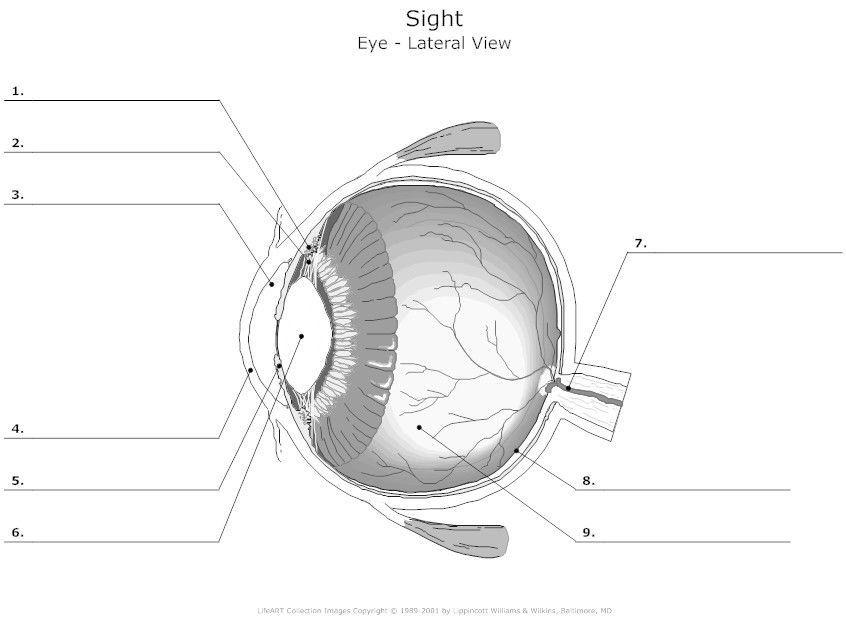
- A1. Ciliary body
- B1. Ligament
- C1. Aqueous humor
- D1. Cornea
- E1. Iris
- F1. Lens
- G1. Optic nerve
- H1. Vitreous humor
- I1. Retina
- J2. Ciliary body
- K2. Ligament
- L2. Aqueous humor
- M2. Cornea
- N2. Iris
- O2. Lens
- P2. Optic nerve
- Q2. Vitreous humoro
- R2. Retina
- S3. Ciliary body
- T3. Ligament
- U3. Aqueous humor
- V3. Cornea
- W3. Iris
- X3. Lens
- Y3. Optic nerve
- Z3. Vitreous humor
- AA3. Retina
- AB4. Ciliary body
- AC4. Ligament
- AD4. Aqueous humor
- AE4. Cornea
- AF4. Iris
- AG4. Lens
- AH4. Optic nerve
- AI4. Vitreous humor
- AJ4. Retina
- AK5. Ciliary body
- AL5. Ligament
- AM5. Aqueous humor
- AN5. Iris
- AO5. Lens
- AP5. Cornea
- AQ5. Optic nerve
- AR5. Vitreous humor
- AS5. Retina
- AT6. Ciliary body
- AU6. Ligament
- AV6. Aqueous humor
- AW6. Cornea
- AX6. Iris
- AY6. Lens
- AZ6. Optic nerve
- BA6. Vitreous humor
- BB6. Retina
- BC7. Ciliary body
- BD7. Ligament
- BE7. Aqueous humor
- BF7. Cornea
- BG7. Iris
- BH7. Lens
- BI7. Optic nerve
- BJ7. Vitreous humor
- BK7. Retina
- BL8. Ciliary body
- BM8. Ligament
- BN8. Aqueous humor
- BO8. Cornea
- BP8. Iris
- BQ8. Lens
- BR8. Optic nerve
- BS8. Retina
- BT8. Vitreous humor
- BU9. Ciliary body
- BV9. Ligament
- BW9. Aqueous humor
- BX9. Cornea
- BY9. Iris
- BZ9. Lens
- CA9. Optic nerve
- CB9. Retina
- CC9. Vitreous humor
99Label the parts of the ear.
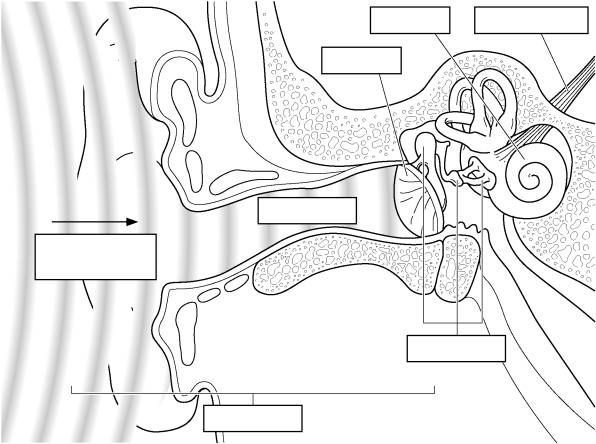
- A(B) Inner ear
- B(B) Middle ear
- C(B) Outer ear
- D(A) Pinna
- E(A) Vestibular apparatus
- F(A) Eustachian tube
- G(C) External auditory canal
- H(C) Eustachian tube
- I(C) Auditory nerve
- J(D) Eardrum (tympanic membrane)
- K(D) Vestibular apparatus
- L(D) Round window
- M(E) Inner ear
- N(E) Middle ear
- O(E) Outer ear
- P(F) Cochlea
- Q(F) Incus
- R(F) Malleus
- S(G) Auditory nerve
- T(G) Stapes
- U(G) Eustachian tube
100In both Type I and Type II diabetes, glucose levels remain higher than normal.
- ATrue
- BFalse
101Insulin helps regulate blood sugar at homeostatic levels by activating hormone production in the posterior pituitary gland.
- ATrue
- BFalse
102Both glucagon and insulin are produced by the pancreas and they regulate blood glucose levels. [blank_start]Glucagon[blank_end] increases blood glucose by stimulating the release of glucose from glycogen, and [blank_start]insulin[blank_end] decreases it by promoting the uptake of glucose by cells.
- A(1) Glucagon
- B(1) Insulin
- C(2) insulin
- D(2) glucagon
103Select the following TRUE statements abou the functions of hormones.
- AHormones affect energy utilization.
- BHormones influence protein synthesis.
- CHormones can affect the activities of the plasma membrane.
- DHormones may be involved in secretory activity.
104If the level of calcium in the blood falls below the homeostatic level, ....
- AParathormone levels in the body would increase.
- BParathormone levels in the body would decrease.
- CThe secretion of calcitonin would increase.
- DBones would begin to store more calcium.
105You just ate about half of your birthday cake. As a result, your glucose [blank_start]increases[blank_end], insulin [blank_start]increases[blank_end], and glucagon [blank_start]decreases[blank_end].
- A(1) increases
- B(1) decreases
- C(2) increases
- D(2) decreases
- E(3) decreases
- F(3) increases
106The [blank_start]hypothalamus[blank_end] controls hormone release by both the anterior pituitary and the posterior pituitary.
- Ahypothalamus
- Bthalamus
- Cthyroid gland
107Releasing hormones are secreted from the neurosecretory cells in the hypothalamus directly onto the endocrine cells in the anterior pituitary.
- ATrue
- BFalse
108FSH promotes sperm production and promotes egg development.
- ATrue
- BFalse
109Select the following statements that are true about LH.
- APromotes sperm production
- BStimulates testes to produce androgens
- CPromotes egg development
- DInduces ovulation
- EStimulates ovaries to produce estrogen and progesterone
110FSH is produced in the [blank_start]anterior pituitary[blank_end], and LH is produced in the [blank_start]anterior pituitary[blank_end].
- A(1) anterior pituitary
- B(1) posterior pituitary
- C(2) anterior pituitary
- D(2) posterior pituitary
111Calcitonin stimulates osteoclasts to break down bone.
- ATrue
- BFalse
112The parathyroid gland stimulates parathyroid hormone (PTH) when there is low blood Ca2+.
- ATrue
- BFalse
113The thymus slowly grows with age.
- ATrue
- BFalse
114The gonads produce [blank_start]gametes[blank_end].
- Agametes
- Bmelatonin
- Cthymosins
115The pineal gland is part of the diencephalon.
- ATrue
- BFalse
116The pineal gland produces and secretes [blank_start]melatonin[blank_end], which is important in maintaining your circadian rhythm.
- Amelatonin
- Bthymosin
- Cthyroxine
Information
- Description
- User has deleted their subject information Quiz on BIOL 108 Exam 4 Study Quiz, created by Deleted user on 05/03/2018.
- Author
- Deleted user
- Language
- English
- Views
- 4
- History
- Created on 5 Mar 2018 · updated on 5 Mar 2018
- Tags
- Rating
- No ratings yet Rate this quiz