
Quiz
BVetMed3: Coughing
This quiz has question types that open in the usual player.
Questions in this quiz (28)
1Upper airway disease in horses
- Ais more common than lower airway disease
- Baffects mainly older horses
- Cinvolves mucoid tracheal secretions
- Dinvolves enlarged submandibular lymph nodes
2What is FALSE regarding lower airway disease in horses?
- Ait is seen in all age groups.
- BViral infections are more common than bacterial infections
- CThey involve mucoid tracheal secretions
- DEquine influenza can cause both URT and LRT disease
3Upper airway disease is [blank_start]less[blank_end] common than lower airway disease and can affect [blank_start]mainly young horses[blank_end].
- Aless
- Bmore
- Cmainly young horses
- Dmainly older horses
- Ehorses of any age
4You suspect a horse to be infected with equine influenza. Which diagnostic test would be your first choice?
- Anasopharyngeal swab
- Bthoracocentesis
- Cbronchoalveolar lavage
- Dthoracic radiograph
5Which of the following is NOT a site of latency for EHV 1&4?
- ABronchial lymph node
- BSubmandibular lymph node
- CAxillary lymph node
- DTrigeminal ganglia
6Which of the following can cause abortion in broodmares in the last trimester?
- AEHV 1&4
- BEquine Influenza Virus
- CStreptococcus zooepidemicus
- DStrangles
7Which of the following only infects the LRT?
- AStreptococcus pneumoniae
- BStreptococcus equi equi
- CEHV 1&4
- DEquine Influenza Virus
8Mild equine asthma is now known as
- AInflammatory airway disease (IAD)
- BRecurrent airway obstruction (RAO)
- CSummer pasture associated obstructive pulmonary disease (SPAOPD)
- DHeaves
9Which of the following is more likely to have inflammatory airway disease (IAD)?
- Aneonate
- Byearling
- Cyoung racehorse
- Dolder thoroughbred
10What is characteristic of IAD?
- AIncreased respiratory effort at rest
- BExcessive mucus in the airways
- CMainly infects neonates and immunocompromised horses
- DIt is a life long condition
11IAD signs are usually acute.
- ATrue
- BFalse
12A 2 year old racehorse is brought into your clinic. It has been having reduced performance for the past month and has been having a productive cough. Endoscopy shows excessive mucus in its airways. On examination, you find the horse's respiratory rate normal and it is not dypsnoic. No other horses in the stable have been affected. This horse likely has
- AInflammatory airway disease (IAD)
- BRecurrent Airway Obstruction (RAO)
- CEquine Herpes Virus
- DEquine Influenza Virus
- EStreptococcus equi equi
13Which of the following is not a focus of therapy with Severe Equine Asthma?
- ANeutrophil accumulation
- BMucus production
- CBronchospasm
- DLymphocyte accumulation
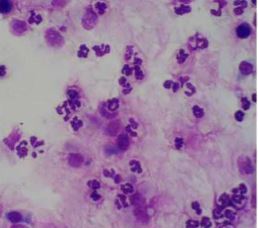
14This type of cytology (known as "Curshmann's spirals) is characteristic of
- Asevere equine asthma
- Binflammatory airway disease
- Cequine herpes virus
- DStreptococcus equi equi
- Eequine influenza virus
15Which of the following causes Strangles?
- AStreptococcus equi equi
- BStreptococcus pneumoniae
- CEquine Infleunza Virus
- DEquine Herpes Virus 1&4
16Strangles primary infects
- Ayoung racehorses
- Byearlings/weanlings
- Cneonates
- Dolder thoroughbreds
17A yearling is brought into your clinic. It is pyrexic, lethargic and has a mucoid nasal discharge. It has a harsh, non-productive cough and is dyspnoic. It has enlarged mandibular and parotid lymph nodes. Other young horses at the stable are showing similar clinical signs. This is likely
- AStrangles
- BEquine Herpes Virus
- CInflammatory Airway Disease
- DSevere Equine Asthma
- EEquine Influenza
18Purpura hemorrhagica is a complication of
- Astrangles
- Bsevere equine asthma
- Cinflammatory airway disease
- Dequine herpes virus
- Eequine influenza virus
- FRhodoccus equi
19Which of the following is a complication seen only in atypical strangles rather than in its classic presentation?
- Aguttural pouch empyema
- Blymph node abcessation
- Cpyrexia
- Dinappetance
20Which of the following is used to confirm resolution of strangles in previously infected horses as per HBLB code of practice?
- A2 negative guttural pouch washings, taken 7 days apart
- B2 negative cultures of nasopharyngeal swabs, taken 7 days apart
- C1 negative culture of nasopharyngeal swab
- D3 negative cultures of nasopharyngeal swabs, taken 7 days apart
- E3 negative guttural pouch washings, taken 7 days apart
21What is the reservoir of Rhodococcus equi?
- Aearthworms
- Bmice
- Cdogs
- Dcats
- Esnails
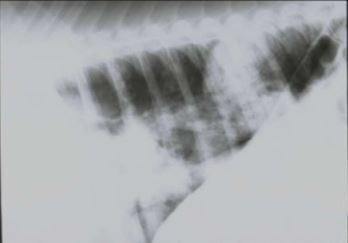
22At the height of summer, a 2 month old foal comes to your clinic. It is pyrexic, depressed, dyspnoic and tachypnoeic. It has a productive cough and has been having diarrhea. Other foals are showing similar signs. You performed a thoracic radiograph, which is shown above. Unfortunately, the foal ends up passing away. On post-mortem you find widespread abscess formation throughout its lungs. The foal likely has
- AStrangles
- BEquine Influenza Virus
- CRhodoccus equi
- DSevere Equine Asthma
- EParascaris Equorum
- FEquine Viral Arteritis
23Which of the following is an organism shed in the faeces?
- AStreptococcus equi equi
- BRhodoccous equi
- CEquine Influenza Virus
- DStreptococcus pneumoniae
24The vast majority of bronchial disease have what type of lung pattern?
- AVascular
- BInterstitial
- CAlveolar
- DMixed
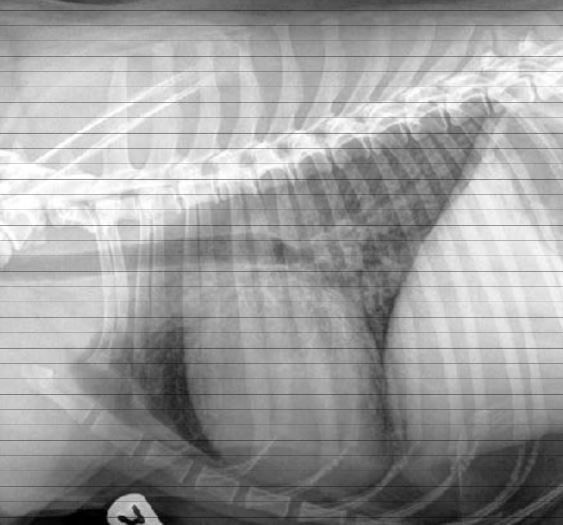
25What type of lung pattern can be seen in this radiograph?
- Anormal bronchial
- Binterstitial
- Calveolar
- Dhypervascular
- Ehypovascular
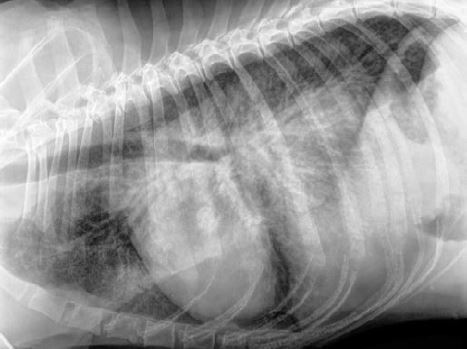
26What type of lung pattern can be seen in this radiograph?
- Ainterstitial
- Balveolar
- Cnormal bronchial
- Dhypervascular
- Ehypovascular
27What type of lung pattern can be seen in this radiograph?
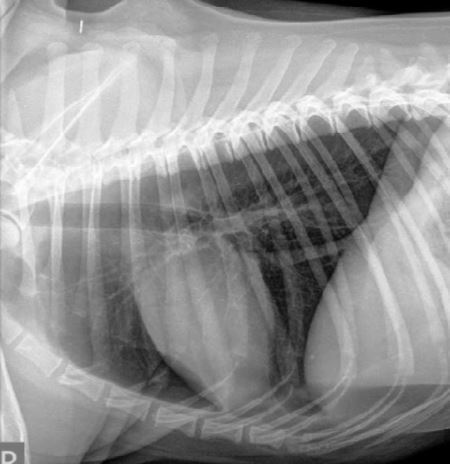
- Aalveolar
- Bnormal bronchial
- Cinterstitial
- Dhypervascular
- Ehypovascular
28Which type of lung pattern has the greatest significance clinically?
- Aalveolar
- Binterstitial
- Cbronchial
- Dvascular
Information
- Description
- User has deleted their subject information Quiz on BVetMed3: Coughing, created by Deleted user on 13/04/2019.
- Author
- Deleted user
- Language
- English
- Views
- 15
- History
- Created on 13 Apr 2019 · updated on 13 Apr 2019
- Tags
- Rating
- No ratings yet Rate this quiz