
Quiz
NPTE - Musculoskeletal
Questions in this quiz (24)
1In the capsular pattern associated with adhesive capsulitis of the shoulder, the GREATEST percentage of loss of range of motion is in:
- Amedial (internal) rotation, followed by lateral (external) rotation.
- Blateral (external) rotation, followed by abduction and medial (internal) rotation.
- Cabduction, followed by lateral (external) rotation and medial (internal) rotation.
- Dmedial (internal) rotation, followed by abduction.
2A patient has shoulder joint impairments. The range-of-motion examination reveals restricted lateral (external) rotation and abduction of the shoulder. Based on arthrokinematic principles, which of the following mobilization procedures should be performed for the patient FIRST?
- APosterior glide
- BDistraction
- CAnterior glide
- DLateral (external) rotation
3During walking, a patient demonstrates backward leaning of the trunk at right heel strike (initial contact). The result of manual muscle testing of the weak muscle is Good minus (4-/5). Which of the following exercises BEST addresses this patient's muscular weakness?
- ABridging activities progressing from double leg to single leg
- BSingle-leg stance allowing the opposite side of the pelvis to drop, then return to a level position
- CProne leg lifts with the leg straight
- DStanding on the uninvolved leg to perform active hip extension of the involved leg
4Which of the following positions is MOST effective to actively stretch the lumbrical muscles?
- AMetacarpophalangeal and interphalangeal flexion
- BMetacarpophalangeal and interphalangeal extension
- CMetacarpophalangeal extension and interphalangeal flexion
- DMetacarpophalangeal flexion and interphalangeal extension
5To relieve lateral shoulder and arm pain, a patient elevates the right arm with the elbow bent and rests the right forearm on the head. The patient's symptoms are MOST likely caused by which of the following conditions?
- AC4–C5 disc herniation
- BRotator cuff tear
- CThoracic outlet syndrome
- DAnterior shoulder instability
6Following acute knee trauma, which of the following examination findings indicates the need for referral for radiographic imaging?
- ATenderness to palpation of the tibial tuberosity
- BActive range of motion knee flexion limited to 75°
- CTenderness to palpation of the medial femoral condyle
- DFull weight-bearing gait tolerance limited to 20 ft (6.1 m)
7A patient with a recent ankle injury reports anterior ankle pain while walking. Pain is reproduced ONLY during passive rotation of the lower leg. The patient most likely sustained which of the following injuries?
- ASyndesmosis sprain
- BCalcaneocuboid sprain
- CFibular shaft fracture
- DTibial stress fracture
8A patient who has atrophy of the hypothenar eminence of the hand will most likely have the GREATEST difficulty performing which of the following tasks?
- AHolding a cup of water and transferring the contents into another cup
- BWriting two short sentences on a piece of paper using a fine-tipped pen
- CMaking a circle with the fingers by touching the tips of the thumb (1st digit) and the index finger (2nd digit)
- DPulling a piece of paper between the pads of the thumb (1st digit) and the index finger (2nd digit)
9When treating a patient who has ankylosing spondylitis, which of the following muscles require the MOST emphasis in strengthening exercises?
- APectorals
- BHip flexors
- CBack extensors
- DAbdominals
10Excessive upward rotation of the right scapula is noted when a patient attempts to perform shoulder flexion. Which of the following exercises is MOST appropriate to help correct the excessive scapular rotation?
- ARight scapular protraction against resistance with the right arm at 90° of flexion
- BBilateral scapular elevation with the upper extremities at 180° of flexion
- CWall push-ups with an isometric hold at end range with the elbows extended
- DBilateral scapular adduction with the upper extremities medially (internally) rotated and adducted across the back
11A patient who has low back pain is placed in prone position. A physical therapist performs posteroanterior lumbar segmental mobility testing on the patient and provokes tenderness in the L3–L4 segments. The patient is then instructed to stand and bend over the end of the plinth, grab the edges of the plinth in order to stabilize the trunk, and lift both feet off the ground. Which of the following consequent scenarios will be MOST helpful in establishing the patient's prognosis?
- AInability to secure the upper body on the plinth
- BInability to lift both lower extremities off the ground
- CReduced tenderness on repeat palpation with the legs lifted
- DReduced localized back pain symptoms with the legs lifted
12A physical therapist examining a patient's joint play finds restriction in the direction indicated by the arrow in the photograph (therapist is gliding volarly). To address the restriction, the therapist should include an intervention to increase which motion of the index finger (2nd digit)?
- AFlexion
- BExtension
- CAbduction
- DRotation
13A physical therapist observes a patient from behind during bilateral shoulder abduction and notes that the patient's right scapula is more abducted than the left scapula at the end range of movement. Which of the following conditions is the MOST likely cause of the altered scapula position on the right?
- ATightness of the rhomboid major and minor
- BWeakness of the serratus anterior
- CRestricted motion of the glenohumeral joint
- DWeakness of the upper trapezius
14A 20-year-old female athlete underwent anterior cruciate ligament reconstruction 3 days ago. Which of the following exercises is LEAST indicated at this time?
- APerforming active knee flexion to 90° in prone position
- BKicking a large air-filled ball from a short-sitting position
- CPerforming quadriceps isometrics in a long-sitting position
- DHip abduction with a 1-lb (0.5-kg) weight at the ankle in sidelying position
15During a posture examination, the physical therapist notes that both of the patient's patellae point inward when viewed from the front of the patient. The MOST likely cause of this problem is excessive:
- Afemoral anteversion.
- Bweakness of the vastus medialis.
- Cgenu varum.
- Dmedial tibial torsion.
16A patient who had a radial shaft fracture 8 weeks ago just had the cast removed. The patient has limited range of motion in all directions and limited strength of the wrist and finger joints. Which of the following interventions would be MOST appropriate to begin developing range and motor control of the patient's wrist and hand?
- AClosed-chain concentric wrist strengthening
- BThrowing and catching a ball with the affected hand
- CTendon and nerve gliding exercises for the wrist and hand
- DEccentric strengthening exercises of the wrist flexors and extensors
17A physical therapist is measuring the shoulder passive joint range of motion of a patient who has acute bursitis. What type of joint end-feel is MOST likely to occur?
- AFirm
- BHard
- CEmpty
- DBoggy
18Which of the following structures is indicated by the arrow in the radiograph?
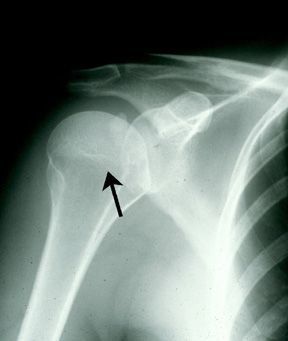
- AIntertubercular groove
- BGreater tubercle
- CLesser tubercle
- DCoracoid process
19A patient is lying supine with hips and knees extended and hands behind the head. The patient is able to raise the head, shoulders, and thorax from the treatment table but is unable to come to a complete long-sitting position. What muscle should the physical therapist target for a strengthening program?
- AIliopsoas
- BExternal abdominal oblique
- CQuadratus lumborum
- DUpper rectus abdominis
20The physical therapy plan for a patient who underwent a medial meniscectomy includes exercising the quadriceps femoris against accommodating resistance. Which of the following exercises should be recommended?
- AKnee bends through half of the range
- BKnee extension with an ankle weight
- CKnee extension on an isokinetic exercise device
- DStraight-leg raising with a sling suspension
21During evaluation of a patient's gait, a physical therapist observes that the patient leans forward shortly after heel strike (initial contact). The patient's forward bending is MOST likely a compensation for weakness in the:
- Aquadriceps.
- Bhamstrings.
- Cgluteus maximus
- Dtibialis anterior.
22The work modification (standing) shown in the photograph is MOST appropriate for a patient with which of the following conditions?
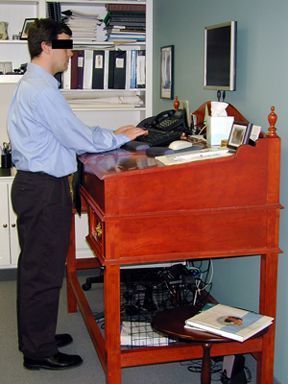
- ACentral lumbar stenosis
- BDeep vein thrombosis
- CThoracolumbar scoliosis
- DPosterolateral lumbar disc bulge
23An older adult patient had a total hip arthroplasty following a hip fracture from a fall in his home. The patient lived alone and was previously able to perform all activities of daily living independently. He has been admitted to a skilled nursing facility for rehabilitation. The patient's goal is to return home. His family believes he should be admitted to a long-term care facility for his own safety after acute rehabilitation is completed. Which of the following actions would be MOST appropriate to initiate FIRST?
- AAdvise the family that the patient should determine his own discharge environment.
- BRecommend a team conference with the patient and his family to discuss discharge plans.
- CSchedule a home visit to determine if home modifications are needed before discharge.
- DImplement a treatment plan with a long-term goal of discharge to home.
24A patient who has rheumatoid arthritis comes to physical therapy with signs of muscle atrophy, ecchymosis, puffy cheeks, and a diagnosis of osteoporosis. Which of the following medications is the patient MOST likely taking?
- APenicillin (Ampicillin)
- BPrednisone (Deltasone)
- CAcetylsalicylic acid (aspirin)
- DGold salts
Information
- Description
- NPTE Practice Quiz on NPTE - Musculoskeletal , created by Christopher Wysong on 06/11/2019.
- Author
- Christopher Wysong
- Language
- English
- Views
- 35
- History
- Created on 6 Nov 2019 · updated on 7 Nov 2019
- Tags
- Rating
- No ratings yet Rate this quiz