
Quiz
Ophthalmic Medical Assistant Practice Test
Create a free account to finish this quiz
Save your progress and see your final score.
Already have an account? Sign in
Questions in this quiz (148)
1The only eye care professional who is a medical doctor is the
- AOptometrist
- BOcularist
- COphthalmologist
- DOrthoptist
2A patient in need of a prosthetic eye would be referred to an
- AOcularist
- BOptician
- COrthoptist
- DOptometrist
3Of the following, the eye care professional who routinely fills prescriptions for eyeglasses is the
- AOcularist
- BOptician
- COphthalmic Medical Technician
- DOrthoptist
4An ophthalmologist who concentrates on one area of the eye or focuses on a specific ocular disease is called
- AAn optician
- BAn ocularist
- CAn optometrist
- DA subspecialist
5The level directly above certified ophthalmic medical assistant on JCAHPO'S certification ladder is
- ACertified ophthalmic medical technologist
- BCertified ophthalmic registered nurse
- CCertified ophthalmic technician
- DCertified ophthalmic photographer
6Of the following, the responsibility that routinely falls to the ophthalmic medical assistant is
- ADiagnosing certain conditions
- BMaking prognostic estimates
- CPerforming certain diagnostic tests
- DPrescribing treatment for certain problems
7An ophthalmic medical assistant accidentally administers too many eyedrops to a patient's eye. The first action the assistant should take is to
- AApologize to the patient and thoroughly wash with water
- BExplain to the patient that the effects will be intensified
- CTell the ophthalmologist, who will then decide how to handle the situation
- DSuggest that the patient remain in the office for awhile after the examination
8While waiting for the ophthalmologist, an anxious patient asks the Ophthalmic Medical Assistant for the results of a recent test. The assistant should
- AExplain that the ophthalmologist will discuss the results with the patient shortly
- BDiscuss the results with the patient to reduce the level of anxiety
- CReassure the patient that all is well and that the condition tested for is not serious
- DPolitely tell the patient that another patient requires attention and leave the room
9An ophthalmologist's office may disclose information regarding a patient's condition only when the individual seeking the information
- AIs the patients spouse
- BHas received permission from the patient
- CIs the patient's employer
- DIs a member of the patient's immediate family
10Of the following, the structure that is part of the ocular adnexa is the
- ACornea
- BEyelid
- CLens
- DOptic nerve
11The medial rectus muscle rotates the eyes
- AInward towards the nose
- BOutward towards the temple
- CDownward and outward toward the temple
- DDownward and inward toward the nose
12The membrane that lines the inner eyelid is the
- ABulbar conjuntiva
- BEpithelium
- CPalpebral conjunctiva
- DTarsus
13The tough, transparent membrane that provides about two thirds of the eye's focusing power is the
- ARetina
- BConjunctiva
- CSclera
- DCornea
14The white tissue surroundind the cornea and forming the main structural component of the globe is the
- ACilisry body
- BLimbus
- CSclera
- DVitreous
15The structures of the uveal tract, or uvea, are
- AIris, ciliary body, choroid
- BIris, posterior chamber, ciliary body
- CChoroid, sclera, retina
- DIris, lens, choroid
16The clear, transparent fluid that fills the anterior chamber is called the
- AVitreous
- BAqueous humor
- CChoroid
- DTear film
17The condition occurring most often in individuals over age 45 in which the lens can no longer change shape to focus at the near is
- AAccomodation
- BPresbyopia
- CGlaucoma
- DCataract
18The primary function of the sphincter and dilator muscles is to
- AControl the amount of light entering the inner part of the eye
- BRaise and lower the eyelid
- CDetermine the direction and movement of the eyeball
- DChange the curvature of the lens
19In this figure of the lacrimal system, the structures are correctly identified as
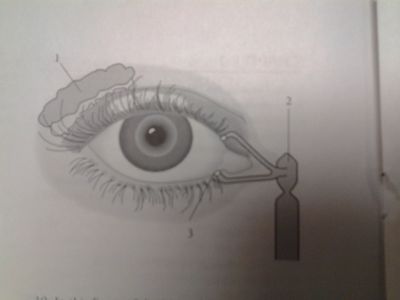
- A(1) lacrimal sac (2) punctum (3) lacrimal gland
- B(1) lacrimal sac (2) nasolacrimal duct (3) lacrimal gland
- C(1) lacrimal gland (2) punctum (3) lacrimal sac
- D(1) lacrimal gland (2) lacrimal sac (3) punctum
20Under normal conditions, aqueous fluid leaves the eye in the sequence
- ATrabecular meshwork, through the canal of Schlemm, to the anterior chamber angle
- BCanal of Schlemm, through the trabecular meshwork, to the surface blood vessels
- CAnterior chamber angle, through trabecular meshwork, to canal Schlemm
- DAnterior chamber angle, through surface blood vessels, to trabecular meshwork
21Injury or degeneration of the macula will most likely result in loss of
- ANight or dim-light visioj
- BPeripheral vision
- CDistance vision
- DDetailed central vision
22In this figure of the visual pathway, the structures are correctly identified as
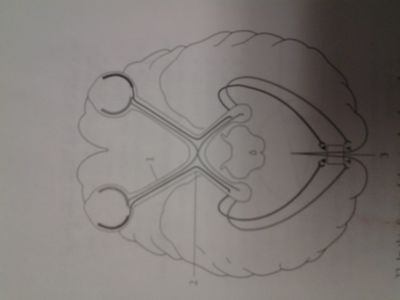
- A(1) visual cortex (2) optic tract (3) optic nerve
- B(1) optic nerve (2) optic chiasm (3) genticulate body
- C(1) optic chiasm (2) optic tract (3) genticulate body
- D(1) optic nerve (2) optic chiasm (3) visual cortex
23The suffix -itis added to the name of a tissue or organ produces the medical term for
- AInfection
- BInflammation
- CIschemia
- DDegeneration
24A body part deprived of its normal blood supply due to blockage or breakage of a vessel is said to be
- AInflamed
- BInfected
- C Ischemic
- DNeoplastic
25Diabetes Mellitus is an example of the type of disease process called
- AMetabolic
- Binfectious
- CNeoplastic
- DDegenerative
26An abnormal change observed by a physician while examining a patient is referred to as
- AAn etiology
- BA symptom
- CA sign
- DA syndrome
27When the orbital contents swell, pushing the eyeball forward, the resulting condition is termed
- ABlepharitis
- BExophthalmos
- CEctropion
- DExotropia
28The term diplopia is used to describe
- ASwelling from large amounts of fluid
- BParalysis
- CDouble vision
- DDeviation of one or both eyes
29Treatment of congenital strabismus may include surgery of the
- ACornea
- BEyelid
- CRetina
- DEye muscles
30Inward deviation of an eye that occurs only when the eye is covered is called
- AEsophoria
- BEsotropia
- CExophoria
- DExotropia
31Amblyopia referd to
- AThe continual movement of the eyes from side to side and up and down
- BThe suppression of visual images from a deviating eye
- CThe abnormal drooping of an upper eyelid
- DThree-dimensional visual perception
32The term chalazion describes
- AAn inward turning of the eyelashes
- BA drooping upper eyelid
- CAn inflammation of the lacrimal sac
- DA lump that develops after inflammation and infection of the meibomian glands
33A condition of dry eyes is called
- ADacrocystitis
- BKeratoconus
- CBlepharitis
- DKeratoconjuntivitis sicca
34Primary open-angle glaucoma
- AIs not a threat to vision
- BCan cause permanent damage to the optic nerve
- CDevelops rapidly and suddenly
- DAccounts for a small percentage of all glaucomas
35A cataract is
- AA clouding of the vitreous gel
- BA benign growth on the conjunctiva
- CA branch-shaped corneal ulcet
- DAn opacification of the crystalline lens
36The apperance of flashes of light in the corner of the eye followed by a sensation of a curtain moving across the vision are symptoms of
- AAge-related macular edema
- BRetinal detatchment
- CRetinitis pigmentosa
- DPapilledema
37Substances that permit the passage of light without significant disruption are termed
- AOpaque
- BTransparent
- CTranslucent
- DElectromagnetic
38A convex lens with a focal length of 0.50 meter has a power of
- A0.20
- B0.50
- C2.00
- D5.00
39A toric cornea is characteristic of
- AHyperopia
- BMyopia
- CPresbyopia
- DAstigmatism
40The type of lens that best corrects myopia combined with astigmatism is a
- ACylindrical lens
- BSpherical lens
- CSpherocylindrical lens
- DMultifocal lens
41The difference between the power of the upper segment and the power of the lower segment in a bifocal lens is referred
- ACircle of least confusion
- BRefractive index
- CPrincipal meridian
- DAdd
42The correct transposition of the plus-cylinder prescription +1.00+2.00×90
- A+3.00-2.00×90
- B+1.00-2.00×180
- C+3.00-2.00×180
- D+2.00-1.00×90
43The term neutralization in retinoscopy refers to
- AAdministering cycloplegic eyedrops, which block accomodation
- BFinding the lens power that affects movement of the retinal reflex and fills thd pupil with light
- CMeasuring the prescription of the patient's exisiting eyeglasses
- DBalancing the correction of both the patient's eyes
44If the distance portion of an eyeglass lens is +2.00 and the bifocal add is +1.00, then the bifocal power is
- A+1.00
- B+2.00
- C+3.00
- D-1.00
45The first step in performing manual lensometry or keratometry is to
- AFocus the eyepiece
- BLubricate the instrument
- CPosition the eyeglasses
- DPosition the patient
46If the lensmeter mires cannot be centered in the central portion of the lensmeter target, the lens probably contains a
- ASphere
- BCylinder
- CSpherocylinder
- DPrism
47The part of the comprehensive medical eye examination during which the visible parts of the lacrimal apparatus are inspected is
- AOphthalmoscopy
- BThe external examination
- CThe alignment and motility examination
- DThe visual field examination
48Healthy, asymptomatic individuals between the ages of 40 & 64 should have a comprehensive medical eye exam every
- A6 months
- BYear
- C2-4 years
- D5 years
49When recording the patient's chief complaint, the opbthalmic medical assistant should
- AInclude an evaluation of the patient's words
- BInclude only the facts as stated by the patient
- CSubstitute technical terms for the patient's words
- DInclude any diagnoses that seem likely
50Close examination of the lids, lashes, cornea, and lens can be accomplished with the
- ABiomicroscope
- BOphthalmoscope
- CGonioscope
- DExophthalmometer
51In the snellen acuity recording 20/200, the number 100 represents
- ASize of the largest optotype seen by the patient
- BDistance in feet from the patient to the chart
- CDistance in meters from the patient to the chart
- DDistance in feet at which a normal eye can see the particular line on the chart
52If a pinhole acuity test is found to significantly improve a patient's poor visual acuity, the patient probably has
- AGlaucoma
- BA cataract
- CPoor peripheral vision
- DA refractive error
53Jaeger notations, snellen M units, and distance equivalents are various units of measuring
- ANear visual acuity
- BOcular motility
- CPeripheral vision
- DPupil width
54Having a patient follow a finger in the six cardinal positions of gaze is a method of evaluating
- ADirect pupillary reaction
- BPeripheral vision
- CExtraocular muscle function
- DDistance acuity
55The prism and alternate cover test is used to
- AEvaluate depth perception
- BEvaluate peripheral vision
- CMeasure deviation in a misaligned eye
- DMeasure near visual acuity
56Of the following, the procedure that mistbe performed before pupillary dilation is
- ACycloplegic refraction
- BBiomicroscope
- COphthalmoscopy
- DThe swinging-light test
57In a normal consensual reaction, when a light is directed into the pupil of one eye, the pupil of the other eye
- AConstricts
- BDilates
- CIs unchanged
- DPulsates
58Of the following, the test that evaluates disturbances or defects in the visual field is the
- AWorth four-dot test
- BTitmus stereopsis test
- CSchirmer test
- DAmsler grid test
59Intraocular pressure is measured by flattening a small area of the central cornea in
- AKeratometry
- BApplanation tonometry
- CIndentation tonometry
- DSchiøtz tonometry
60A reading of 3 on the Goldmann tonometer dial indicates an intraocularpressure of
- A0.3 mm Hg
- B3 mm Hg
- C15 mm Hg
- D30 mm Hg
61Gonioscopy is a procedure used to view the
- AExternal structures of the eye
- BStructures of the anterior chamber angle
- CVitreous
- DOptic nerve head
62Indirect ophthalmoscopy provides a
- ANonmagnified view of the fundus
- B15-fold magnified view of the fundus
- CWider field of view of the fundus than does direct ophthalmoscopy
- DNarrower field of view of the fundus than does direct ophthalmoscopy
63The three transparent structures that compose what is termed the ocular media are the
- ACornea, lens, and retina
- BConjunctiva, cornea, and lens
- CCornea, lens, and vitreous
- DLens, vitreous, and aqueous humor
64The interferometer measures visual acuity potential by using a laser or special light beams to
- AProject parallel lines onto the macula
- BPhotograph the cornea's endothelial cells
- CProject a lighted Snellen chart onto the retina
- DDeliver radiating sound waves throughout the cornea
65Pachymetry is useful in determining the
- APosition and size of tumors in the eye
- BMacular function in a patient with a media opacity
- CDegree of a patient's sensitivity to glare
- DAbility of the cornea to withstand the stress of surgery
66Of the following, the procedure used for counting endothelial cells of the cornea is
- AFluorescein angiography
- BSpecular microscopy/photography
- CUltrasonography
- DPachymetry
67An acuity chart printed in faint gray instead of sharp black on white is useful for measuring
- ANear visual acuity
- BGlare sensitivity
- CColor vision
- DContrast sensitivity
68Fluoroscein angiography is a valuable method of detecting and documenting
- AAbnormalities in the structures of the outer eye
- BCorneal endothelial cells
- CAbnormalities in ocular blood vessels
- DLens opacities
69Of the following, the procedure most useful in calculating the power of an artificial lens to be implanted in a patient who has undergona cataract extraction is
- AA-scan ultrasonography
- BB-scan ultrasonography
- CFluorescein angiography
- DSpecular microscopy
70The printed circles on a visual field chart refer to the
- ARadial meridians
- BBoundaries of a normal patient's island of vision
- CEccentricity from fixation at 10° intervals
- DHoles within the contour of an otherwise normal visual field
71On a visual field chart, a contour obtained with a single target of a particular size and brightness is
- AA shallow scotoma
- BAn absolute scotoma
- CAn isopter
- DA circle of eccentricity
72Generally, the 0° point on visual field charts of both the right and the left eye is located at the
- AExtreme right on the horizontal meridian, and the other meridians are measured progressively in a clockwise direction
- BExtreme left on the horizontal meridian, and the other meridians are measured progressively in a clockwise direction
- CExtreme right on the horizontal meridian, and the other meridians are measured progressively in a counterclockwise direction
- DTop of the vertical meridian, and the other meridians are measured progressively in a counterclockwise motion
73A defect in the inferior temporal retina will affect the
- AInferior temporal field of vision
- BInferior nasal field of vision
- CSuperior temporal field of vision
- DSuperior nasal field of vision
74On visual field charts, the physiologic blind spot appears in the
- ACenter of the visual field
- BNasal visual field
- CTemporal visual field
- DInferior visual field
75Two examples of static perimetry are
- AThe tangent screen test and the contrast sensitivity test
- BSuprathreshold perimetry and Autoplot perimetry
- CThe tangent screen test and Goldmann perimetry
- DThreshold perimetry and suprathreshold perimetry
76The technique of placing a target of a given size in the visual field and gradually increasing its brightness until the patient sees it is the basis for
- AThreshold perimetry
- BSuprathreshold perimetry
- CThe tangent screen test
- DGoldmann perimetry
77One disadvantage of Goldmann periimetry is that it
- ACovers only the central 30° of the visual field
- BRequires the examiner to move the target at the same speed in each direction
- CProvides no means of controlling the brightness of the test targets
- DProduces printed results that are difficult to plot and interpret
78One advantage of computerized threshold perimetry is that it
- AIs quicker and easier to perform than kinetic perimetry
- BIs more sensitive in detecting shallow defects than kinetic perimetry
- CEliminates the need for the technician to be in the room
- DEliminates the need for patient response
79This figure illustrates the
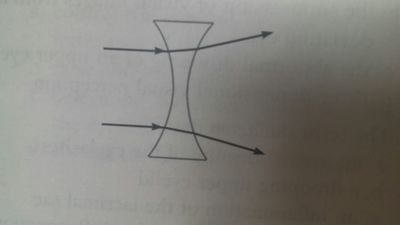
- ALight divergent property of a convex lens
- BLight divergent property of a concave lens
- CLight convergent property of a convex lens
- DLight convergent property of a concave lens
80This figure shows the focal point of light rays in an eye that is
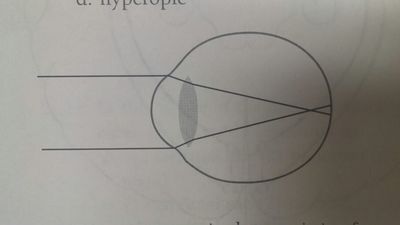
- AMyopic
- BPresbyopic
- CEmmetropic
- DHyperopic
81In this visual field chat of the right eye, the arrow on the left points to an area of decreased visual sensitivity known as a
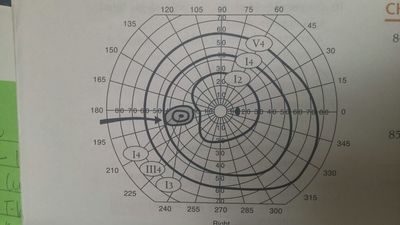
- APhysiologic blind spot
- BScotoma
- CDepression
- DHemianopia
82In this visual field chart of both eyes, the condition depicted is most often due to
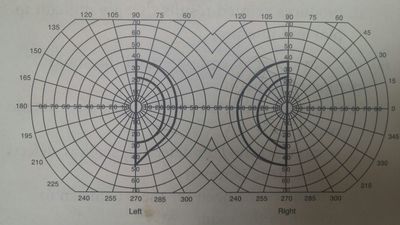
- AGlaucoma
- BSmall pupil size
- CA lesion or tumor in the optic chiasm
- DCataracts
83For accurate perimetry, the patient's near correction must be in place if the patient
- AHas ptosis
- BIs presbyopic
- CHas a pupil size of 2mm or smaller
- DIs easily distracted
84Correction for distance, near, and intermediate vision in one lens can be achieved with
- AAn executive bifocal lens
- BA round-top segment bifocal lens
- CA single vision lens
- DA double-D segment trifocal lens
85Transitional zones or areas of blending that create distorted or blurred vision are a particular drawback of
- ARound-top multifocal lenses
- BConventional seamed multifocal lenses
- CProgressive-addition multifocal lenses
- DPolarized lenses
86Because of its resistance to shattering , the material choice for safety glasses is
- AHeat-treated flint glass
- BChemically treated flint glass
- CCR-39
- DPolycarbonate
87Interpupillary distance is measured principally to determine
- AThe base curve of a lens
- BThe optical center of a lens
- CThecpantoscopic angle of a lens frame
- DThe segment height of a multifocal lens
88Interpupillary distance is measured principally to determine
- AThe base curve of a lens
- BThe optical center of a lens
- CThe pantoscopic angle of a lens frame
- DThe segment height of a multifocal lens
89The procedure for obtaining monocular interpupillary distance involves measuring the distance from
- AOne pupil to the other in a single measurement
- BOne pupil to the other in a single measurement and then dividing the results by 2
- COne pupil to the bridge of the nose and then multiplying the result by 2
- DEach pupil to the bridge of the nose separately and then adding the results
90The accurate measurement of vertex distance during refractometry is required
- AFor all refractive prescriptions
- BOnly for multifocal prescriptions
- COnly for prescriptions with corrections greater than or equal to -5 to +5 diopters
- DOnly for prescriptions with corrections less than or equal to -5 to +5 diopters
91As a starting point, most opticians recommend fitting the top of a bifocal segment
- ALevel with the upper lid margin
- BLevel with the lower lid margin
- CLevel with the lower rim of the pupil
- DExactly at the middle of the eyeglass lens
92The primary purpose of triage is to
- AObtain the patient's complete ophthalmic history
- BDiagnose the patient's problem
- CClassify the patient's chief complaint according to its severity and urgency
- DSchedule office appointments acording to the availability of the physician
93If the ophthalmic medical assistant notices a discrepancy between the patient's report of a traumatic injury and the injury itself, the assistant should
- AConfront the injured patient immediately
- BInform the ophthalmologist in private, without the patient present
- CInform the ophthalmologist in the presence of the patient
- DDisregard the discrepancy, as this matter is not the responsibility of the ophthalmic medical assistant
94Of the following, the situation that should be treated as an emergency requiring immediate action is a
- ARecent onset of flashes of light
- BLoss of contact lenses needed for work
- CMucous discharge from the eye
- DSudden, painless, severe loss of vision
95Generally, urgent situations are those requiring that the patient be seen within
- A3 to 6 hours
- B24 to 48 hours
- C5 to 7 days
- D1 to 2 weeks
96A patient telephones the ophthalmologist's office reporting an alkali burn to the eye. The ophthalmic assistant should instruct the patient to
- APatch the eye and proceed immediately to the office or emergency facility
- BKeep the eye closed and proced immediately to the office or emergency facility
- CIrrigate the eye with water for 20 minutes and then proceed to the office or emergency facility
- DPut a lubricating ointment on the eye and proceed immediately to the office or emergecy facility
97When assisting a patient who feels faint in the office, the ophthalmic kedical assistant should first
- ABegin CPR
- BGet the emergency cart
- CSplash water on the patient's face
- DGet the patient's head below the heart
98In encounters with irate or hostile patients, the best approach an ophthalmic medical assistant can take is to
- ARecommend that they see anothe physician
- BTry to convince them that they are being unreasonable
- CListen calmly to their complaints and apologize for any misunderstanding
- DIgnore them until they calm down
99When interacting with a visually impaired or blind patient, the ophthalmic medical assistant should
- AApproach quietly to avoid startling the patient
- BSpeak through an accompanying companion
- CSpeak loudly to ensure comprehension
- DFace the patient and say the patient's name
100A papoose board is useful in
- APropping up a toddler at the slit lamp
- BImmobilizing an infant during an ophthalmic evaluation
- CTransporting a toddler from one examining room to another
- DTesting visual acuity in a school-aged child who cannot identify letters
101The "fix and follow" method of evaluating visual function is generally used with
- AInfants
- BSchool-aged children
- CElderly patients
- DPatients with low vision
102A patient with insulin dependent diabetes suddenly becomes sweaty, dizzy, and disoriented while waiting to see the ophthalmologist. The assistant, acting in compliance with the office's emergency procedures, should first
- AReschedule the appointment and send the patient home
- BHave the patient lie down until the episode passes
- CGive the patient fruit juice or candy to stabilize the blood sugar level
- DHave the patient drink one or two glasses pf water
103When testing visual acuity in elderly patients, the ophthalmic medical assistant should
- AConcentrate on distance acuity, as near acuity is not as important in this age group
- BRequire that these patients respond quickly, so that an objective measurement can be obtained
- CAdjust the lighting to avoid glare, which often is a problem in this age group
- DUse the Allen chart rather than the Snellen chart when testing visual acuity
104Approximately 95% of all individuals over the age of 65 havr some degree of
- AGlaucoma
- BCataract
- CDiabetes
- DDiplopia
105When the ophthalmic medical assistant schedules a lengthy appointment for a patient with IDDM, the most appropriate recommendation to make to the patient is to
- AFast for several hours before the appointment
- BCome in right before lunch
- CCome in right after breakfast or lunch
- DEat lightly on the day of the appointment
106When the ophthalmic medical assistant asks a literate 8 year old patient to read the visual acuity chart, the child begins reciting the alphabet. The most effective action the assistant can take to get the results needed is to
- APraise the child for trying hard to cooperate
- BAsk the parent to get the child started reading the chart
- CAsk the child to start at the beginning of the chart and read each letter separately
- DMove the child closer to the chart
107One disadvantage of ophthalmic medicinal ointments is that they
- AMay cause unwanted effects in other parts of the body
- BMay blur vision when applied
- CCannot be used in patients with excessive tearing
- DDo not remain in contact with the eye surface for very long
108Of the following, the type of injection classified as a form of systemic drug delivery is the
- AIntravitreal
- BSubconjunctival
- CSubcutaneous
- DRetrobulbar
109When instilling eyedrops, the ophthalmic medical assistant should
- AAdminister the medication directly to the cornea
- BMake certain the dropper makes contact with the conjunctival sac
- CAdminister the medication directly into the conjunctival sac
- DApply direct pressure to the eyelids
110Of the following, the drug that is most helpful when performing both a fundus examination and an objective refraction on a pediatric patient is
- AAn anesthetic
- BA miotic
- CA mydriatic
- DA cycloplegic
111The two types of drugs that could stimulate an attack of angle closure glaucoma in patients with narrow anterior chamber angles are
- AMydriatics and cycoplegics
- BMydriatics and antihistimines
- CAnesthetics and dyes
- DAntiallergic and anti inflammatory agents
112In ophthalmology, topical anesthetics are most often used to
- APerform major eye surgery
- BTreat corneal defects on a long-term basis
- CRelieve minor eye fatigue and redness
- DPrevent discomfort during diagnostic procedures
113Miotics function to reduce the intraocular pressure by
- ADecreasing the production of aqueous humor
- BContracting the ciliary body muscle and opening the outflow channels for aqueous humor
- CParalyzing the ciliary body muscle and closing the anterior chamber angle
- DDilatinf the pupil and opening the anterior chamber angle
114All of the following are used to treat bacterial infections except
- ANeomycin
- BSulfonamides
- CNystatin
- DBacitracin
115The topical drug phenylephrine is classified as
- AA miotic
- BA mydriatic
- CAn anesthetic
- DAn antimicrobial
116The ophthalmologist has written that includes the abbreviations "gtt" and "bid." These indicate that the prescribed drug is
- AAn ointment to be administered every hour
- BAn ointment to be administered at bed time
- CTopical drops to be administered 4 times a day
- DTopical drops to be administered twice a day
117Topical corticosteroids function primarily as
- ALubricants, which keep the external eye moist and maintain tear film balance
- BAntimicrobials, which inhibit the growth of bacteria, viruses, or fungi
- CIrrigating solutions, which flush out the eye during surgical procedures
- DAnti-inflammatory and anti-allergic agents, which reduce swelling and scarring of the lids and anterior segment
118A common side effect of cycloplegics is
- AEye redness
- BBlurred vision
- CHigh blood pressure
- DCorneal edema
119The microbe most likely to cause recurrent fever blisters is
- AAdenovirus
- BCytomegalovirus
- CEpstein-Barr virus
- DHerpesvirus
120A corneal abrasion caused by a tree twig is most likely to cause a
- AFungal infection
- BProtozoal infection
- CViral infection
- DChlamydial infection
121Of the following, the people most at risk for developing an ocular infection by the protozoan Acanthamoeba are those who
- AEat undercooked or raw meat
- BUse homemade salt solutions to clean their contact lenses
- CHave had chickenpox during childhood
- DUse contaminated cosmetics
122The primary purpose of standard precautions is to
- AIdentify disease-causing microbes
- BReduce the opportunity for harmful microbes to flourish and threaten patients and medical personnel
- CProtect the sterility of a sterilized article
- DDestroy all the microorganisms in the office environment
123A tonometer tip is best disinfected by using
- ABoiling water
- BMoist heat
- CA germicide
- DSoap and water
124Sterilization is best defined as
- AThe transmission of infectious microbes from reservoir to host
- BThe range of procedures used to prevent the spread of infectious microbes in the office
- CThe process of inactivating or eliminating most disease-causing microorganisms
- DThe destruction of all microorganisms
125An autoclave is used to
- ADisinfect medical amterials that would be destroyed by dry or moist heat
- BSterilize medical materials by means of pressurized moist heat
- CSterilize medical materials by means of dry heat
- DDecontaminate reusable medical materials before they are sterilized
126If the ophthalmic medical assistant accidentally touches the sterile functional surface of a disposable instrument
- AResterilized in the office
- BWiped with alcohol
- CWiped with a sterile cloth
- DDiscarded, no matter what it's cost
127An infection caused when the eye has been penetrated by a contaminated metal fragment is an example of
- ADirect-contact transmission
- BIndirect-contact transmission
- CCommon-vehicle transmission
- DVector transmission
128Ophthalmic medical assistants with open cuts on their hands
- AShould wear gloves to protect patients
- BShould wear gloves to protect themselves
- CShould wear gloves to protect patients and themselves
- DDo not need to wear gloves if they wash their hands before and after working with patients
129Of the following, the task that is the responsibility of the ophthalmic assistant when caring for a patient undergoing minor surgery is
- AInitiating the discussion of informed consent
- BPrepping the patient for the procedure
- CAdministering a local anesthetic by injection
- DDetermining when the patient is steady enough to leave the office
130The discussion involved in obtaining informed consent
- AIs necessary only before a major surgical procedure
- BOccurs between the patient and the ophthalmic medical assistant
- CCovers the benefits as well as the risks of the procedure
- DIs conducted mainly for the protection of the surgeon
131Of the following, the suture material that is not broken down by the body but must be removed from the suture site is
- APolypropylene
- BCollagen
- CGut
- DPolyglactin 910
132The rhumboid-shaped needle point used in procedures involving the cornea or sclera where the plane of penetration must be precise is
- ACutting point
- BReverse-cutting
- CSpatula point
- DTaper point
133In this photograph, the surgical instruments are correctly identified from left to right as
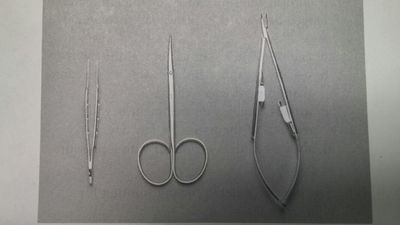
- AScissors, forceps, needle holder
- BForceps, scissors, needle holder
- CNeedle holder, forceps, scissors
- DForceps, needle holder, scissors
134To maintain hemostasis during a surgical procedure, the surgeon uses
- ACurettes
- BCannulas
- CClamps
- DForceps
135In lacrimal-system probing, a cannula is used to
- AEnlarge the small punctal opening
- BScoop out the unwanted tissue
- CHold the suture needle steady
- DFlush out a tear duct with an irrigating solution
136All of the following are considered to be within the sterile operating field except
- AThe instrument tray
- BMasks
- CGloves
- DDrapes
137Prepping the patient is usually done
- AAfter final scrubbing and without sterile gloves
- BBefore final scrubbing and without sterile gloves
- CAfter final scrubbing and with non sterile gloves
- DBefore final scrubbing and with sterile gloves
138Of the following, the suture size least likely to be used for eye surgery is
- A2-0
- B5-0
- C8-0
- D10-0
139The contact lens that allows oxygen to reach the cornea only through the tear pump are
- ASoft lenses
- BRigid gas-permeable lenses
- CPolymethylmethacrylate lenses
- DExtended-wear lenses
140A prescription for contact lenses
- AIs identical to that for eyeglasses
- BRequires only keratometry and refraction measurements
- CIncludes both keratometry and base curve measurements
- DIncludes vertex and interpupillary distance measurements
141One significant advantage of soft lenses as compared to rigid gas-permeable lenses is that soft lenses
- AGenerally are easier to handle, clean, and disinfect
- BCan correct large amounts of astigmatism or irregular corneas more effectively
- CGenerally are easier to adapt to and initially more comfortable to wear
- DCan be modified after manufacture
142An allergic reaction related to contact lens wear is most often due to individuals sensitivity to a
- ASoft contact lens material
- BRigid contact lens material, such as silicon acrylate
- CSoap used to wash hands before insertion
- DPreservative or disinfectant chemical in a lens solution
143Cosmetic restorative lenses are most appropriate for patients who
- AWant to enhance or change the color of their irises
- BHave disfigured eyes
- CRequire relief from photophobia or glare sensitivity
- DHave large amounts of astigmatism that would otherwise require thick glasses
144Disinfection of contact lenses serves primariky to
- ARemove surface protein deposits
- BKeep the lens surface hydrophilic
- CPrevent the growth of bacteria, viruses, and fungi
- DLubricate the area between the cornea and the lens
145Contact lenses are most likely to be contraindicated in individuals who
- AHave refractive errors resulting from keratoconus
- BWork in occupations requiring excellent peripheral vision
- CParticipate heavily in sports activities
- DAre routinely exposed to excessive amounts of fumes or dust
146Generally, when inserting a soft contact lens on a patient, the ophthalmic medical assistant should first place the lens on the
- ASclera above the cornea
- BSclera below the cornea
- CSclera to the right or left of the cornea
- DCornea directly
147A corneal abrasion caused by foreign material lodged between the cornea and the contact lens
- ACan result in a serious corneal infection
- BUsually is more painful in soft lens wearers than in rigid lens wearers
- CUsually requires no treatment beyond removal of the lens for a few days
- DAlways requires treatment with a pressure patch
148The onky acceptable rinsing solution for contact lenses is
- ASalt tablets dissolved in distilled water
- BSalt tablets dissolved in tap water
- CThe contact lens user's own saliva
- DSterile saline solution
Information
- Description
- Quiz on Ophthalmic Medical Assistant Practice Test, created by Dani Geiger on 03/03/2015.
- Author
- Dani Geiger
- Language
- English
- Views
- 10,733
- History
- Created on 3 Mar 2015 · updated on 7 Apr 2018
- Tags
- Rating
- 5.0 out of 5 · 1 rating Rate this quiz