
Quiz
Part 5 US History EOC
Questions in this quiz (38)
1 The changing image of women during the 1920s was symbolized by the
- Apassage of an equal pay act
- Bdrafting of women into the army
- Cpopularity of the flappers and their style of dress
- Dappointment of several women to President Calvin Coolidge’s cabinet
2The Scopes Trial of 1925 is an example of
- Athe effects of assimilation on American culture
- Ba clash between scientific ideas and religious beliefs
- Can increase in violence in American society
- Dgovernment intervention in racial conflicts
3During the 1920s, controversies concerning the Scopes trial, national Prohibition, and the behavior of “flappers” were all signs of disagreements over
- Athe return to normalcy
- Btraditional values and changing lifestyles
- Ccauses of the Great Depression
- Dthe benefits of new technolog
4Which statement about Franklin D. Roosevelt’s New Deal program is most accurate?
- AProtective tariff rates increased.
- BSocial welfare programs were expanded.
- CGovernment regulation of business was reduced.
- DGovernment support of environmental conservation ended.
5 The New Deal programs of President Franklin D. Roosevelt changed the United States economy by
- Arestoring the principal of a balanced budget
- Bexpanding the trustbusting practices of Progressive Era presidents
- Cencouraging greater production of agricultural goods
- Dincreasing government involvement with both business and labor
6 The Federal Deposit Insurance Corporation (FDIC) and the Securities and Exchange Commission (SEC), established during the New Deal, were important because they
- Aincreased the supply of money in circulation
- Bguaranteed loans to failing businesses and banks
- Cattempted to restore public confidence in financial institutions
- Dprovided grants to unemployed workers
7 New Deal programs such as the Civilian Conservation Corps (CCC) and the Works Progress Administration (WPA) were primarily intended to help
- Afarmers
- Bhomeowners
- Cbusinesses
- Dunemployed workers
8 The National Labor Relations Act (Wagner Act) of 1935 strengthened labor unions because it legalized
- Acollective bargaining
- Bblacklisting
- Cthe open shop
- Dthe sit-down strike
9The strongest opposition to President Franklin Roosevelt’s New Deal programs came from
- Awestern farmers
- Bbusiness leaders
- Cfactory workers
- Drecent immigrants
10The Supreme Court declared some New Deal laws unconstitutional because these laws
- Aoverextended the power of the federal government
- Bforced the federal government into heavy debt
- Cignored the rights of minority groups and women
- Dfailed to solve the problems for which they were intended
11 Congress refused to enact President Franklin D. Roosevelt’s court-packing plan because the plan
- Athreatened to upset the constitutional system of checks and balances
- Bentrusted too much power to the judicial branch
- Ccalled for an increase in income taxes
- Drequired passage of a constitutional amendment
12At the beginning of World War II, national debate focused on whether the United States should continue the policy of
- Acoexistence
- Bcontainment
- Cimperialism
- Disolationism
13“Arms Sales to Warring Nations Banned”
“Loans to Nations at War Forbidden”
“War Materials Sold Only on Cash-and-Carry Basis”
These headlines from the 1930s reflect the efforts of the United States to- Amaintain freedom of the seas
- Bsend military supplies to the League of Nations
- Climit the spread of international communism
- Davoid participation in European wars
14Between 1934 and 1937, Congress passed a series of neutrality acts that were designed primarily to
- Astrengthen the nation’s military defenses
- Bprovide aid to other democratic nations
- Ccreate jobs for unemployed American workers
- Davoid mistakes that had led to American involvement in World War I
15 Why was the United States called the “arsenal of democracy” in 1940?
- AThe leaders in the democratic nations of Europe were educated in the United States.
- BMost of the battles to defend worldwide democracy took place on American soil.
- CThe United States supervised elections in European nations before the war.
- DThe United States provided much of the weaponry needed to fight the Axis powers.
16• Cash and Carry (1937)
• Destroyers for Naval Bases Deal (1940)
• Lend-Lease Act (1941)
Which change in United States foreign policy is demonstrated by the passage of these acts prior to World War II?- Aa shift from neutrality toward more direct involvement
- Ban effort to become more neutral
- Ca movement from isolationism to containment of communism
- Da desire to provide aid to both Allied and Axis powers
17 Which statement most accurately describes the foreign policy change made by the United States between the start of World War II (1939) and the attack on Pearl Harbor (1941)?
- AThe traditional isolationism of the United States was strengthened.
- BThe nation shifted from neutrality to military support for the Allies.
- CWar was declared on Germany but not on Japan.
- DFinancial aid was offered to both the Allied and Axis powers.
18 Shortly after entering World War II, the United States began the Manhattan Project to
- Awork on the development of an atomic bomb
- Bincrease economic production to meet wartime demands
- Cdefend New York City against a nuclear attack
- Drecruit men for the military services
19Base your answer to the question on the poster to the left and on your knowledge of social studies.
During World War II, this poster was used primarily to- Acontain the spread of communism
- Bcreate jobs for the unemployed
- Cgain financial support for the war
- Dconvince women to fill vacant factory jobs
20A controversial issue that resulted from World War II was the
- Afuture role of the League of Nations
- Bmorality of nuclear warfare
- Ccommitment of troops without congressional approval
- Dcivilian control of the military
21Convictions of war criminals by courts at Tokyo and Nuremberg following World War II showed that
- Agovernment officials and military leaders could be held accountable for their actions
- Bthe United Nations accepted responsibility for international peacekeeping
- Cthe League of Nations could successfully enforce international law
- Dnations that start wars would be forced to rebuild war-torn nations
22During World War II, the federal government used rationing to
- Ahold down prices of military weapons
- Bincrease educational benefits for veterans
- Cincrease imports of scarce products
- Dprovide more resources for the military
23 During World War II, many women experienced a change in role in that they
- Aserved in military combat positions
- Bworked in jobs formerly held by men
- Ccontrolled most corporations
- Dchaired several congressional committees
24 In the 1944 case Korematsu v. United States, the Supreme Court ruled that wartime conditions justified the
- Ause of women in military combat
- Bban against strikes by workers
- Climitations placed on civil liberties
- Dreduction in the powers of the president
25Which factor contributed to the internment of Japanese Americans during World War II?
- Alabor shortage during the war
- Binfluence of racial prejudice
- Cincrease of terrorist activities on the West Coast
- Dfear of loss of jobs to Japanese workers
26To help pay for World War II, the United States government relied heavily on the
- Amoney borrowed from foreign governments
- Bsale of war bonds
- Csale of United States manufactured goods to neutral nations
- Dprinting of additional paper money
27What was the main purpose of the GI Bill passed by Congress shortly before the end of World War II?
- Ato offer low-interest loans to the defense industry
- Bto provide economic aid to veterans
- Cto contain the spread of international communism
- Dto expand career opportunities in the military
28 The baby boom primarily resulted from the
- Aeconomic prosperity of the 1920s
- BGreat Depression of the 1930s
- Cdelay in marriages during World War II
- Dcounterculture movement of the 1960s
29 The experiences of African Americans serving in the military forces during World War II influenced their postwar decision to
- Arenew support for the principle of separate but equal
- Bjoin the armed forces in record numbers
- Cincrease efforts to end racial discrimination
- Dmove back to the rural south
30What was one result of World War II?
- AThe arms race ended.
- BThe Cold War ended.
- CCommunism was eliminated.
- DTwo superpowers emerged.
31“Soviets Create Iron Curtain in Eastern Europe”
“Mao Zedong Leads Successful Revolution in China”
“North Korean Invasion of South Korea Leads to War”
Which development is reflected in these headlines?- Athe post–World War II expansion of communism
- Bthe beginning of détente between the Soviet Union and the United States
- Cthe return to an isolationist foreign policy
- Dthe beginning of pro-democracy movements during the Cold War
32 During the Cold War era, the United States and the Soviet Union were hesitant to become involved in direct military conflict mainly because of
- Athe threat of China to both nations
- Bpressure from nonaligned nations
- Cthe potential for global nuclear destruction
- Dmutual dependence on Middle East petroleum
33 The primary goal of the United States foreign policy of containment was to
- Areturn to noninvolvement in world affairs
- Bstop communist influence from spreading
- Cgain territories in Africa and Latin America
- Doverthrow existing dictatorships
34 Which foreign policy decision by President Harry Truman is an example of the policy of containment?
- Arelieving General MacArthur of his Korean command
- Brecognizing the new nation of Israel
- Csupporting the trials of war criminals in Germany and Japan
- Dproviding military aid to Greece and Turkey
35The main foreign policy objective of the Marshall Plan (1948–1952) was to
- Astop communist aggression in Korea
- Bfight poverty in Latin America
- Crebuild the economies of European nations
- Dprovide jobs for unemployed Americans
36Base your answer to the question on the cartoon to the left and on your knowledge of social studies.
The United States carried out the idea expressed in this late 1940s cartoon by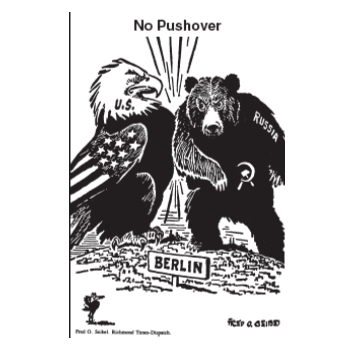
- Aforming a military alliance with Russia
- Bairlifting supplies to West Berlin
- Caccepting Russian authority over West Berlin
- Dagreeing to turn over control of Berlin to the United Nations
37What was a major outcome of the Korean War (1950–1953)?
- AKorea continued to be a divided nation.
- BNorth Korea became an ally of the United States.
- CSouth Korea became a communist nation.
- DControl of Korea was turned over to the United Nations.
38 In the 1950s, the domino theory was used by President Dwight D. Eisenhower to justify
- Asending federal troops into Little Rock, Arkansas
- BUnited States involvement in Vietnam
- Cjoining the United Nations
- Dopposing Britain and France in the Suez Canal crisis
Information
- Description
- Part 5 US History EOC
- Author
- Deleted user
- Language
- English
- Views
- 65
- History
- Created on 6 Oct 2016 · updated on 8 Dec 2016
- Tags
- Rating
- No ratings yet Rate this quiz