
Quiz
Development Economics IIA
Create a free account to finish this quiz
Save your progress and see your final score.
Already have an account? Sign in
Questions in this quiz (47)
1Which of the following would be an appropriate alternative to this
Development Economics IIa
as a name for this course?- AIndustrialisation and development: Strategies and experience
- BDevelopment economics: The Neoclassical Approach
- COpen Economy development economics
- DDeveloping countries in the international economy
- EDevelopment, Accumulation and Structural Change
- AIndustrialisation and development: Strategies and experience
2Who wrote the textbook for the course and what kind of economist is he
- AWeaver - Kaleckian
- BThirdwood - Keynesian
- CThirllwarld - Supply-sider
- DThirlwall - Kaldorian
- EFurball - Neoclassical
- AWeaver - Kaleckian
3Using the figures from our lecture (lecture 1), roughly speaking, what is the average percent of the workforce in the low income countries working in each of the following sectors?
Agric. - Indus. - Services- A5 - 15 - 80
- B33 - 33 - 34
- C80 - 15 - 5
- D75 - 10 - 15
- E61 - 19 - 21
- A5 - 15 - 80
4At what level of employment does the diminishing marginal product of labour start?
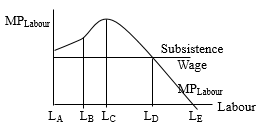
- ALA
- BLB
- CLC
- DLD
- ELE
- ALA
5Which of the following has NOT been argued in the lectures
- AAgriculture is characterised by diminishing returns to labour
- BThe income elasticity of demand for agricultural output is relatively low
- CAs income rises (and productivity rises) the relative importance of agriculture in purchases will increase
- DIndustry is an increasing returns activity
- EThe income elasticity of demand for industry’s output is relatively high
- AAgriculture is characterised by diminishing returns to labour
6Using our standard growth formula assume we have a population growth of 2% per year and our incremental capital output ratio is 5. What level of savings would be required to give us a constant GDP per capita if the annual GDP was £150 billion. (Assuming all the savings are invested)
- A5%
- B15%
- C£15 billion
- D£150 billion
- EThere is insufficient information
- A5%
7Lack of access to basic sanitation and primary health care low income countries contributes to high infant mortality.
On average and approximately, how many deaths are there per 1000 live births?- A1
- B10
- C60
- D300
- E600
8How might this “Kuznets curve” be best labelled?
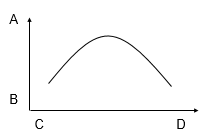
- AA=High Growth B=Low Growth C=Low Industrialisation D=High Industrialisation
- BA=Low Gini B=High Gini C= High Level of Development D=Low Level of Development
- CA=High Gini B=Low Gini C= Low Level of Development D=High Level of Development
- DA=High Growth B=Low Growth C= Low Level of Development D=High Level of Development
- ENone of the above
- AA=High Growth B=Low Growth C=Low Industrialisation D=High Industrialisation
9Who defines undernourishment as: “a state in which physical functioning of a person is impaired to the point where she cannot maintain an adequate level of performance at physical work, or at resisting or recovering from the effects of any of a garden variety of diseases”?
- AKuznets, S (1955) Economic Growth and Income Inequality
- BMalthus, T (1798) Essay on the Principle of Population
- CDasgupta, Partha (1993) An Inquiry into Well-being and Destitution
- DGalbraith, J.K. (1962) Economic Development in Perspective
- ESen, A (1984) Poverty and Famines: An Essay in Entitlement and Deprivation
- AKuznets, S (1955) Economic Growth and Income Inequality
10What it is the missing word in the following famous quote?
“The country that is more developed _________ only shows, to the less developed, the image of its own future.”- AAgriculturally
- BCulturally
- CFinancially
- DIndustrially
- EEconomically
- AAgriculturally
11Which of these did NOT explicitly advance a “stage” theory of development?
- ASmith
- BClark
- CMarx
- DFisher
- EVerdoorn
- ASmith
12Which of the following is not one of Rostow’s stages?
- ATraditional
- BTake-off
- CTransitional
- DMaturity
- EPre-maturity
- ATraditional
13Which of Rostow’s stages might be best described as involving a shift to “self sustaining growth”, the emergence of “leading sectors”, an expansion of the market for output, an increase in the supply of capital, a channelling of agriculture’s surplus (via the state or private sector) to industry, the growth of self-finance by businesses, the spread of new production techniques (production functions) and the beginning of a secondary expansion?
- ATraditional
- BTransitional
- CTake-off
- DPre-maturity
- EMaturity
- ATraditional
14Which of the following was not one of Kaldor’s growth laws (as described in the lecture)?
NOTE: m - manufacturing; nm - non-manufacturing; p - productivity; g - growth- AgGDP = f(gm) f’ >0
- Bpm = f(gm) f’ >0
- Cgm = f (ggdp) f’ >0
- Dpnm= f(gm) f’ >0
- EVerdoorn’s Law
- AgGDP = f(gm) f’ >0
15Which of the following best describes Allyn Young’s (1928) “increasing returns” ?
- Aa microeconomic phenomenon involving the returns gained at the enterprise level by an expansion in output
- Ba sectoral level phenomenon involving the returns gained where by, for example agricultural, productivity will increase as a result of a reduction in the sector’s size
- Ca macroeconomic phenomenon involving the interaction between activities in the process of general economic expansion
- DAn echo of Smith’s worries about the dangers of over specialisation of labour
- EA myth. Young believed in constant returns
- Aa microeconomic phenomenon involving the returns gained at the enterprise level by an expansion in output
16Which of the following most closely corresponds to Fisher (1939) and Clark (1940) stages?
- ATraditional – Transitional - Take-off –Maturity – Age of High mass consumption
- BHunting and gathering – Shepherding – Agriculture - Commercial Society
- CThe sequential dominance of primary production, then secondary production followed by tertiary production
- DPrimitive Communism – Slavery – Feudalism – Capitalism – Socialism –Communism
- EThe sequential dominance of the Nobility, then Entrepreneurs, then Technocrats
- ATraditional – Transitional - Take-off –Maturity – Age of High mass consumption
17Which author or authors’ “stage theory” has the income elasticity of demand and changes in income elasticity of demand as the major driver of shifts between stages?
- ASmith
- BRostow
- CMarx
- DFisher and Clark
- EKaldor
- ASmith
18This is the result of a regression estimating “Verdoorn’s Law” in China
pm = -9.46E-05 + 0.71(gm)
(-0.02) (19.10) R^2=0.73
How might we best interpret this result?- AProductivity increases are causing growth in manufacturing
- BThe R^2 of 0.73 and the coefficient on manufacturing sector growth 0.71 are sufficiently similar to counterbalance the negative coefficient on the intercept
- CA 1% increase in the growth of the manufacturing sector will cause an increase of 0.71% in that sector’s productivity. But the low R2 and the negative t stat on intercept coefficient render the result meaningless
- DA 1% increase in the growth of the manufacturing sector will cause an increase of 0.71% in the growth of that sector’s productivity
- EProductivity and growth are not related to each other as the t-statistic on the growth coefficient (19.10) is too low
- AProductivity increases are causing growth in manufacturing
19Which of the following is a “correct” reference for a book by Alice Amsden?
- AAmsden, Alice (1929) Asia’s Next Giant: South Korea and Early Industrialisation
- BAmsden, Alice (1959) Asia’s Giants: South Korean and Japanese Industrialisation
- CAmsden, Alice (1979) Asia’s Last Giant: Japan and Late Industrialisation
- DAmsden, Alice (1989) Asia’s Next Giant: South Korea and Late Industrialisation
- EAmsden, Alice (1999) Asia’s Next Giant: North Korea and Early Industrialisation
- AAmsden, Alice (1929) Asia’s Next Giant: South Korea and Early Industrialisation
20Suppose a country’s population is growing at 3% per year and the ICOR is 4. Using the “standard” formula what savings rate would be needed to ensure a constant level of GDP/capita?
- A12%
- B4%
- C3%
- D0.75
- EThere is insufficient information
- A12%
21Which of the following is least likely to be assumed by traditional development economists?
- AAs income and productivity rise the relative importance of agriculture in purchases will increase
- BAgriculture is characterised by diminishing returns to labour
- CThe income elasticity of demand for agricultural output is relatively low
- DIndustry is an increasing returns activity
- EThe income elasticity of demand for industry’s output is relatively high
- AAs income and productivity rise the relative importance of agriculture in purchases will increase
22How might this “Kuznets curve” be best labelled?
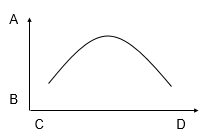
- AA=High Growth B=Low Growth C=Low Industrialisation D=High Industrialisation
- BA=High Growth B=Low Growth C= Low Level of Development D=High Level of Development
- CA=High Gini B=Low Gini C= Low Level of Development D=High Level of Development
- DA=Low Gini B=High Gini C= High Level of Development D=Low Level of Development
- ENone of the above
- AA=High Growth B=Low Growth C=Low Industrialisation D=High Industrialisation
23Which of these is NOT a Classical Economist and/or did NOT write the Book on the date implied
- AKarl Marx (1867) Capital: A Critique of Political Economy
- BDavid Ricardo (1817) Principles of Political Economy and Taxation
- CAdam Smith (1776) An Inquiry into the Nature and Causes of the Wealth of Nations
- DThomas Malthus (1798) Essay on the Principle of Population
- EW. W. Rostow (1805) The Stages of Economic Growth
- AKarl Marx (1867) Capital: A Critique of Political Economy
24In the lecture (L4) it was argued that Smith found sources of increasing returns in specialisation. Which of these is NOT relevant to this argument?
- AThe encouragement of invention of “machines which facilitate and abridge labour, and enable one man to do the work of many”
- BThe Pin Factory example
- CLearning by doing increasing the “dexterity of every particular workman”
- DThe saving of time “passing from one species of work to another”
- ESmith’s arguments with Malthus about the role of trade
- AThe encouragement of invention of “machines which facilitate and abridge labour, and enable one man to do the work of many”
25Malthus raised doubts about which law when raising the prospect of what might now be termed “demand deficient unemployment”?
- ARicardo’s Law
- BSmith’s Law
- CMarx’s Law
- DVerdoorn’s Law
- ESay’s Law
- ARicardo’s Law
26Which of the following is NOT true about Ricardo?
- AHe was an industrialist, politician and economist
- BHe argued that UK should specialise in agricultural produce, including corn and beef, because of its absolute advantage in producing these
- CHe campaigned for repeal the “Corn Laws” in England which had been protecting UK agriculture
- DHe predicted that capitalist economies would end up in stationary state with no accumulation and therefore no growth
- EHe argued that diminishing returns in agriculture would lead to higher food prices
- AHe was an industrialist, politician and economist
27Where
variable capital = v
constant capital =c
profits = s
A Marxist economist would NOT normally use which of the following definitions- ATotal output=v+c+s
- BDegree of exploitation = s/v
- COrganic composition of capital = c/v
- DThe rate of profit = (s/v)/(1+[c/v])
- EGrowth = s/c
- ATotal output=v+c+s
28Thirlwall Ch5 Theories of Economic Growth argues:
"An attempt is made to illustrate the contemporary relevance of the theories discussed. … the wheel has turned full circle, and … the most recent theories of endogenous growth rehabilitate many of the ideas of the old classical economists particularly _________ __________ emphasis on increasing returns associated with investment in manufacturing industry, and the general emphasis in both classical and __________ theory on the role of capital accumulation, and the embodiment of various forms of technical progress associated with it.”
What are the missing words?- AThomas Malthus’s AND Ricardian
- BDavid Ricardo’s AND Neoclassical
- CAdam Smith’s AND Keynesian
- DKarl Marx’s AND Neo-Keynesian
- EJoseph Schumpeter’s AND evolutionary
- AThomas Malthus’s AND Ricardian
29Which of these is NOT a Classical Economist and/or did NOT write the Book on the date implied
- AKarl Marx (1867) Capital: A Critique of Political Economy
- BNicholas Kaldor (1805) The Stages of Economic Growth
- CDavid Ricardo (1817) Principles of Political Economy and Taxation
- DAdam Smith (1776) An Inquiry into the Nature and Causes of the Wealth of Nations
- EThomas Malthus (1798) Essay on the Principle of Population
- AKarl Marx (1867) Capital: A Critique of Political Economy
30Suppose a country’s population is growing at 3% per year and the ICOR is 4. Using the “standard” formula what savings rate would be needed to ensure a constant level of GDP/capita?
- A24%
- B12%
- C4%
- D0.75
- EThere is insufficient information
- A24%
31In the lecture on the Classical Economists it was argued that Smith found sources of increasing returns in specialisation. Which of these is NOT relevant to this argument?
- AThe encouragement of invention of “machines which facilitate and abridge labour, and enable one man to do the work of many”
- BSmith’s discussions with Marx about the role of exploitation
- CThe Pin Factory example
- DLearning by doing increasing the “dexterity of every particular workman”
- EThe saving of time “passing from one species of work to another”
- AThe encouragement of invention of “machines which facilitate and abridge labour, and enable one man to do the work of many”
32Malthus raised doubts about which law when raising the prospect of what might now be termed “demand deficient unemployment”?
- ARicardo’s Law
- BSay’s Law
- CSmith’s Law
- DMarx’s Law
- EVerdoorn’s Law
- ARicardo’s Law
33Which of the following is not one of Harrod’s questions?
- AWhat must be the DY/Y for Ip to equal Sp (i.e. for a “dynamic equilibrium”?)
- BWill a dynamic equilibrium between Ip and Sp tend to prevail?
- CIs any dynamic equilibrium between Ip and Sp stable?
- DWill the growth rate be such that labour and capital will tend to be fully employed?
- EWhat is the optimal level of growth to ensure the maximisation of the sum individuals in the society’s welfare?
- AWhat must be the DY/Y for Ip to equal Sp (i.e. for a “dynamic equilibrium”?)
34Assuming there is a problem with the warranted growth rate being less than the natural growth rate. Which of the following was NOT suggested as a possible solution?
- Areduce the population growth rate
- Braise the savings rate using fiscal policy
- Craise the savings rate using monetary policy
- Dreduce the amount of capital needed per unit of output
- Eencourage more of the population to work
- Areduce the population growth rate
35Joan Robinson used which phrase to describe the situation where ga=gw=gn
- AThe perfect equilibrium
- BThe growth “norm”
- CA “golden age”
- DThe desired optimum
- EA “happy medium”
- AThe perfect equilibrium
36Who in 1946 published an article in Econometrica outlining a model very similar in insights to Roy Harrod’s 1939 model?
- AE. Dorar
- BE. Domar
- CE. Domer
- DE. Dormer
- EE. Dobar
- AE. Dorar
37This is a Cobb-Douglas Production function in “extensive” form
Y = bK^(a)*L^(1-a)
Which of the following is not true?- AY is output
- Bb is some measure of technology
- Ca = elasticity of output with respect to the capital stock
- D1-a = elasticity of output with respect to the labour force
- Ea+ (1-a) = 1 =>increasing returns to scale
- AY is output
38If you were writing an essay on the major features of "stages of growth" theories who would you be least likely to mention as one of the stage theorists?
- AKaldor
- BRostow
- CFisher and Clark
- DMarx
- ESmith
- AKaldor
39In a standard Cobb-Douglas Production function (Y=TKaLb) which of the following is NOT true?
- Aa+b=1 implies constant returns to scale
- Ba+b<1 implies decreasing returns to scale
- C a+b>1 implies increasing returns to scale
- D0<a<1 and 0<b<1 reflects diminishing returns to the factors
- E a and b are often assigned the values 0.6 and 0.8 to reflect their respective shares in national income
- Aa+b=1 implies constant returns to scale
40Taking logs of a standard Cobb-Douglas Production function (Y=TKaLb) differentiating with respect to time and using a discrete approximation we get the following functional form:
rY=rT+a rK+b rL
When using this to model an economy which of the following would NOT be a good description of rT ?- AThe annual rate of growth of “total productivity”
- BThat part of growth of output not attributable to increases in factors of production
- CA “coefficient of ignorance”
- D“Advances in knowledge”
- EAn accurate measure of the economies degree of technical progress
- AThe annual rate of growth of “total productivity”
41Thirlwall discusses the possible contributions of the agricultural sector to the process of development under four headings. Which is not one of them?
- AProduct contribution
- BFactor contribution
- CMarket contribution
- DForeign exchange contribution
- EEnvironmental contribution
- AProduct contribution
42Who was the father of the 1960s Green Revolution and was awarded the Nobel Peace Prize in 1970 in recognition of his contributions to world peace through increasing food supply
- AW. A. Lewis
- BNorman Borlaug
- CNicholas Kaldor
- DTony Thirlwall
- EThomas Malthus
- AW. A. Lewis
43Complete the following quote from Lewis. “The central problem in the theory of economic development is to understand the process by which a community which was previously
- Asaving and investing 4 or 5 per cent of its national income or less, converts itself into an economy where voluntary saving is running at about 12 to 15 per cent. of national income or more.”
- Bcorrupt, converts itself into a democracy.”
- Cindustrialised, converts itself into a post industrial society.”
- Dsaving 15-20 per cent of its national income, converts itself into an economy where voluntary saving is running at about 50 per cent. of national income or more.”
- Einvesting nothing, converts itself into an economy where voluntary saving is running at about 10 per cent. of national income.”
- Asaving and investing 4 or 5 per cent of its national income or less, converts itself into an economy where voluntary saving is running at about 12 to 15 per cent. of national income or more.”
44What is Lewis’s answer to the question "why do [poor countries] save so little”? Because
- Athey are poor
- Btheir government are too corrupt
- Ctheir taxes are too high
- Dtheir capitalist sector is small
- Ethey lack a sufficiently developed financial sector
- Athey are poor
45In Lewis’s model earnings in the subsistence sector set a floor to wages in the capitalist sector but in practice wages in the capitalist sector have to be higher than this. That is, there is a “gap”. Which is the figure closest to Lewis’s estimate of the typical size of this gap?
- A10 %
- B15 %
- C20 %
- D30 %
- E50%
- A10 %
46Which of these is not one of Lewis’s description or explanation of the gap?
- AThe gap is nominal not real in that it merely reflects the higher cost of living in capitalist sector
- BReflecting a psychological cost. The cost of moving from an easy going way of life in the subsistence sector to the more regimented and urbanised environment of the capitalist sector
- CReflecting unskilled workers being of more use to the capitalist sector after they have been there for some time than is the raw recruit from the country
- DBecause of the need for urban workers to send money home to the countryside
- EReflecting a difference in conventional standards as a result of acquiring tastes and a social prestige which conventionally are recognised by higher real wages
- AThe gap is nominal not real in that it merely reflects the higher cost of living in capitalist sector
47According to Google Scholar how many times, approximately, has
Lewis, W.A. (1954) Economic development with unlimited supplies of labour. The Manchester School, 22(2), 139-191.
been cited?- A0
- B8
- C80
- D800
- E8000
Information
- Description
- Universität Development Economics Quiz on Development Economics IIA, created by Chanté on 04/12/2014.
- Author
- Chanté
- Language
- English
- Views
- 438
- Tags
- Rating
- 5.0 out of 5 · 2 ratings Rate this quiz