
Quiz
Physics (Unit 1 - Kinetic Theory and Conduction)
Questions in this quiz (28)
1Kinetic theory describes how atoms move in solids, liquids and gases.
- ATrue
- BFalse
2Kinetic theory describes how _______ move in solids, liquids and gases.
- AAtoms
- BElectrons
- CParticles
3The energy an object or particle has because of its movement is called its kinetic energy.
- ATrue
- BFalse
4Kinetic energy can explain the three states of matter.
- ATrue
- BFalse
5This structure represents which state of matter?
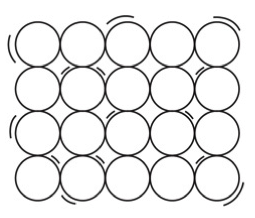
- ASolid
- BLiquid
- CGas
6This structure represents which state of matter?

- ASolid
- BLiquid
- CGas
7This structure represents which state of matter?
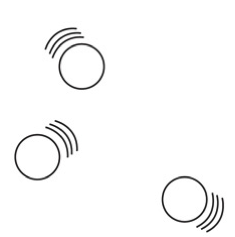
- ASolid
- BLiquid
- CGas
8Which statement is correct?
- AThe particles of a particular substance in each state are the same - only the arrangement and energy of the particles are different.
- BThe atoms of a particular substance in each state are the same - only the arrangement and energy of the particles are different.
- CThe particles of a particular substance in each state are different - only the arrangement and energy of the particles are the same.
- DThe electrons of a particular substance in each state are not the same - only the placement and energy of the particles are similar.
9Solids have strong forces of attraction that hold the particles close together in a fixed, regular arrangement. The particles don't have much energy so they can only vibrate about their fixed positions.

- ATrue
- BFalse
10Solids have strong forces of _______ that hold the particles _______ __________ in a ______, regular arrangement. The particles don't have much _____ so they can only ______ about their fixed positions.
- Aattraction
close together
fixed
energy
vibrate - Bseparation
far apart
dangerous
movement
wiggle - Cattraction
loosely together
fixed
energy
vibrate
- Aattraction
11Liquids have weaker forces of attraction between the particles. The particles are close together, but can move past each other and form irregular arrangements. They have more energy than the particles in a solid - they move in random directions at low speeds.

- ATrue
- BFalse
12Liquids have ______ forces of attraction between the particles. The particles are _____ _______, but can move past each other and form ________arrangements. They have _____ energy than the particles in a _____ - they move in ______ directions at ______ speeds.
- Aweaker
close together
irregular
more
solid
random
low - Bsimilar
far apart
regular
less
gas
uniform
high - Chigher
close together
irregular
less
solid
random
low
- Aweaker
13There are almost no forces of attraction between the particles. The particles have more energy than those in liquids and solids - they are free to move and travel in random directions and at high speeds.
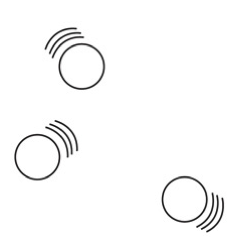
- ATrue
- BFalse
14There are ______ ___ forces of attraction ______ the particles. The particles have _____ energy than those in liquids and solids - they are free to move and travel in _______ directions and at _____ speeds.
- Aalmost no
between
more
random
high - Balmost twenty
on
less
uniform
low - Cnearly 100
between
more
similar
high
- Aalmost no
15Conduction of heat occurs mainly in liquids.
- ATrue
- BFalse
16Conduction of _____ energy is the process where _________ particles pass on their extra _____ energy to ___________ particles.
- Aheat
vibrating
extra
neighbouring - Bkinetic
stiff
heat
tiny - Cheat
little
kinetic
nearby
- Aheat
17Conduction of heat energy is the process where vibrating particles pass on their extra kinetic energy to neighbouring particles.
- ATrue
- BFalse
18The process continues throughout the solid and gradually some of the extra kinetic energy (or heat) is passed all the way through the solid, causing a rise in temperature at the other side of the solid. And hence an increase in the heat radiating from its surface.
- ATrue
- BFalse
19The process continues throughout the ______ and gradually some of the extra _____ energy (or heat) is passed all the way through the solid, causing a _____ in temperature at the other side of the _____. And hence an ______ in the heat radiating from its ________.
- Asolid
kinetic
rise
solid
increase
surface - Bliquid
heat
decrease
liquid
impact
bottom - Csolid
kinetic
influx
liquid
increase
surface
- Asolid
20Usually conduction is faster in denser solids, because the particles are closer together and so will collide more often and pass energy between them. Materials that have larger spaces between their particles conduct heat energy much more slowly - these materials are insulators.
- ATrue
- BFalse
21Usually ________ is faster in ______ solids, because the particles are _______ ________and so will ______ more often and pass energy between them. Materials that have ______ spaces between their particles conduct _____ energy much more ______ - these materials are ________.
- Aconduction
denser
closer together
collide
larger
heat
slowly
insulators - Bconvection
denser
further apart
avoid
larger
heat
quickly
convectors - Cconduction
denser
closer together
collide
smaller
kinetic
slowly
inducers
- Aconduction
22Why are metals good conductors?
- AThey have free particles
- BThey have expensive particles
- CThey have free electrons
- DThey have expensive electrons
23Metals conduct so well because the electrons are free to move inside the metal.
- ATrue
- BFalse
24At the hot end of the metal, electrons will move: faster or slower?
- AFaster
- BSlower
25At the hot end of the metal, electrons will more faster and collide with other free electrons. What happens next?
- AThey transfer energy
- BThey transfer electricity
- CThey exchange Christmas cards
26Because the electrons can move freely, this is obviously a much faster way of transferring the energy through the metal than slowly passing it between jostling neighbouring atoms. This is why heat energy travels so fast through metals.
- ATrue
- BFalse
27If a spade is left in the sun and you touch the metal part, it feels much hotter than the wooden handle. This is because the metal is hotter.
- ATrue
- BFalse
28If a spade is left in the sun and you touch the metal part, it feels much hotter than the wooden handle.
IT ISN'T HOTTER - it just conducts the heat into your hand much quicker than the wood, so your hand heats up much quicker.- ATrue
- BFalse
Information
- Description
- Quiz on Physics (Unit 1 - Kinetic Theory and Conduction), created by colette_louise on 29/12/2014.
- Author
- colette_louise
- Language
- English
- Views
- 61
- Rating
- No ratings yet Rate this quiz